ENO stages its first ever production of Bellini’s Norma

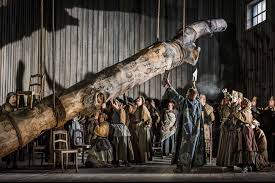
ON NormaFor the first time in its 85-year-history ENO will stage an opera by one of the greatest masters of the Italian Bel canto style, Vincenzo Bellini. His widely-acknowledged masterpiece Norma will be performed in the staging by award-winning director Christopher Alden which was first seen at Opera North in 2012 where it was described as ‘alive, energising and absorbing ‘ by the Daily Telegraph. It was subsequently seen in Chemnitz and Bordeaux.

The production relocates the setting from Gaul under Roman occupation to an imagined American Mid-West of the late 19th Century where a close-knit community’s way of life is threatened by unstoppable change. The people want war. Their priestess Norma, secretly in love with one of the enemy Pollione, resists. But now he has a new love and in the face of his betrayal it seems Norma is prepared to make the ultimate sacrifice.

Norma is a high-point of the Bel canto style with the drama expressed through vocal lines of extraordinary beauty and grandeur yet which demand exceptional technical control. Its most famous aria Casta Diva has been a showcase for many of opera’s most acclaimed sopranos including Giuditta Pasta who created the role, Rosa Ponselle, Maria Callas, Joan Sutherland, Montserrat Caballé and Cecilia Bartoli. But the work is also noted for its powerful choral episodes and two magnificent duets for the two sopranos.

Christopher Alden directs his sixth production for ENO. Known for his striking interpretations, his dramatic staging ofNorma ‘pierces to the heart of the drama’ (The Guardian). Alden’s creative team includes set designer Charles Edwards, costume designer Sue Willmington and lighting designer Adam Silverman.

Stephen Lord, Music Director of the Opera Theatre of St Louis and a noted interpreter of the Bel canto repertory, returns to lead the orchestra and chorus having previously conducted Rigoletto, La Boheme and Tosca for ENO.

Rising star soprano Marjorie Owens makes her UK, ENO and role debut in the demanding title role.  A recent Aida at the Metropolitan Opera, New York, Marjorie was also a company member of Semperoper in Dresden where her roles included Daphne, Senta, Ariadne, Amelia Grimaldi and Elisabetta in Don Carlo.

American soprano Jennifer Holloway returns to ENO in the role of Adalgisa, which she sang in this production in Bordeaux. Previously here she has sung Musetta and Prince Orlofsky.

British tenor Peter Auty debuts in the role of Pollione. He has previously sung for ENO in The Girl of the Golden West,Der RosenkavalierRigoletto and La bohème. Formerly a company principal at the Royal Opera House he has also performed with Grange Park Opera, Glyndebourne, Opera North and Scottish Opera. Peter’s professional musical career started at the tender age of 13, when as a choir boy at St Paul’s Cathedral he was chosen to sing ‘Walking in the Air’,the theme to the 1982 animated film of The Snowman.

Celebrated American bass James Creswell is Norma’s father Oroveso, a role he performed in this production with Opera North in 2012 and in Bordeaux. His previous roles for ENO include Padre Guardiano in The Force of Destiny, Pogner in Richard Jones’s Olivier Award-winning production of The Mastersingers of Nuremberg and Sarastro in Simon McBurney’s production of The Magic Flute, a role he will reprise in its revival in February 2016.

Scottish mezzo-soprano Valerie Reid sings the role of Norma’s friend Clotilde. For ENO she has previously sung in numerous productions including La traviataJuiletta , Peter Grimes, and Katya Kabanova and will perform the role of Mayor’s Wife in David Alden’s revival of Jenufa in June 2016.

Completing the cast is Australian tenor Adrian Dwyer as Pollione’s companion Flavio. Adrian recently sung the role of Trabuco in The Force of Destiny and has also performed in The Girl of the Golden West, Fidelio, Death in Venice, The Passenger, Wozzeck, Parsifal and Lucia di Lammermoor all for ENO.

Norma opens on Wednesday 17 February 2016 at 7.30pm for 7 performances –24, 27 February, 2, 7, 11, March at 7.30pm, 20 February at 6.30pm.

Pre-performance talk: Wednesday February 5.15-6pm, £5/£2.50 concs.

Originally created by Opera North in a co-production with Die Theater Chemnitz

New production supported by the English National Opera Trust and the American Friends of ENO.
January 2016 DVDs & CDs

Beethoven: The Ninth Symphony
Bejart Ballet Lausanne & The Tokyo Ballet, Israel Philharmonic Orchestra, Zubin Mehta
EUROARTS 2060878

The idea behind this approach is unproblematic as many orchestral works have been turned into highly successful ballets. Macmillan’s Das Lied von der Erde is a good case in point. Unfortunately Bejart’s approach is unconvincing and often lacklustre. The movement appears to have little to do with the score and is frequently at odds with it. This might matter less of the musical side was outstanding but there is too often a sense that Zubin Mehta is holding himself back for the dancers rather than leading the score.

The DVD opens with a lengthy percussion improvisation which seems equally distant from the Beethoven. It may all have made more sense live but conveys very little on the small screen.

Puccini: Turandot
Teatro Carlo Felice, Donato Renzetti
DYNAMIC 33764

With the exception of occasional rather raw edges which may m simply be the result of a live performance this is well sung throughout. Mario Malagnini’s Calaf gets stronger as he goes on and Roberta Canzian’s Liu becomes more mellifluous in the final act. Smaller parts are well sung and vocally characterised. There is a steely edge to Daniela Dessi’s Princess which is in character if a little uncomfortable at times.

The real problem is the production by Giuliano Montaldo which is old-fashioned and dull. It has no understanding of choral movement, with the singers lined up in blocks either side and allowed to emote at will. To compensate, a group of dancers frequently bound onto the stage to fill the space left by the retreating chorus. Added to this the acting is often perfunctory with a propensity for ending an aria down stage centre to milk the applause. I thought we were well past this stage now but it appears I was wrong.

Weber: Der Freischutz
Staatskapelle Dresden, Christian Thielemann
UNITEL CLASSICA 733108

This is a well-focused if very dark rendition of the work, often violent though never excessively so. As often these days there is no attempt to use the dance music for dancing – the act one scene becomes a nasty fight between neighbours.

However the narrative in Axel Kohler’s production is firmly kept in check and the characterisation is sensitive to the text and score. Michael Konig is a bluff Max, very much the outsider and is easily taken to the dark side. Sarah Jakubiak is a fine Agathe.

Most impressive is the conducting of Christian Thielemann who keeps the score on edge the whole time and makes us sense the latent horror even in moments of apparent calm. Where so many productions can drift too far from the original text, this re-interpretation is very convincing.

Rossini: Otello
Vlaanderen Opera, Alberto Zedda
DYNAMIC CDS 7711/1-3

This is a case where I would happily have had the DVD rather than the CD. For those of us who know Verdi’s Otello well it can come as something of a shock to find Rossini’s version so far adrift from Shakespeare both in terms of narrative and emotional intensity. While well sung I found it difficult to engage with the work as a whole, and, looking at the productions photographs, feel I could have benefitted greatly from seeing the action as well as hearing it. Alberto Zedda keeps things moving well from the pit but does little to engage us with the changes inherent in Rossini’s score.

Mendelssohn in Birmingham Vol 4
Jennifer Pike, violin, City of Birmingham Symphony Orchestra, Edward Gardner
CHANDOS CHSA 5161

A happy combination of popular works – the violin concerto and the full incidental music to A Midsummer Night’s Dream. Both are finely played and I particularly enjoyed the approach to the Dream. The work can so easily seem hackneyed with over hearing but here is light, immediate and engaging. While there are many versions available this must go very high up the list from the start.

Mendelssohn: String Symphonies Vol 1
L’Orfeo Barockorchester, Michi Gaigg
CPO 777 942-2

A noted above these are familiar works but the new recording is fresh and amiable throughout. However the use of a baroque orchestra – with a closer reliance on an original sound – does give this an extra layer of interest.

More recordings to follow

Happy New Year from St Nicholas Pevensey!


St Nic Pevensey


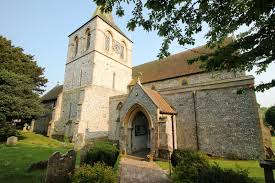
2016 promises to be a momentous year for all who are connected with, value and appreciate St. Nicolas church, Pevensey. It is the churches 800th anniversary year: completed in 1216, 400 years before Shakespeare, 500 years before JS Bach was in his prime, St. Francis of Assisi was yet to be born and the world hadn’t been circumnavigated.

2016 will see the start of the second part of the church’s restoration with two new roofs, upgraded electrical system and renewed windows ironwork (‘ferramenta’). This will be financed by a Heritage Lottery Fund grant announced last September, and from our own continuing fundraising.

A further £80,000 is needed to complete the much needed internal redecoration of the church. Applications will be made to hopefully supportive grant funding bodies early in the New Year who, without exception, always want to know what we are fund raising ourselves!

The church has an ambitious Events programme planned for 2016. Tickets will generally be on sale about four weeks before the concert date. Some events may be booked earlier on line through ‘wegottickets.com’.

The first 2016 concert is on 23rd January at 7:00 PM with NOTEWorthy, an accomplished Eastbourne based ‘a cappella’ choir of mixed voices several of whom have sung in major London choirs (Bach Choir, BBC Chorus to name but two). Their programme will be a selection of sacred and secular music, with some familiar pieces. One of the pieces, an ancient chant ‘O Mysterium Magnum’ from Christmas Matins was sung by King’s College Choir on Christmas Eve this year. It has become a favourite, arranged in this contemporary version in 1947 by an American,  Morten Laurisden. https://www.youtube.com/watch?v=Q7ch7uottHU. Come and hear more! Tickets are £6.


Brighton Philharmonic Orchestra

New Year’s Eve, 2015
The Dome, Brighton

It must be New Year’s Eve – we have spent the afternoon in Vienna with the Brighton Phil and it proved as genial and uplifting as ever. Barry Wordsworth may have had some difficulty with his throat but this did not impair his conducting abilities as he launched into the Overture to Die Fledermaus.  I suspect it may be the result of many years working with the Royal Ballet, but his approach to Strauss is always mellifluous in its line spinning. There is none of the over-exaggerated marking of rhythms or the – often very unfunny – musical jokes which can mar the finest playing. Instead all we had was some exceptional playing of hugely enjoyable works. Yes they were mostly familiar from the lushness of Lehar’s Gold and Silver Waltz to the inevitable grandeur of the Blue Danube, by way of The Emperor Waltz and Roses from the South.

As a change from the normal Viennese diet he introduced three pieces of British light music; all familiar and all very welcome. British light music needs no apology, surely, these days and sat comfortably alongside the Egyptian March and Pizzicato Polka. Coates’ Dance in the Twilightwas possibly the least well known of the three pieces played but proved to be a fine waltz in its own right. Robert Docker’s Tabarinage and Hartley’s Rouge et Noir are more familiar – particularly to those of us who remember Music while you work or the early days of Friday Night is Music Night.

Barry Wordsworth suggested we might like to hear more like this as part of a British New Year celebration – he is right; we would!

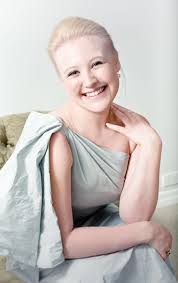
Kiandra Howarth

The guest soloist this year was soprano Kiandra Howarth who has a confident stage presence to add to a fine voice which easily filled The Dome. She opened with the familiar Meine Lippen, following this with Eine wird Kommen from Der Zarewitsch, its heady sentimentality easily bewitching the audience. In the second half she was radiant as Dvorak’s Rusalka, singing the Song to the Moon and was the unexpected vocal soloist in Voices of Spring where her coloratura excelled expectation.

She came back at the end to entrance us with O mio babbino caro proving herself to be a soloist of many parts. It will be worth following her blossoming career.

We all joined in the Radetzky March before Barry Wordsworth led the orchestra off to platform before we demanded any more. If the rest of the year is as good as this we have little to worry about.

Hastings Philharmonic Choir: Christmas Carols for All

St Mary in the Castle, Hastings, 20 December 2015

hastings phil dec 15

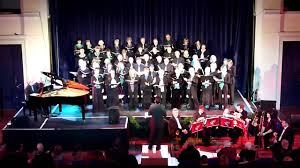
This was the 18th time Hastings Philharmonic Choir have led us in Christmas Carols for All and they do seem to improve year on year. If one overlooks the tiny blip at the start of Gaudete the balance and quality of tone was a delight throughout. Under their conductor Marcio da Silva they seem to be taking on greater challenges each year and meeting them with success.

In the first half, alongside familiar favourites, we heard John Rutter’s arrangement of The Infant King and Bob Chilcott’s rendition of Stille, stille, stille. When one puts these finely honed readings together with a hugely effective singing of Lauridsen’s O Magnum Mysterium we realise that Marcio da Silva is trying to create something very different. Rather than sticking to the familiar, with the significant input of instrumental accompaniment, we had a collection of pieces which were almost a capella, highlighting the sensitivity not only of the singers but of Frances Rayner’s continuously tactful piano support.

One of the highlights of a previous Christmas had been Marcio’s singing, at very short notice, of O Holy Night. He repeated it here, with the same wonderful outpouring of tone – and an enthusiasm that lifted the choir to their best singing of the evening.

Where we were all invited to join in, it was good to have Inspiritus Brass on tap, and they also provided two jolly interludes, one of which disarmingly included the Pizzicato Polka arranged for brass!

Gary Marriott provided the brief links between items and introduced his own choir Tune-Up Tuesday Singers who gave us Sweet Bells of Bethlehem.

The Choir are due to perform Brahms’ Requiem in May. Before this evening I had thought that was something of a large undertaking for them, but on the strength of what we heard, and the quality of the ensemble, I am looking forward to it already.

Details of this and membership at www.hastingsphilchoir.org.uk


ENO 2016 Highlights

Norma

Award-winning director Christopher Alden returns to ENO for its first ever production of Bellini’s indisputable Bel canto masterpieceNorma. Alden’s critically acclaimed  production, first seen at Opera North in 2012 comes to London for the first time.

A close-knit community’s way of life is threatened by unstoppable change. The people want war. Their priestess Norma, secretly in love with one of the enemy Pollione, resists. But now he has a new love and in the face of his betrayal it seems Norma is prepared to make the ultimate sacrifice. Celebrated for its fine melodies Norma features one of opera’s most recognisable arias ‘Casta Diva’, made famous by sopranos Maria Callas and Dame Joan Sutherland.

Rising star soprano Marjorie Owens makes her UK, ENO and role debut in the demanding title role with British tenor Peter Auty debuting in the role of Pollione.

Norma opens on Wednesday 17 February 2016 at 7.30pm for 7 performances. Tickets are available at eno.org/020 7845 9300

Akhnaten

Watching Akhnaten is a thought-provoking, absorbing experience. The opera, which has not been seen in London for almost 30 years, explores the life and religious convictions of the Egyptian pharaoh.

Following the success of his ENO productions of Philip Glass’s Satyagraha and The Perfect American, Improbable Theatre Company’s Phelim McDermott returns to direct this hypnotically mesmerising work. Countertenor Anthony Roth Costanzo sings the challenging title role for the first time while conductor Karen Kamensek, a specialist in Glass’s music, makes her ENO debut.

This new production celebrates ENO’s close relationship with one of contemporary music’s leading composers.

Akhnaten opens on the 4th March for 7 performances. Tickets are available at eno.org / 020 7845 9300

Tristan and Isolde

An epic drama told on a grand scale, Tristan and Isolde will be an unforgettable highlight of ENO’s 2015/16 Season. From the opening bars of the famous prelude, Wagner’s powerful opera is one of the most significant pieces in the repertoire.

ENO’s first new production of Tristan and Isolde since 1996 is directed by ‘theatre’s most exciting young director’ (Daily Telegraph) Daniel Kramer, with designs from Anish Kapoor, one of the most influential sculptors of his generation. The exceptional cast is led by the outstanding Wagnerian Heldentenor Stuart Skelton as Tristan. He is joined by American dramatic soprano Heidi Melton and British Bass Matthew Rose. Former ENO Music Director Edward Gardner conducts.

Tristan and Isolde opens on the 9th June for 8 performances. Tickets are available at eno.org / 020 7845 9300

A Child of Our Time

BBC Symphony Orchestra & Chorus
Barbican Hall, 17 December 2015

A Child of Our Time would not appear to be an obvious choice for a Christmas choral work, but its passionate, heartfelt plea for humanity seemed all the more relevant in the current political situation. The BBC Chorus were on tip-top form with the outbursts thrillingly exciting and hushed moments genuinely moving. Sarah Tynan’s clarion soprano carried easily over the massed choral forces and the richness of Brindley Sherratt’s bass added authority to the narrator. Human warmth was again very evident from the compassionate approach of Alice Coote. The only slightly weak link in this strong group of soloists was Robert Murray. While the voice is finely honed, the actual volume was not strong enough to ride the chorus and so the text was frequently lost.

Tippett’s text, over half a century on, still causes problems but there is no such difficulty with the setting itself, the radiant spirituals drawing all the elements together.

This would easily have stood by itself but we had a first half which was in no way insubstantial, opening with the brief but finely formed potpourri from Oliver Knussen’s Higglety Pigglety Pop. The colour palette impressed throughout as does the subtle use of percussion even if the melodic structure might be too complex for young listeners.

Louis Schwizgebel

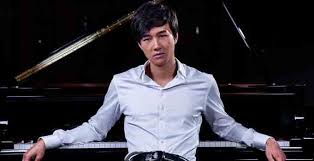
This was followed by Beethoven’s Fourth Piano Concerto with the young Swiss pianist  as soloist. He produced clean, crisp articulation throughout, often light and fluid even where the volume and intensity levels were high. His approach is frequently clipped and percussive, which suits the work well, and the orchestra was carefully crafted by Edward Gardner to mirror the approach. The only minor problem was Louis Schwizgebel’s left leg which seemed to have a mind of its own, flashing out sideways and often tapping loudly. Bring this under control and his performances could be faultless.


Proposals for a Centre for Music in London move forward as feasibility study published

As London expands, a proposal for a building to inspire a new generation of music-lovers:
  • A world-class concert hall, built for the digital age
  • An education facility offering immersive experiences for all
  • A digital offer available to the whole of the UK and internationally
  • Engagement for London’s communities and young people
  • A renewed commitment to London as a world musical centre
Proposals to build a new state of the art Centre for Music in the heart of London took a step forward today with the announcement that the Government will provide £5.5 million in funding for a full business case for the project while the City of London Corporation has agreed its willingness in principle to make land available for the site.
The opportunity to begin the next phase comes as a feasibility study exploring options for a new world class music facility in London is published. The study sets out an economic, business, cultural and educational case for a potential new Centre for Music in London, and highlights a significant moment of opportunity in delivering an outstanding new facility in the capital.
The Government is making £5.5 million available via Arts Council England to fund the development of a detailed business plan and analysis of costs and benefits; work on the initial design for the building; explore the options for funding the project and beginning fundraising; and undertake extensive consultation with the arts and education sectors.
Meanwhile, the City of London Corporation is backing this vision by agreeing in principle to make the land available for the Centre, significantly reducing the external funding requirement for the project. This support is part of the City’s ambitious plans to transform the area surrounding the Barbican into a world-leading cultural hub for the arts, heritage and learning.
The six-month initial feasibility study, Towards a World-Class Centre for Music, was commissioned by the Chancellor of the Exchequer and the Mayor of London in February this year. The report has been produced by the Barbican Centre, the London Symphony Orchestra (LSO) and the Guildhall School of Music & Drama alongside expert specialist teams.