Brighton Festival: Monteverdi – the other Vespers

I Fagiolini, Glyndebourne, Sunday 7 May 2017

Robert Hollingworth made some very interesting comments before the performance commenced. While these vespers are not as well-known as the regularly performed Vespers of 1610 they are, nevertheless, a complete liturgical recreation of Vespers of the period. As such he pointed out that we were involved in an act of worship just as much as if we were in a church or cathedral, and requested that we did not applaud until the end of each half.

His remarks raise a number of fascinating theological points which lay outside the remit of this review but reflect on the continuing, and wide scale, interest in religious music at a time when the believe systems which they support have been widely rejected. Few churches mounting these vespers liturgically would get anything like the response we saw at Glyndebourne yesterday. But then of course few churches can provide the sort of frisson which we got from I Fagiolini and the English Cornett & Sackbut Ensemble.

The Vespers are built around five psalm settings, a hymn, the Magnificat and the final Salve Regina. The Antiphons before each psalm were chanted but their liturgically necessary repeats were replaced – as was conventional in the seventeenth century – by instrumental versions of the text. Consequently, while the majority of the vocal items were by Monteverdi, we heard a Canzon by Viadana, a Sonata for solo violin by Uccellini – which brought the only spontaneous applause of the evening – a Toccata by Frescobaldi and a final sonata by Usper for cornetts and organ. All immaculately played and highly sensuous. In fact it was this tactile quality which seemed to inform the whole event. There was a latent eroticism to many moments of Monteverdi’s settings and a richness to Gabrielli’s Magnificat of 1615 which seemed to surpass any simply liturgical need.

The final Salve Regina was spine-tingling in its impact. A solo tenor and lute, crystal clarity of text and line, melting into silence.

I Fagiolini will be performing the other vespers across the rest of the year – details on www.ifagiolini.com


Bexhill Choral Society

De La Warr Pavilion, Bexhill, Saturday 6 May 017

Messiah in May? We have become accustomed to Christmas and Easter outings for Handel’s masterpiece so it was refreshing to encounter it at the start of summer. Moreover, we were in the more opulent acoustic of the De La Warr Pavilion rather than the ecclesiastical surroundings of St Augustine’s. All of the early presentations of Messiah were in theatres as the operatic nature of the composition was deemed far too irreligious for church performance, and Kenneth Roberts brought a dramatic intensity to his reading which helped keep the narrative moving rapidly.

The loss of the first eight rows also helped the impact of the performance, placing singers and musicians in the same room as the audience, with the soloists effectively in the centre of the space rather than isolated at the far end. Having heard many concerts here where the chorus was almost inaudible at the back of the stage this was a real advantage.

It also allowed for a greater dynamic range, with orchestral pps in the repeat section of the Overture and the Pastoral Symphony particularly effective in the hushed string playing. The lack of rehearsal time which plagues all performances these days was evident at the opening of Surely where Kenneth Roberts had to stamp his authority to get the tempi he needed and it was to the credit of all that they responded so rapidly and professionally.

Choral singing was crisp and responsive throughout, with clear articulation of the text and very tight rhythms. And He shall purify, Behold the Lamb of God and All we like sheep were particularly clear in attack and clarity of part singing.

The soloists were very exposed but given the quality of the singing this was never a problem. Andrew Mackenzie-Wicks is a dramatic tenor who combines fluid coloratura with a rich tonal palette. The contrast between Comfort ye and Thou shalt break them was thrilling. Peter Grevatt found a Georgian sense of conviction for The trumpet shall sound with Andy Gill in splendid form on solo trumpet.

Fae Evelyn brought beauty of tone to the soprano arias though as yet she has difficulty breathing through Handel’s long lines. Phillipa Thomas was a lighter voiced mezzo than we often hear in Handel but it was good to encounter a female voice here in an age dominated by counter-tenors. Her sensitivity carried well.

We are used today to technology and take it for granted. When it goes wrong everything stops, as happened just before For behold, darkness when all the lights went out, and returned to flash like distant lightning. Handel’s candlelit hall in Dublin would never have had that problem!

Bexhill Choral Society return to St Augustine’s on 7 October with works by Monteverdi, Vivaldi, Purcell and Albinoni.


Hastings Philharmonic

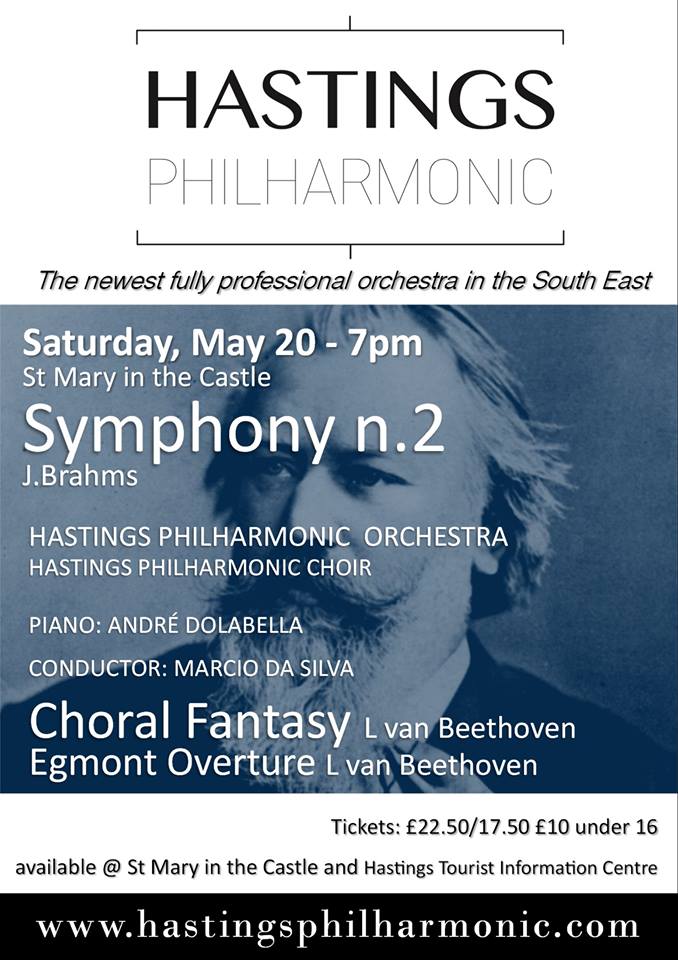
Hastings Philharmonic is producing  a keynote concert which shows off its full professional orchestra to best effect. The concert of Beethoven and Brahms are at St Mary in the Castle on Saturday 20 May at 7pm. In addition to Beethoven’s Egmont overture and Brahms’ 2nd Symphony, the concert features a rare choral, orchestral and piano piece by Beethoven which was a precursor to his ninth (choral) symphony.
Beethoven’s Choral Fantasy Op 80 was composed late in 1808 as a concert finale that incorporated elements of several works from an extraordinary concert. The concert included premieres of some of Beethoven’s finest works: Beethoven presented for the first time his 6th (Pastoral) Symphony,his 4th Piano Concerto in G major (with Beethoven himself as soloist), the 5th Symphony, ‘Ah Perfido’, ‘Gloria’   and ‘Sanctus’ (from his C major mass); Beethoven played the piano part himself in the first part of the Fantasy for piano, chorus and orchestra and it ended triumphantly.

Far from being a slick affair, the Choral Fantasy’s composition and performance is thought to have been a last minute concoction, but it served as a precursor to Beethoven’s Choral Symphony No.9; Beethoven had not written a score for the piano solo at the beginning and extemporised at the premiere on 22 December 1808 in Vienna. Improvisation was not unusual and even expected of virtuoso musicians in Beethoven’s time. Consequently the actual piano score now used owes something to a reworking nearly a hundred years later by the famous late 19th century pianist Xaver Scharwenka.  The concert made Beethoven more famous than ever and proved his greatness after a less than well received Fidelio put on earlier that year had dashed his hopes .

Beethoven’s pupil, Carl Czerny, wrote that the Symphony in c minor (his 5th) was meant to conclude the concert but to delay this important symphony to the end would have lessened its impact after so many other worthy new pieces. According to Czerny,  Beethoven felt this and, at the last minute, wrote a separate finale.  He chose a song that he had composed many years before, sketched out a few variations, the chorus, etc, and the poet Kuffner was commissioned to write a choral text.  The result was the Choral Fantasy, Op. 80.

The first two thirds of the work is a somewhat unusual concert piece for piano solo and orchestra; it begins with an expansive solo passage almost as if it were a piano sonata.Then the orchestra joins in and only later does the chorus enter with some melodic elements of “Ode to Joy” – which was  to be completed as the Choral Symphony some 15 years later.

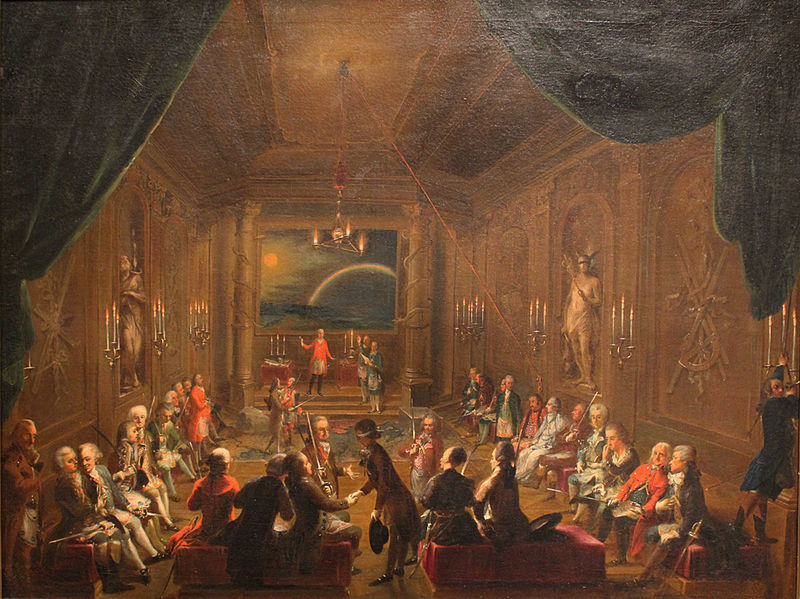
Although not a poet of Schiller’s stature, Christoph Kuffner’s poem used for the Fantasy  bears the hallmarks of many Age of Enlightenment writings and the post-revolutionary ideals of liberty, equality and fraternity. Beethoven’s possible membership of the freemasons is still a very controversial topic, but the case for his being one is based partly on the statement by his later personal secretary and admirer, musician Karl Holz, that he had been a mason but was inactive in later life.

 
Roger Cotte in his book La Musique Maçonnique suggests that Beethoven’s Fantasia Op 80 was indeed a masonic work describing it as a ‘veritable symphonic poem on initiation of the first degree’. Cotte suggests that the unusual structure of this piece reflects a masonic initiation ceremony: it starts with the initiate standing in darkness represented by the long piano introduction. As the initiates are unveiled, the interaction between orchestra and piano represents the question and answer phase, while a horns, oboe and piano passage concludes the unveiling and leads to the choral climax.  The choral jubilation was, according to Cotte, steeped in masonic symbolism both in words and music with the text ‘When love and strength are united, the favour of God rewards man’ being closely associated with the masonic concept of moving from Dark to Light, and a c minor-major progression of the music being evocative of a leap towards joy.

One of the highlights of the concert is Brahms’ great 2nd Symphony which should be a delight coming from the full romantic Hastings Philharmonic Orchestra  The concert at St Mary in the Castle also includes Beethoven’s Egmont overture, music set for Goethe’s ‘Sturm und Drang’ drama which was dripping in revolutionary ideals of the late eighteenth century.  Goethe’s membership as a mason was fully documented.

Hastings Philharmonic Orchestra play Brahms 2nd Symphony, Beethoven’s Choral Fantasy and the Egmont Overture at St Mary in the Castle, 7 Pelham Crescent, Hastings TN34 3AF on Saturday 20 May at 7pm. Tickets £22.50, £17.50 and £10 (under 16s)
 

City of Birmingham Symphony Orchestra announces its 2017-18 Concert Season at Symphony Hall, Birmingham

  • Mirga Gražinyt?-Tyla to conduct an ambitious series of 26 concerts, working with the whole CBSO family, curating an internationally-significant Debussy Festival in March 2018, and conducting his opera Pelléas et Mélisande
  • Clarinettist, composer and conductor Jörg Widmann is Artist in Residence for the season
  • A strengthened commitment to new music with six premieres, including the world premiere of Gerald Barry’s Organ Concerto conducted by Thomas Adès
  • The CBSO Chorus performs Haydn’s The Creation, Fauré’s Requiem and works by Lili Boulanger with Mirga Gražinyt?-Tyla
  • BBC Young Musician 2016 Sheku Kanneh-Mason makes his CBSO debut conducted by Mirga Gražinyt?-Tyla
  • Debut artists include Yeol Eum Son, Ning Feng, Rafal Blechacz, Xavier de Maistre, Jérémie Rhorer, Constantinos Carydis, Joana Mallwitz and Leo McFall.  
  • Friday Night Classics concerts include the music of David Bowie, Abba, Star Wars, and the Best of Bollywood
  • The CBSO continues to offer accessible world class music for all, with an additional 1700 tickets available under £25, and tickets for young audiences from just £6

The City of Birmingham Symphony Orchestra (CBSO) is delighted to announce its 2017-18 Concert Season at Symphony Hall, Birmingham. ‘One of Europe’s best orchestras’ (The Economist, 2016), the CBSO is a cultural flagship organisation for the Midlands and every year shares its world-class music-making with over 200,000 concertgoers in Birmingham, around the UK and worldwide. Led by Osborn Music Director Mirga Gražinyt?-Tyla(‘conducting’s next superstar’ The Telegraph) the CBSO’s 2017-18 season shares the talents and ambition of the entire CBSO family of ensembles with the widest possible audience.

Full season details can be found at www.cbso.co.uk

ENGLISH NATIONAL OPERA ANNOUNCES 2017/18 SEASON

ENO’s 2017/18 season features four new productions and five revivals at the London Coliseum, supported by a number of projects in other venues

  • Daniel Kramer directs his first opera as ENO Artistic Director, a new production of La traviata starring Claudia Boylein her role debut as Violetta
  • Martyn Brabbins begins his first full season as ENO Music Director, conducting performances of Marnie and The Marriage of Figaro
  • ENO presents the world premiere of Nico Muhly’s latest opera, Marnie, directed by Michael Mayer and conducted by Martyn Brabbins
  • A new production of Verdi’s Aida opens the 17/18 season, conducted by Keri-Lynn Wilson. After sell-out performances of his Olivier Award-winning Akhnaten, Phelim McDermott returns to direct
  • Cal McCrystal directs a new production of Gilbert and Sullivan’s Iolanthe, starring ENO Harewood Artist Samantha Price in the title role alongside ENO favourites Andrew Shore and Yvonne Howard
  • Regent’s Park Open Air Theatre and ENO present a new production of The Turn of the Screw, directed by multiple Olivier Award-winner and Artistic Director of the Open Air Theatre, Timothy Sheader. ENO Mackerras Fellow Toby Purser conducts
  • Revivals of audience favourites include Jonathan Miller’s The Barber of Seville, Richard Jones’s Rodelinda, Phelim McDermott’s Satyagraha, Robert Carsen’s A Midsummer Night’s Dream and Fiona Shaw’s The Marriage of Figaro
  • A raft of exciting British conductors new to ENO includes Leo McFall, Alexander Soddy and Hilary Griffiths. Keri-Lynn Wilson and Karen Kamensek return after acclaimed debuts in the 2014/15 and 2015/16 seasons respectively
  • Over 93% of cast and conductors in the 2017/18 season are British born, trained or resident. Rodelinda, Iolantheand Satyagraha all feature casts that are entirely British born, trained or resident
  • More than 15 principal roles across the 17/18 season will be taken by current or former ENO Harewood Artists.
  • Over 39,500 tickets are available for £20 or less across the 17/18 season (500 for every performance)

Today (27 April 2017) ENO has announced its 2017/18 season, comprising four new productions and five revivals at the London Coliseum alongside performances at other venues during the summer. In the 2017/18 season ENO will present nine fully-staged productions at the London Coliseum (following eight in the 2016/17 season). This will increase to 10 fully-staged productions at the London Coliseum by 2019/20.

PULL OUT ALL THE STOPS – 3

Stephen Farr, organ, Royal Festival Hall
Monday 24th April 2017

Programmers of organ concerts often fight shy of much contemporary repertoire. It is often said that people will not come when they see what is to be played. Last evening’s latest instalment in the excellent Pull out all the stops 2016-17 season proved that a high calibre performer coupled with an excellent instrument will still draw a good crowd, even  when the programme is entirely of 20th and 21st Century music.

There is no doubt that some of this music is challenging. It is equally true that hearing music in such surroundings as the RFH, with detailed enough (but not excessively so) programme notes allows the listener to be immersed in each piece and offered the opportunity of a focussed and all-encompassing musical experience.

Beginning with a world premiere, of Judith Bingham’s Roman Conversions, the listener was soon aware that throughout the evening a myriad of sounds will be heard from this amazing instrument at the expert hands and feet of Mr Farr. This programmatic piece charts a journey through some of the sacred buildings of Rome, a journey from darkness into light. Very effectively structured I hope this piece will get the exposure it deserves.

The second piece was Jehan Alain’s Trois Dances. These three contrasting pieces  were brilliantly brought to life. As in the first piece moments of passion and vitality sat alongside more sustained moments and delicate figures.

The final item in the programme was familiar territory for those who have embraced the 20th Century organ repertoire. One of Messiaen’s best known and most substantial organ works Les corps glorieux is an extended meditation on death and resurrection, portraying the composer’s Christian convictions in a structure that draws on his varied musical influences and worked out techniques.

Stephen Farr was completely at home with this music and drew a marvellous array of sounds from the organ. His energy at times was phenomenal, with frenetic percussive passages and huge chords. He was equally convincing in the slower moving and monophonic sections.

After this impressively moving performance the audience was treated to a beautifully understated encore which rounded off the evening in a sublime way, not undermining the experience of what had gone before.

I hope that more of this music – the completely new, and that “new music” that is now a number of decades old – will be given more exposure. Whilst some of it undoubtedly needs organs of the scale of the RFH and performers of Stephen Farr’s calibre there is also much that can be effectively played with more restricted resources. There is such a vast repertoire embracing music of different styles and periods that deserves to be heard.

The final instalment of this series takes a different turn with David Briggs improvising a soundtrack to Hitchcock’s The Lodger (1927) on 24th June.

SP


Official Opening of The Stoller Hall: Manchester’s Newest Performance Space at Chetham’s School of Music

This weekend (Friday 21 – Sunday 23 April) The Earl of Wessex, Patron, Chetham’s School of Music, opens The Stoller Hall: Manchester’s newest performance space at Chetham’s School of Music. It offers a flexible, professional venue which is the ideal place for recitals, chamber concerts, jazz, folk, pop and spoken word events as well as recordings and conferences. The city of Manchester is a vibrant hub of culture with a plethora of music venues catering to a variety of genres: The Stoller Hall adds to this by filling the gap for a dedicated chamber music space, combining the intimacy of a small venue with impressive visual and acoustic design.

Situated in the New Building, which opened in 2012, a void was deliberately left in this new part of the school for a planned for concert hall, with the assumption that years of fundraising still lay ahead before that could become reality. The total cost of The Stoller Hall is £8.7m, and £7.5m of its overall cost has been generously donated by Sir Norman Stollerthrough the Stoller Charitable Trust: Chetham’s are delighted that this means the doors are opening just five years after the original conception, with additional support from the Garfield Weston Foundation. The remainder of the funds have been raised through various arms of the Encore Campaign: from donating a Round of Applause or the Name a Seat scheme to establishing a Wall Plaque or exploring Naming Opportunities.

The concert hall provides:

  • State-of-the-art 482-seat auditorium
  • Flexible acoustics, designed by industry experts Arup, for different types of performance
  • An extendable concert stage
  • High quality, brand new PA and lighting with in-house technical support
  • In-house Steinway D grand piano
  • Two large dressing rooms & two Green rooms with en-suite facilities
  • An intimate yet impressive setting providing a unique audience experience in the heart of Manchester

ENO and Grange Park Opera announce partnership

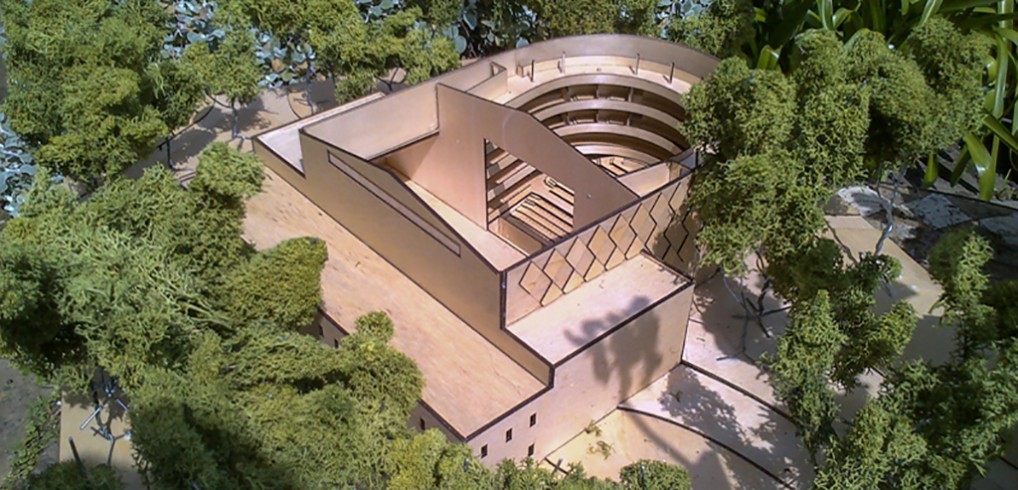
English National Opera (ENO) and Grange Park Opera (GPO) have today announced the formation of a three-year partnership, beginning in June 2018. Each year ENO’s award-winning Orchestra will play for productions presented by Grange Park Opera at West Horsley Place. West Horsley Place, the first opera house to be built in the UK in the 21st century, is the new home of Grange Park Opera and will open on 8 June 2017.

Described as ‘the finest opera orchestra in the country’ (The Stage), the ENO Orchestra is at the heart of the company’s artistic life. The repertoire that they perform is extremely diverse, ranging from baroque opera to world premieres. Their performances are regularly broadcast by BBC Radio 3 and have been screened live to cinemas worldwide as part of ENO Screen. In 2016 the ENO Orchestra and ENO Chorus were joint winners of the Olivier Award for Outstanding Achievement in Opera.