All Saints Hastings Organ Concerts 2017

Concerts this summer on the 1878 Father Willis Organ

All concerts Mondays at 7.30pm

10 July                   David Humphreys, Peterborough Cathedral

17 July                   Peter Wright, Southwark Cathedral

24 July                   Scott Farrell, Rochester Cathedral

31 July                   Matthew Jorysz, Westminster Abbey

7 August              Tim Ravalde, Chichester Cathedral

14 August            Jonathan Allsopp, Westminster Cathedral

21 August            Peter King, Bath Abbey

28 August            Gordon Stewart

Tickets £10 on the door

Refreshments available at all events

Opera Holland Park: Kat’a Kabanova

Opera Holland Park, July 2017

This concise, passionate piece comes with echoes of both Chekhov and Ibsen – somewhere between The Seagull and A Doll’s House. Based on a mid-nineteenth century Russian play and inspired by Janacek’s late flowering love for a much younger woman, it is written with mature, if not always subtle, musical skill – that fortissimo timpani roll at the moment of sexual ecstasy for instance –  and, in this production, conductor Sian Edwards ensures that every nuance is brought out.

As always at Opera Holland Park the playing area is so wide that it’s almost transverse theatre except that the audience is all on one side. Designer Yannis Thavoris has used it pragmatically, with a pseudo river, complete with the ubiquitous reeds, winding across the space and a semi circular mini stage to represent indoors in various forms – I won’t dwell on the fact that in its first incarnation the latter reminded me of a trampoline guard. It was effective thereafter.

Kat’a (Julia Sporsen) is a married woman with an unexciting husband (Nicky Spence) and an appalling mother-in-law (Anne Mason). In her husband’s absence she falls in love with Boris (Peter Hoare) and of course – this is opera – it can’t end happily.

Sporsen and Hoare work pleasingly together and each brings out the raw longing, regret, guilt and all the rest of it with some impressive solo singing and duet work. The symbolic flying movement as they lift all four of their arms to create a sense of togetherness (with a nod at the old slang implications of “flying”) underpins the singing rather cleverly too. Amongst the supporting roles Paul Curievici as Kudrjas stands out as does Clare Presland’s Varvara.

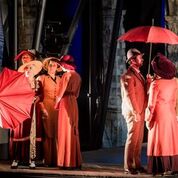
The chorus is a strange beast in this production though. The score gives them very little singing but, since they have to be in the building, director Oliver Fuchs uses them a lot in other ways to provide a sense of bustling crowd scenes, people walking by the river or observing the action. The trouble is that there are 32 of them and the lay out of OHP’s stage means that it takes a long time to get that number of people on and into position for what are often very short scenes – the whole laborious concept is far too fussy. Full marks, thought, for their beautiful, elegant Downton Abbey-esque costumes – in brown, terracotta, amber, burgundy and orange; like warm old bricks.

Kat’a Kabanova doesn’t  seem to get as many outings these days as Cunning Little Vixen or Jenufa and that’s a pity because it’s an interesting piece worth exploring. Well done Opera Holland Park for the usual imaginative programming.

Hastings Philharmonic

St Clements Church, Hastings, 16 July 2017

Marcio de Silva is certainly not averse to taking risks. Many choirs find it difficult to attract enough male singers for normal choral settings. To commence a performance with an unaccompanied setting for double chorus for male voices only was certainly a risk but, in the event, totally justified.

Biebl’s Ave Maria was written in 1964 but has a lyrical quality which harks back to the previous century with its rich harmony and romantic lyricism. The men of the chamber choir filled the church easily with their warm and well-balanced rendition, proving a fine start to a rewarding evening.

The ladies of the chamber choir then joined them for three short motets by Monteverdi. The settings regularly split into six parts, with complex polyphony throughout. If Domine ne in furore is more introspective, the flamboyant settings of Cantate Domino and Adoramus te filled the church with glowing tone.

The final item before the interval was the most unusual. Nunes Garcia was born in Brazil but heavily influenced by the European enlightenment in terms of his settings. The Judas Mercaor Pessimus has a splendidly dynamic impact with great variety of tone colour, which the choir handled with aplomb.

After the interval, the full choir gave us Durufle’s Requiem. The clarity of text was impressive and the Kyrie beautifully crafted. The sudden outpouring of the Hosanna was thrilling in its impact and the Sanctus had a warm lightness of touch. Marcio da Silva himself provided the baritone solos and Lin Westcott brought us the single soprano solo with a gentle lyricism. The unaccompanied Lux aeterna showed the continued confidence of the choir and the deft handling of their conductor.

Throughout, they were supported from the organ by Douglas Tang who was standing in at short notice and seemed to have a very good grasp of St Clement’s instrument.

This was the final event of a full and highly successful season. The new one opens at St Mary in the Castle on Friday 13 October with an all-Beethoven evening.


Garsington Opera: Le Nozze di Figaro

Garsington Opera at Wormsley, 11 July 2017

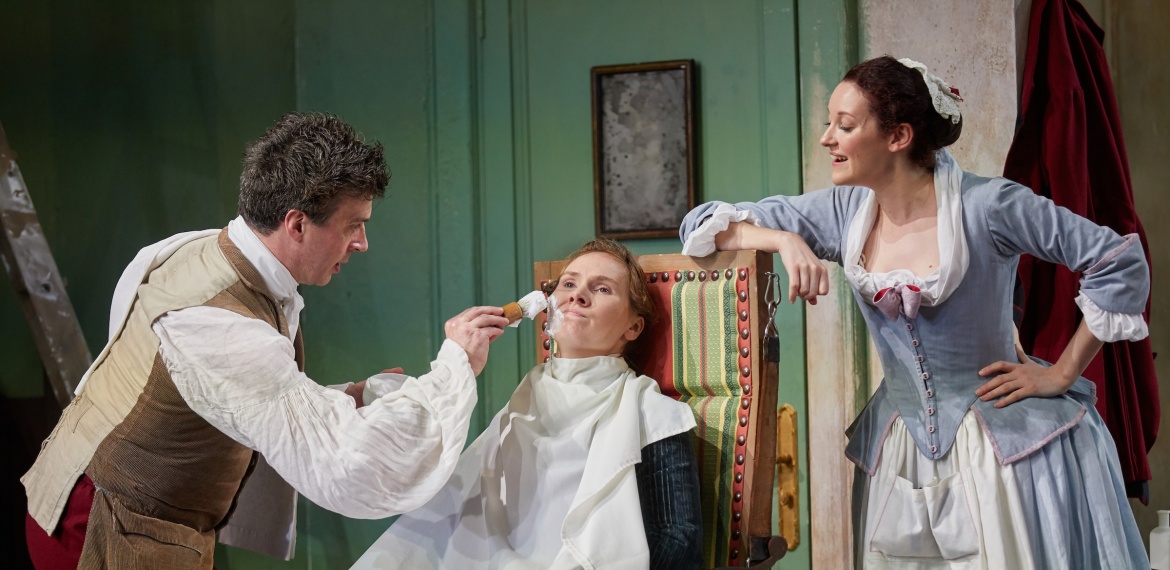
When John Cox’ production of Figaro was first seen at the old Garsington House I reported then that it was the finest I had ever seen and this revival entirely endorses my original opinion. Every move, every entry is entirely justified and logical. Every passed note, every aside, is true to the narrative and in character. When this is wedded to Douglas Boyd’s enthusiastic and limpid conducting, and a sense of flow which carries all before it, it cannot fail.

Thankfully the singers are more than up to the challenge of the production. Joshua Bloom is a rough-diamond Figaro, vocally assertive, and it is easy to see him moving smoothly into a position as a leader of the revolutionary movements which underpin the story. His aprite un po quegli occhi is positively vicious and it is only the strength of Jennifer France’s Susanna that can match him to take on the nobility.

Duncan Rock is a dangerously smooth Count, the voice forthright and powerful, and the personality untrustworthy. He may be forgiven twice but we doubt it will be the end of his libertine ways. Kirsten MacKinnon is a young countess with hints of the younger self we know from the Barber of Seville. This works well and allows that she is naïve, even if she is learning all too quickly how to cope with Almaviva.

Janis Kelly is a superb Marcellina, alive to the nuances of the role and a fine foil to Stephen Richardson’s relaxed Bartolo. The third act recognition/reconciliation scene was magnificent and we see the forces of the bourgeoisie coming together against the wiles of the aristocracy.

There were no weaknesses across the rest of the cast and Marta Fontanals-Simmons proved to be the most convincing Cherubino I can recall.

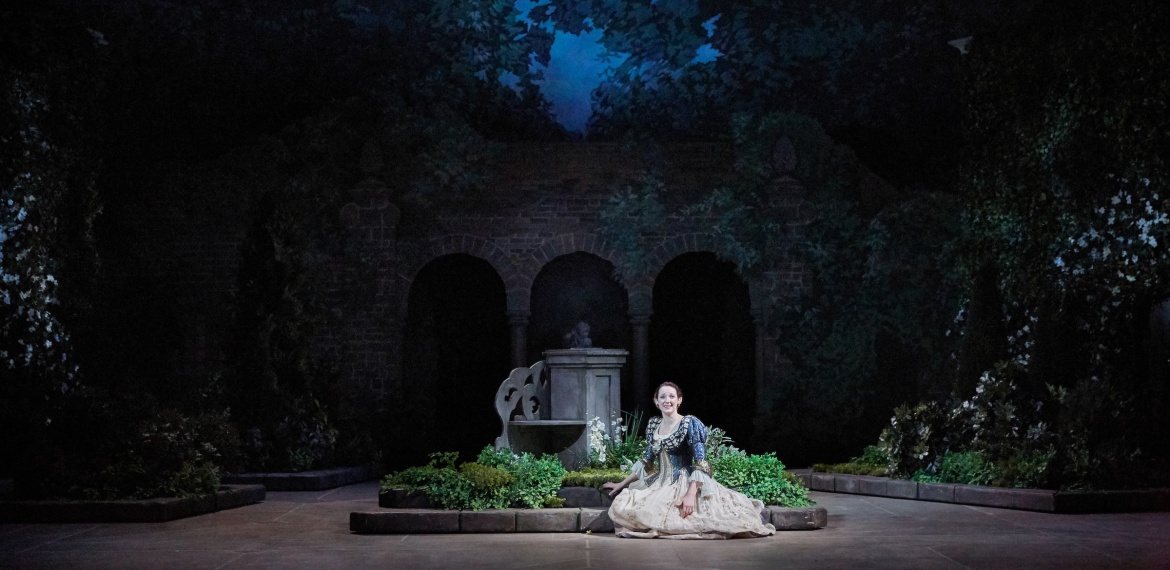
The settings by Robert Perdziola transfer well to the new venue and there is a lovely conceit for the final act. In the old house this had used the terrace itself, with an entrance from the house stage right and the steps down into the garden on the left. This was reconstructed for Wormsley, with the familiar triple arches at the back and the garden pillars to one side. A lovely tough which worked well both sides of the foot-lights.

The chorus was as enthusiastic as it always is at Garsington, and the orchestra – particularly the fine continuo section – was at its best, despite one of the wettest evenings this summer.

Given the downpour when I visited for Pelleas and now again for Figaro there are concerns that I bring the rain with me! Hopefully the community opera at the end of the season will prove them wrong.


Hastings Philharmonic

Monteverdi and Duruflé concert at St Clement’s Old Town, Hastings
The historic St Clements Church in the old town will be the venue for a beautiful concert of church choral music produced by Hastings Philharmonic aiming to attract lovers of plainchant harking back to the medieval origins of church music. It starts early at 5pm on Saturday 15th July.

The great crowd puller is likely to be the three Monteverdi pieces, Cantate Domino, Domine ne in furore tuo and Adoramus te, performed by the Hastings Philharmonic Chamber Choir, but the concert includes a rare opportunity to hear some beautiful 20th century music based on chant and quasi-Renaissance counterpoint. It will be an even rarer opportunity to hear a religious piece by José Maurício Nunes Garcia (1767–1830), a Brazilian classical composer, one of the greatest exponents of Classicism in the Americas whose style was strongly influenced by Viennese composers of the period, such as Mozart and Haydn.

The main work to be performed by the main Hastings Philharmonic Choir will be Maurice Duruflé’s Requiem Opus 9, which was first performed in 1947. Themes in the work come mainly from chant; there is a calmness that reflects the flowing, easy quality of its Gregorian chant origins. This is mixed with the serenity of quasi-Renaissance counterpoint, and rich harmonies influenced by Debussy and Ravel. Chant formed a large part of Duruflé’s musical upbringing as a boy chorister (1912-1918) at the cathedral in Rouen, where the services were almost entirely chanted, and his professional education was at the Paris Conservatoire, where harmonizing chant melodies was a large part of his training as an organist. Duruflé’s clear Gregorian themes are also found in his ‘Four Motets’. His music is sometimes compared with that of Vaughan Williams, who briefly studied in France but the latter’s modal melodies, counterpoint and archaic-sounding techniques were inspired by English folk music and the composers of the Tudor era, whereas Duruflé’s modal counterpoint is supported by rich, and very French, added-note harmonies. Duruflé’s wife has said that, while composing his Requiem dedicated to the memory of his father, he “cried several times” appropriately for one of the most moving religious works of the twentieth century.

Last but not least, twentieth century German composer, Franz Biebl, produced many works for children, men’s, and mixed choruses but his best known composition is his ‘Ave Maria’ which is performed here too. It might have languished in obscurity but for the ‘Glee Club’, a Cornell University choir who popularised it in America as a result of its beautiful multiple harmonisation. It’s now very popular with choirs and often performed in Germany and America. Biebl took two Marian texts – the Angelus and the Ave Maria and joined them together producing a hybrid text for his work.

The concert will feature as soloists, soprano Lin Westcott, baritone Marcio da Silva and will be accompanied by Richard Leach on organ.

Church music, Monteverdi, Duruflé and others, Saturday 15th July, early start 5pm, at St Clements Church, Swan Terrace/High St, Hastings TN34 3ES – Tickets: £15/£12.50 under 16 £5

ENO: The Dream of Gerontius

Royal Festival Hall, 1 July 2017

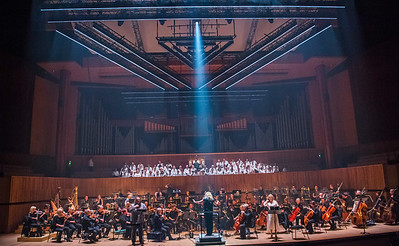
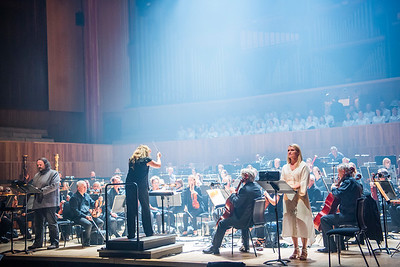
In recent years we have encountered many stagings of oratorio – the Bach Passions, Handel’s Messiah, Verdi’s Requiem – but this was the first time I can recall a presentation of Elgar’s The Dream of Gerontius. I say presentation advisedly as this was not a staged event so much as an ambient creation to heighten our involvement and understanding. In this it was remarkably successful. Rather than trying to create an alternative narrative or simply aping the text, Lucy Carter gave us a (literally) moving light scape which reflected the moods and places of the text without ever becoming too literal.

The photo describes the setting far more easily than I can, with the lines of strips of pin-point lights positioned high above us in sets of triangles. If this was a Trinitarian reflection it was very successful!

Together with a slight haze of smoke theses created an every shifting environment which moved us effortlessly from the solid realities of the earth to the heavenly realm without ever forcing the mind to accept the unacceptable.  If the changes sometime seemed too fast, look, next time you are in a cathedral, at the speed with which the light coming through the top windows changes the internal ambience of the building – it is remarkably rapid!

It reminded me of the directions Wagner gives for the transitions in Parsifal, where one scene simply becomes another without any apparent change taking place. I’d love to see Lucy Carter working on Wagner!

ENO understandably brought us operatic voices which were entirely appropriate for Simone Young’s approach to the score. Gwyn Hughes Jones is a muscular, and very obviously Welsh, Gerontius, who gave us many insightful moments. With a strong will I sever was just that, and there was a real heroism about In thine own agony.  Most telling was the radiant joy of Take me away – no pain here but exultation in salvation realised. A wonderful moment.

Patricia Bardon gave us a genuinely contralto Angel with the rich fullness Elgar certainly intended and a warmth for the Angel’s farewell which has become ever rarer today. Matthew Rose was in exemplary voice as the Priest and Angel of the Agony. After his King Marke it would be good to hear him in Parsifal soon.

The combined choruses of ENO and the BBC singers made a strong impact if limited in numbers. Elgar is writing for much larger choral forces and there were times when one could have wished for a larger body of sound, particularly in Praise to the Holiest. However the clarity of the text for most of the evening impressed.

The orchestra was dramatically alive throughout and Simon Young brought an emotional intensity to her reading of the score which some traditional forces lack or turn into sentimentality.

ENO is evolving in its approach to its repertoire. This was a most promising development which we hope will continue.


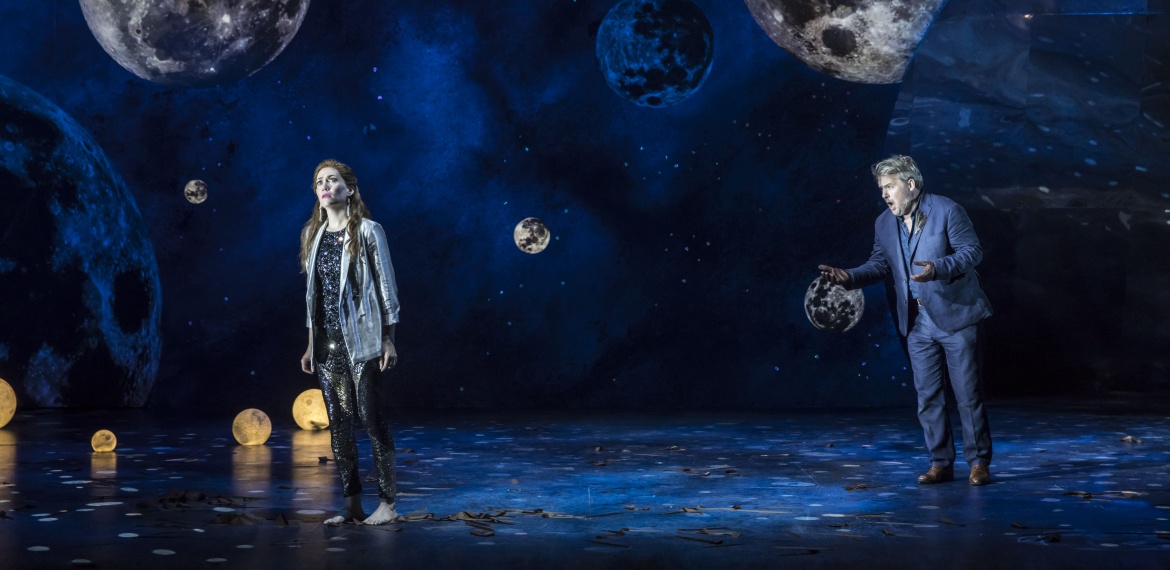
Garsington Opera: Pelleas et Melisande

Garsington Opera, Wormsley, 27 June 2017

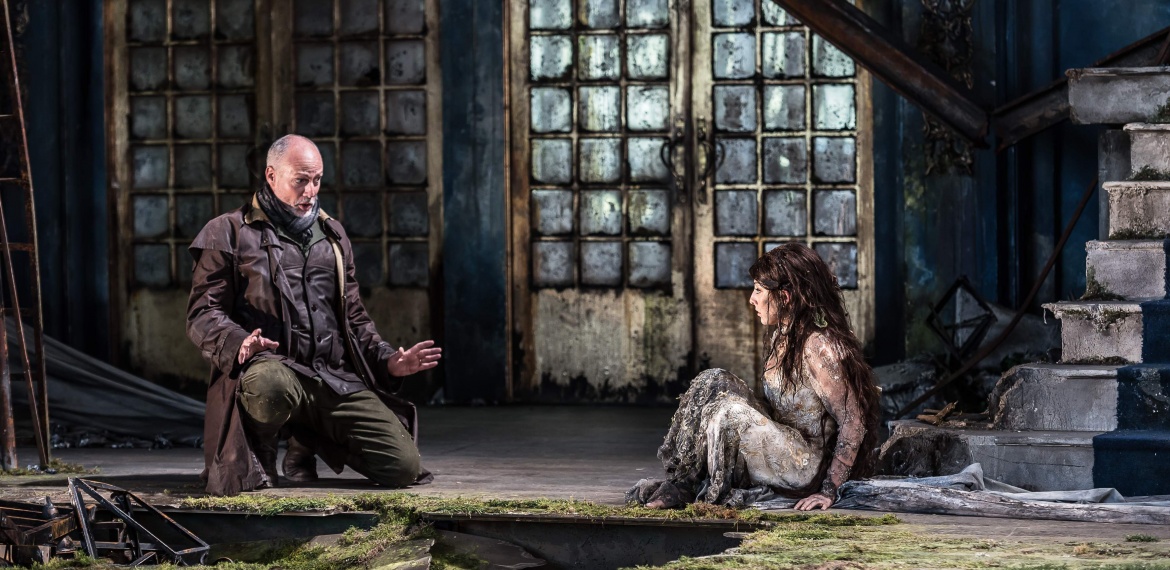
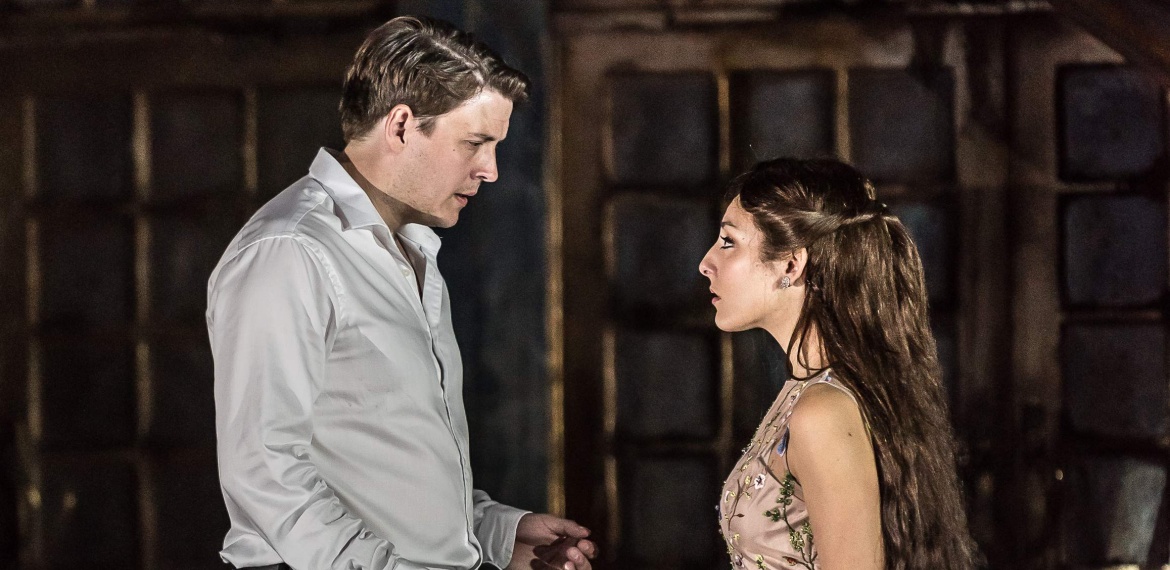
A very wet evening seemed quite appropriate for Debussy’s only opera, the downpour reflecting the decaying splendour of the palace within which the action unfolds in Michael Boyd’s lucid presentation. More than anything else it was the clarity of the text which impressed and the refusal to try to explain what Maeterlinck wished to remain mysterious. We were constantly challenged to try to understand relationships which were elusive and shifting before our eyes.

In this Paul Gay’s Golaud was masterly. His gruff exterior seemed to hide an emotional core which never quite makes sense of his situation, to the point where even the death of Pelleas and Melisande lay outside of his understanding.

Andrea Carroll’s Melisande is probably the most enigmatic I can recall, the voice radiant yet the character always distant and reserved. Even at the end we have very little understanding of who or what she is. If Jonathan McGovern’s heroically sung Pelleas is more straightforward, his emotional understanding is complex and his relationship to Melisande always tentative, even in their final scene.

Brian Bannatyne-Scott brings dignity to Arkel and William Davies’ Yniold is given much more to do than normal. His finding of the crown in the second act is convincing if sinister, and his dragging off of Melisande’s soaking dress, impressive.

In the pit, the Philharmonia Orchestra more than justify their new relationship with the company. The sound is glorious and the interludes in particular had a lucidity and body to them which radiated throughout the house. Jac van Steen’s approach to the score was equally fluid, with attention to detail and phrasing always impressive.

Pelleas is not an easy work, either to stage or for the audience. It does not seem an obvious summer festival choice, yet it was more than vindicated here. Let us hope that this new approach from Garsington is the start of a long and fruitful collaboration.

ENO re-enters Arts Council England’s National Portfolio

Today (Tuesday 27 June) Arts Council England (ACE) has confirmed that English National Opera (ENO) has re-entered ACE’s National Portfolio at its current funding level of £12.38million.

Dr Harry Brunjes, Chairman of ENO, commented

‘ENO is very pleased to share that we have been readmitted to Arts Council England’s National Portfolio. This decision reflects the hard work and sacrifice made by every single person across the organisation, including the senior team, led by Cressida Pollock. Their commitment has allowed us to build a sustainable business model, and one that I am confident will allow ENO to grow and prosper. A thriving, busy, competitive opera scene in the UK is vital if opera is going to continue to develop and flourish.

‘We are pleased that Arts Council England have recognised that ENO delivers public value not only through the productions that it puts on stage, but also through its education work, talent development, and artistic partnerships with other organisations and venues.

‘With a full artistic and executive team in place and many years of fantastic opera ahead of us, I am very confident and excited about the future.’

Cressida Pollock, ENO’s Chief Executive, said:

‘We are delighted to have been readmitted into ACE’s National Portfolio. This follows the huge amount of work that has gone into stabilising ENO and developing a sustainable platform from which we are able to grow. Only three years ago we were facing a very real risk of closure and it is hugely significant to see the work of the whole company celebrated through this show of confidence from ACE.

‘We employ over 350 people on stage and offstage, including our award-winning Chorus, Orchestra and technical teams. We appreciate the huge importance of our teams working and performing together regularly, with the security offered by a permanent position and this will ensure that we will remain the world leader in the development of British operatic talent.

‘We will invest more resource into ENO Baylis, our learning and participation programme, which enables people of all ages and backgrounds to engage with opera. We will keep our ticket prices affordable, with more than 500 tickets available for every single ENO performance for £20 or less alongside free tickets to dress rehearsals for young people and community groups.

‘By the 19/20 season we will have grown the number of London Coliseum operas we perform by 25% from the 2016/17 level – from 8 to 10. This is just one part of our wider mission, which is to deliver more opera of the very highest quality to as wide an audience as possible.’

Daniel Kramer, ENO‘s Artistic Director, said:

‘This wonderful news is a tribute to the hard work of our Company over the past two years. It is thanks to the dedication and commitment of every single one of my colleagues that we have been able to secure our future. We will now be able to develop more diverse and inclusive work, to support more British talent, to continue to work with the world’s most exciting artists, and to expand the definition and reach of opera to audiences across our nation.’

Barefoot Opera: Ecco Monteverdi

St John, Pevensey Road, Hastings, 17 June 2017

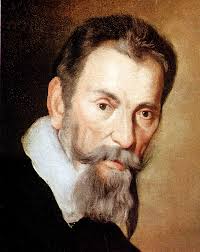
A charming conceit to recreate the music that may have been heard at Monteverdi’s baptism four hundred and fifty years ago. This formed the first half of Barefoot Opera’s concert at St John’s last weekend, with Cantemus, under the direction of Christopher Arnold, singing liturgical settings by Josquin des Prez and Marc’Antonio Ingegneri.  Of these, Ingegneri’s mass setting was particularly impressive with its gently enfolding lines and reflective harmonies. Between these a cappella items Nigel Howard played three pieces by Andrea Gabrieli, with a bright Canzona Ariosa at the heart of the performance.

After the interval the soloists of Barefoot Opera, under the direction of Jenny Miller, brought us a narrative worked around six of Monteverdi’s Madrigals. The texts nearly all refer to the anguish of the lover, often coming close to death because of the pangs of love, but by the end the song of the Nightingale leaves us all on a happier note. The use of movement was very telling and often voices came across with more precision because of their place within the nave. This was especially true of the final moments when they were singing from the centre of the nave, with the voices gently ringing all around us. It was a bold undertaking which certainly paid off.

The evening closed with the two groups coming together to sing Monteverdi’s Adoramus Te, and leaving us wanting more.

Garsington Opera: Semele

Garsington Opera at Wormsley, 15 June 2017


Charles Jennens dismissed Semele as a Bawdatorio and, despite the ravishing beauty of so much of the score, it has never quite entered the repertoire in the same way as Caesar or Ariondante. A surprise really when it so easily lends itself to a wide range of visual interpretations while the characters have an emotional depth which is equal to any of Handel’s other operas – but then of course the argument rises as to whether this is opera or oratorio. Opera may be allowed to be morally dubious, but oratorio is expected to be far more straight-laced. The key seems to lie with the organ. Oratorios are led from the organ; operas from the harpsichord. Semele has both and they were used with admirable tact under Jonathan Cohen’s light touch from the pit. This was Handel at his most entertaining. The relationships may be serious but Annilese Miskimmon’s production treads a fine line between fantasy and reality. The opening wedding scene could be any country house celebration, until the gods literally intervene and Semele is whisked off to a heavenly palace.

There are many telling details. Juno’s trail of small girls is a constant delight and never overused. The tiny golden Bacchus at the any is charming, all the more so as the children were clearly related to the adult cast. The chorus are a great strength throughout and their movement was tellingly choreographed by Sarah Fahie.

There were no weak points in the casting and Heidi Stober radiated as Semele, her rendition of Endless pleasure and Myself I shall adore becoming genuine showstoppers. Robert Murray gave us an old rue as Jupiter, pulling out all the stops for Where’er you walk and handling the many pyrotechnics with aplomb. Jurgita Adamonyte’s Ino was able to turn the humour on herself without any sense of humiliation, and David Soar’s Somnus had the gravely bass the part requires while hinting at the sort of lustful reserves Jennens found so objectionable.

Of all Handel’s stage works – and this surely demands to be staged – this can seem the most contemporary and certainly Garsington have highlighted its very many strengths.