‘Aqua’ – Arta Arnicane

‘Aqua’ – Arta Arnicane
(Solo Musica label on Sony Music)
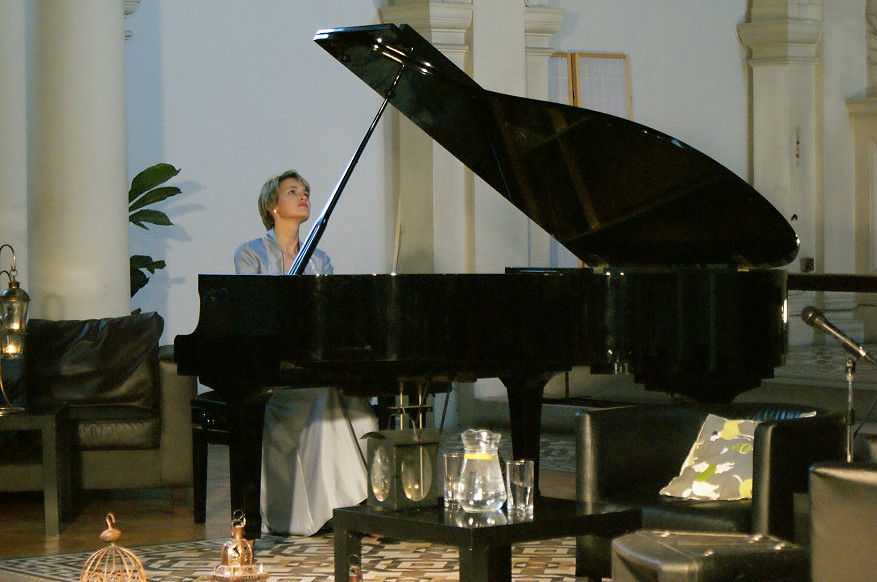
The planet looks likely to need artistes like Arta Arnicane. The Latvian pianist’s ingenuity and imagination combined again to create an enriching and rewarding songlike programme by her piano-cello DUO Arnicans at their International Interview Concert at Worthing in November 2017. But few places in Britain have yet tasted her appealHer new CD album ‘Aqua’ is a beautiful piece of work. Do not be surprised at its class. The disc, the music, the booklet, the personally-written narrating booklet accompaniment, the guest photography, the packaging, indicate that Arnicane promises a future flow of contributions to the wellbeing of her listeners.

‘Aqua’ amounts to a sort of soul hydrotherapy. We know of the physical and spiritually therapeutic effects of water, and here she presents a 16-item sequence of solo piano music designed to seep inside ourselves. Our majority-water composition as human beings subliminally determines our  affinity and receptiveness to that – and if science has yet to research this process, Arta Arnicane here issues their prompt.

Scientists now confirm the imminent increased water domination of our existence: the oceans are on their way upwards to meet us. Indeed, prescient on this album is Waterfall of P?rse, which portrays an actual waterfall lost to the rising level of the river Daugava. It is one of seven pieces by Latvian composers, some actually acquaintances of Arnicane, and who on ‘Aqua’ are rubbing shoulders with music’s already established master water painters.

Latvia gave us Mikhail Baryshnikov, Mischa Maisky, Mariss Kansons, Andris Nelsons, Gidon Kremer. Like all these, who were born in the winter by the Baltic Sea, at the mouth of the Daugava, Arnicane hails from Riga. I have named only male compatriots. But Mirga Gražintye-Tyla from neighbouring Lithuania has lately broken through the glass door of recognition and now chief-conducts Birmingham’s famous orchestra.

No Latvian woman has hit full international musical consciousness outside opera. But Arnicane could emerge from that shade with her own angle on great music. In ‘Aqua’, she creates both an alluring and invigorating ambience, and a refreshing and rejuvenating listening experience. Relaxation comes in the knowledge that, heard end-to-end, ‘Aqua’ has taken the hearer to a new plane of perception and understanding – even repose.

I firmly recommend that your first listening is done without knowing all the titles, or the running order, nor having read the inside booklet. Failing that, not having them in front of you.

This greatly empowers the undulation of the programme’s trajectory and energy, and increases the listener’s feeling of discovery, for discoveries lie in wait. Approach ‘Aqua’ like a 1970s concept album heard in the dark.

Arnicane, to use circus billing, is already a virtuoso. But in’Aqua’ her prize gift to the hearer is not from the necessary servant dexterity and strength but the priority of the scenic depiction and the poetry. She wants you to shut your eyes and visualise, not to seek bedazzlement. And her instinct and innate sensitivity of planning leaves you with the final feeling of ‘and so to bed’. Magic is abroad and know also that this is a record you could give unhesitatingly to a child.

From our wealth of sea, lake, river, stream, brook and rain music, Arnicane draws on Berio, Debussy, Ravel, Liszt, Schubert, Chopin, Grieg  (people you’ve heard of) and Jazeps Vitols, Arvids Žilinskis, Janis Keptis, Pauls Damis and Romualds Jermaks – the important newcomers who make this record the treasured one it will become. Providing that you, I trust – like everyone else – are made of water.

Richard Amey

Details and special video: https://www.artaarnicane.com/aquacd

DUO Arnicans’ self-titled CD of Chopin and Dohnanyi Sonatas, plus two other unexpected Chopin items is out on the same label.
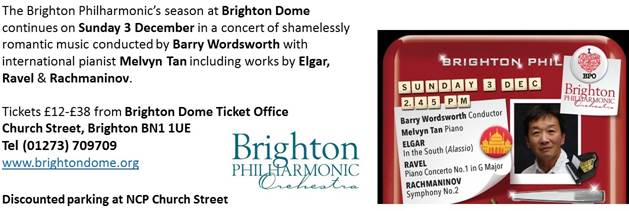
Brighton Philharmonic Orchestra concert at Brighton Dome: Sunday 3 December, 2.45pm

The third concert of the Brighton Phil’s current season at Brighton Dome on Sunday 3 December takes us from the sun-drenched Italian Riviera to the jazz clubs of pre-war America courtesy of three great Romantic composers: Elgar, Ravel & Rachmaninov, in the company of Conductor Laureate Barry Wordsworth and the illustrious pianist Melvyn Tan.

Elgar’s concert overture In the South is a fabulous evocation of a family holiday in Alassio that perfectly captures the delights of an Italian town and the grandeur of the Italian coast.

Sumptuous and punchy, Ravel’s Piano Concerto in G Major is infused with the jazz-age glamour that he experienced on a concert tour of America and in the clubs of Paris – a heady juxtaposition of jazz syncopation and neo-classical elegance.

Barry Wordsworth, Conductor Laureate, Brighton Philharmonic Orchestra, says “The Ravel is one of my favourite piano concertos as it shows the genius of this great composer to perfection, and with a soloist we will be so proud to have with us again in Brighton. Three masterworks of the most contrasting mood and character will make up a wonderful afternoon of symphonic music.”

Epic in scale yet intimate in mood, Rachmaninov’s Second Symphony is surely one of the best loved in the repertoire. Its hauntingly beautiful central theme is one of the most exquisite by a composer noted for his luscious melodies, and ends this concert on a torrent of romantic ecstasy.

Tickets (from £12-£38) are available from Brighton Dome Ticket Office in Church Street, Brighton, (01273) 709709 and online: www.brightondome.org – 50% discount for students and Under 18s.

Discounted parking is available for BPO concert-goers at NCP Church Street – just £6 between 1-6pm.

ENO: Marnie

London Coliseum , 18 November 2017

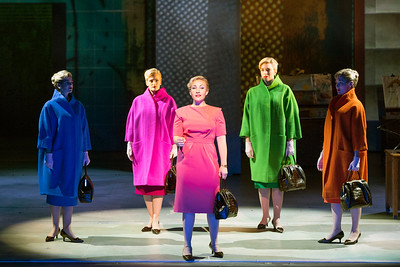
The world premiere of Nico Muhly’s Marnie should have been a great success. Everything was in its favour. The casting was strong, the composer is one of the foremost of his generation and greatly admired, the designs and costumes were strikingly impressive – in fact everything, on a superficial level, seemed fine. The real problem was with the adaptation of Winston Graham’s novel and the persona of the heroine herself.

The programme notes implied that Marnie has an enigmatic quality; that she is a sister to Melisande or Lulu. However, both of these – and many more – are strongly characterised to the point where we are swept away by their impact, even if at the end of the evening we know no more of them than we did at the outset. Marnie remains an enigma, but one who rouses little interest or sympathy. No matter how much new information about her comes to us as the evening unfolds, we are never drawn to empathise with her, even in the attempted rape scene at the end of the first half. She remains an outsider but one whom we can all too easily ignore.

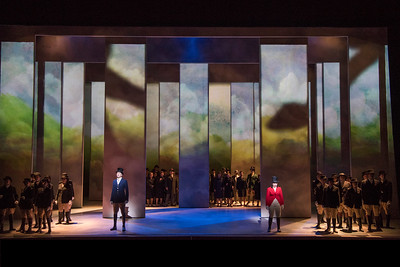
The large cast create a highly credible world within which the narrative unfolds. The chorus are particularly important here and the sense of London in the late 1950s is extremely impressive. Arianne Phillips’ costumes are spot on – the four shadow Marnies gloriously apt – and the shifting visual world moves effortlessly between venues and between the real and illusory. All of this is excellently done. Michael Mayer’s direction within this is naturalistic for most of the intimate scenes but allows the choreography to open out the points of reflection. Here Marnie’s moments of self-reflection should be keys to the work as a whole but they hardly ever move beyond the banal.

Sasha Cooke looks splendid as Marnie and sings with finesse, though there are occasions when the text gets lost. The three older women – Kathleen Wilson as Marnie’s mother, Diana Montague as Lucy and Lesley Garrett as Mrs Rutland – were classic exemplars of singing actors who convey the whole text with ease as well as producing fine vocal sound and incisive characterisation.

Daniel Okulitch looked suave enough as Mark but occasionally lacked impact – a fault which may ease as the run progresses. The operatic version makes more of Terry than either of the sources and was sympathetically louche in James Laing’s hands.

Martyn Brabbins brought a great deal of detail to light from his large orchestra and his handling of the narrative was always well focused.

The first night was ecstatically received and the production moves to the Met next year where it is sure to be equally popular. As the excellent choral passages and much of the orchestration suggested, Nico Muhly is a natural opera composer. Hopefully he will soon find a subject which grasps the attention of the audience as well as his fine abstract qualities as a composer.

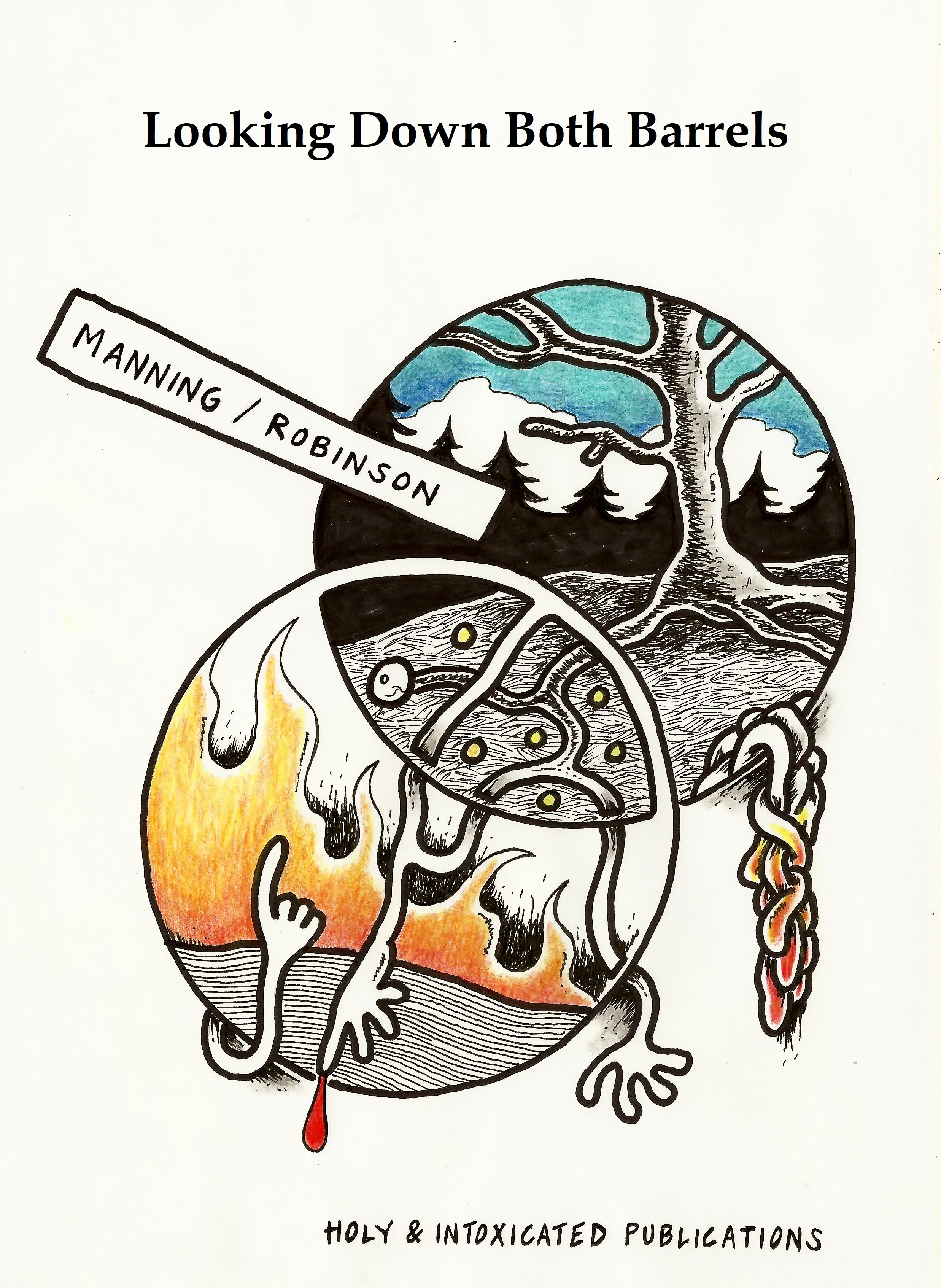
LOOKING DOWN BOTH BARRELS with Adrian Manning & John D Robinson


© Adrian Manning 2017
© John D Robinson 2017
© Janne Karlsson  Cover Art 2017
ISBN: 978-0-9932068-6-3
Published by John D Robinson: Holy&intoxicated Publications: UK;

There are times when this new collection of poems from Adrian Manning and John D Robinson makes for difficult reading, for it is honest – and confrontational in its honesty. Many of the poems reflect loss and the contemplation of failure, but equally the overriding necessity to wrestle with the depths we find ourselves in and to rise above them.

As such it is ultimately optimistic in the face of potential despair. AND FAHRENHEIT 451 EVENS THE SCORE and THE BLANK PAGE (pasted below) sum up the approach to the eternal problem of being driven to write yet always facing the reality of trying always to write something worth saying.

The two writers complement each other and as such the collection makes for a highly satisfying whole.

Poet Rob Plath in an end note says Each poem is truth drilled into the page. Highly recommended.  A sentiment I would entirely endorse.

BH


AND FAHRENHEIT 451 EVENS THE SCORE

if you’re gonna
write a poem
write words
that will burn
words that will
burn
the paper they are
written on
the eyeballs
that read them
and leave
nothing
but the message
scorched
into the
earth
and the
memory


THE BLANK PAGE

the blank page lies
ahead
a sea of possibility
sometimes a friend
sometimes the enemy
who knows what will surface
pale headed horses
grinning wide
mouthed happiness
or dark ghosts
treading the waters
of fear
limited days
and time
will
tell

AFTER RAY BREMSER

I choose not to socialise, I
have always felt awkward
and increasingly
uncomfortable in such
situations: I stay away
from the bars and
parties and refuse
every invitation: I lead a
quiet life now and I
think of the words of the
armed robber and poet,
Ray Bremser
when asked if he had
any grandchildren:
‘I don’t know, I don’t
want to know, don’t
want no more pain’
fucking right, keep the
people at a distance
because for sure, only
hurt can come of it.


Brighton Philharmonic Orchestra – Remembrance Day

The Dome, Brighton, 12 November 2017

Loosely, but not aggressively, themed for Remembrance Day this concert gave us the works of one composer whose pacificism drove him across the Atlantic, one who served as a medical orderly in World War 1 and one who was killed on the Somme.

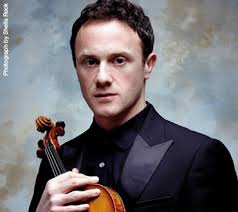
Britten’s D Minor Violin Concerto was completed during the composer’s voluntary exile and premiered at Carnegie Hall in 1940. Matthew Trussler, modestly looking like a half dressed, rapidly growing schoolboy in a tight white shirt, played it with verve, maturity and impressive control. It was easy, in this performance, to hear menace and the horror of war in some of the abrupt harmonies and desperate sadness in the lyrical passages. The War Requiem might lie twenty two years into the future but the anger and distress at the futility of it all is clearly there already. Barry Wordsworth ensured this came out strongly although he also, wisely, allowed Trussler his head. The playing in the long cadenza was edge-of-the-seat stuff with exquisitely accurate trills on harmonics and the unusual technique of left hand pizzicato with simultaneous legato bowing. Even the rising and descending scales, of which there are lots for both soloist and orchestra, were made to sound musically compelling here.

The other long work in the programme was Vaughan Williams’s strident, angry fourth symphony which dates from 1935. Wordsworth leant on all the big RVM themes and played up the syncopated passages in the last movement to enjoyable effect. The central scherzo was evocative and carefully managed. For this final work in the programme the orchestra was fully warmed up.

Also appropriate in its wistful way was George Butterworth’s A Shropshire Lad: Rhapsody which opened the second half. Plenty of yearning, lyrical beauty came through some fine playing.

This concert opened with Stokowski’s arrangement of Bach’s Toccata and Fugues (more D minor) which was an odd choice. Yes, it makes a splendid opening – all drama and semiquavers – but it’s hard to listen to it, I’m afraid, without thinking of Fantasia and  irreverently expecting Mickey Mouse to appear. Moreover some of the entries were a bit ragged in the first few moments although by the time we got to the fugue, inspiringly started by the violas, it was all sailing along grandiloquently. If, however, we were meant – in part – to be focusing on Remembrance Day then this work seemed inappropriate.

Two further small observations about this concert, one positive, one less so. First, it’s grand to see and hear a selection of works which make such good use of the tuba and it’s fun to see the enormous mute going in and out of the bell. Well done,   Principal Tuba. Second, I wish they’d sort out that percussive whistle which whispers in the Dome when it’s quiet. You could hear it all too clearly during the Britten. I don’t know whether it’s the heating, air conditioning or something else but it’s always there and needs dealing with.

Susan Elkin


Barefoot Opera: L’incoronazione di Poppea

St Mary in the Castle, 11 November 2017

Monteverdi’s L’incoronazione di Poppea seems uncomfortably relevant with its abuse of power and sex, moral corruption, disdain for the law and sudden death. In the key scene between Seneca and Nero, the Emperor makes it quite clear that the law is only for little people. Those who have power can do what they like – and they do.

That Monteverdi envelops his narrative in such wonderful music is all the more disturbing. At the end, evil is seen to triumph as the radiant final duet is given to the two most corrupt individuals, with no sense that they will ever suffer for their iniquities as would become the norm in later opera.

Jenny Miller’s production universalises the action and Vicky Turner’s costumes create a seemingly egalitarian, if corrupt, society where Poppea is literally the one scarlet woman. The production utilises the space at St Mary’s with subtlety and the voices never lose out regardless of where the singers are placed.

The large cast is drawn from strength with much exceptionally pleasing singing. Sarah Parkin’s Poppea is an easy foil for Lucilla Graham’s slippery Nerone, their voices aptly complementary and radiant in the final pages. Michal Aloni as Ottavia brings a sense of moral worth even as she is emotionally challenged by all around her. Her final scene is genuinely moving, but we know she is lucky to escape alive.  Of the two male leads, Tobias Odenwald lends vocal gravitas to Seneca and his height gives him added authority. By contrast Matthew Paine’s shifty Ottone highlights the ease with which moral laxity can set in. Whether Hannah Jones’ supportive Drusilla will ever be able to make anything of him is left to our imagination.

Of the many smaller parts the two soldiers, Vincent Martinez and Brian McAlea, are particularly impressive vocally and one wished they had more to do. Sarah Dunbar made much of three smaller parts, her acting ability matching a well-focused voice. Natasha Elliot surprised with her gentle comedy and clear articulation as the nurse Arnalta, a part normally taken by an aging tenor!

Lesley Anne Sammons and Nicholas Bosworth accompanied from keyboards which allowed us a range of instruments, with the harp/lute being particularly effective. They were joined by Lucy Mulgan on double bass and Evelyn Nallen on recorders to create a positive small ensemble and one which worked well within the warm acoustic.

There was a large and enthusiastic audience – a pleasure to report given the increasing number of high quality performances we are now experiencing in Hastings.

AUDIENCES CAN SIMULATE BEING PART OF  SIEGFRIED SASSOON INSPIRED OPERA

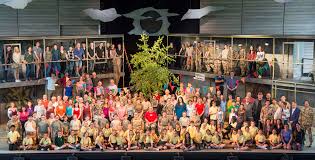
Audiences will have the chance to feel part of a new opera inspired by Siegfried Sassoon’s poems with an innovative 360-degree simulated experience of Garsington Opera’s Silver Birch on BBC Arts Digital from midday, Wednesday 08 November.

Part of the BBC Opera Season, this ground-breaking experience from BBC Arts Digital and Garsington Opera entitled Person 181, utilises 360-degree video capture and cutting edge ambisonic audio recording to simulate being part of the community opera. The technology will give audiences the experience of being on stage standing among the cast of 180 performers during a performance of Silver Birch, as well as unique behind the scenes access in the build up to the actual performance.

Silver Birch is an exciting new commission from leading UK composer Roxanna Panufnik, with a libretto by writer Jessica Duchen. Inspired by Siegfried Sassoon’s poems, and the testimony of a British soldier who recently served in Iraq, the piece illustrates the human tragedies of conflicts past and present. The opera chorus includes a variety of first time singers from various community groups including veterans and family members.

Silver Birch is a celebration of music, drama, poetry and dance and brings together professional singers with 180 members of the local community. Designed to appeal to everyone from age 8 upwards, Karen Gillingham, Creative Director of Garsington Opera’s Learning & Participation programme, directs and Douglas Boyd conducts. The production is also supported by Foley Artists from Pinewood Studios.

Person 181 will be available at www.bbc.co.uk/arts along with three short ‘making of’ films, and at BBC Taster http://bbc.in/2lZfc4S

Interview Concert: Duo Arnicans

St Paul’s Cafe Worthing, 2 November 2017

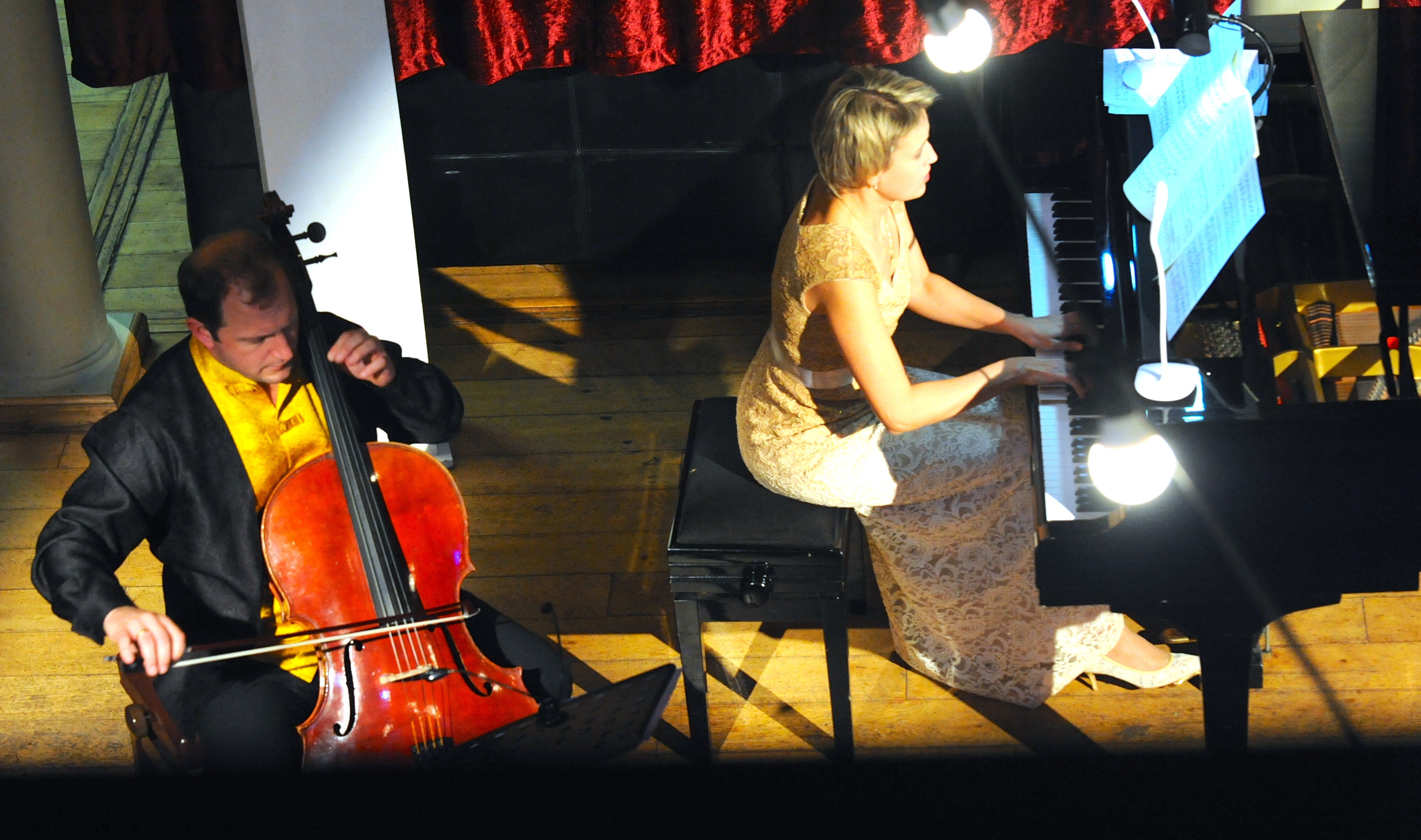
An unmistakeable magic was weaved into the sound waves and social atmosphere of the latest International Interview Concert at St Paul’s Cafe Worthing. DUO Arnicans’ new programme of seven singing cello pieces, played without a break, took the packed audience into a dream. And then their stirring Brahms Sonata No 2 for Cello and Piano turned from romance into passion the ambience of their connection with their avid listeners.

Cellist Florian Arnicans played from memory the first-half sequence of song and melody beyond words. Suddenly unaccompanied, he played cello legend Pablo Casals’ Song Of the Birds, riveting the full house in his own realisation of the unpublished score after listening himself to an original Casals recording. There were unexpected and revelatory instrumental effects. Then, out of the silence after its concluding sky-high trill, came pianist Arta Arnicane’s stealing steps of the following Habanera by Ravel , creating a halting expectation and sensuality that shot through the audience.

These top-notch young artistes from Zurich ? Florian a German, his spouse Arta a Latvian ? asserted categorically the level of artistry and performance in these innovative, interactive and inclusive concerts. This being the 11th in five years, the Interview Concerts in Worthing are already a precious biannual advancement of the classical music offering in West Sussex.

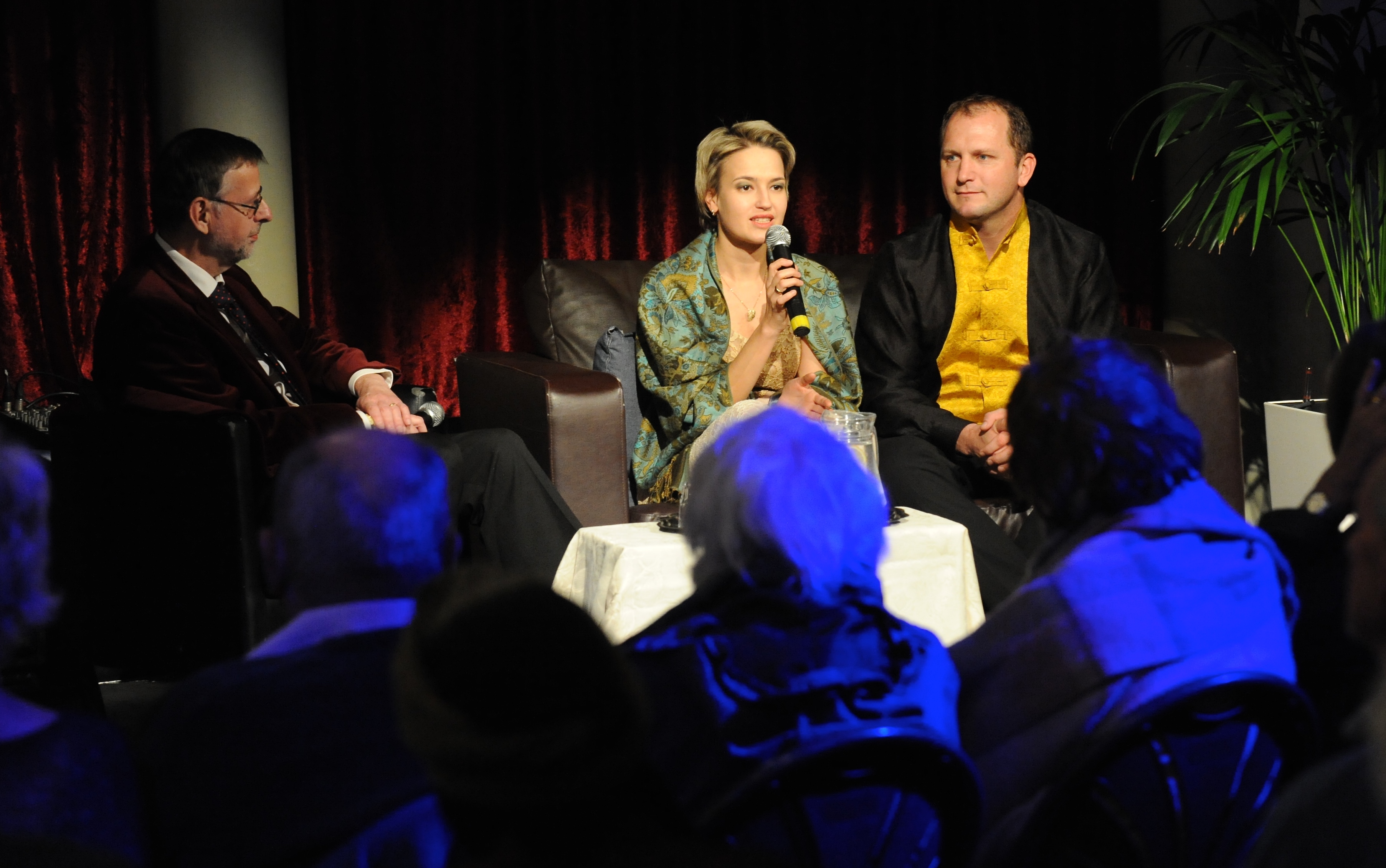
The musicians’ verbal communication skills in the interviewing lay another dimension on the audience experience. Arta and Florian brought humour, wisdom, insight and candidness in this additional connective and intimate showcase. Questions also came from the audience, who relished the fun when the organisers’ gifts to the artistes came to be opened, so capping entertainment in a compelling combination.

Music – ‘Programme Canción’: “The Cello Sings” – JS Bach, Arioso; Schubert, Ständchen; Mendelssohn, Lied ohne Worte Op.109 (Song without Words);  Dvorak, Melodie; Pablo Casals, Song of the Birds; Ravel, Pièce en forme de Habanera; Josef Suk, Serenade. After the interval: Brahms, Sonata for Cello and Piano No 2 in F Opus 99.

Richard Amey


Brighton Philharmonic Orchestra

In the Brighton Phil’s Remembrance Sunday concert at the Dome on 12 November music by some of Britain’s greatest 20th century composers sits alongside a vivid re-imagining of an 18th century masterpiece.

The orchestra is joined by the violinist Matthew Trusler who performs Benjamin Britten’s emotionally and technically demanding Violin Concerto, mysterious, martial and melodic by turns. Written in 1939 the concerto was heavily influenced by the escalation of hostilities in Europe.

The concert opens with Bach’s Toccata & Fugue (arranged by Leopold Stokowski) familiar to many from the opening scenes of Disney’s Fantasia (1940) when Mickey Mouse shakes hands with The Conductor, Stokowski himself.

Then we have George Butterworth’s evocative A Shropshire Lad which was written in 1913, based on poems by AE Housman. This sumptuous orchestral rhapsody conjures up the rural idyll of Edwardian England that was to change forever in the First World War, where Butterworth was to lose his life in the trenches.

The concert ends with Vaughan Williams’ powerful Symphony No.4 which was written in 1935 as the storm clouds of war gathered over Europe. This craggy and at times ferocious piece is shot through with the composer’s rage, humour and poetic nature.

Tickets (from £12-£38) are available from Brighton Dome Ticket Office in Church Street, Brighton, (01273) 709709 and online: www.brightondome.org 50% discount for students and Under 18s.

Discounted parking is available for BPO concert-goers at NCP Church Street – just £6 between 1-6pm.


Swansong

Milton Court Studio, 4 November 2017

Iain Burnside is a commensurate communicator. Witness his often quirky, but always fascinating, programmes on Radio 3 over the years and his 5 star piano playing especially when he’s accompanying and particularly in lieder. Lucky are the students who study with him at Guildhall School of Music and Drama where he is a professor.

Swansong is, at one level, a warm and vibrant recital of Schubert’s last fourteen songs which the Viennese publisher Tobias Haslinger hooked together and marketed – very profitably – as Schwanengesang after Schubert’s death. At another level it’s a piece of musical theatre. Six actors deliver short monologues between the songs so that suddenly we see them from many different angles like a cubist painting. At a third level it’s a real joy to see yet another work devised and directed by Burnside in which the Guildhall musicians work with their counterparts in drama to present something which is as integrated as it is enlightening.

The piece is scored for a singer, a pianist and six actors. In fact here we get two excellent pianists (Michael Pandya and Dylan Perez) and four singers alongside six actors playing characters who all have a view about the composer and/or his songs over nearly two centuries – Brahms, Ivor Gurney, Haslinger, Franz von Schober, a cleaner and a modern student.

Harriet Burns, soprano, brings lots of warmth and passion along with a knowing twinkle in both eye and voice to the opening song Liebesbotschaft. James Robinson’s tenor and both baritones, Andrew Hamilton and Henri Tikkanen pack plenty of drama and colour especially in Die Stadt. All four voices blend well in the final Die Taubenpost.

Each of the actors does a fine job too. Burnside has ignored conventions of period so that all the speech is very modern, along with the costumes. It reminds you – rather neatly – that nothing changes and yes, the laundry maid would have known all about Schubert’s sickness once she started finding mercury stains (“they mix it with lard and rub it on the sores”) on the sheets.  Jordan Angell’s Haslinger is a spivy type who tells the audience to “cut me some slack, will you? And Declan Baxter’s Gurney, complete with authentic Gloucestershire accent, locked in City of London Mental Hospital, is both appealing and pitiful. The trouble with this approach is that without a programme you might struggle to work out who is who but it’s a minor gripe

Overall this is a pleasingly original, high quality hour of music and drama – not quite a concert, not quite musical theatre and not quite an illustrated talk. Maybe Burnside has invented a new performance art form?

SE