Fantasia ! Spring 2018

45 Minutes of Music

The Meeting House at University of Sussex

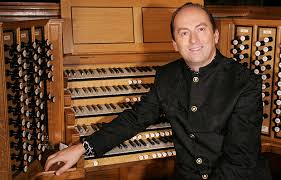
A series of informal concerts by D’Arcy Trinkwon

Last Wednesday – every month @ 12 noon

January 31 February 28 March 21* April 25 May 30

FREE ADMISSION  everyone welcome


January 31
Fantasia & Fugue in F KREBS
Fantasia in G minor PACHELBEL
‘Echo’ Fantasia SWEELINCK
Fantasia: Nun komm’ der Heiden Heiland BRUHNS
Sonata quasi una Fantasia, Op.129 PEETERS
Fantaisie et fugue BOËLY


February 28
Fantasia & Fugue in C minor, BWV537 BACH
Fantasia in G, BWV571 Trio Sonata in D TELEMANN
Deux fantaisies ALAIN
Fantasia & Fugue on BACH LISZT


March 21
please note this is the penultimate Wednesday of March – not the last
Fantasia & Fugue in G minor, BWV542 BACH
Fantasia in C, BWV570 Echo Fantasia SWEELINCK
Fantasia in F minor & Major, K594 MOZART
Troisième Fantaisie, Op.157 SAINT-SAËNS
Fantasia on Mozart’s Turkish March WEINER

CDs January 2018

Percy Grainger: Complete Music for Wind Band 1
Royal Norwegian Navy Band, Bjarte Engeset
NAXOS 8.573679

A most unusual collection with more promised to follow. Grainger’s arrangements are often idiosyncratic with hand bells and Hammond organs to the fore – but always used to fine effect. Alongside many of his own compositions come arrangements of other composers’ works. Most interesting is the orchestration of Franck’s Second Chorale – normally an organ piece but here given a far wider range of texture and tone. This is a fascinating dive into unfamiliar territory and I look forward to further volumes.

Debussy: Piano Music Vo.V
Michael Korstick
SWR 19044CD

While this new cd includes some familiar pieces – L’isle joyeuse, Masque- it is most noteworthy for the two sets of Etudes. Late works, Debussy deliberately leaves much to the performer with little indication of fingering or pedalling. Michael Korstick brings a clarity and often a severity to the pieces which seems very forward-looking and is immensely pleasing in impact.

The notes with this cd include information on the piano version of Jeux which is available for download.

From Baroque to Fado
Os Musicos do Tejo, Marcos Magalhaes
NAXOS 8.573875

This proved to be an unexpected pleasure as much for the high quality of performance throughout as well as the wide range of music included. Few of us will be aware of the range of Portuguese music and so the twenty tracks on the cd offer a valuable insight into the range of music which came out of the country over the last three hundred years. The Fado items are a delight, sitting comfortably alongside composed works by eighteenth century composers Palomino and da Silva Leite, and living composers Carlos Goncalves and Pedro Ayres Magalhaes. Most of the tracks may be short but the balance between them means that the programme flows without any uncomfortable jumps.

Beethoven, Hiller & Schubert
RESONUS RES 10203
Mozart Piano Trios
RESONUS RES 10168
Rautio Piano Trio

The Rautio Piano Trio have a growing reputation which is amply demonstrated by these two cds even if the cellist is not consistent. The Mozart cd uses original instruments and a fortepiano to create a warm ambience throughout though there is no lack of intensity of attack where needed, and real sense of enthusiasm for the scores.

The more recent cd includes the premiere recording of Ferdinand Hiller’s Piano Trio No 6 in C minor Op186, which unusually has five movements including a central notturno which links it to Beethoven’s Ghost Trio and Schubert’s Notturno D897. This is intelligent programming as it brings a fine, if unknown, work to our attention alongside familiar works which stand strong comparision with other recordings. We can look forward to further recordings from the Rautio Piano Trio given the large range of music available to them and the relatively small number of current recordings.

Elgar: Falstaff; orchestral songs
Roderick Williams, BBC Philharmonic Orchestra, Andrew Davis
CHANDOS CHSA 5188

It is the song recordings – with the ever reliable Roderick Williams – which make this a valuable new cd. While The King’s Way and the brief Kindly do not smoke may only be of passing interest, the Op59 & 60 cycles are far more important and could sit comfortably alongside the more familiar Sea Songs. Added to this are two movements from the incidental music to Grania and Diarmid and a complete performance of Falstaff. Andrew Davis draws the best from these scores, even where they are not necessarily first rank, and the whole makes for a fine programme.

MONTEVERDI AND REFLECTIONS; tears of a lover
Fieri Consort
Fieri Records www.fiericonsort.co.uk

This is a debut release produced by John Rutter on its own Fieri Records label. It includes recent settings by Ben Rowarth alongside those by Monteverdi and Luca Marenzio. The Fieri Consort use the complex harmonies of both the sixteenth and twenty-first centuries to challenge the ear as well as draw comparisons between the emotional impact of the two approaches despite the large disparity in time.

J G Janitsch; Rediscoveries from the Sara Levy Collection
Tempesta di Mare Philadelphia Baroque Orchestra, Gwyn Roberts
CHACONNE CHAN 0820

Johann Gottlieb Janitsch (1708-62) was little more than a name in the record of composers whose works had been lost until the remarkable reappearance in 2001 of the Sara Levy collection in Kiev in 1999, which was subsequently returned to Germany. Sara Levy was a fine musician in her own right and great-aunt to the Mendelssohns. The collection includes about 90 works by Janitsch, about thiry of which were previously unknown. All of this would be an excellent reason to welcome the new recording which proves to be a delight if conventional in both style and approach. The cd has four sonatas for chamber forces and an overture grosso written for two orchestras.

Copland: Orchestral works 3
BBC Philharmonic Orchestra, John Wilson
CHANDOS CHSA 5195

This recording brings together a range of works which illustrate Copland’s adaptability. An Outdoor Overture was written for the High School of Music and Art, New York, in 1938 as a result of a commission to work with students. The lack of concert halls with organs (to say nothing of the difficulties organists had dealing with the time lag between the conductor’s beat and the note sounding) meant that the First Symphony had to be rescored to leave out the organ itself – the latter version being recorded here. The Dance Symphony is a much darker work than the title may imply, being an arrangement of music intended for a Gothic ballet. The BBC Philharmonic under John Wilson give spirited interpretations of these less familiar scores.

JS Bach; Musikalisches Opfer
Bach Collegium Japan, Masaaki Suzuki
BIS 2151

This is an enjoyable new recording based around the various sections of the Musical Offering and a set of Canons taken from the ground bass of the Goldberg Variations. The Canons are all very brief and could seem like little more than academic exercises to test just how far Bach could go with this experimentation. Needless to say they are far more musically alive than this, and might benefit from being played by a single instrument or ensemble rather than the regular change of instrumentation.

 

Bath Camerata: Bach St John Passion

Bath Camerata to perform JS Bach’s ‘St John Passion’ with world-class Evangelist, James Gilchrist

On Saturday 3rd February 2018 Bath Camerata will be joined by leading soloists and instrumentalists to perform JS Bach’s dramatic masterpiece, the St John Passion, in St Mary Redcliffe Church, Bristol.

James Gilchrist, a frequent soloist at the BBC Proms and one of the world’s greatest Evangelists, will sing the central role in this performance, alongside soloists Elizabeth Cragg (soprano), Robin Blaze (countertenor), Joshua Ellicott (tenor) and Giles Underwood (bass), all widely regarded as the finest interpreters of this music.

Accompanying the performance will be some of the best baroque players in Europe , led by Kati Debretzeni, Leader of the Orchestra of the Age of Enlightenment. The St John Passion tells the story of Jesus’ last days; His betrayal, the denial, His burial and resurrection. It captures the drama, sadness and anger of the crowds, setting movements of vivid excitement against moments of startling beauty and compassion.

St Mary Redcliffe is a masterpiece of Gothic Architecture. Sited on the ‘red’ cliffs above the floating harbour for over 800 years, the church’s ancestry at at the heart of the local shipping industry is reflected in the carved bosses, elegant 18th century ironwork, beautiful stained glass windows, and in more contemporary pieces such as the chapel altar dedicated to St John.

Tickets are priced at £28, £22, £15, £10 with under 25s half price. A £45 VIP ticket includes reserved seating at the front of the nave, a pre-concert drinks and canapés reception in the church vaults and a concert programme. Tickets are available from Bath Camerata’s website site www.bathcamerata.co.uk or from St George’s Bristol Box Office on 0845 402 4001.

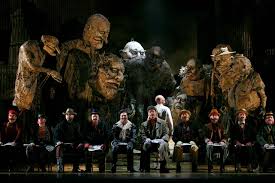
ENO: Satyagraha

Philip Glass’s operatic masterpiece returns to English National Opera, with Toby Spence leading the cast in his role debut

Opens Thursday 1 February at 7pm at the London Coliseum (7 performances)

ENO revives an iconic piece of contemporary opera, Philip Glass’s Satyagraha, in February. This critically acclaimed production from visionary director Phelim McDermott and Associate Director / Set Designer Julian Crouch (co-founders of Improbable) broke box office records for 20th century opera on its UK premiere in 2007, making it the most popular contemporary work to be performed by ENO.

Satyagraha, a Sanskrit word meaning ‘truth force’, looks at Mahatma Gandhi’s early years in South Africa and his development of non-violent protests as a political tool. The story moves back and forth through Gandhi’s life, with the flow of time, words and music creating a hypnotic, almost ritualistic experience. Each of the three acts depicts a spiritual guardian who is linked to the Satyagraha philosophy. Act 1 features Tolstoy, Act 2 the Indian mystic and poet Tagore and Act 3 Martin Luther King Junior, representing the past, present and future of Satyagraha.

Performed in Sanskrit, Satyagraha is the second of Philip Glass’s trilogy of operas about individuals who changed the world. The first was Einstein on the Beach (1976) and the third Akhnaten (1984) which had its UK premiere at ENO in 1985, sparking a special artistic relationship between Glass and the company. Contemporary opera and ongoing work with living composers are central to ENO’s mission, with four world or UK premieres staged by the company in the last twelve months.

Director Phelim McDermott is famed for his success in bringing Philip Glass’s works to ENO. For Satyagraha, he is reunited with conductor Karen Kamensek following their hugely successful production of Akhnaten in 2016, which won the 2017 Olivier Award for Best New Opera Production. Phelim is a founder member of Improbable. He has won various awards, including an Olivier Award for Best Entertainment, TMA Awards for Best Touring Production and Best Director and a Critics Circle Best Designer Award. He was awarded a National Endowment for Science, Technology and the Arts fellowship and an Honorary Doctorate from the Middlesex University.

Associate Director / Set Designer Julian Crouch – a founder member of Improbable –collaborated with innovate design studio 59 Productions to create the stunning visuals. 59 Productions, who make a welcome return to the Coliseum after their work on numerous ENO productions including Two Boys as well as 2009’s Doctor Atomic and 2017’s Marnie,are famed for the video projection in the Opening Ceremony of the 2012 London Olympic Games.

Distinguished London-born tenor Toby Spence sings the principal role of M.K. Gandhi for the first time, taking over from Alan Oke who has performed the role since the 2007 premiere. An ENO regular, Spence returns to the Coliseum having recently performed Don Ottavio (Don Giovanni) at the Liceu Barcelona; Captain Vere in the Teatro Real’s new production of Billy Budd; and Eisenstein (Die Fledermaus) and Antonio (The Tempest) for the Metropolitan Opera, New York.

Brighton Philharmonic Orchestra

The Dome, Brighton, Sunday 31 December 2017

New Year’s Eve Viennese Gala Concert

A very happy new year to all and what better way to celebrate than with Brighton Philharmonic at their annual Viennese Gala. Out of a finely balanced programme of familiar favourites and welcome additions, the highlight was without any doubt the mellifluous coloratura of Rebecca Bottone. Opening with the audition song from Die Fledermaus she moved effortlessly into Schenkt man sich Rosen in Tyrol from Zeller’s Der Vogelhandler, later adding the waltz song from Edward German’s Tom Jones.

If this latter piece seemed somewhat out of place it was very much part of Barry Wordsworth’s approach to these New Year’s Eve concerts, aiming to include a range of British pieces which sit comfortably alongside the Viennese. As such Gershwin’s By Strauss could hardly fail even if Vaughan Williams’ Fantasia on Greensleeves was a more unusual addition.

The second half opened with Malcolm Arnold’s English Dance No8 – a raucous item guaranteed to blow the cobwebs away and Richard Rodney Bennett’s waltz for the film score of Murder on the Orient Express.

Rebecca Bottone returned to bring us a vocal setting of Strauss’ waltz Wo die Citronen blüh’n and, the vocal highlight of the afternoon, Vilja from The Merry Widow. The Brighton audience is so knowledgeable and well trained that we had no difficulty providing the hushed choral support needed for this lovely piece!

If this implies there was a dearth of actual Viennese music – far from it. We heard twelve works from the Strauss family running from the overture to Die Fledermaus to The Blue Danube, taking in along the way Voices of Spring, Auf der Jagd and my particular favourite Die Libelle – the Dragonfly Polka.

From Lehar, in addition to Vilja¸ we heard the Gold and Silver Waltz.

The Brighton Philharmonic Orchestra were on fine form with some excellent solo work from John Bardbury, providing exquisite violin solos, harpist Helen Sharp and piccolo Deborah Davis.

There was just time for the inevitable encore – Strauss’ Radetsky March­ – with audience and orchestra in perfect accord.

Barry Wordsworth announced that the orchestra, which relies on its audience for the bulk of its income, is secure for the next twelve months and dates have already been issued for the new 2018-19 season. Be there!


A new Carol for Battle

We are used to new carols each Christmas but it is always good to find one which is not only locally sources but locally set.

In the early sixteenth century a monk in Battle Abbey wrote a Christmas carol on a leaf in his service book. It was recently rediscovered in the library of Trinity College, Cambridge, and, through the chairman of the Battle Historical Society, Stephen Page was commissioned to create a new setting for the text. It was given its premiere performance by Battle Community Singers at the society’s December meeting, where their MD Ailsa Vinson welcomed their accompanist Stephen Page to conduct the premiere.

The text had been tactfully transcribed into modern English by Charlotte Moore. Where the monk wrote sorrow increaseth, and envye is bold?/ When chereti is skantye and waxethe colde she changed the second line to When charity is scanty and does grow cold. She thought that if she had written waxes, people would not have understood as too often today waxing is something people do in beauty parlours.

Otherwise, the carol flows as its author intended. The monk’s topics seem surprisingly relevant. All fancy talk is not worth a straw?/ Where there’s no love which fulfills the law?/ Therefore in meeting where ye resort?/ Belie no man with false report. The chorus shows that the Christmas message itself hasn’t altered much in 500 years, Be merry all with one accord?/ And be ye followers of Christ’s word.