Maidstone Symphony Orchestra

The Mote Hall, Maidstone, 19 May 2018

An all-Russian evening to end the season – and what a splendid season it has been as Peter Colman rightly notes, with an equally exciting programme in view for the autumn.

The evening opened on familiar ground with Tchaikovsky’s overture Romeo and Juliet. In his introductory remarks – always a welcome start to the evening – conductor Brian Wright had noted that the royal wedding was not in view when the programme was planned and he hoped that the outcome for the royal couple would be somewhat better than that for Shakespeare’s lovers.

The overture opened with a brooding tension which was held throughout, the emotional outpouring coming with all the intensity of snarling brass and rasping woodwind.

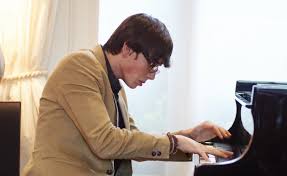
Prokofiev’s third piano concerto linked in quite well with the emotional power very much in evidence. Pianist Martin James Bartlett may have had an injury to his thumb but there was no evidence of this is the quality of his playing or the staccato, percussive attack he brought to his reading. The occasional romantic reflections become all the more effective in the midst of such challenging attacks on our senses. His encore, a gentle piece of Schumann, was all the more moving in the light of the contrast to the Prokofiev.

After the interval Shostakovich’s First Symphony sat comfortably within this company. Its tongue-in-cheek opening movements were very well structured, with a strong sense of line and pace. Then came the bleakness of the third movement with its fine opening oboe solo and developing sense of depression. If the finale tries to overcome this darkness it only does so by fits and starts, and Brian Wright’s approach left us wondering just how enthusiastic we should be about the bombast of the finale. For a student piece, this is amazing and makes us eager to hear how Shostakovich develops this near schizophrenic approach to composition in the later symphonies.

The new season opens on Saturday 13 October with familiar works by Britten and Mussorgsky, and Shostakovich cello concerto no1 with Michael Petrov. Season tickets now available and individual concerts at www.mso.org.uk

Yesterday Once More @ Opus Theatre

For music fans everywhere, the Carpenters music was the soundtrack to the ‘70s. Hauntingly beautiful songs like Close to You and We’ve Only Just Begunmade Richard and Karen Carpenter international superstars.

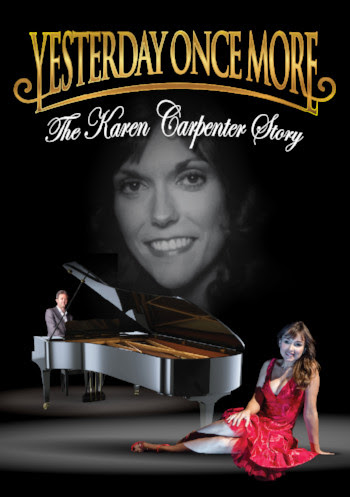
Kent-based soprano Rebecca Robinson and pianist Mark Heller are touring a captivating show charting the meteoric rise to fame of the brother and sister duo, and they will be appearing at the Opus Theatre, Hastings, on Saturday 2 June, at 7.30pm.
 
Featuring many classic and much-loved Carpenters songs, Yesterday Once More charts Karen’s extraordinary musical achievements, reveals the turbulent lives that lay behind the glamour and success, and tells the story of her long and unsuccessful battle with anorexia.

This memorable and moving show pays tribute to Karen Carpenter through song, story and video footage. Intimate piano and vocal arrangements showcase The Carpenters’ songs in all their poignant beauty.

Tickets are priced at £13 (£15 on the door), and are available at Hastings Tourist Information Office and online by clicking HERE

Grand Organ Gala Concert

Royal Albert Hall 15/5/18

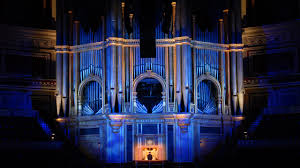
The wonderful RAH Willis/Harrison organ is not played nearly enough and so it was a particular thrill to be part of the audience for this well supported concert – the culmination of a day of music-making, celebrating this instrument and exploring the world of organ music in general.

Three first class organists shared the bill and it was Wayne Marshall who opened the proceedings with a thrilling, if somewhat idiosyncratic rendition of Bach’s Toccata & Fugue in D minor, BWV565.

He remained at the console to demonstrate a selection of stops as we were treated to a rare glimpse inside the organ. A guided tour from the genial and energetic Michael Broadway, custodian of the organ, as he climbed around inside with a cameraman – was relayed to the two large screens either side of the pipework and in dialogue with Tom Daggett, Organ Outreach Fellow at St Paul’s Cathedral, who proved to be an excellent MC throughout the evening.

The screens continued to enhance the music as we were treated to a superb performance of Liszt’s Fantasia & Fugue on B-A-C-H. Olivier Latry, was then introduced as the second organist. His first piece, Mozart’s Fantasia in F minor, K608, allowed for more variety of colours to be demonstrated. The audience appreciated his witty conversation and his enthusiasm (as he drew comparisons with organists wishing to play the works of Widor at St Sulpice) for being able to pay homage to former organist of the RAH, George Thalben-Ball. He then gave a dazzling performance of Thalben-Ball’s Variations on a theme of Paganini, the experience again enhanced by the screens making clear exactly what the organist’s feet have to do in order to play this piece!

The third organist, David Briggs, was introduced. After the interval he went on to play one of his celebrated transcriptions of an orchestral work, this time, Ravel’s Mother Goose Suite. This brought further contrast to the proceedings and highlighted the versatility and variety of effects possible through careful use of pistons and expression pedals and the ability to use the organ as a truly orchestral instrument.

Prior to this all three organists gave a fun and well co-ordinated performance of Widor’s Toccata in F.

The evening ended with another performance by all three, simply entitled, Concerto-Improvised, which I would have loved to have witnessed as all three performers are well-known for their improvisatory skill. Sadly, due to the limitations of the rail network, I had to leave before this. I was able, though, to enjoy the delightful rendition of Gershwin’s Rhapsody in Blue, with David Briggs playing the orchestral parts on the organ and Wayne Marshall in his other guise as solo pianist.

This was undeniably an evening of popular music but still with much of interest and variety. As a showcase for this marvellous instrument and for the organ in general it was superb. Entertaining and educational with much attention given to presentation and programming it drew a large, diverse and appreciative audience, I hope we shall see more of these events and that the organ may be recognised once more as a vital part of the general musical scene. Congratulations to all involved.

Stephen Page

Opus Theatre’s first World Series

A first World Series comes to The Opus Theatre, commencing this June with international professional musicians from across the world.

Speaking at the inauguration, pianist Oliver Poole, who is Artist In Residence for the series, said ‘As Artist in Residence, I am truly thrilled and honoured to welcome six incredible, inspirational and internationally renowned acts this year, together with the theatre’s director, composer and impresario Polo Piatti. The message of the series is simple: To Unite The World Through Music. I, with Polo  – together with the artists who will be arriving from all over the world – believe in one core principle: The power of music and its ability as a universal language to enlighten and bring change to our world. Each of the artists performing have stories to share, some serving as backdrops to their artistic endeavours. I am truly thankful to all of the artists for being part of the first ever World Series at The Opus Theatre. It is going to be a unique and inspirational celebration of music, storytelling and the human spirit, and we cannot wait to warmly welcome our artists and audiences for unforgettable experiences.’

More than anything else the promoters of the World Series want to ensure it is accessible to all, with music that is captivating and engaging without the need for previous study or understanding. Moreover, the series will be a not-for-profit venture, to enable as many people to attend as possible by keeping entry costs as low as is feasible.

The Opus Theatre in Hastings is considered one of the finest small concert halls in the South East. Formerly a non-conformist church, it is a Grade II listed building with superb natural acoustics.

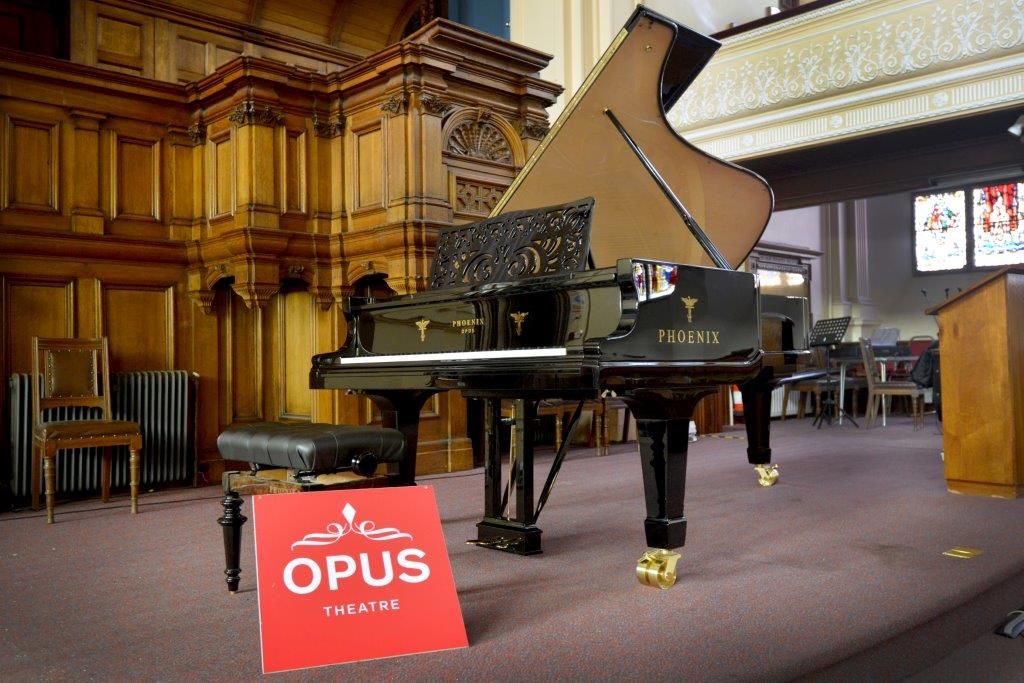
It hosts the Phoenix Opus – a 9ft concert grand piano, one of the most technologically advanced instruments in the world. It was custom built to the venue’s exact specifications and finish, and constructed using the latest Phoenix technology including their carbon-fibre soundboard, fitted to a 1925 Blüthner Style XI acoustic body, widely considered as one of the finest acoustic bodies in existence. This makes the Phoenix Opus piano the concert grand with the biggest carbon-fibre soundboard in the United Kingdom.

The series opens on 9 June with soprano Carly Paoli and pianist Oliver Poole. Carly Paoli is internationally known for her wide repertoire and her appearances alongside many iconic singers including Andrea Bocelli and Elaine Page. Having appeared in venues as large as the O2 she is looking forward to the intimacy of the Opus Theatre and its possibilities for immediate engagement with the audience.

The next visitor is the Portuguese pianist Pedro Gomes on 16th June followed by Blato Zlato bringing fiery Balkan music from the swamps of New Orleans.

Later performances will include Marcelo Bratke from Brazil, Iranian tenor Ramtin Ghazavi and cellist Nina Kotova.

Full details are available on www.opustheatre.co.uk/news

NEW HEAD OF MUSIC FOR GARSINGTON OPERA

Garsington Opera is delighted to announce the appointment of Jonathon Swinard as Head of Music.  He takes up this appointment at the end of the 2018 Season.

Conductor and pianist Jonathon Swinard studied at Oxford University and the Guildhall School of Music and Drama. He began his career at Scottish Opera as the company’s first Emerging Artist répétiteur  and went on to hold the Alexander Gibson Choral Conducting Fellowship with the Royal Scottish National Orchestra Chorus. From 2014 to 2016 he was Solorepetitor and Kapellmeister at the Staatstheater in Nuremberg where he conducted opera, ballet, and musical theatre. In 2016 he returned to Scottish Opera as Chorus Master and répétiteur. He studied conducting with Sian Edwards at Dartington and is the Artistic Director of the Scottish Opera Young Company. Jonathon is a long-standing member of Faculty for both the Georg Solti Accademia di Bel Canto and Lyric Opera Studio Weimar, and is a visiting vocal coach at the Royal Conservatoire of Scotland.

As Head of Music, Jonathon will be Garsington Opera’s Chorus Master and Music Director of the Alvarez Young Artists’ Programme.  He will take over from Susanna Stranders who joins the Music Department at the Royal Opera House.  Over six years, Susanna Stranders has made a transformational contribution to Garsington Opera developing both the chorus and Alvarez Young Artists’ Programme to be an internationally renowned training ground for the best young talent.

4th Sussex International Piano Competition Grand Final

Sunday 13 May 2018

Many of the supportive audience waiting attentively in the sharp acoustic Worthing’s assembly hall had been following the competition all week. So by the time it reached the Grand Final on Sunday afternoon it was very much a case of “Now sits expectation in the air”.

Three fine soloists played three (different) concertos with the somewhat pared down Worthing Symphony Orchestra conducted by John Gibbons who is also the director of the competition which launched in 2010.

The orchestra did well although it’s a big ask to accompany Tchaikovsky’s First Piano concerto with only three desks of first violins, three of seconds and two each of cellos and violas. B flat minor is hard work for string players at the best of times and when numbers are so low it becomes even more of a strain. Moreover the acoustic of the hall means that brass and timps can sound too loud especially for listeners in the gallery and when strings are relatively thin. These are passing observations though, rather than gripes. In general Gibbons and his orchestra accompanied the competing soloists with warmth, commitment and panache.

First up was Rhythmie Wong from Hong Kong playing Chopin’s Piano Concerto No. 1 in E minor. Petite and very young looking she played the creamily romantic piece with poised stillness. She brought neat dynamic control especially in the first movement with its passages of rippling 6/8 and in the dancing lyricism of the finale. And it was reassuring to see Gibbons beating the bars during Wong’s middle movement cadenza which she played with so much  rubato that I would certainly have got lost. Good to know that professionals, potentially at least, have the same problem.

Then came Russian Sofya Bugayan with the Tchaikovsky. It is, of course, a magnificent old war horse but that makes it harder to bring off because almost everyone listening knows it. This performance had some fine moments – a very exciting alla breve in the first movement for example and some commendably precise pizzicato work. And Bugayan’s passionate interpretation of the middle movement was impressive. It’s a pity thought that some of the tempi were misjudged which meant that sometimes Bugayan was falling over herself at high speed. In a piece this well known wrong notes show.

The afternoon concluded with Yi-Yang Chen from Taiwan who played Beethoven’s fourth. Totally engaged with orchestra, conductor and audience he played the concerto as if it were chamber music,  alertly and intensively looking up and looking round continually. The first movement was, unfashionably, slightly under the tempo set by Beethoven’s metronome markings which allowed us all to revel in the detail such as the horn interjections, flute passages, bassoon colour and all the rest of it. And Chen, throughout, was totally at one with the orchestra. Rarely have I heard a performance which made it quite so clear that Beethoven is rejecting classical conventions and finding a highly expressive romantic voice. That’s what Chen, young as he is, wanted us to hear and we did.

Gibbons is clearly very accomplished at supporting young, relatively inexperienced soloists. With Chen, who visibly feels every note of the music, it felt much more of an equal partnership

At the end of the concert and the competition my money was firmly on Chen to win. Happily the judges agreed with me and he was, after an interval for them to confer, declared the overall winner of the 2018 Sussex International Piano Competition. He receives a £5,000 cash prize and the opportunity to make a recording at Champs Hill. The audience must have approved too because he also won the Audience Prize.

Susan Elkin

Bexhill Choral Society: Brahms’ Requiem

De La Warr Pavilion, Bexhill, Saturday 12 May 2018

Brahms’ Requiem was written for large scale forces. Moreover, it is not a Requiem in the conventional sense as the composer creates a series of meditations based on Biblical texts rather than following the liturgical structure. This should make it more acceptable to a wider audience given the lack of religious belief today and particularly so when it is sung in English.

The performance certainly had the benefit of clarity. Placing the Sussex Concert Orchestra on the floor of the hall with the chorus gently raked behind them, but all in front of the proscenium arch, made for immediacy and helped the impact of the text throughout.

The soloists in particular benefitted from this with Lucy Ashton producing limpidly beautiful tone in Ye now are sorrowful and John Morgan bringing passion and weight to Lord, make me to know and a fine sense of attack to Here on earth.

Brahms really needs larger orchestral forces than were here available though there was some fine playing from harpist Alex Rider and the balance held up well.

The choral forces unfortunately were not as well balanced on this occasion. While the altos produced some fine singing throughout, there were times when the other sections did not make the same level of impact. Tenors and basses made a positive sound singing together but when they were required to sing solo lines they lacked the weight to do so. The sopranos certainly had the right numbers but often sounded hesitant, singing just under the note. When lines flowered with confidence they were fine but often the beauty of Brahms’ lyricism was not in evidence.

Kenneth Roberts guided the whole performance with a convincing sense of pace and dynamic, though as noted the choir were not always up to the emotional outpouring the score requires.

We have heard many fine performances in the past from Bexhill Choral Society and if this was not up to their usual standard we can hope for the future.

The 4th Sussex International Piano Competition: Semi-finals

The 4th Sussex International Piano Competition, Semi-Finals (last 6) at Worthing Assembly Hall on Friday 11 May 2018 – Antonina Suhanova (Latvia): Mozart, Sonata K311; Prokofiev, Sonata No 8. Kenny Fu (UK): Beethoven, Sonata No 30 in E Op109; Rachmaninov, Sonata No 2. Alon Petrilin (Israel): Liszt, Ballade No 2; Haydn, Sonata in C Hob XVI:48; Barber, Sonata Op 26.
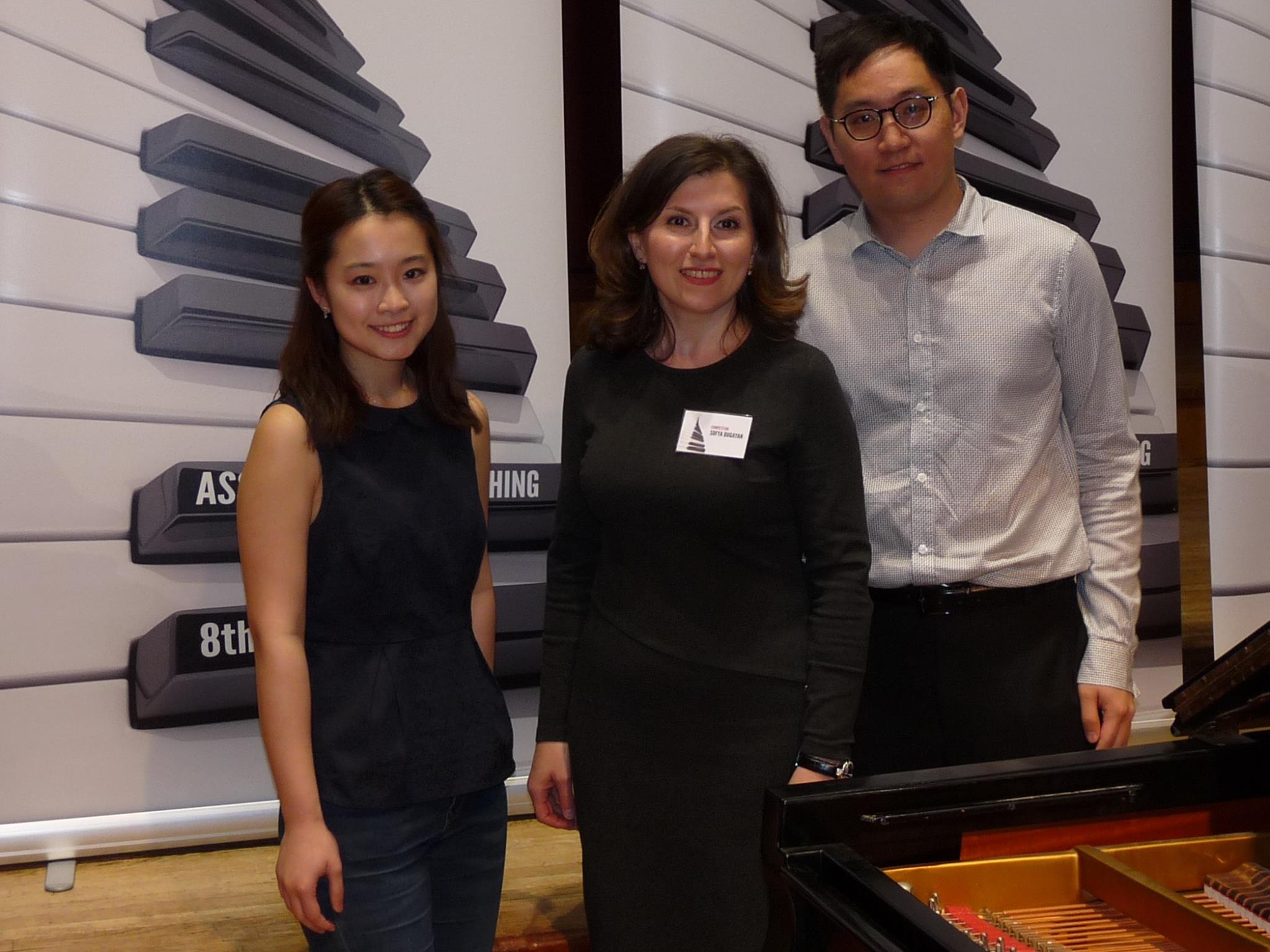
Sofya Bugayan (Russia): Brahms, Six Pieces Op118 (Nos 1-3); Prokofiev, Sonata No 8. Yi-Yang Chen (Taiwan): Haydn, Sonata in Bb Hob:41; Chen, In Memorium: Japan, March 11 (2011); Rachmaninov Sonata No 2; Chopin Mazurka Op17 No 4 in A. Rhythmie Wong (Hong Kong): Haydn, Sonata in Eb Hob XVI:52, Tchaikovsky, Dumka; Ravel, Ondine from Gaspard de la Nuit; Stravinsky, music from The Firebird, transcribed by Agosti.

The oldest finalist in the Sussex International Piano Competition, the first competitor at Worthing to include their own composition, and a glowing example of three of the four things the Jury seek. These factors are carried forward into tomorrow’s Grand Final at Worthing Assembly Hall (May 13, 2.45pm) by, respectively, Sofya Bugayan, Yi-Yang Chen and Rhythmie Wong of Russia, Taiwan and Hong Kong.

This competition is not ageist.  No limit on years is imposed. It balances a duty to provide opportunity for youth alongside celebrating wisdom and experience. Bugayan became the first SIPC finalist older than 30 when, at 36, she held off a formidable challenge from the second youngest of these final six pianists, Israeli Alon Petrilin, 23.

Visual news footage of the Japanese earthquake, Tsunami and nuclear power plant disaster compelled Yi-Yan Chen, a Juilliard pupil in New York, to write In Memorium: Japan, March 11 (2011). He played it on Friday, sometimes using several unorthodox piano sound devices, including key-struck hand-dampened strings, and glissando sweeps across open strings, in evoking Far Eastern musical sounds.

And with possibly one glissando too many in Agosti’s own arrangement take on Stravinsky’s piano version of his orchestral ballet score The Firebird, Cologne-based Rhythmie Wong swept into the final with more than enough technical ability, quality programming and artistic flair. In the latter two qualities, Chen ran her closest.

His de Falla (Fantasia Baetica) in the opening round already helped mark him out as a leading contender in all three counts, while Wong’s Ravel (La Valse), a similarly extrovert piece, had scored the highest possible marks with the particular audience member I actually misquoted previously.  Now corrected, I can report that ‘The best performance of the piece I have heard in 10 years’ should read “The best playing of ANY piano piece in that time”.

The fourth Jury requirement, ‘ability to connect with the audience’ in dry recital amounts to the sum of the previous three parts. But if Bugayan appeared outstripped by others in variety of programming, which from her amounted to a single work by Schumann (Humoresque) in the first round and selected late Brahms with Prokofiev in the second, she will probably have impressed in the Jury’s search criteria with the absorption, control and intensity of her playing.

Compared with (10 years her junior) Antonina Suhanova’s earlier performance in the day, Bugayan’s Prokofiev 8th Sonata, a war work, seemed to come with softer, more human edges in the initial two mournful and troubled movements, and a iron grip on the bitter, violent, sometimes hysterical finale. Her deep affinity with Prokofiev dates back to childhood.

Petrilin, outstanding in the first half, set up a formidable fence for Bugayan to clear. The apparent dark horse, in a field headed by Chen and Wong’s variety of musical offering, Petrilin created an awe-inspiring atmosphere with Liszt’s Ballade No 2. Then, on the light-actioned, luxuriant Steinway he declined to celebrate Haydn by following the’ brittle sound brigade’ and instead let the instrument have its own unpedantic say on the composer.

Then Petrilin unleashed the startling half-crazed Barber Sonata, written to throw down the gauntlet to that era’s leading virtuoso, Vladimir Horowitz, with the express intention of ensuring him a string of sleepness nights ahead of its first performance.

Kenny Fu, only 20, shares London domestic accommodation with wonder-boy cellist Sheku Kanneh-Mason’s violin-playing brother Braimah at The Royal Academy of Music. Kenny was in only his second open competition. He promised more than experience let him to deliver on the day but indicative of his talent is his Russian teacher Tatiana Sarkissova (wife of Dmitri Alexeev) setting him the high bar of Beethoven’s late Opus 109, and then the Rachmaninov 2nd Sonata, in which he was eclipsed by Chen.

Yet if Fu’s tender years found him out in the Beethoven, the six-years-older Wong’s Haydn showed no shortcomings. From such a young player it displayed everything one might dare ask from a 40-something steeped in Haydn.

Wong’s playing bristled with character of many types. With the pauses of a well-practised humorist, she created anticipation before every paragraph. She kept you guessing if there would be a joke or not. She had you on the edge of your seat. Yet each pause seemed uncontrived, merely a natural break for breath, but still each successive one created more pregnancy.

And late in the finale – the requirement of any genuine Haydn player – more than just smile, she made me actually laugh. An act of supreme musicianship. She even created one astonishing toccata-like section in a blur of two alternating hands that would have ignited the Haydn’s ecstatic London audiences. A super Haydn player, not in the making, but already here.

One stage away from the Final round of chosen concertos tomorrow (Sunday, 2.45pm), this competition is far from over. Hoops and fences remain. Someone may fall at the last. Young pianists come to competitions short on concerto experience. The Worthing Symphony Orchestra and conductor John Gibbons, artistic director both the band and competition, await them with help.

Twice now, we have heard the final three – performing alone. Stalwart Jury member Yuki Negishi made the draw on stage for the playing order. Wong will go first in Chopin’s E minor Concerto, No 1.  In the first round, she played a Chopin Rondo. She seems unerringly to resurrect the spirit of each composer she plays. Doing that in Chopin No 2 was Varvara Tarasova in the previous Grand Final.

Second to go will be Bugayan – the new dark horse. The daughter of Armenian emigrants, a folk clarinettist and an accordionist on her father’s side, 10 years ago she became the youngest piano professor in Rostov-on-Don’s Rachmaninov Conservatory. She is in this final without using dazzlers in the standard solo show-off repertoire. “I wanted to travel, start playing in competitions again, and see the English Channel,” she says, disarmingly. But she brings a weapon of fire: Tchaikovsky’s 1st Piano Concerto.

Yi-Yang Chen has been in the US for 12 years, now an assistant piano professor at East Tennessee State University, Johnson City. He has played 20 competitions in nine years. Will Beethoven’s 4th Concerto take him to the £5,000 First Prize from the Bowerman Charitable Trust, plus the Champs Hill CD recording? Second prize is £2,000 and third, from Gisela Graham Ltd, is £3,000. The eliminated semi-finalists have received reward from the Worthing Symphony Society.

There can be no clean sweep repeat of Tarasova’s 2015 achievement. The British Music Prize from the William Alwyn Trust for the best interpretation and performance, from memory, of Alwyn’s The Devil’s Reel, has gone to a pianist who was ill on the day. A fact ironical – or instrumental? The winner: Bristolian, Daniel Evans (yes, British).

The Audience Prize, donated by Helena and Ti m Chick, is determined by votes from the audience at the final. Tickets from Worthing Theatres box office 01903 206206.

Richard Amey



CDs/DVDs May 2018

Berlioz: Benvenuto Cellini
Dutch National Opera, Mark Elder
NAXOS 2.110575-76

This production by Terry Gilliam was a great success when first staged for ENO but here, in its original language with the Dutch National Opera, presumably has a better chance of international sales. Not that there is any lessening in my enthusiasm for the production as all the strengths of the original are certainly very much in evidence and the singing throughout is convincing with John Osborn a fine Cellini. It would have been good to have had the original ENO cast but such are the exigencies of recording these days.

Niccolo Jommelli: Il Vologeso
Stuttgart Opera, Gebriele Ferro
NAXOS 2.110395-96

No, I had not heard of Niccolo Jommelli before this recording arrived but I really don’t understand why apart from the obvious problems of history. The score is fluent and frequently heart-meltingly moving as it depicts the emotional turmoil of individual characters. It seems that the reason the scores have been overlooked is that, when they were written in the mid-eighteenth century, the book/libretto and the scenery were more important than the score. Consequently, while there were many different versions of the text set to music, audiences came to the play not the setting. As such, once Jommelli’s setting had been heard a number of times it fell out of favour and a new score was commissioned. Thus almost all of Jommelli’s scores were archived until in recent years an attempt has been made to revive them – an attempt which here shows itself to have been distinctly worth the effort. Hopefully Garsington or Wexford may take up the cause?

Mozart; Don Giovanni
National Theatre Prague, Placido Domingo
CMAJOR 745208

There are two reasons to recommend this recording. The first is Placido Domingo’s handling of the score. The second is that this is the theatre for which Mozart wrote the opera. We were fortunate, when visiting Prague a few years ago, to attend Don Giovanni in the Estates Theatre in this production and it is fascinating to do so as the work comes across very differently from the vast expanses of many major opera houses. That intimacy is found here both in the production itself and the singers. Worth investing in on both accounts.

Schubert: Piano Sonata; Four Impromptus
Marc-Andre Hamelin
HYPERION CDA 68213

Marc-Andre Hamelin’s muscular approach is linked to enormous sensitivity which makes for a highly exciting and engaging performance. The B flat piano sonata is particularly effective with the brooding introspection of much of the opening movement easing into its intense lyricism. All of this is achieved with apparent ease of fluency throughout. His reputation may go before him but is more than justified by this most recent addition to his recorded repertoire.

Smetana: Festive Symphony
Berlin Radio Symphony Orchestra, Darrell Ang
NAXOS 8.573672

For all Smetana’s popularity this symphony is almost unknown. This is the result of politics rather than musical appreciation. Soon after its composition, the rise of Czech nationalism found the Austrian national anthem unacceptable and there was no way Smetana could rewrite the work to remove the quotations. As a result it was quietly dropped. A great shame, as this recording shows, for it is a lively and engaging work which sits happily alongside the excerpts from The Bartered Bride which make up the rest of the cd.

Erik Satie: Gymnopedies, Gnossiennes and other works
Giacomo Scinardo, piano
DYNAMIC CDS 7820

Giacomo Scinardo takes a leisurely approach to many of these works with relaxed tempi and many moments of near stasis – all of which is entirely in keeping with the works themselves. The pieces are formed into a convincing programme which splits up the suites rather than recording each as a set in its own right, which makes it easier to hear as a whole, closer to a recital programme than a recording. Highly recommended.

The Romantic Piano Concerto: 75 Ferdinand Ries
Piers Lane, piano, The Orchestra Now, Leon Botstein
HYPERION CDA 68217

Volume 75? Is there no end to the series? Well obviously not when the quality of works continues to impress. Ferdinand Ries was taught by Beethoven, and his own father had taught Beethoven the violin. The influence is clear here but in no sense derivative, the rich romantic writing looking forward to the mid-nineteenth century rather than back to Mozart or Haydn. If you have been following the series this is clearly a fine example of re-discovering works which should never have been lost.

G P Telemann: Concerti
Tempesta di Mare, Philadelphia Baroque Orchestra & Chamber Players
CHACONNE CHAN 0821

You might be forgiven for thinking you were listening to Handel’s Water Music when encountering the Concerto Suite TWV 54, so close are they in style and musical ideas. However this is Telemann at his sparkling best  and the recording brings together for the first time the composer’s three remaining Concerti-en-suite. These are closer to a concerto for soloist and ensemble but are built around dance suites rather than the conventional classical three movements. They are charming and engaging throughout.

J S Bach: Partitas WV 825-830
Menno van Delft, clavichord
RESONUS RES10212

These partitas are more familiarly known as Clavier-Ubung though the cd cover makes no mention of this and it is not until one delves into the booklet that one realises that they are one and the same. The two cds cover all six partitas and Menno van Delft brings a bright enthusiasm to his playing throughout. Though there are many versions of these works this is certainly a strong addition to the range.

Beethoven: Piano Sonatas
Angela Hewitt
HYPERION CDA 68199

This most recent cd opens with the Sonata No17 in D minor Tempest followed by No13 in Eb major. This is the twin to the more familiar Moonlight Sonata and as such often overlooked. There is no problem here with relegation as the performance is effortlessly beautiful. Additionally, we have an exhilarating reading of No25 in G major which sparkles throughout and a gentler, more reflective reading of No30 in E major with its unexpected hushed conclusion. A fine recording which I know I will return to.

The Nutcracker and I
Alexandra Dariescu (piano)
Lindsey Russell (narrator)
Jessica Duchen (story)
SIGNUM CLASSICS SIGCD542

It’s an attractive package – a slim CD-sized book, perfect for small hands, with a slot for the CD inside the front cover. The idea of a narrated account of the Nutcracker story with piano transcriptions of the music is interesting too.

The young reader can follow the story in the attractively illustrated (by whom?)  book as she – or let’s hope he – listens to the CD. My children used to love following stories as they were narrated and I think it helped them with reading skills. I shall happily pass this CD and book on to my seven year old granddaughter, who already loves ballet, when I’ve finished with it.

Dariescu plays the transcriptions (by various people) beautifully and some of them require terrific technical skill with contrary rhythms across the keyboard. She also ensures that we hear a lot of colourful left hand work – melodic lines which are often lost in the orchestral texture. The musical interludes are quite long too so that it’s free to be narratively expressive and it feels respectful rather than in any way dumbed down.

Duchen’s story presents Clara as an ambitious child pianist who goes on an adventure with her Nutcracker-turned-Prince. He shows her that she can, with work and determination, be a virtuoso. He teaches her to believe in herself by taking her through doors to exotic countries to hear music and watch dance. Drosselmeyer has gone. The mice are more realistically saurine than the baddies they’re usually portrayed as.  It’s ingenious and attractive with some really pleasing lyrical prose such as flying to the Land of Sweets “on the wings of the music” and admiring the “ornate turquoise tiling and filigree metalwork”. It’s also compelling, uplifting and affirmative – just what children need. Lindsey Russell gets the right  story telling tone too. She sounds slightly breathy, childlike and enthusiastic.

The CD is presented in 14 bands to represent the scenes – pretty much as they occur in the original although of course it’s heavily abridged. It means that you can select just one section if you wish which could be useful for parents and teachers seeking to introduce The Nutcracker by drip feed.This CD and book are a quasi preview of the stage show which Dariecu (also the artistic director and producer for this project) is touring this year. I shall be seeing and reviewing it for Lark Reviews in October.

Susan Elkin