Investec Opera Holland Park: La Traviata

I first encountered La Traviata when I was about nine. My father, who wasn’t actually a great classical music man, saw it at Royal Opera House with my mother and fell in love with all those fabulous Verdi melodies. So he bought “new fangled” LPs of La Traviata to play on his recently acquired three speed record player. For a long time the house resounded to Verdi’s rich and lovely tunes – many of them in lilting triple time – and I soaked them up like blotting paper. A lifetime later, of course, I’ve learned to appreciate this take on Dumas’s La Dame aux Camelias, in turn based on a true story about hedonism, passion and illness, rather more thoughtfully.
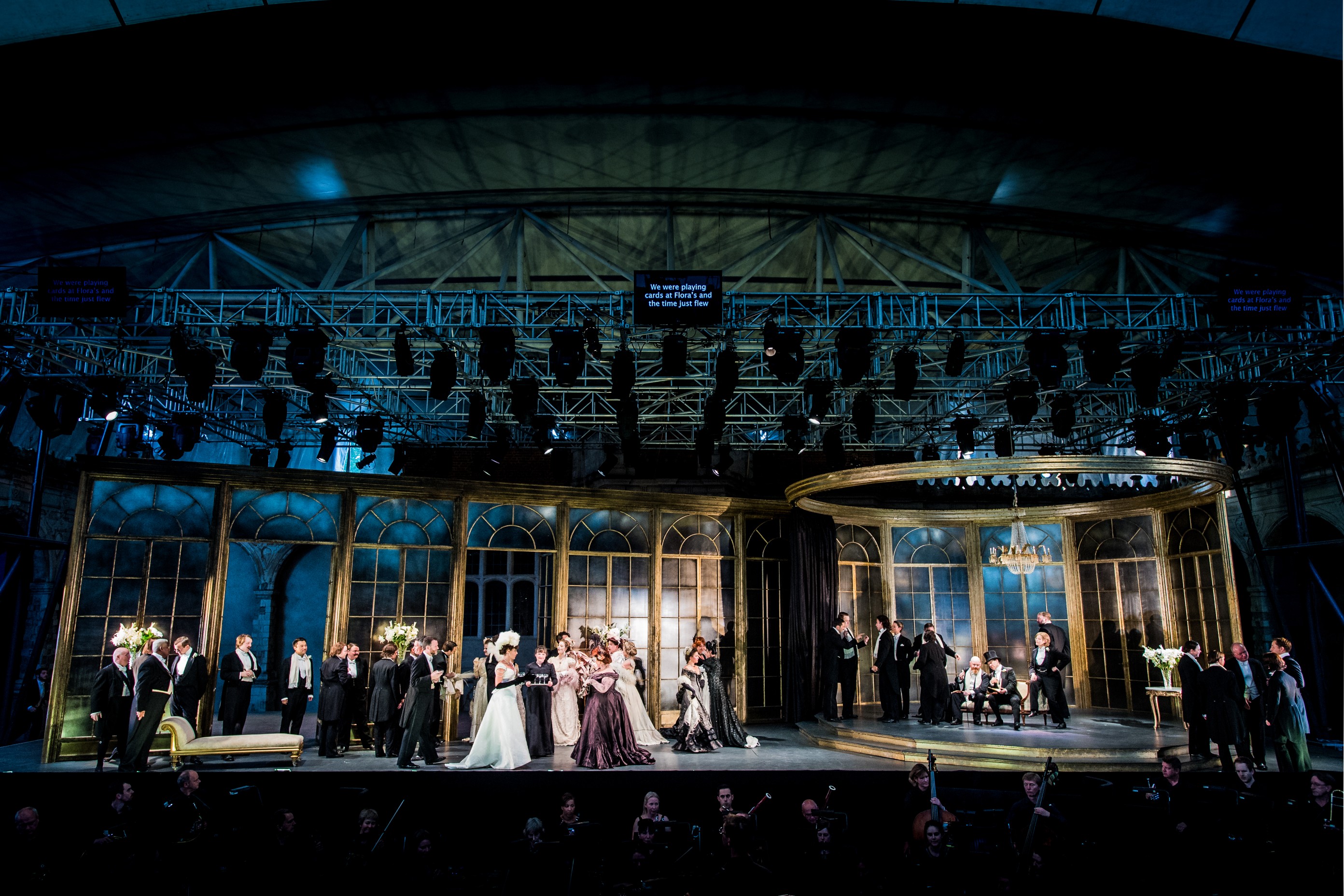
In Opera Holland Park’s new production Lauren Fagan gives a sensitive, intelligent account of Violetta. She took a little while to warm up on press night (nerves?) but once she got there it was a magnificent performance: passionate, convincing and thrilling with some stupendous top notes. Her Alfredo, Matteo Desole, an impressive tenor likewise rapidly got better after a lacklustre start. By the time they reach the deathbed scene in Act 4 their rendering of that supremely simple duet over pizzicato strings was beautiful.

There is strong support from bass Stephen Gadd and from  Laura Woods as Flora. The latter has a glorious wine dark voice, effectively an old fashioned contralto, which is a striking contrast to Fagan’s soaring soprano.

Sterling work from the orchestra under Matthew Kofi Waldren’s baton underpins the whole. This music is full of colour and Waldren allows us to see and hear it all – assisted by the clear acoustic in this venue which places the orchestra on the level in front of the stage. The work from the brass during the deathbed scene is especially noteworthy. It’s surprising how well the sound works here when you consider that the auditorium is open to the elements at the sides and you can hear the odd peacock, goose, aircraft or park reveller.

Director Rodula Gaitanou makes interesting dramatic use of a large chorus and ensures that the story telling is clear. I like Cordelia Chisholm’s ingenious set too. Built on a huge saucepan shaped quasi joist angled across the stage it offers an adaptable intimate space beneath the “pan” and more public area for parties and so on along the length of the “handle.”

It is altogether an enjoyable production which does the piece real justice. My father died in 1997. He would have been 96 this month. I think he would have approved.

Susan Elkin
Sussex Concert Orchestra

St Peter’s Church, Bexhill Sunday 3rd June 2018

Standing outside St Peter’s as Evensong drew to a close, one could hardly have wished for a more perfect Sussex summer evening. Happily the programme provided by Sussex Concert Orchestra mirrored this warmth and enjoyment.

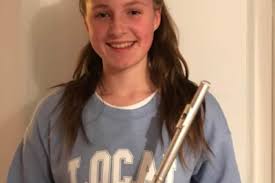
The performance opened with Faure’s familiar but none the less welcome Pavane, whose warmth and light in the excellent acoustic of the church proved immediately appealing. This was followed by Bach’s Suite for Flute and Strings BWV 1067 with Daisy Noton the accomplished flute soloist. The opening section of the Overture and the later Sarabande were unexpectedly slow and grave – the latter coming close to the intensity of the St Matthew Passion. Elsewhere there was a strong attacking edge in the Rondeaux and very lively rhythms in the Bourees and concluding Badinerie.  One of the more complex results of the acoustic was that the soloist seemed to move in and out of the orchestral sound, at times shining brightly above them while at others almost being engulfed by the strings though never creating any sense of an unbalanced effect. It was very impressive and sensitive throughout.

After the interval we heard Beethoven’s Pastoral Symphony. Kenneth Roberts approach to this was intense and often quite aggressive. Tempi and dynamics were frequently on the fast and loud side, particularly in what is normally the slow movement. There were times it felt as though we were tourists in the countryside rather than ramblers – an interesting and not unconvincing approach. The speed was maintained through the exhilaration of the storm – with the piccolo rasping its way above the onslaught – and the subsequent rejoicing, which was enthusiastic rather than romantic.

A fine evening with a full house – and rightly so.


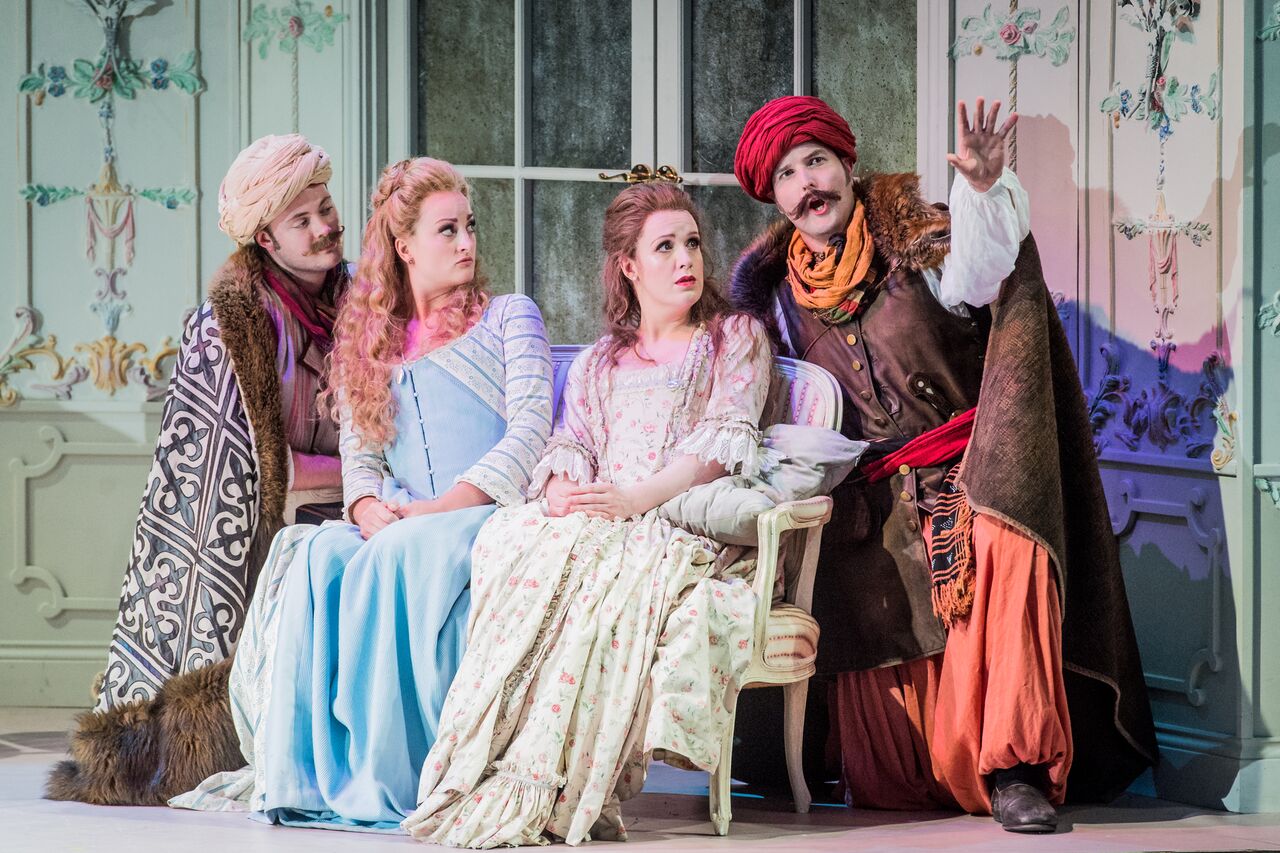
Investec Opera Holland Park: Cosi fan tutte

What a strange piece Cosi fan tutte is. In a way it covers the same ground as A Midsummer Night’s Dream – sexual licence and the temporary (?) hots for the wrong person. Yet the ambiguity of the message makes it seem very different. It’s almost tragic rather than comic. Oliver Platt’s directorial emphases in this enjoyable production, for example, left me feeling deeply sorry for the duped women and I don’t always.


Despina, the knowing maid who assists in the duping, is undoubtedly the best female role and petite Sarah Tynan made a fine job of it – hitting all those soaring high notes with aplomb and adding lustrous warmth to numbers such as the glorious sextet which ends the first half. She’s also very funny disguised as both the doctor and the notary.

Peter Coleman-Wright’s Alfonso has plenty of scheming gravitas as he sets up his two friends to find their fiancées unfaithful – and his 6/8 patter song as he backs out of the door with Despina is pure Mozartian fun. Then the four young lovers: Eleanor Dennis, Kitty Whately, Nicholas Lester and Nick Pritchard all sing well both together and in groups with Dennis’s second half aria being a particular high spot. The farewell quintet before Lester and Pritchard’s characters pretend to go off to war is another gem delivered with tender warmth here.

Opera Holland Park’s playing space is almost traverse theatre and it’s vast so most designers find ways of confining it to a smaller area and Alyson Cummins is no exception. Her main, rather ingenious set is based on a huge hinged, five facet flat positioned centre stage, which represents walls with doors and windows. It’s decorated with pastel wall swags in relief which looks strikingly pretty.

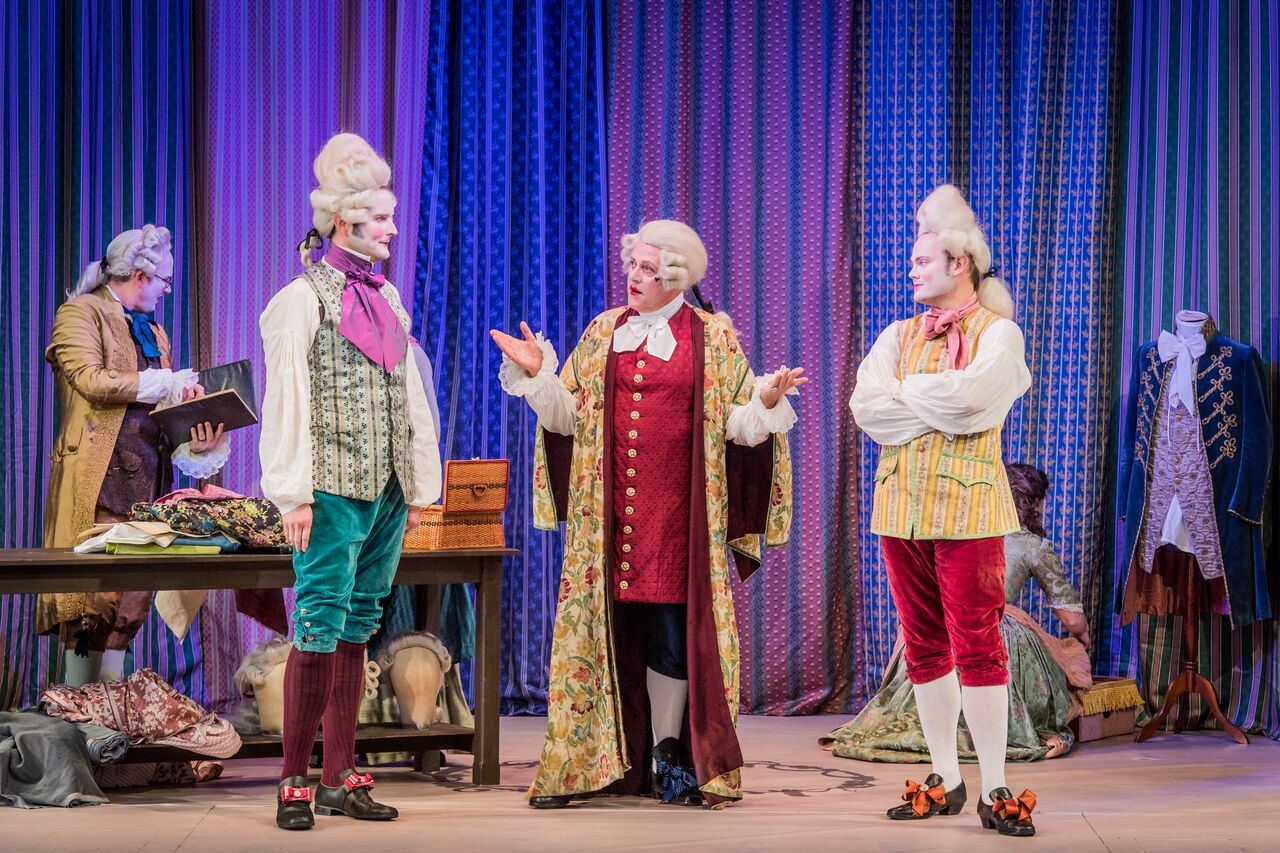
Her costumes are good too – firmly in period with the men in gorgeously colourful velvet breeches and elaborate 18th century beehive wigs which make them look ridiculous even before they disguise themselves as lustful Albanians. It’s a pity that Kitty Whately’s dress is quite so frumpy but it’s a small point. She is so convincing as Dorabella that I soon stopped noticing it.

In many ways the real star of this show is Dane Lam who works musical miracles in the pit. A highly charismatic, left-handed, word-mouthing conductor, he ensures that not a nuance in the music is missed. We hear every bassoon and clarinet solo with clarity, for example. And I liked the work of both timpanist, Scott Bywater using hard sticks and of Stuart Wild who plays the harpsichord continuo with delightful responsiveness. The latter makes the recit passages sound as it they really are simply conversations.

Susan Elkin


Carly Paoli shortlisted for Classic BRIT Awards’ Sound of Classical poll

Rising classical singer and lyricist Carly Paoli has been shortlisted in the first ever Sound of Classical poll, with the winner to be revealed at the Classic BRIT Awards on June 13th.

The winner will collect the award in person during the Classic BRIT Awards ceremony at the Royal Albert Hall in London, to be broadcast on ITV.

Speaking about the news Carly saidI had to pinch myself when I found out that I was nominated for a Brit Award and I’ve been thanking the Lord ever since I received this incredible and completely joyous news. Since I was a little girl, I dreamt about singing and sharing my music with an audience. Now that my dreams have come true, I hope other young people can be inspired to follow theirs. I am so excited, so grateful and so thrilled by this prestigious nomination.”

Signed to the independent London-based record company ABIAH, Carly released her debut album Singing My Dreams in 2017.  The record charted at No. 2 on the UK’s Official Classical Albums chart, while earning 5 star reviews. Carly recently performed a headline concert at London’s Cadogan Hall leading Classic FM’s David Mellor to write a glowing 4 star review in the Mail on Sunday under the headline ‘Nobody does it better’.

From Mansfield, Carly studied at Tring Park and The Royal Northern College of Music and has worked with Jose Carreras, Andrea Bocelli and David Foster. She has performed alongside stars including Aerosmith lead singer Steven Tyler and Oscar-winning actress and Grammy-winning singer Jennifer Hudson and was invited to perform for the Prince of Wales and the Pope.

Carly recently signed a publishing deal with Sony ATV. Her songwriting credits on Singing My Dreams include co-writes with Ennio and Andrea Morricone and James Horner having written English lyrics for Se Tu Fossi (Cinema Paradiso) and the theme from Legends of the Fall which now bears the title Memory of You.


Catsfield Quire

In the 18th   & 19th centuries St. Laurence Church had a Quire, a group of singers and other villagers who played perhaps fiddles, a cello, a flute, a clarionet maybe even a bassoon.

The musicians having played for a dance on the Saturday night  would turn up on Sunday together with the singers to lead the service up in a gallery at the west end of the church.

Who played what or who sang is not known but what they sang and played is, thanks largely to one man, Canon Kenneth H MacDermott.

In the late 19th century when he was curate of Hurstpierpoint he began his research into this music prompted by an old manuscript book he was given. He wrote to over 200 church choirmasters seeking information about church bands and their music. With the resultant information he was able publish a book entitled ’The Old Church Gallery Minstrels’.

Amongst the documents he received were 9 books from Catsfield, some from Miss Louisa Blackman (grand-daughter of a Robert Blackman) and some from a Mr T C Poulter, whose    great-grandfather, a Mr Crouch, was a musician in the band.

They of course were all hand written and most quite tricky to decipher, they contained 175 different items of music.

Almost 25 years ago some of this robust music, with strong tunes and words, was published in a book entitled ’The Singing Seat’ (another name for the west gallery).

So to celebrate Sussex Day, Sussex Harmony, a West Gallery Quire, is returning to Catsfield to perform a selection of these pieces interwoven with readings and snippets of history from the period.

The concert is on 16th June in the Village Hall starting at 7.30p.m.

It will be free to come in BUT there is a retiring collection. Refreshments will be available and participation in singing some of the pieces will be encouraged

Opus Theatre – World Series

CARLY PAOLI & OLIVER POOLE

Two Of The Greatest Artists Of Our Time
United Through Music

Chart-topping British soprano and international phenomenon Carly Paoli will be joined by one of the world’s most thrilling and groundbreaking concert pianists
Oliver Poole for one truly unmissable night!

Tickets for this exclusive event only £15 at ‘Hastings Tourist Information Centre’ and online HERE.

Haydn: The Creation

Temple Church Choir, London, 24 May 2018

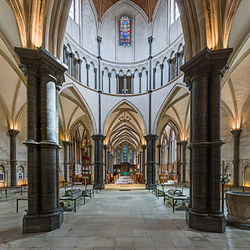
Temple Church, with its lofty fan faulting and intricate stained glass glinting in the early evening sunshine, is a magnificent setting for a concert. And this performance of Haydn’s colourful masterpiece, sung in English, certainly did it justice – in memory of Jonathan Hirst QC who died last year and whose chambers, Brick Court, sponsored the event.

Temple Choir, which has in recent years made quite a name for itself, is authentically male with 12 choir men and 18 choir boys. They were ably accompanied by Outcry Ensemble whose string work is commendably crisp. It’s an unusual idea to place the timps at the back of the choir so that the singers acted as a muffler but it worked.

Roger Sayer, director of Temple Music, has a real passion for detail and the clear, revealing acoustic of the building allows him to fulfil it. From the first bar of the introductory Representation of Chaos, he ensured that we heard every note from every instrument. Later he and his musicians had such fun with Haydn’s witty sound  effects that the audience chuckled aloud at the “flexible tiger” and the stress on “long” and the evocative bottom E for the worm sung by bass, Jimmy Holliday. Another lovely moment was Holliday’s rendering of the descending fourths in Rolling in Foaming Billows with the flute weaving underneath.

Tenor Guy Cutting sang with lyrical warmth and terrific dynamic control especially in “In Native Worth and Honour Clad” and soprano Augusta Hebbert was  delightful in part three when she and Holliday sang their section as Adam and Eve with sparkling smiles to remind us that this is a freshly minted young couple in love. Their voices blended well because each singer was totally attuned to the other.

There was some fine singing from the choir too. Sayer clearly has a terrific rapport with them, conducting without baton and mouthing words. I particularly admired the way they did the Spacious Firmament fugue with energy that lasted right to the end and included a magnificent crescendo. It’s a testing sing for any choir and more often than not flags long before the last note.

Given the effort which had clearly gone into one of the finest – and certainly the most sensitively dramatic –  renderings I’ve ever heard of The Creation, it’s a pity they didn’t hire a harpsichord. Of course Greg Morris played the recit passages more than competently on piano but it sounded far too plummy for music of this period. It didn’t spoil it because everything else was so beautifully done but it would have been even better with harpsichord.

Susan Elkin

Music Speaks

Polyphony Vocal Ensemble to sing at St Nicolas, Pevensey

Eastbourne-based Polyphony Vocal Ensemble will be giving a concert at St Nicolas, Pevensey at 7pm on Saturday 2 June. They will present a varied selection of theatrical, modern, folk, sacred and thought provoking songs, including “Hallelujah”, “Whistle Down the Wind”, “Misty” and “Ave Maria”.

Tickets will cost £8 and can be purchased at the door. Wine and soft drinks will be available during the interval.

Churchwarden Simon Sargent commented “We are very grateful to Polyphony Vocal Ensemble for putting on this concert, with its appealing programme, in aid of the church. Now that the building has been so beautifully restored, regular fundraising is essential to maintain it in good condition.”

Matthew Bourne’s Cinderella

Marlowe Theatre, Canterbury and touring

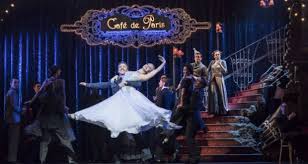
Prokofiev’s lush score – with all its minor key melody and those evocative rhythms – dates from 1946 and part of it was written during World War II. Matthew Bourne’s idea of setting it in the London Blitz therefore makes sense, and the “Ball” in the Café de Paris – which was bombed on 8 March, 1941 – is beautiful, poignant and apt. And there are some lovely conceits, such as Cinderella (Ashley Shaw in the performance I saw) being whisked off to the dance by her angel (Liam Mower) on a white motorbike and sidecar. There’s a cinema framing device with lots of Pathe news footage too which works a treat.

This production, which has been around for a while, is currently touring nationwide and Matthew Bourne did a post-show question and answer session for the first night Canterbury audience.

Shaw first appears as Cinderella, drab in grey and bespectacled at home with Alan Vincent, her wheelchair-bound father. Given that this character doesn’t dance other than with his arms it might have been appropriate to cast a wheelchair user which Vincent isn’t – an opportunity missed?

She is bullied by a stepmother (Anjali Mehra – strong) and a chorus of individually characterised step-siblings, each of them good value in the way they convey greasy nastiness. Then, of course, she is whizzed off the glitzy Café de Paris, despite having been denied her invitation, in glittering white. Cue for some lovely muscular dancing by the men and, then for some very engaging duet work between Cinderella and her “prince”, Harry the Pilot who is styled to look like John Cleese but who dances with verve.

Like all the best ballet performances it’s an ensemble piece. The real star is Bourne’s spiky, fluid, story-telling choreography. There is no point work so the dancing feels very natural –  effectively a movement based, Brechtian drama. There’s a splendid scene, for example, when Cinderella is in hospital and her family visit – moving as one round the screens which form doors, pecking menacingly like a flock of vultures. The tiny visual subplot in which a pair of gay men fall for each other is nice too.

The second (but not by much) best thing in this show are Lez Brotherston’s stunning designs for sets and costumes. Most of the clothes are black, white and grey with filmy, flowing 1940s dresses for the women and various sorts of uniform for the men.  He provides a spacious family room at the beginning, a very convincing café de Paris amongst bombed buildings followed by shocking devastation at the end of Act 2. And we even get Paddington station and a rather good train.

This is the sort of show which could, I think attract new audiences to dance productions. Without a tutu or pair of tights in sight it feels much more like a moving piece of musical theatre than a “classical” ballet. Bravo!

Susan Elkin

Garsington Opera 2019

30th ANNIVERSARY SEASON ANNOUNCED

Garsington Opera is delighted to announce their 30th anniversary season in 2019 which will feature four new productions:

Smetana’s The Bartered Bride, conductor Jac van Steen, director Paul Curranwith Natalya Romaniw as Marenka; the British stage premiere of

Offenbach’s Fantasio, conductor Justin Doyle, director Martin Duncan with Hanna Hipp in the title role and Jennifer France as Princess Elsbeth;

Britten’s The Turn of the Screw, conductor Richard Farnes, director Louisa Muller with Sophie Bevan as the Governess

Mozart’s Don Giovanni with conductor Douglas Boyd, director Michael Boyd and Jonathan McGovern in the title role. The season will run from 29 May to 21 July 2019.

The 2018 Season is now 95% sold to date.  It opens on 31 May for seven weeks and features four new productions, including the world premiere of The Skating Rink by leading British composer David Sawer with a libretto by award-winning playwright Rory Mullarkey, Verdi’s Falstaff, Richard Strauss’s Capriccio and Mozart’s Die Zauberflöte.