International Composers Festival

Opus Theatre/De La Warr Pavilion, 21-23 September 2018

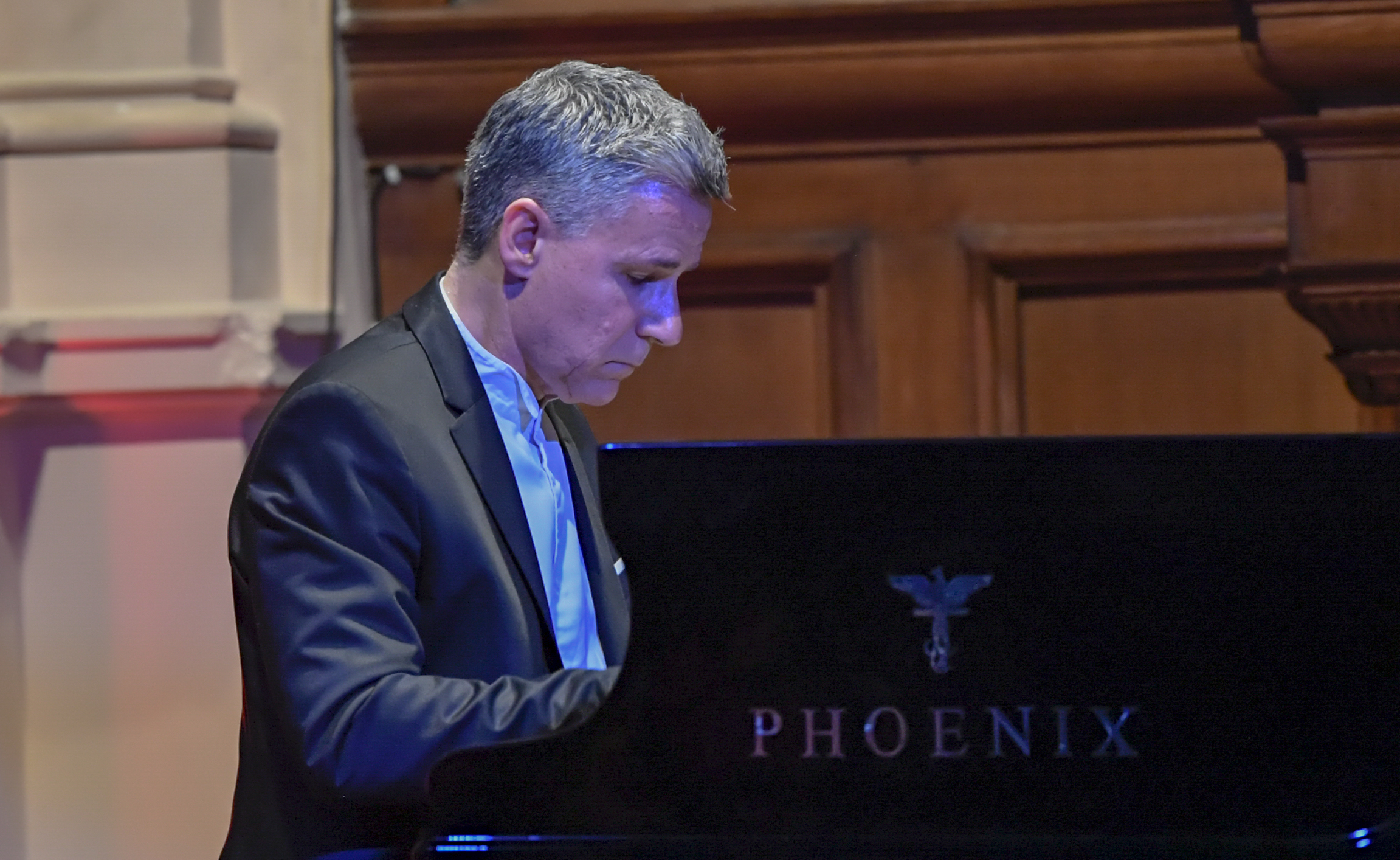
The Fourth International Composers Festival presented six events over three days, featuring the work of more than 40 living composers and over two hundred performers. Moreover, it brought together a wide range of musicians and styles but with one specific focus in mind – the importance of melody to enhance the listener’s experience and enjoyment. Polo Piatti had set this as the goal of the festival and regularly across the weekend extolled the strength and ongoing importance of melody as the key to broadening the involvement of an ever widening public.
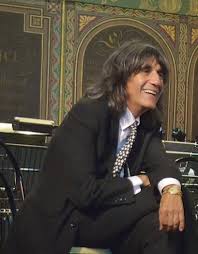
With so many new works performed a brief review like this can only give a glimpse of what was achieved, highlighting just a few of the many outstanding compositions.

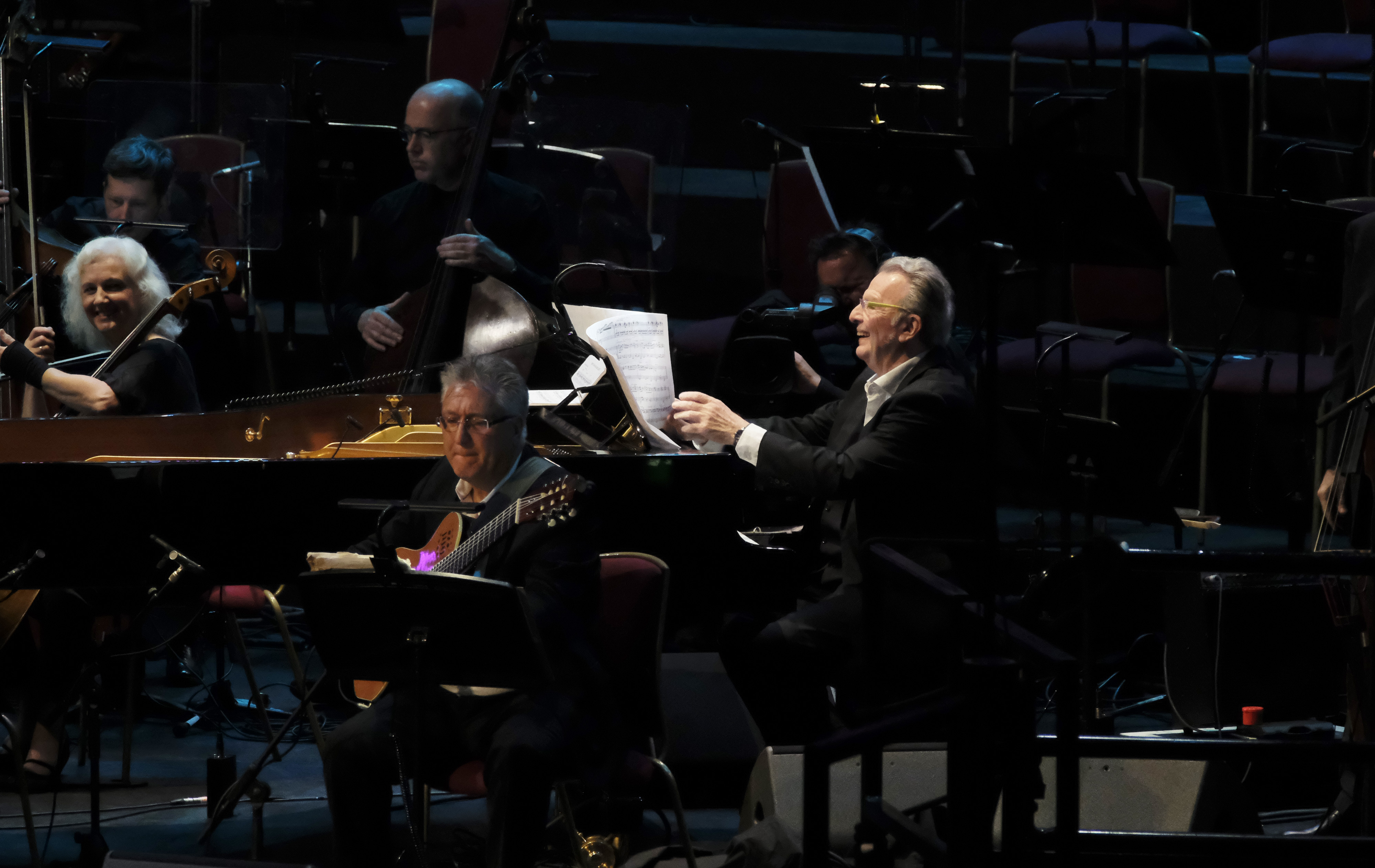
The Grand Opening Concert on Friday evening at the Opus Theatre was given by the International Festival Orchestra under John Andrews who proved to be a tower of strength across the three days, his indefatigable good humour and enthusiasm never allowed to flag.

Two of the most engaging works came either side of the interval with Thomas Hewitt-Jones’ That’s it, I’m off to Cuba whisking us away to the exotic before Louise Denny’ Mulberry Harbours – a march written for Civil Engineers – bring us comfortably back to a very English Waltonesque reality.

Efimero by Noelia Escalzo brought us the first of a number of fine solos from violinist Jane Gordon, who led the orchestra as well as providing many individual items across the weekend. Great musicianship and a calm head at all times.

Pollo Piatti is a fine composer in his own right and it was more than acceptable that he should include some of his own works. On Friday we heard Goodbye with Katie Molloy providing the guitar solo and the concert ended with The Impossible Pieces for orchestra with trumpet, clarinet and violin solos. The richly rolling orchestration – somewhere between Rheingold and Vltava ­– was immensely pleasing and brought the first day to a fine climax.

Saturday morning, in the De La Warr Pavilion, we heard a wide range of chamber music. Some the most impressive was performed by violinist, Daniel Rainey and pianist Simon Proctor. Daydream by Kevin Riley and Romance by Peter Thorogood both demonstrated a sensitive understanding of form and a keen awareness of the development of ideas. Lament by Ash Madni was one of the few pieces of genuinely reflective writing, its soulful reworking of a brief motif being very moving.

The morning ended with Romance in C by Fiona Bennett with a horn solo finely played Simon Morgan.

Saturday afternoon brought a change of approach with the Brighton Film Quartet playing works by Penny Loosemore set against film clips. The composer stressed that the music had come first and appropriate clips added subsequently. The outcome was often effective and atmospheric with the starling murmuration particularly pleasing.

Camera – Sound – Play! on Saturday evening brought us to a more popular and probably more familiar set of scores, including music from La La Land, Pirates of the Caribbean and Harry Potter.

However it also included an improvised piece from Oliver Poole – Altitude – which involved not only the pianist improvising but the whole orchestra as well – a fascinating and most impressive undertaking as well as one which proved musically stimulating.

Perhaps the most innovative idea came on Sunday at the concluding event which was given over to dance. Six new works from around the world were choreographed by the Eastbourne Academy of Dancing and the Diana Freedman School of Dance, ranging from a lively Barro Negro from Mexico by Carlos Salomon, Pollo Piatti’s own Tango Solitaire and a stunning Hornpipe from Simon Proctor. After the interval there was one work, the world premiere of The Crane’s Wife choreographed by Mayu Uesugi – who also danced the principle roll – and scored by Nobuya Monta. The company had travelled from Osaka specifically to give this premiere and it proved a fitting climax to the weekend. The simple folktale unfolded with grace and emotional truth, the score highlighting the nuances of mood and deeper mythical layers of the narrative.

Only a few years ago the idea of so many international musicians coming to Hastings for an event of this breadth and quality would have been unthinkable. We have much to be thankful for in the creative talents and sheer hard work which Pollo Piatti has put in to making this possible. Long may it last!
 

Hastings Philharmonic at Rye Festival

St Mary, Rye, Thursday 20th September 2018

Hastings Philharmonic’s new season does not officially open until 12 October but they had been invited to take part in this year’s Rye Festival and a very successful visit it proved to be. The acoustic in St Mary’s suits a baroque orchestra well and placing it essentially within the nave rather than wholly under the tower enhanced its impact.

The evening was founded not just on Mozart but on his lifetime relationship with G minor. Though the Piano Concerto No17 is in the major it regularly dips into the minor and formed a formidable pair with the great G minor symphony.

Kenny Broberg, winner of the 2017 Hastings International Piano Competition, was the soloist, opening with a hard-edged almost aggressive approach in the first movement. In the second he brought out the introspective, searching quality of the score to fine effect, before cheering up considerably for the rustic dances of the finale.

The rest of the programme was familiar to those of us who are regular supporters of Hastings Philharmonic. Philip O’Meara’s Flacubal was first heard in March this year and was being given in a revised form. Much as I enjoyed its original outing this performance seemed crisper, with a light, bright opening – at times almost playful in its rapid melody making. The deep romanticism of the slow movement gives way to the as fast as possible of the finale and creates a virtual concerto part for the lead violin – splendidly played on this occasion.

This led into Mozart’s Symphony No40 – the great G minor – with all the tension and passion the score requires. The great benefit of small forces is that the balance can be finely honed while the tempi need not drop. Bassoons were particularly impressive on this occasion and the rasp of the horns brought excitement to the concluding bars. Marcio da Silva handles his forces with great skill, shaping musical lines to beautiful effect and splendid impact within the warm and sympathetic acoustic.

The Autumn-Winter season brochure is now available and on line at www.hastingsphilharmonic.com

English National Opera presents the first ever staging of Porgy and Bess in the company’s history

One of the great landmarks of twentieth century music theatre, featuring some of the most iconic genre-straddling music ever written, Porgy and Bess will in October be presented in a new production for the first time in English National Opera’s history. Rarely seen in a full operatic staging, this is the first such major new production of George Gershwin’s masterpiece seen in London since the 1980s.

James Robinson, Artistic Director at the Opera Theatre of St. Louis, will direct this, a co-production by ENO, Dutch National Opera and the Metropolitan Opera, New York. The 1935 “folk opera” will be presented anew in a realistic and hard-hitting account of life in the African-American communities of the 20th century Deep South. Baritone Eric Greene and Soprano Nicole Cabell take the title roles with one of the most popular conductors at work in the UK today, John Wilson, making his house debut.

Porgy and Bess tells the story of disabled beggar Porgy and his love for Bess as he tries to rescue her from the influence of her abusive lover Crown. With songs including “Summertime” and “I Got Plenty o’ Nuttin” and “I Loves You Porgy”, material from the opera has been reinterpreted by jazz and popular singers for decades.

The ensemble of 40 singers, portraying the residents of Catfish Row, were specially brought together for the project, and will also appear with Dutch National Opera for the performances in 2019. This ensemble will join ENO’s own Chorus for the performances of Benjamin Britten’s War Requiem later in the season.

Celebrating the company’s ongoing work with young people and the community, young people from the ENO Baylis youth programme will sing on stage of the London Coliseum on 27 October at 6.15pm before the performance of Porgy and Bess. Chief Executive Officer Stuart Murphy comments:

“As ENO continues to grow and more clearly demonstrate our public value, ENO Baylis will become an ever more significant part of what we do. I am delighted that, for the first time, an ENO Baylis performance will take place just before a performance on main stage. We need ENO to continue to be daring and try new things. It’s why we are here and is what makes us different.”

American baritone Eric Greene sings Porgy, in his second performance at ENO after his ‘truly inspiring’ (Bachtrack) Janitor in Between Worlds in 2015. Other performances in London include his ‘genuine tour de force’ (The Guardian) as Martin Carter in the premiere of The Knife of Dawn at the Roundhouse in 2016.

Bess is sung by soprano Nicole Cabell, BBC Cardiff Singer of the World 2005, who makes her ENO debut. Much in demand around the world: ‘hers is among the most alluring voices around’ (Opera Magazine), she last sang Bess with the Sydney Symphony Orchestra in 2016.

Soprano Latonia Moore, who makes a very welcome return to ENO after her much-lauded debut in the title role of 2017’s Aida (‘a glorious performance’ – The Arts Desk), sings the bereaved Serena. Crown is sung by Grammy Award-winning baritone Nmon Ford in his ENO debut.

Brixton-born soprano Nadine Benjamin makes her ENO debut as Clara, also marking her debut as an ENO Harewood Artist. A fast-rising operatic star, she sang the Countess in ETO’s The Marriage of Figaro earlier in 2018. She will return to sing Musetta in La bohème later in the season.

American tenor Frederick Ballentine sings the dope peddler Sportin’ Life in his UK debut. In his native US he is a Washington National Opera Domingo-Cafritz Young Artist. Donovan Singletary sings Jake, formerly praised as ‘excellent’ (Opera News) in the role when he performed it for Seattle Opera in 2011.

Chaz’men Williams-Ali sings Robbins and Tichina Vaughan sings Maria in their ENO debuts. Peter is sung by Ronald Samm, known for singing the title role inOtello for Birmingham Opera Company and Opera North, also in his ENO debut.

James Robinson is Artistic Director at the Opera Theatre of St. Louis, known in the US for his much-praised productions of John Adams’ The Death of Klinghoffer (2011) and Nixon in China (2004), the latter of which has toured across the country. His prolific output in the US has led to his being called ‘one of the busiest men in opera’ by Opera News. We are delighted that James is making his UK debut with English National Opera.

English conductor John Wilson takes to the pit for his house debut with the ENO Orchestra. Best known at the head of the John Wilson Orchestra, his performances of Gershwin have been called ‘the greatest show on earth’ by The Spectator. The JWO has been a fixture of the Proms for years, garnering numerous five-star reviews.

The set design is by double Tony Award-winner Michael Yeargan, whose recent London credits include Oslo, The King and I and ENO’s Two Boys. Lighting design is by Donald Holder, also a double Tony Award-winner for his lighting designs for The Lion King (1998) and South Pacific (2008).

Choreography is by Dianne McIntyre, a legend of American dance whose career spans 50 years of Broadway, West End, and dance productions across the US. Winner of numerous awards and fellowships, she is known for her pioneering of African-American theatre alongside Ntozake Shange in for colored girls…. in which she helped develop the choreopoem form.

Porgy and Bess opens on Thursday 11 October at 7.30pm at the London Coliseum for 14 performances: 11, 17, 19, 24, 26, 29, 31 October and 08, 14 November at 7.30pm, 13 and 27 October and 10 November at 6.30pm, and 03 and 17 November at 3pm

500 tickets for £20 or less are available for each performance. Tickets start from £12*.

WNO: War and Peace

Wales Millennium Centre, Saturday 15th September 2018

Some works seem ideally suited to WNO and Prokofiev’s War and Peace is surely high on the list. If nothing else the marvellous WNO Chorus is called upon to give of its all, which it does in stunning fashion from the very first note. If the work itself occasionally slows the pace, then the choral scenes are never less that thrilling and often overwhelming.


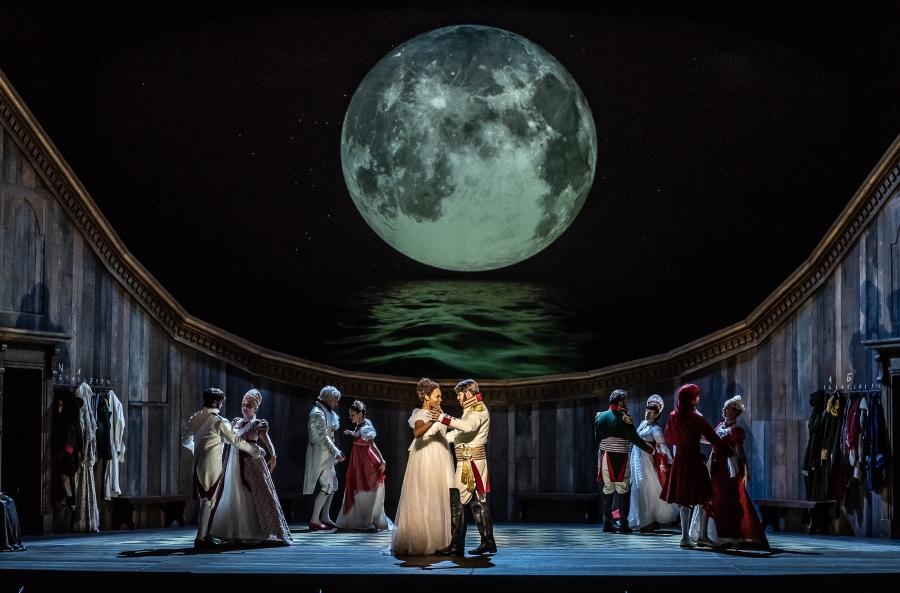
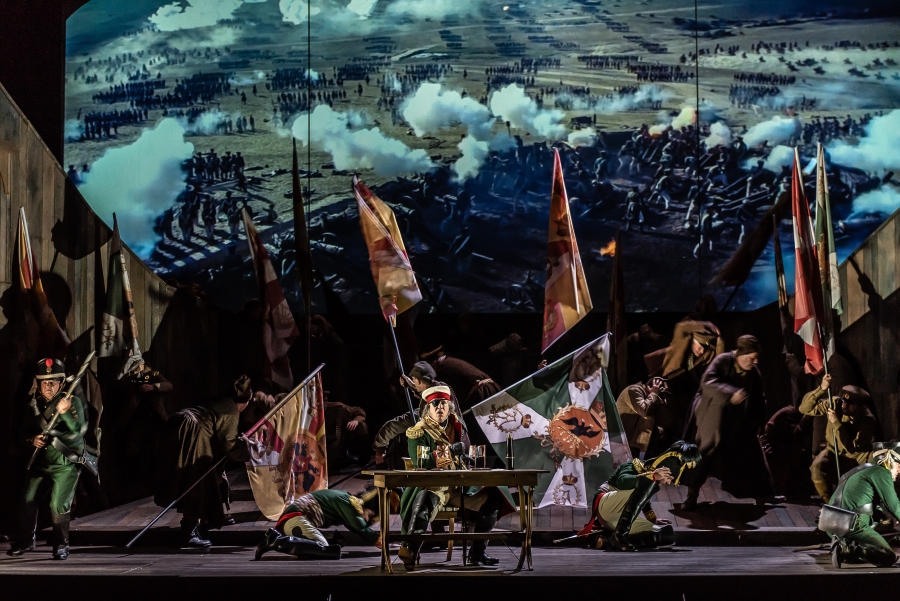
David Pountney’s production draws of the strengths of his earlier staging of In Parenthesis to bring the action close to the audience and maintain the sense of a narrative unfolding before the participants as well as those seated in the auditorium. For this, Robert Innes Hopkins’ steeply curving set with its two doors is effective for the numerous changes of place and scale, aided splendidly by the projections created by David Haneke, which in turn draw on the 1966 film version of War & Peace. It is all remarkably effective in creating a sense of the epic scale of events as well as the intimacy of the opening scenes in the various noble households.

Singing the score in English is a mixed blessing. For the solo scenes it is helpful in maintaining the narrative but the large choruses lack the edge that sung Russian would bring.

The other great benefit of the ensemble which WNO can draw upon is the strength of the large number of minor parts which Prokofiev requires. Some doubling up was sensitive but so was the use of chorus members for small parts, where there was never any sense of two tiers of singers – all were equal within the cast as a whole.

Of the principals, tenor Mark Le Brocq was outstanding as Pierre and grew in stature as the evening progressed. Jonathan McGovern’s over-smooth Andrei oozed his way through the opening scenes though his death was unexpectedly moving. David Stout sang four roles, including Denisov and Napoleon, creating incisive characters for each. The second half is almost entirely given over to Simon Bailey’s gruff but warmly pleasing Field Marshal Kutuzov, who gives us just enough insight into his private life to create a leader who is aware of his responsibilities.

There are not as many female parts but Lauren Michelle’s Natasha is suitably naïve until the war challenges her assumptions. She sings radiantly throughout and is genuinely moving at the end. The final tableau showing her aiding Pierre / Tolstoy writing up the events makes a fitting conclusion to the work. By contrast Jurgita Adamontye’s Helen is about as narcissistic as one could wish for, her beautiful singing at odds with the nastiness of her character.

A wonderful start to the season. The problem with such vast undertakings is that the likelihood of revival is always slim. Let us hope we don’t have to wait another generation to see the work again.

Opus Theatre World Series: Marcelo Bratke

Saturday 8th September 2018

The penultimate concert in the current World Series at the Opus Theatre brought us a stunning performance of Brazilian music from surely its finest interpreter, Marcelo Bratke.

The programme was built around the meeting in 1917 of Heitor Villa-Lobos and Darius Milhaud in Rio de Janeiro. Villa-Lobos took Milhaud to hear pianist Ernesto Nazareth, who played regularly in the foyer of the Odeon Cinema. It was a revelation, and Milhaud suddenly understood the heart of Brazilian music.

Having given us this intriguing background, Marcelo Bratke introduced the pieces individually, opening with the delightful Broken musical box by Villa Lobos followed by the more familiar Bachianas Brasileiras No4. In Brazilian folklore the stars of Orion’s belt are known as the Three Marys, and Villa-Lobos’ short suite of that name twinkles and charms with its rapid staccato and very high-lying tonal range. A lenda do Caboclo (the legend of the native) is a movingly lyrical piece and gave us a moment of reflection before the vigour and fire of the eight miniatures of A prole do bebe – a doll’s suite – which became familiar internationally when they were taken up by Rubenstein.

After the interval we moved on to Milhaud himself with his seven movement suite Saudades do Brazil, which uses Brazilian dance rhythms to underpin his frequently modernist compositions.

The final section brought us to Ernesto Nazareth and his captivating melodic and rhythmic pieces. Brazilian tango is immediately appealing and his strong classical training comes through in an homage to Chopin. The dance rhythms return in Coracao que sente – the Heart that Feels – which concluded a wonderful evening.

The Opus piano seems to get better and better, on this occasion the clarity and immediacy of the sound, even in the fastest of runs and arpeggios, was exhilarating.

There was just time for a short encore – which brought us closer to home with a wistful, romantic snatch of Chopin himself.


Welsh National Opera Announces General Director

Welsh National Opera is delighted to announce the appointment of Aidan Lang as the new General Director following an extensive recruitment process.

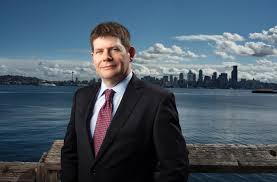
British born Lang is currently General Director of Seattle Opera, a role he has occupied since 2014. He will take up his new position in July 2019, reporting directly to the Chair and Board.

Chair of WNO’s board Mark Molyneux said “The Board of WNO are delighted with the appointment of Aidan Lang as our General Director.  We conducted an extensive, global search and were exceptionally pleased with the calibre of candidates, which reflects well on the leading reputation of the Company.  Aidan stood out, with both his deep artistic credentials as well as proven leadership skills, and we look forward enormously to working with him. The experience that Aidan brings to WNO will build on the Company’s world-wide reputation for achieving the highest artistic standards, bold and innovative productions and a wide-ranging youth and community programme. As the UK’s largest touring opera company WNO is a resourceful and imaginative company and we believe we have found a leader who embodies these qualities and is equipped to undertake ambitious plans for the future. We look forward to him building a great working relationship with all of our strong leadership team.”

During his tenure as General Director at Seattle Opera, Aidan Lang has forged new partnerships across the opera industry, including co-productions with Washington National Opera, San Francisco Opera, Santa Fe Opera, Glimmerglass Festival, Opera Philadelphia, Opera Queensland and New Zealand Opera. He also launched the first of several critically acclaimed chamber operas designed to showcase operas in a new light, especially those that have a direct connection to social conversations happening today. The company has greatly expanded the range of its youth and adult programmes, and its audience for mainstage performances has increased from 67,000 in his first season to 85,000 in the season just completed. Millennial audiences have nearly quadrupled during this period and 40% of Seattle Opera ticket buyers are now under the age of 50. He has also overseen the development and fundraising efforts for the company’s new administration and rehearsal home, which is due to open in December this year.

Worbey and Farrell


Cadogan Hall, 6 September 2018

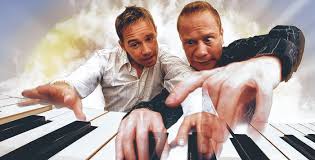
If you want a high quality piano recital cheerfully enlivened with a bit of stand up comedy than catch Steven Worbey and Kevin Farrell in action. Although they aren’t yet a household name they have performed in over 150 countries and seem to astound audiences everywhere they go – we reviewed them here when they played The Carnival of  Animals with Barry Wordsworth and Brighton Philharmonic earlier this year.

Yes, they follow in the tradition of Victor Borge and Liberace but their USP – and it’s quite a coup – is that they play four hands on one piano and arrange the music accordingly. It’s an original take on the concept of piano transcription.  This concert included their versions of Scott Joplin, Vidor’s Toccata and Fugue, Bumble Boogie, Sidesaddle and much more – culminating in a stunning rendering of Rhapsody in Blue.

Worbey and Farrell, who were at the Royal College of Music together, are partners in life as well as in music. Normally I’d regard that as a complete irrelevance but here it isn’t. There’s a comfortable intimacy in the way they play because this is definitely not piano duetting in any conventional sense.  Sharing a single piano stool, they lean across each other, tucking notes in beneath each other’s hands as they race up and down the keys taking most works at phenomenal speed. They told the audience that Joplin stipulated that his rags should be played slowly. “We’ve come to the conclusion”, Farrell said chirpily, “That he just couldn’t play them as fast as we can! So we’ll meet him in the middle.” The joke, of course, was the accelerando in the Maple Leaf Rag after a gentle start.

In addition to lots of humour – they spark well off of each other as comedians too – the concert included extracts from The Carnival of Animals which they developed for the BPO concert. Each number is preceded by an introductory verse which they’ve written and they’re pretty witty.

I also really like the projection above and behind their heads which, with a camera placed near the piano, allows the audience to watch their hands. It’s carefully thought out too. Worbey was wearing floral cuffs while Farrell’s shirt had a scarlet band at the wrist so there was never any visual doubt whose hands were whose.

They are musically highly attuned to each other and achieve some astonishing effects with prestissimo, fortissimo playing especially in the Vidor. Such virtuosic flamboyance is testament to a lot of talent, the chemistry between Worbey and Farrell and many thousands of hours of work and practice. And it makes for an entertaining concert.

Susan Elkin

Prom 70: Tango Prom

Royal Albert Hall, Tuesday 4th September 2018

A Tango concert complete with dancers to give us an immersive, if very rapid, insight into the way the dance craze made its way from the brothels of Buenos Aires to the Royal Albert Hall. A bland statement like this hardly does justice to the emotional excitement of the evening and the hedonism virtually all tango music arouses in both players and audience.

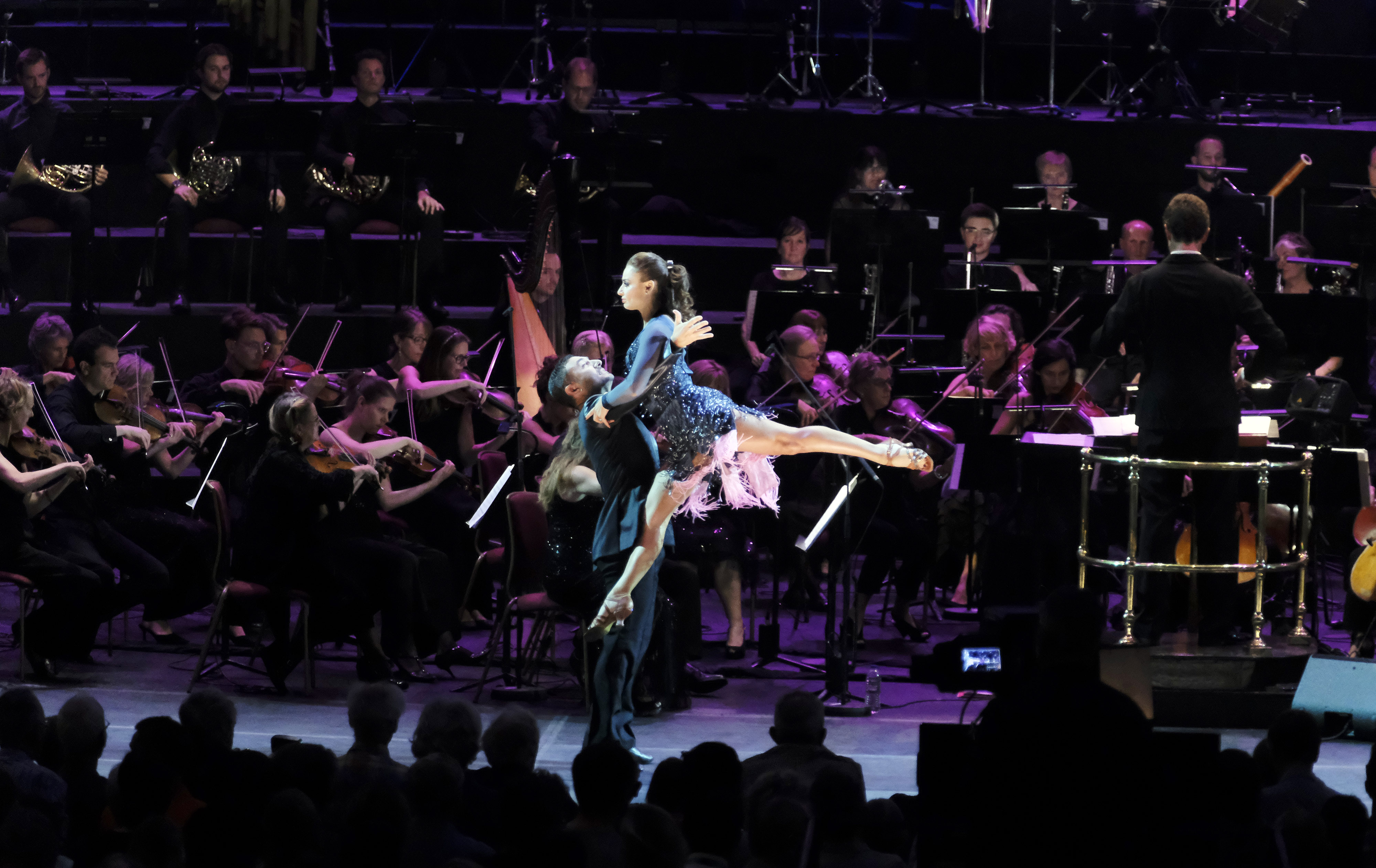
The evening opened with the strings of the Britten Sinfonia accompanying bass Nahuel di Pierro in five early songs which ooze with the smoke and sweat of a cellar bar. During El motive they were joined by tango dancers Vincent and Flavia, better known for Strictly Come Dancing than at the proms, who brought an added level of glamour and sensuality to the event.

For those unaware of the impact of tango the following section may have come as a shock as all the music was from Finland – opening with a tango arrangement of Sibelius’ Valse Triste by Timo Hietala. Five songs followed, sung by Helena Juntunen whose high coloratura can match any opera singer in this hall. An additional unexpected feature was the accordion playing of Veli Kujala whose instrument has quarter-tone settings, making for some surprising, not to say edgy, musical inflections. As if all of this had not been challenging enough in itself, the first half ended with a version of David Bowie’s Sudenkorento (Life on Mars).

If the second half seemed somewhat more conventional it was certainly not lacking in musical excitement as it was led by pianist and composer Pablo Ziegler, who continues in the tradition of Astor Piazzolla, though his own compositions encompass modern jazz and elements of contemporary classical composition. As if to set the scene the second half opened with Piazzolla’s familiar Libertango, before moving into more demanding territory with the furious pace of Fuga y misterio and the aggressive trumpet solos of Murga del amanecer. With all the Bernstein we have heard this season, Ziegler’s Places seemed an appropriately brash evocation of a city at its most dynamic. There was a slight relaxation for Blues Porteno before the very hard edged Buenos Aires Report.

All involved, including conductor Clark Rundell, who had guided us so smoothly throughout the evening, and the three bandoneon players and dancers, returned for the final rendition of La cumparsita – which traditionally ends all tango evenings. With the Proms spreading its wings so aptly one can only wonder what we are in for next year?

ENO: Salome

Boldly feminine interpretation of Richard Strauss’s Salome launches ENO’s 2018/19 Season

Opens Friday 28 September at 7.30pm (7 performances)

 Continuing English National Opera’s long tradition of reimagining the operatic canon in daring new ways, the 2018/19 Season opens with a production of Richard Strauss’s Salome retelling the biblical tale from a radical feminine perspective. Acclaimed Australian director Adena Jacobs makes her UK debut with an all-female creative team, excavating the themes of violence, sexuality and power from Oscar Wilde’s story and presenting them in a shockingly contemporary light. Allison Cook, one of the UK’s most exciting interpreters of 20th century repertoire, makes her role debut as the titular princess.

This dreamlike journey through Salome’s psyche, evoked with powerful abstract visual images, shows a claustrophobic space in which female desire replicates the violence of the patriarchal world. ENO Music Director Martyn Brabbins takes the conductor’s baton in his third production as Music Director.

Adena Jacobs is the Artistic Director of acclaimed Melbourne-based theatre company Fraught Outfit, which seeks to stage classical and biblical stories from a feminine perspective. Previous adaptations have included The Bacchae (‘extraordinary, overwhelming theatre’ – ABC) and The Book of Exodus (‘gobsmacking, brilliant’– The Melbourne Critique). She was Resident Director at Belvoir in Sydney, 2014-15. She comments: “This production of Salome is mythic, feminine and brutally contemporary. Imagined through Salome’s perspective, Strauss’s opera becomes a fever dream, a dark fantasy, and an examination of patriarchal power and control. My approach to Salome is through the lens of trauma; the ways in which cycles of violence have inscribed themselves on to the bodies and psyches of these characters.” 

Martyn Brabbins has emerged as one of the country’s leading conductors. In this, the first season he has fully programmed alongside Artistic Director Daniel Kramer, he will also conduct two more pieces, War Requiem and the world premiere of Iain Bell’s Jack the Ripper: The Women of Whitechapel.

Scottish mezzo-soprano Allison Cook, widely acclaimed for her ‘tour-de-force’ (Opera Magazine) performance as the Duchess of Argyll in the 2013 New York City Opera production of Powder Her Face and in the title role as Britten’s Phaedra at the Barbican, makes her ENO debut as well as her role debut in this production.

English bass David Soar sings the prophet Jokanaan, returning to ENO after singing his ‘first-rate’ (The Daily Telegraph) Animal Tamer and Athlete in 2016’sLulu. He also returns to ENO to sing Colline in La bohème later in the autumn. Northern Irish tenor Michael Colvin, previously seen at the Coliseum as the Painter in Lulu and as Bob Boles 2014’s Peter Grimes, sings Herod.

One of ENO’s most admired artists, Susan Bickley, sings Herodias, wife of Herod. Called ‘one of the greatest singers of our time’ (The Spectator), she has been seen on the ENO stage many times, most recently as Paulina in 2017’s premiere of The Winter’s Tale and as Eduige in Rodelinda, also in 2017. British tenor and former Glyndebourne Young Artist Stuart Jackson makes his house debut as Narraboth.

Mezzo-soprano Clare Presland sings Herodias’s page, having given a ‘beautifully considered’ (WhatsonStage) Hermia earlier in 2018 in A Midsummer Night’s Dream.


The Jews, Soldiers, and Nazarenes ensemble includes members of the award-winning ENO Chorus, continuing an ENO practice of featuring Chorus members in principal roles from the Studio Live programme. The cast is completed by Trevor Bowes as the Cappadocian and Ceferina Penny in her house debut as the Slave.

Multi-award-winning designer Marg Horwell makes her UK debut after a much-lauded career in Australian opera and theatre. Lighting design is by Lucy Carter, whose many awards and plaudits for work including Oil at the Almeida Theatre (2016) and ENO’s own The Dream of Gerontius at the Southbank Centre (2017) have made her one of London’s most sought-after lighting designers. Australian choreographer Melanie Lane completes this all-female creative team.

Salome opens on Friday 28 September at 7.30pm at the London Coliseum for 7 performances: 28 September 3, 6, 12,18, 23 October at 7.30pm and 20 October at 6.30pm.


Hastings Litfest 2018

‘It’s just paper and ink – but it can reach into your heart and grab it’. Hastings first Litfest crammed thirty two events into little more than two days – so many that even an enthusiast like myself could cover nowhere near all that was on offer. Here we will concentrate on those at the Opus Theatre which proved a remarkably responsive venue for single presentations and larger theatrical events.

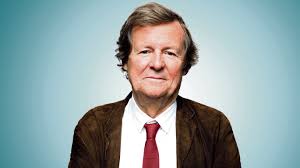
The opening quotation came from Kathryn Evans at the discussion by authors Writing for Children and Young Adults on Saturday morning. It took up the ideas raised by Sir David Hare, the Festival Patron, the day before. He was remarkably honest about his time in St Leonards and Bexhill, places he could not wait to leave, but the sense of isolation it brought also encouraged him to read intensively and subsequently to be a writer. He accepted that he had avoided the South Coast for most of his life but had recently, with an invitation to write about the South Downs and subsequently Glyndebourne, come to appreciate what Sussex has to offer, and is genuinely enthusiastic about this, the first of what is hoped to be many Hastings Litfests. It felt, he said, like a homecoming.

The complexity of emotions which writing raises for any individual was perfectly reflected in the choice of David Hare’s verse which was read by Julian Sands. Where his plays always have an intermediary – as with most art forms be they opera, concerts, or exhibitions – verse is intensely private and his poetry has only, so far, been published for private distribution. Many of his poems are dedicated to and reflect on his long term relationship with his wife Nicole Farhi. They are so personal that at times we seemed to be intruding.

This theme was taken up again by the panel of five authors writing books for children and young adults. Led by Sunday Times journalist Nicolette Jones they discussed their own reading as children and the influences upon them. The scope of writing for children is vast and it became clear as the session progressed that all of them valued the breadth of vision they can bring to children’s books which are often more limited within the rigid categories for adult fiction. Deeper philosophical points were raised when questions of identity came to light ‘who am I? How do I know who I am?’ and all concerned agreed that writing for young adults often gives them a freer hand than might be the case with adult fiction.

In the afternoon Sophie Hannah provided a highly entertaining introduction to her work writing continuation stories for Agatha Christie’s Hercule Poirot. There seemed to be a rather uncomfortable interface between the creative challenge of a new story fitting the Poirot / Christie model and the families desire to sell ever more Agatha Christie novels to a new generation who prefer to be on their phones rather than reading books. On the more positive side we can look forward to a first Murder Mystery Musical at next year’s Litfest.

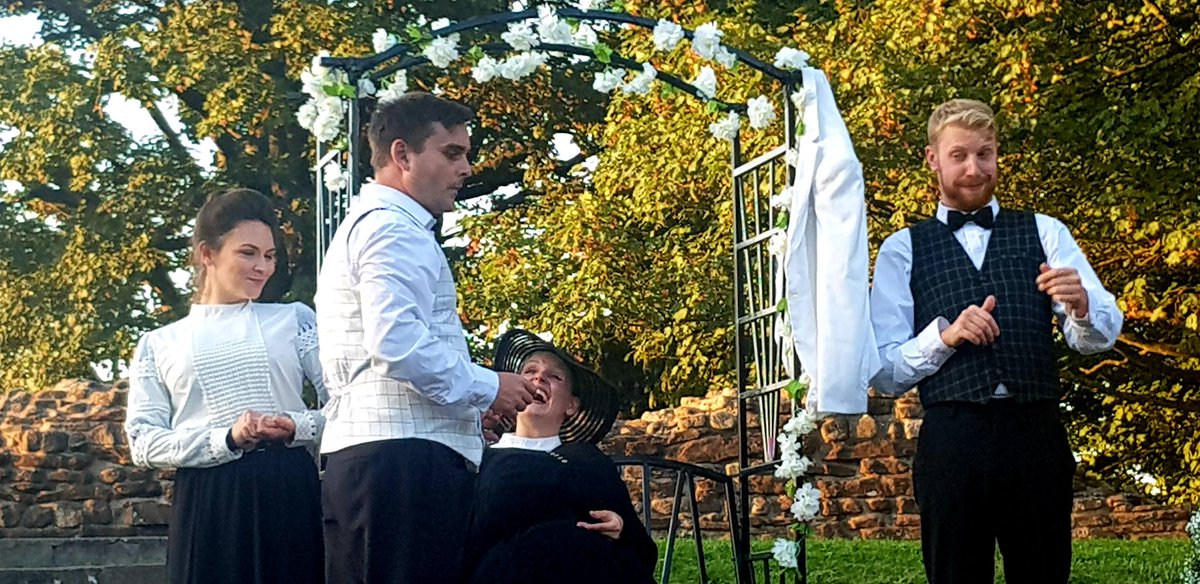
The evening’s entertainment took us very clearly away from our phones. The Pantaloons have a strong reputation for working closely with their audiences even if it is (often necessarily) at the expense of the original text. Their version of The Importance of Being Earnest, with just four actors, is hilarious and gloriously entertaining. It draws on the assumption that most of the audience know the play very well long before they arrive, and that we can all join in with a hand-bag!!! Moreover they add in musical numbers which are entirely apt to the approach as a whole, and remarkably well sung and played. In the long run the approach stays faithful to the original and simply brings an old war-horse comfortably into the twenty-first century. Jennifer Healy gives us a sexily overt Fenella Fielding as Gwendolen and a Miss Prysm such as none of us have ever previously encountered – or would want to. Alex Hargreaves as Jack/Earnest is almost the most normal of the cast but has fine moments of eccentricity. Fiona McGarvey brings us a Lady Bracknell which would make Dame Judi blush, while Neil Jennings holds the whole thing together with an Algernon who appears to be normal – if totally untrustworthy. The performance was obviously couched for out-doors but worked well within the spaces of the Opus Theatre. Let us hope The Pantaloons are encouraged to return soon.

The festival spread it wings to the White Rock, the Electric Palace Theatre, the Horse and Groom, the Kino Teatr, with workshops at the Stade Hall, Archers Lodge and The Stables Theatre, with the concluding events in the Royal Victoria Hotel.

Generous thanks to the many volunteers, without whom none of the events would have happened and to the organisers of what we firmly hope will become a fixture in the cultural life of Hastings.