
Darbar Festival 2013


darbar

Thursday 19 to Sunday 22 September

http://www.darbar.org/darbarfestival

The Darbar Festival returns to the Southbank Centre following its sell out success in 2012 for another invigorating weekend of music, talks, food, and yoga from Thursday 19 to Sunday 22 September in the Purcell Room for a full immersion in the hypnotic flavours of India. This year the unique Festival of both Hindustani and Carnatic music will showcase the next generation of India’s most respected up and coming talent with a special focus on female performers, some of whom will be performing in London for the first time. The Festival will also celebrate the life and memory of the great Pandit Ravi Shankar who passed away in December 2012.

The 2013 Festival

Thursday 19th

6.30pm – ‘Transposed Rhythm and the Saraswati Veena’

Bernhard Shimpelsberger drums
Sukhad Munde pakhawaj
Interval
Jayanthi Kumaresh saraswati veena
Patri Satish Kumar mridangam
RN Prakash ghatam
The Festival opens with a double bill concert of drums performed by Shimpelsberger to Indian rhythms together with Munde on the pakhawaj.

Friday 20th

12:45pm – ‘Tribute to Ravi Shankar’

Oliver Caske

Simon Broughton

Find out more about the life and times of this great Indian classical music maestro. Illustrated with photographs rarely seen by the general public.

2.30pm – ‘Great Improvisational Expectations’

Debashish Bhattacharya slide guitar

Yogesh Samsi tabla

The trendsetter Bhattacharya presents afternoon ragas through his virtuosity. He doesn’t believe in the difference between classical music from East and West, but sees it simply as universal. He is accompanied by one of India’s foremost tabla maestros, Samsi, who takes the improvisational accompaniment to dazzling heights.

6pm – ‘Darbar Unplugged: Saraswati Veena’

Jayanthi Kumaresh saraswati veena

Patri Satish Kumar mridangam

RN prakash ghatam

Jayanthi Kumaresh is the most highly prized Saraswati veena player in India – enjoy the traditional way to hear Saraswati veena.

6.30pm – ‘Colours of Dhrupad and the Majestic Sarod’

Nirmalya Dey dhrupad vocal

Sukhad Munde pakhawaj

Interval

Ustad Wajahat Khan sarod

Akram Khan tabla

Dhrupad predates the Hindustani and Carnatic traditions of today but sadly there are merely a handful of remaining practitioners making this concert a rare treat. Khan, belonging to a 400-year musical dynasty is a celebrated composer and sarod maestro. He performs ragas in the Imdadkhani Gharana style.

Saturday 21st

10.00am – ‘Glorious Morning: Ragas Unwrapped’

Manjusha Kulkarni-Patilkhayal vocal
Tanmay Deochake harmonium

Akram Khan tabla

Manjusha Kulkarni-Patil is India’s most sought after young virtuoso of the Agra and Gwalior Gharanas. In her debut UK concert, she presents these morning ragas in her inmitable style which savours their expressive implications of the words, relishing their subtle shifts of rhythm to create a sighing quality.

10:15am – ‘Darbar Unplugged: Morning Sitar Recital’

Mehboob Nadeem sitar

Harkiret Bahra tabla

Mehboob Nadeem performs morning raga melodies in a rare mehfil-style concert.

2.30pm – ‘Enchanting Afternoon Ragas on 100 Strings

Harjinderpal Singh Matharu santoor

Yogesh Samsi tabla

Harjinderpal Singh Matharu performs mesmerising ragas on the santoor, an ancient string instrument that produces a beautiful trance-like sound, which Sufi mystics use as an accompanying instrument in their divine music.

6pm – ‘Darbar Unplugged: Rudra Veena’

Ustad Baha’uddin Dagar rudra veena

Sukhad Munde pakhawaj

An opportunity to hear Dagar, a 21st-generation musician and one of a handful in the world playing the rudra veena. The young maestro Munde accompanies him on the pakhawaj.

6.30pm – ‘Iconic Sitar to Mesmerising Carnatic Ragas’

Anupama Bhagwatsitar
Gurdain Rayatt table

Interval

Sudha Ragunathan carnatic vocal

Jyotsna Shrikanth violin

Patri Satish Kumar mridangam

RN Prakash ghatam

In her UK debut performance, Bhagwat plays the sitar with vigour that is the hallmark of her Imdadkhan Gharana. She is accompanied by Rayatt, the UK’s rising star of tabla.

Ragunathan, known for her enchanting voice, is the most eminent singer in the South Indian devotional Carnatic tradition. A trio of Carnatic heavy weights will accompany her.

Sunday 22nd

10.00am – ‘Morning Ragas: Sitar on Fire’

Pandit Budhaditya Mukherjeesitar
Soumen Nandi tabla

The sitar phenomenon Mukherjee returns to the London stage after an absence of six years. With his bullet speed virtuosic ability, he has been described by the great veena maestro, S. Balachander, as the sitar artist of the century. Nandi makes his debut UK appearance accompanying Mukherjee.

10:15am – ‘Darbar Unplugged: Kirana Gharana Khayal’

Dr Vijay Rajput khayal vocal

Tanmay Deochake harmonium

Shahbaz Hussain tabla

Dr Rajput, a disciple of the illustrious North-Indian vocalist Pandit Bhimsen Joshi, is one of Britain’s most talented classical Indian vocalists. He returns to the Darbar Festival to perform poetic morning ragas.

12:45pm – ‘Where Are the Women?’

Sudha Ragunathan

Dharambir Singh MBE

One of India’s most experienced Carnatic vocalists Sudha Ragunathan talks vividly about her life as a female musician and explores the role of women in Indian classical music.

2.30pm – ‘Limitless Tabla, Punjab Style’

Yogesh Samsi tabla

Tanmay Deochake harmonium nagma

This long awaited tabla solo shows of the amazing versatility of this instrument through the hands of India’s great intellectual table maestros. Samsi’s sublime dexterity in manipulating time and tone through rhythmic patterns is exhilarating to witness. Deochake accompanies him on nagma.

6:00pm – ‘Rudra Veena to Magnificent Khayal’

Ustad Baha’uddin Dagar sitar

Sukhad Munde pakhawaj

Interval

Pandit Raghunandan Panshikar khayal vocal

Tanmay Deochake harmonium

The Dagar family dynasty is synonymous with Dhrupad. Dagar is noted for his control of the raga. The terrific young Munde accompanies on the pakhawaj. Panshikar presents evening ragas from the Jaipur Atruli Gharana, known for its beautiful and unusual ragas, and is accompanied by an array of stalwart musicians.

6pm – ‘Darbar Unplugged: Sitar & Tabla’

Aunpama Bhagwat sitar

Gurdain Rayatt tabla

One of India’s freshest female sitar maestros, Bhagwat, makes her debut visit to the UK. She is accompanied by leading UK tabla player Gurdain Rayatt.

www.southbankcentre.co.uk/darbarfestival

Southbank Centre Ticket Office: 0844 875 0073
BIRMINGHAM INTERNATIONAL CONCERT SEASON 2013/14

· Appearances by Gustavo Dudamel, Lang Lang, Karita Mattila, Sir Antonio Pappano, Maxim Vengerov, Joseph Calleja, Ingrid Fliter, Joshua Bell, Andreas Scholl, John Lill, András Schiff

· San Francisco Symphony and Michael Tilson Thomas visit Birmingham for first time since 1995

· Season opens with Peter Grimes from London Philharmonic and Vladimir Jurowski, continuing Birmingham’s Britten Centenary

· Sir Roger Norrington’s 80th birthday concert

· Three-concert residency from the Pavel Haas Quartet

· Bach: A Beautiful Mind: six events in the biennial Bach celebration

· Thomas Trotter’s 30th anniversary recital as Birmingham City Organist

· International visits from Orchestra Accademia Nazionale di Santa Cecilia, Moscow Philharmonic, Vienna Tonkünstler Orchestra, Zurich Chamber Orchestra and Apollo’s Fire

· Opera performances from The Royal Opera and Opera North’s Ring Cycle, The English Concert in Handel’s Theodora and Music Theatre Wales production of Mark-Anthony Turnage’s Greek

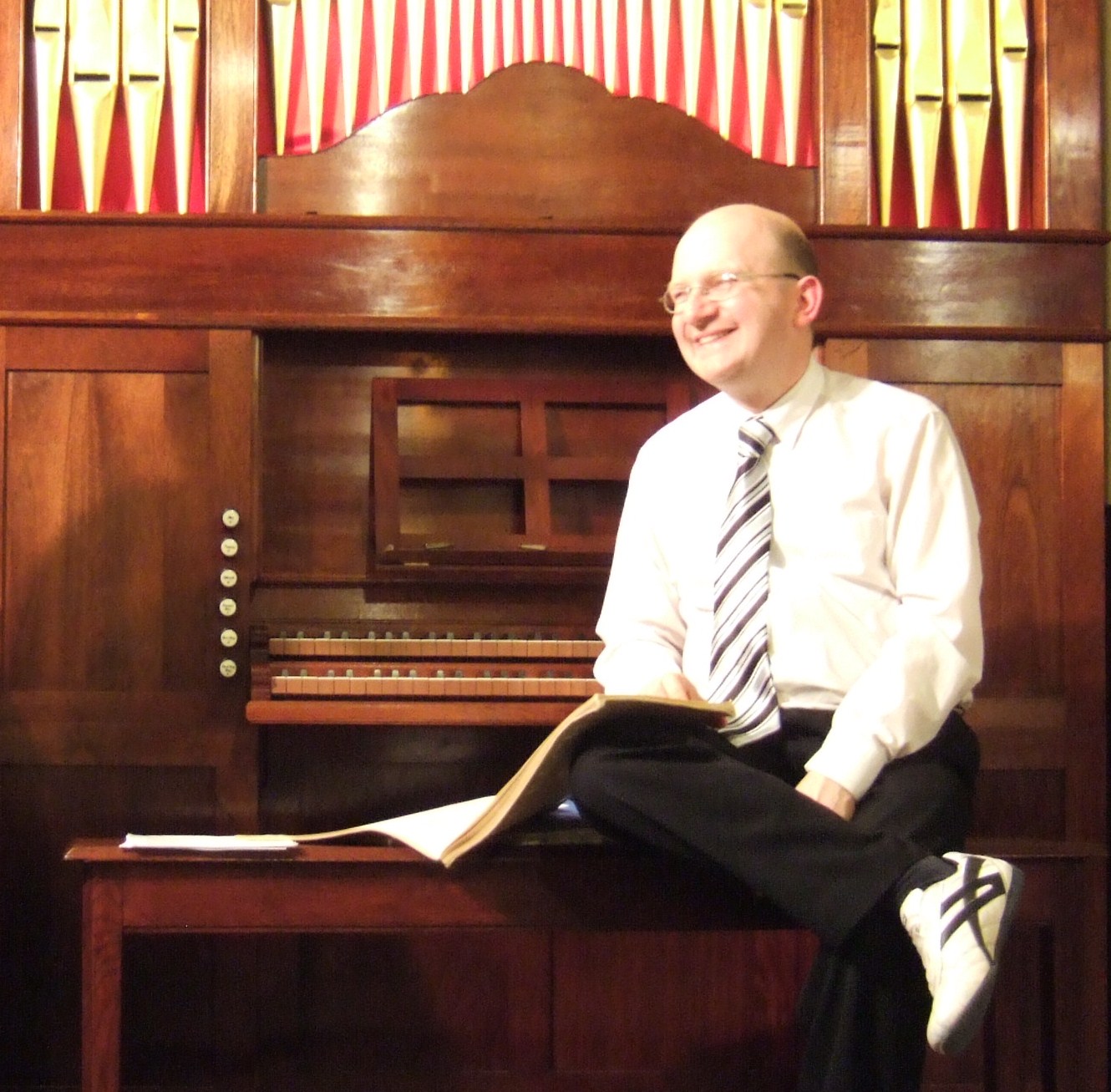
Stephen Page

s page for web

Hastings Unitarian Church, 13 April 2013

The first in the new series of organ concerts opened with a sprightly rendition of Purcell’s Trumpet Tune which had the additional pleasure of the Air which is so often omitted. In a programme of gentle music, which seemed to match the gentle April showers outside, we next heard Charles S McClain’s Prelude on Were You There, which has just enough acid in its textures to keep the mind involved.

Three short pieces by the sixteenth century Virginalist Giles Farnaby suited the Snetzler very well, with its soft flute particularly apt for the Spagnioletta. Jacques Berthier is better known as the composer of many Taize chants, but here we heard his mellifluous variations on Lobe den Herren.

Bach’s Prelude & Fugue No22 from Book 1 of the 48 was followed by Reverie by Vierne. This allowed Stephen to indulge himself in the solo Dulciana, managing to sound far more romantic than it should.

The second movement of William Russell’s Voluntary No5 has a prophetically Menselssohnian feel to it, with a warmth that led us easily into four short pieces by Howard Skempton. Swedish Caprice has jolly syncopation and there is a delightful irony in the extended melody for Well, well, Cornelius.

Edmonstoune Duncan’s Solemn March  should have been the end but – with summer in sight – Stephen gave us Blaze Away to send us home whistling happily.

The next concert is on Saturday 29 June at 2.30pm, and there is an open invitation to the 1066 Choir & Organ President’s Evening on 27 April at Sackville Road Methodist Church, Bexhill, at 7.30pm  BH

Royal Greenwich String Quartet Festival: 2

greenwich 2

Friday 12 April

The second day of the festival opened with a masterclass from the Caroducci Quartet and a lunchtime concert from the Benyounes Quartet.  Later that afternoon the Trinity Laban String Ensemble was joined by the Benyounes Quartet in the Old Royal Naval College Chapel. Due to train delays I unfortunately missed the opening Schnittke but was comfortably seated in time for a ravishing performance of Elgar’s Introduction and Allegro for Strings. The fact that the higher strings were all standing seemed to give a greater impact to the ensemble with a richness and warmth often missing in larger concert halls. A live performance also highlights the quartet’s relationship to the main ensemble and the sensitivity of Elgar’s scoring for them. There was an eagerness and bite to the playing which impressed as well as a readiness to accept the sentimental edge of the more reflective passages.

Shostakovich’s Chamber Symphony in C minor – an arrangement by Rudolf Barshai of the Eighth String Quartet – could hardly have been more different and highlighted the versatility of the ensemble. The opening may be bleak but it was the intensity of the Allegro Molto which galvanised the listener. The Allegretto dances its way forward – with hints of the Dance of Death rather than a folk festival and the brooding Largos drew the work to its uncompromising close. The anger in these final pages would seem to deny any suicidal tendencies, but this is a powerfully disturbing work, and played with relish. Ani Karapetyan was an impressive soloist in this arrangement, and the ensemble was sensitively conducted by Nic Pendlebury.


In the evening we were back in the chapel for the Quatuor Mosaiques, who play period instruments with gut strings. After many hours of modern instruments it took a little time to adjust to the softer, less focussed tones of the quartet. They opened with three fugues by Gregor Werner for which Haydn had provided slow introductions. Only the third – an Adagiose – proved of any real interest, and the fugues by Werner were pleasant but uninvolving.

Haydn’s own F minor quartet, Op20 No5, followed and proved more satisfactory. The opening Moderato demonstrated how forward looking his composition was even at this early stage and the hesitant Menuet fascinates in its seeming inability to decide where it is going. The Adagio brings a necessary respite before the solid ground of the fugal Finale.

As part of the late Beethoven cycle, the quartet ended their concert with Op130 and the Grosse Fugue. There was a slight mismatch between the printed programme and their performance. We had read that the quartet would be performed in Beethoven’s revised version with the new shorter final movement, followed by a separate performance of the Grosse Fugue. In the event we were given the original version, with the Grosse Fugue as the final movement. No problem, but a jolt to the system when they launched unexpectedly into the Grosse Fugue. The performance was well shaped, though the use of gut strings in this acoustic tends to soften the details to the point where, in the Presto, they became fudged. The Andante was more expressive and the Alla danza maintained a seductive rhythm. The Cavatina again lost some detail in the inner voices, but clarity returned for the final movement, with impressive authority and sense of structure.

The final day brings more workshops and the site specific world premiere of Deirdre Gribbin’s Hearing Your Genes Evolve on the Cutty Sark. BH

 www.trinitylaban.ac.uk


Royal Greenwich String Quartet Festival


Thursday 11 April

The weather seemed to have turned just in time to welcome the newly named Royal Greenwich String Quartet Festival, which must boast some of the finest venues in the Capital. Coming out of the Old Royal Naval College Chapel on Thursday evening the air was mild, the building delicately floodlit and across the river Canary Wharf twinkled delightfully. It was the sort of magic we have been waiting for across a long hard winter.

The day was centred on a Chamber Music Bonanza – a cluster of sessions for student musicians, working with lead professionals and the Carducci Quartet, culminating in an afternoon concert in St Alfege’s Church. The opening Brahms’ Violin Sonata had a little difficulty with balance, the piano being rather overpowering, but it ended well. Two movements from Haydn quartets showed strong rapport from a quartet of students who appeared to have come together relatively recently. They also showed a good understanding of Haydn’s humour.

The Pierrot Trio played the first movement of Beethoven’s Eb Trio Op1 No1, with excellent balance, and a fine performance of the Andante from Shostakovich’ Piano Trio No2 Op67. The muted cello at the opening was very impressive, and the transitions within the movement were well controlled.

The Vilaseca Quartet brought the most challenging music of the afternoon with three works by Britten. The opening Alla Marcia sounded distinctly uncomfortable, as if a pacifist had been forced to write a military march, and all the more convincing for the tension created. The Rhapsody for String Quartet is equally challenging in the near ferocity of the writing, which the quartet handled with surprising ease. The Three Divertimenti concluded the afternoon, with a whimsical Waltz lingering in the memory.


In the evening we moved into the Old Royal Naval College Chapel for a concert given by the Arcadia Quartet, who opened with Wolf’s Italian Serenade. The acoustic in the chapel favours the bass registers making the cello and viola parts sing with particular ease. The Wolf has just enough tension to warn us of what is to come without making us uneasy. Janacek’s Second Quartet Intimate Letters brought a richness and intensity throughout, but allowed the playful moments to spin into the air without difficulty. The emotional tension of the Adagio was very well created and the Moderato brought an unexpected sense of hope where many players can only sense despair. The final Allegro returned us to the world of Janacek’s Vixen, and a sense of continuing hope.

The bleak, almost suicidal, loneliness of the opening of Beethoven’s Op131 was painfully impressive. If there was a hint of heroism in its ability to face the awful truth it was deeply hidden. The following Allegro did little to break the spell of the opening and it was not until the unfolding variations of the fourth movement that any sense of peace began to ensue. After this the Presto bounced almost playfully and the following Adagio seemed less desolate that the opening had been. Perhaps there was hope after all? The final movement did not agree. The aggression was there but also a darkness at its heart, failing to throw off the bleakness of the opening which had remained throughout. This was a totally convincing reading of what for me is Beethoven’s finest quartet. BH

The Festival continues on Friday and Saturday. www.trinitylaban.ac.uk


Bach: St John Passion


Hastings Philharmonic Choir & Orchestra, Marcio da Silva

Christ Church, St Leonards, 6 April 2013

It is always a pleasure to attend a local performance which needs no allowances for being local. Such is the quality of music making under new conductor Marcio da Silva that one can relax and enjoy every aspect of the event without having to make any mental compromise.

The young soloists presented us with an interesting range of voices. Soprano, Alice Privett and tenor, Peter Kirk had more developed operatic voices which highlighted the dramatic side of Bach’s writing while Angela Simkin’s more introspective style suited the intimacy of Es ist vollbracht. Daniel Joy’s Evangelist brought a welcome clarity in his diction and an emotional involvement which carried the narrative forward. Laurence Meikle’s Jesus was noble but humane.

The soloists in the orchestra excelled themselves with a touching viola da gamba solo from Jenny Bullock and fine, intense, woodwind playing throughout. The choir’s sound was well balanced and their accuracy impressive. They negotiated the many difficulties in the score with apparent ease and moved seamlessly from the dramatic to the reflective. Though the acoustic in the church is supportive of choral music there were some problems with the clarity of the text. Though one understands why it might be preferable to sing the work in English, the German text would have cut the acoustic with greater clarity and often words were lost because of the soft edges of the translation.

Throughout, Marcio da Silva maintained a steady pace which gave us time to consider what we were hearing, rather than being driven too rapidly forward, but it never became over-indulgent.

Christ Church, St Leonards, has a venerable history of fine musical performances since it was first opened and the choir can feel confident that they are building on this reputation.

For their next concert on 22 June they are returning to St Mary in the Castle for an evening of American and Brazilian folk music. www.hastingsphilchoi.org.uk BH

Peggy Glanville-Hicks: Sappho

Deborah Polaski, John Tomlinson, Orquestra Gulbenkian, Jennifer Condon

TOCCATA CLASSICS 

TOCC 0154-55


Peggy Glanville-Hicks is almost unknown today but she produced a significant number of works including two operas in the early nineteen-sixties. With a cast as strong as this, and secure playing from the orchestra, it should be easy to welcome this new release. Unfortunately the quality of the work itself leaves much to be desired. No matter how good the singing, the fact that the musical line rarely provokes or involves the listener is a significant barrier. The text by Lawrence Durrell seems dated now in a way that Tippett’s own texts – once vilified – seem timeless and effective. There is little dramatic impact and  any sense of pacing or structure is too often lacking. What appear from the text to be emotionally important moments drift by with little intensity or frisson.

It is good to have the recording available, if only to realise, on this occasion, that we have not overlooked a masterpiece. BH

1066 Choir & Organ: A Musical Celebration


Saturday 27th April 7.00pm

Sackville Road Methodist Church, Bexhill-on-Sea 

Featuring 

Calvert Methodist Church Choir, Hastings

The Melodians

Regency Singers

Musicians from King’s Church, Hastings

Edward Preston

Lin Westcott

Andrew McGregor

Stephen Page


Introduced by Dr Brian Hick

Free Admission – donations to St Michael’s Hospice