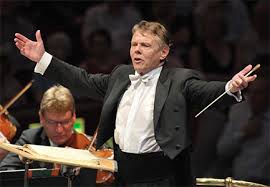
Prom 35: Mahler Symphony No 2 The Resurrection

M JansonsFriday 9 August, 2013

Bavarian Radio Symphony Orchestra, Bavarian Radio Chorus, WDR Radio Choir, Cologne, Mariss Jansons

It is fifty years since I first heard Mahler’s Resurrection Symphony at the Proms under Leopold Stokowski and I don’t recall how full the Royal Albert Hall was then given that Mahler was not in fashion. There were certainly very few seats last night when Mariss Jansons led his Bavarian forces in a carefully controlled but compelling reading of the score. The edgy, plaintive opening gave way only fitfully to moments of solace which were quickly snuffed out and the final melt-down to the long first movement seemed to indicate that death was, after all, just a joke.

The second movement was surprisingly light, almost hesitant, in its unfolding, with touches of sentimentality before Jansons took it by the scruff of the neck and forced out any lurking hints of joy.

The third movement was full of gentle dance rhythms and brought us a headily indulgent trio, before Gerhild Romberger, singing from the midst of the orchestra, oozed her way into Urlicht, a magical moment, beautifully executed. She was joined by Genia Kuhmeier in the finale and both soared effortlessly over the enormous forces around them.

The fury of the finale was always tightly controlled, a sense that we were being encouraged to experience without indulging over-emotionally in the narrative. The hushed opening bars from the united chorus were breath-taking, like wind in the trees on a summer night, but once the movement eased towards its climax it was as if the chorus took off by themselves and there was no stopping the inevitable shattering climax.

The orchestra gave us the dynamic range of the work without the rawness which other performers often bring to it, though it never lacked excitement. The extended roar at the end was certainly justified. BH
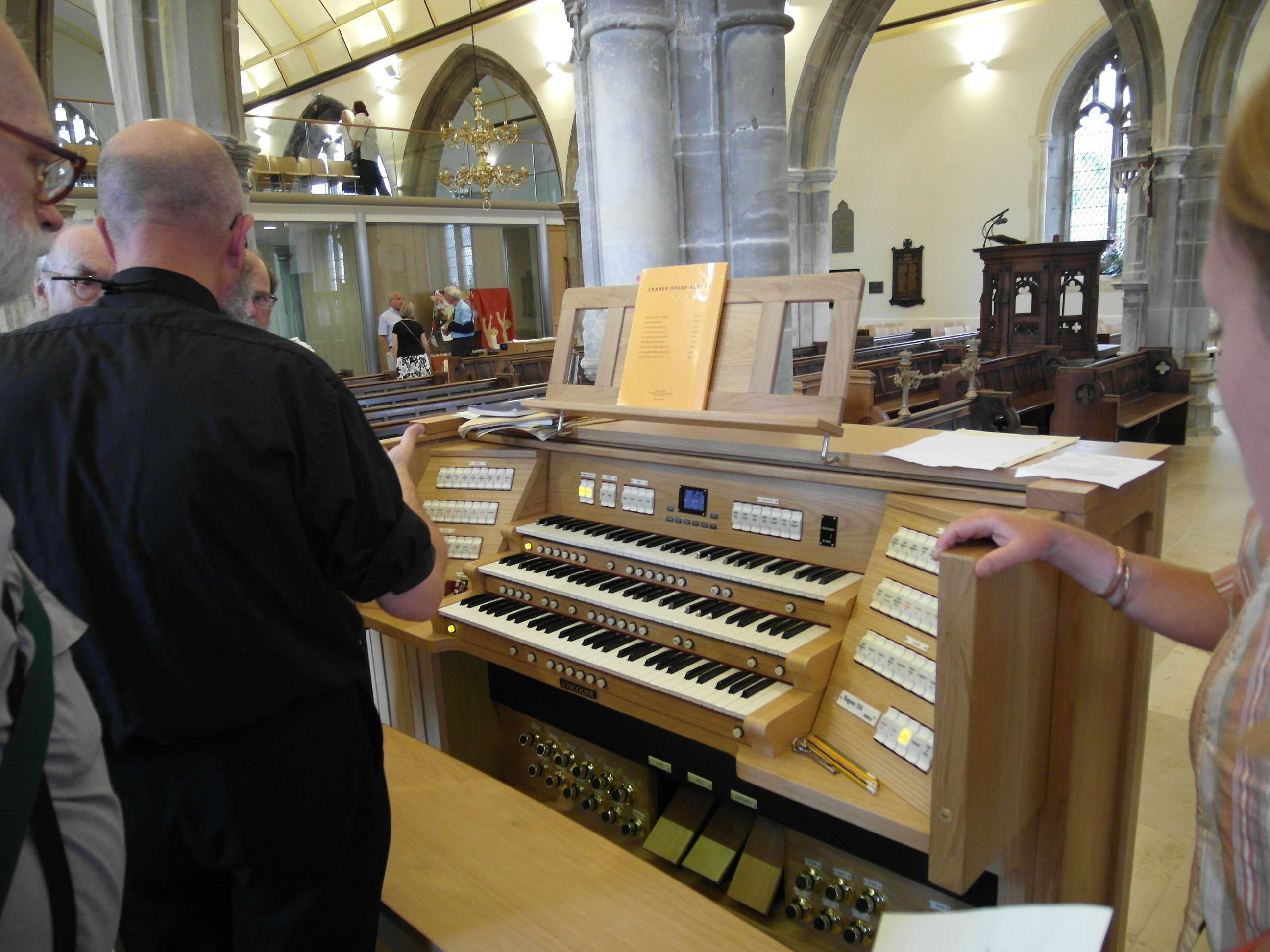
St Clement’s New Viscount

St Clements (12)

The magnificent re-ordering of St Clement’s Church, Hastings Old Town, has included the replacement of the pipe organ with a three manual and pedal Viscount digital organ. At a lunchtime concert on 7 August, as part of Hastings Old Town Week, Rev Robert Featherstone played a range of works to demonstrate the new instrument, opening with Arthur Wills’ Fanfare which gave us the power of the instrument as well as a taste of its reed capacity. Bach’s Giant Fugue allowed us a feel of the potential for north German voicing before a gentle and highly effective reading of Henry Ley’s Prelude on Down Ampney.

W Lloyd Webber’s Trumpet Minuet demonstrated a different side of the reeds before a relaxed reading of Whitlock’s Folk Tune allowed us to hear the gentler choruses and strings. Vierne’s Berceuse, possibly the most effective piece of the concert, showed us the dynamic range of the Swell, and the subtlety it can produce. As this organ will be used primarily for liturgical purposes it was fitting that the main programme ended with David Terry’s Prelude on Angel Voices. Being both quintessentially English and yet modern in its harmonies, it was a fine conclusion to a pleasing range of works.

With only a little persuasion, Robert Featherstone gave us C S Lang’s Tuba Tune as an encore, and a bright, enthusiastic rounding-off. St Clement’s are privileged to have a leader who is not only an enthusiast where church music is concerned but a professional organist in his own right.

Many were sorry to lose the old pipe organ but, rightly, the All Saints Willis is an historical gem and should be preserved at all costs. If, in the event, the St Clement’s instrument could not justify the cost of replacement then this was a necessary outcome. The Viscount is not yet fully voiced into the building. Some textures seem slightly woolly and the pedal sound does not resonate with sufficient authority. But these, thanks to the wonders of technology, can easily be address, and as our highly competent local organists get to grips with this new addition I am they will explore its capacity and strengths. BH

THE TWELFTH OXFORD LIEDER FESTIVAL 11 – 26 OCTOBER 2013


Two weeks packed with world-class concerts, talks, master-classes and more make Oxford the number one destination for song lovers this autumn. Highlights include: Sir Willard White (15 Oct), Toby Spence (23 Oct),Kate Royal (26 Oct), Mark Stone (18 Oct) and Joan Rodgers (21 Oct); Wolfgang Holzmair and Imogen Cooper(22 Oct) in an all-Schubert programme; Roderick Williams and Andrew West performing Schumann’s Dichterliebeand a major new commission from composer Robert Saxton (16 Oct); Christoph Prégardien and Roger Vignoles (25 Oct).

The complete songs of Benjamin Britten are presented in conjunction with Britten in Oxford, a year-long celebration of the composer. Over the weekend of 19/20 Oct, there will be a particular emphasis on Britten, with artists includingBenjamin HulettStephan Loges and Joshua Ellicott. The final concert of this features James Bowman, who will talk about his experiences of working with Britten. Songs will also appear in the well-established lunchtime series that gives a platform to the best students from the UK’s leading conservatoires.

Oxford Lieder’s ambitious project to perform and record the complete songs of Hugo Wolf concludes with his settings of Goethe (12, 14 and 17 Oct), with artists including Roderick WilliamsAndrew Kennedy, Daniela Lehner, Sophie Bevan, Jonathan Lemalu ; Oxford Lieder’s artistic director Sholto Kynoch is the pianist for the series.

Settings of Goethe will also feature in a study day devoted to the great writer and polymath and his influence on the world of song (12 Oct). Roger Vignoles will lead this year’s residential master course (20-23 Oct) and there are master classes for aspiring professionals and amateur singers.  Other events include free family concerts and a screening of Tony Palmer’s latest film on Benjamin Britten Nocturne. Concerts take place in the Holywell Music Room (Europe’s  oldest concert hall), New College Chapel, St Michael in the Northgate, and Oxford’s newest music venue, the beautiful church of St John the Evangelist, Iffley Road.

For full programme visit http://www.oxfordlieder.co.uk/2013-festival-brochure

Tickets £6 – £30 from 01865 305305 / www.ticketsoxford.com   www.oxfordlieder.co.uk

Schubert; Winterreise

Sheldonian Theatre, Oxford, 5 August 2013

Christoph Pregardien, tenor; Menahem Pressler, piano

The Sheldonian may not be the most comfortable of venues for most of the audience but this seemed appropriate when undertaking Winterreise with such profoundly moving musicians. Christoph Pregardien’s approach to Schubert’s cycle seemed surprisingly positive in the opening Gute Nacht but one soon realised this, and the occasional angry outbursts, were a futile attempt to address the overarching need to reconcile oneself to loss and eventual death.

Along the way there were many wonderful moments. The final line of Gute Nacht brought just the hint of pain which returned again in Wasserflut. There are brief moments of remembered joy in Erstarrung and Der Lindenbaum but these do not last, giving way to bitterness at the end of Auf dem Flusse. As the cycle unfolded it was clear that Christoph Pregardien was moving us to a point of resignation where we could accept the inevitable. This was possibly the most poignant moment. At the end of Der Wegweiser there was a sudden sense of calm, an acceptance of the inevitability of, almost a wish for, death, which led to a glowing account of Das Wirtshaus. But death does not come and bitterness returns as he flung Mut into the face of fate. The concluding Der Leiermann was enigmatic and disturbing – a perfect conclusion to one of the most profound compositions ever set down, and performed as well as one could ever wish.

Throughout Christoph Pregardien had gently placed the songs to give them a dramatic environment. We saw as well as heard his anger, we saw the crows above; we sensed the warmth of his memory. Winterreise has in some instances been staged, but the sensitive creation here was more than enough to involve us fully in the on-going narrative.

Menahem Pressler’s accompaniment was a miracle in itself. Not only were we aware of the tear drops, the storms and the passion, but the pregnant silences, the breathless hush, were often almost unbearable. Such impact from some of the sparest accompaniments Schubert ever wrote deserved to be heard by themselves – though of course this would make no sense!

Christoph Pregardien can be heard in Schubert again, together with songs by Mahler and Mendelssohn at the Holywell Music Room on 25 October. BH


Prom 29: Tannhauser

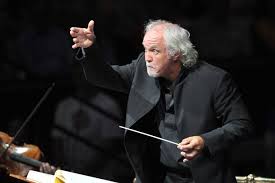
D Runnicles

Sunday 4 August 2013

BBC Scottish Symphony Orchestra, Chorus of the Deutsche Oper Berlin, Donald Runnicles

Donald Runnicles is a past-master at bringing excitement to Wagner performances, and this was in evidence throughout an impassioned reading of Tannhauser, with exemplary orchestral textures and ravishing choral singing.

The edition used drew on the strengths of all available versions, uniting the full Venusberg music with the often cut choral sections and some minor characters. This allows us to wallow in the re-writing with its heady Tristanesque passages as well as enjoying the Weberlike passages in act two. I have never found this disparity problematic as it reflects the differences between the Landgrave’s conservative court and the potential anarchy of the Venusberg.

With so much so good, it was a pity that at the heart of the evening lay its one weakness. Robert Dean Smith was able to produce pleasant tone which was always in tune as Tannhauser, but his blandness and lack of involvement constantly undermined the electricity around him. In act one this was obvious in his confrontation with Daniela Sindram’s fiery Venus. It was difficult to understand what she saw in this lacklustre character and why he excited her passion. The presence of the many male soloists only made matters worse. Ain Anger provided a noble Landgrave whose authority was absolute, and Christoph Pohl a romantic Wolfram whose complexity of character was never in doubt. Under other circumstances O du, mein holder Abendstern would have merited applause! Thomas Blondelle sang so well as Walter one almost felt it a pity he had not swapped with the lead.

Heidi Melton’s Elizabeth carried easily over the orchestra, filling the hall with beautiful tone as she greeted it. In act two she had no difficulty dominating the ensemble, whereas Dean Smith was often lost. Her prayer in act three was moving as well as beautifully paced.

All soloists were cast from strength with a pure voiced shepherd from Hila Fahima.

Orchestral playing was exemplary througout with the off-stage brass adding the icing on the cake. The Chorus of the Deutsche Oper Berlin, singing without scores, brought great sensitivity, particularly to sections where they are techinically off-stage or moving in ways which require a change of dynamic intensity. Set alongside the other Wagner we have heard this summer this was a fine performance; it could so easily have been near perfect. BH

Prom 21

BBC National Orchestra of Wales, Thomas Sondergaard

Asked to name a handful of the world’s finest orchestras, the BBC National Orchestra of Wales might not spring immediately to mind, but on the strength of last night’s Prom they are up there with the best.

The evening moved from strength to strength opening with the relentless energy of Colin Matthew’s Turning Point, being given its UK premiere. There is an intense forward thrust in the scoring, much of which is for near full orchestra at full volume, though it meanders at times without any clear sense of potential outcome. Even the quieter, more reflective sections maintain the restless skittering of the opening. Though the final sections are more relaxed, the work never really loses its intensity or underlying anxiety.

Daniel Hope was the soloist in Prokofiev’s second violin concerto and one who knows the work from long experience. A consummately impassioned account, it opened with a rich melancholy which never really left us even in the earthier rustic quality of the final movement. The rapid changes of mood were precisely placed and musically convincing. The more relaxed joy of the second movement was kept in place by an acidic edge which prevented it becoming sentimental. This was a finely considered and yet passionate account of a work we hear all too rarely.

Shostakovich’s Symphony No 11 The Year 1905 has been heard frequently at the Proms but I doubt if it has been heard as well played as this for many years. The hushed opening and strident solo trumpet were a hint of glories to come, the rolling crescendos beautifully paced with subtle dynamic control across the large orchestra. The horn and brass choruses in the second movement excelled themselves, being fiery without ever becoming too raw. It was at about this point I suddenly realised I was in the Royal Albert Hall and was hearing the work with such clarity. Not long ago, writing of this complexity and density would have been lost in the booming acoustic but on this occasion the crispness of the intonation was unexpected and thrilling. This may not be the Birmingham Symphony Hall, but on this occasion it did not matter! The calmer third movement simply prepared us for the onslaught of the finale, with its great clang of bells and brass outbursts. Throughout, Thomas Sondergaard had nurtured the finest and most intimate of responses from his players and they responded with sublime professionalism. The reception was fully justified. How splendid to find that we do not have to travel the world to hear playing of this quality. BH

The concert was recorded for television for broadcast on BBC4 on Sunday 4 August.

Hastings Old Town Week Organ Recital

Wednesday 7 August, 1.00 – 1.30pm                St Clements Church

Lunchtime Organ Recital with Fr Robert Featherstone,

Parish Priest of St Clements and All Saints.

Free entry, retiring collection in aid of the Organ Fund for All Saints Church.

As far as we are aware this will be the first concert given on the new organ in St Clements.

All Saints Organ Concerts: Philip Scriven


Monday 22 July 2013

Philip Scriven has become a regular visitor to Hastings but on this occasion he produced something quite different with a full performance of Tchaikovsky’s Fourth Symphony. David Briggs has become a past-master adapting large romantic works for the organ, and this arrangement was by him, originally scaled to the larger range of Gloucester Cathedral. That the Hastings Willis manages the large tonal palate so well is a tribute to its wonderful voicing. The outer movements were particularly successful, the changes in brass and woodwind tone being particularly effective. If the subtleties of the Scherzo proved somewhat too challenging for it, this was more a result of the speed of the action than the playing. Hopefully the Russian students in the audience appreciated both the fine playing and the idiomatic approach.

The first half had given us an eclectic mix, opening with Brewer’s Marche Heroique. Bach’s first Trio Sonata twinkled nicely and we enjoyed both Chuckerbutty’s Paean and Vierne’s Berceuse. Philip Scriven has recorded works for jazz organ and his encore was a gentle jazz improvisation on Be Thou my vision. It proved to be the most convivial item of the evening. Perhaps he should be invited back to give us a whole evening of jazz?

Next week Nigel Ogden entertains. BH

The English Roses

St Mary in the Castle, Hastings, 21 July 2013

With Hastings awash with Pirates, any potential audience for The English Roses had to battle their way through seas of eye-patches and cutlass waving scurvy dogs just to get there. Thankfully St Mary’s was a cool retreat from the rigours of an unexpected heat wave.

Sophie Pullen and Iuno Connolly both have large voices, more than adequate to fill St Mary’s, and took it in turns to sing the lower part in duets, which was occasionally disconcerting. At present Iuno’s voice seems to have the more obvious cutting edge which helps both diction and flexibility of line, while Sophie’s often heavier tone seems more obviously operatic.

The first half of the programme followed the history of English song in roughly chronological order, opening with a duet from Purcell’s King Arthur followed by Not all my torments and Sweeter than roses. If this helped to set the temperament for the afternoon it was two beautiful setting by Dowland that really brought the performance to life, with a carefully crafted rendition of Flow my tears.

Given that both singers are sopranos, it was not always obvious why specific arias were performed by individual singers. Two items from Handel’s Semele might have been more interesting if sung by the same singer in order to demonstrate the emotional differences between the arias. In the event Iuno Connolly gave us a moving O sleep why dost thou leave me while Sophie Pullen launched into the more sprightly Endless pleasure.

Songs by Quilter and Ireland impressed before the first half ended with two fine settings by Britten and an unexpectedly humorous duet by Balfe.

The second half focussed on opera, bringing more duets, including the familiar Flower duet from Lakme and the Barcarolle from Offenbach’s Les contes d’Hoffmann. For the solo items, Iuno gave a thrilling account of Donizetti’s Chacun le sait! and Sophie charmed with O mio babbino caro. Just to keep us on our toes, there were two more Handel arias, Sophie giving a warm rendition of Lascia ch’io pianga  and Iuno producing lovely legato lines for Ombra mai fu.

Nancy Cooley accompanied throughout and maintained an excellent balance in what can often be a difficult acoustic.  BH


‘What makes French music French?’


Holy Trinity Lunchtime Concert   Wednesday June 5   Kenneth Roberts   

Glorious sunshine on Wednesday lunchtime surely tempted everyone towards the beach. Not music-lovers though.  They were hieing towards Holy Trinity Church where the first of 2013’s Wednesday lunchtime concerts featured Hastings’ own latter-day Toscanini ( Tosca who?).  

      Kenneth Roberts is well-known as a conductor, but his presenting and educational activities are probably less familiar.  A taste of these in his programme of French piano music provided his listeners with a musical treat.

      He told how from the Romantic era (1830-1900) onwards  no Fremch composers wrote mammoth works such as the symphonies and operas of Germany’s Beethoven, Wagner, Brahms and the rest.  French musicians tended to work on a more intimate scale – music for the drawingroom rather than the concert-hall or stage.

      Opening with the familiar Debussy’s Clair de Lune Kenneth led us into the Victorian drawing-room with Chaminade’s Automne, one of the few female composers of the past still heard today.  For his set on the theme of nostalgia, Kenneth chose the composer with whm he has a special rapport, Francis Poulenc, with his Pastourelle,   and dance music from the little-known Grovlez and Emmanuel Chabrier, the latter whose orchestral rhapsody Espana  is a TV regular.

      Erik Satie’s Gymnopedies No 1 is one of the many ‘I know the tune but I haven’t a clue what it’s called’ melodies, and further works from Poulenc and Debussy including the latter’s Girl with the Flaxen Hair concluded a delightful and thought-provoking ‘I wish I’d practised more but it was all those scales and arpeggios that put me off’ programme.

      The Deputy Mayor Cllr Bruce Dowling and several professional musicians expressed their pleasure and wished the organisers Good Luck for the series.                          Marrion Wells