BPS: Opening concert

Brighton Philharmonic Orchestra, Barry Wordsworth, 6 October 2013

Saved almost at the last minute by generous donations from friends and well-wishers, the new season got off to a rousing start with an all-Beethoven programme. Barry Wordsworth took a moment to thank those who had donated and also to welcome back leader John Bradbury who has been missed by all of us over the last year.

The afternoon may have looked conventional enough but the playing, particularly the concerto, made this into a highly memorable occasion.

Radiant horns and some subtle woodwind brought Beethoven’s overture Leonore No3 to life, setting the seal for the afternoon.

Jason Gillham

Jayson Gillham may have a reputation for being somewhat laid-back but there was nothing overtly casual about his approach to the Emperor concerto. The opening was brisk and bright, with a clipped staccato attack, before a beautifully paced and almost indulgently romantic account of the second movement. Fire returned with a bouncing rondo finale which at times verged on the cheeky. A splendid interpretation, and one which captured the enthusiasm of the audience. Many wanted to applaud after the first movement, which on this occasion would certainly have been justified – had this been a Prom it would almost certainly have happened!

The Pastoral symphony was a more relaxed affair though tempi were mainly on the rapid side. The horns again impressed, with the rasp of the hunt in appropriate places. I had not realised before how astute Beethoven is in keeping the music moving so fluidly. Where Vaughan Williams’ pastoral approach verges on stasis and meditative calm, Beethoven’s rural scene is constantly alive and buzzing, bar by bar, without any hint that the excitement of life will end. The cellos came into their own towards the end of the last movement and the whole reached a fine and highly satisfactory conclusion.

The next concert on Sunday 3 November brings us an all Bach programme including the Magnificat where the BPS are joined by the Brighton Festival Chorus. Details from www.brightonphil.org.uk BH

Bexhill Choral Society: Mozart, Schubert & J C Bach

St Augustine 11 6 13 (4)

St Augustine’s, Bexhill, 5 October 2013

Mozart’s unfinished C minor Mass is not long enough for an evening by itself and on this occasion was sensibly supported by shorter liturgical works by near contemporaries.

The opening Kyrie of the C minor brought us solid choral sound and more than sufficient orchestral accompaniment, and there was a good sense of attack in the Gloria. Claire Williamson had no difficulty with the coloratura of Laudamus te and her duet with Sophie Pullen for Domine Deus was pleasing. Sophie Pullen herself floated the heady lines of Et incarnatus est with ease. If the chorus suffered with occasional poor entries they managed to pull things together for the Sanctus and concluded the work with aplomb, thanks to the strengthening of the solo quartet.

Kenneth Roberts’ approach to the Mass was brisk and business-like but he was more lyrical for Schubert’s Magnificat D486, which allowed all the soloists to blossom before a finely honed Gloria patri.

Amidst the sacred works came two interlopers. The strings of the Sussex Concert Orchestra gave us a workmanlike rendition of Mozart’s Eine kleine Nachtmusik, and Peter Grevatt sang the count’s aria from Act 3 of Le Nozze di Figaro. Though splendidly done it did seem a little out of place.

The evening concluded with J C Bach’s Magnificat in C. The bassoons left at this point which was a pity given the fine solo they had provided during Mozart’s Et incarnates est but Andy Gill’s solo trumpet more than compensated. The work looks back rather than forward and is easier on the chorus than the earlier works. It proved to be a fine conclusion to a rewarding evening.

The next event for Bexhill Choral Society will be Carols for Choir and Orchestra at 7.30pm Saturday 7 December, at St Augustine’s, Bexhill. www.bexhillchoral.org.uk 01424 213352 BH

ENO: The Magic Flute

Complicite’s Simon McBurney returns to ENO with his new production of The Magic Flute.

Opening on 7 November, Simon McBurney’s new production of The Magic Flute is a darkly funny, dramatic and highly visual interpretation of Mozart’s theatrical genius. In McBurney’s interpretation, music casts a visible as well as audible spell, with the orchestra on view alongside breathtaking cinematographic projections, re-imagining Mozart’s rites of passage fairytale.

Building on ENO’s co-producing relationship with De Nederlandse Opera, The Magic Flute opened in December 2012 to great critical acclaim in Amsterdam. McBurney’s production received five-star reviews from the Dutch press: “a feast for the eyes and the ears” (Het Parool) and “Delicious!” (Trouw).

The Magic Flute continues the relationship between English National Opera and theatre company Complicite, who are celebrating their thirtieth anniversary this year. McBurney returns to ENO following his operatic debut and critical-success of A Dog’s Heart in 2010 (nominated for a 2010 Olivier Award for Best New Opera Production). The collaboration highlights ENO’s commitment to producing opera that is fresh and relevant for contemporary audiences by working with talent from across the creative industries.

Contact https://seatplan.com/london/london-coliseum-theatre/ for reviews of seating and environment at the London Coliseum.

Brighton Festival 2014 announces choreographer Hofesh Shechter as Guest Director

HS_BrightonDomecolour credit Matthew Andrews
Brighton Festival is thrilled to announce that the 2014 Guest Director of Brighton Festival is critically acclaimed choreographer, musician, composer and performer Hofesh Shechter.

Recognised as one of the UK’s most exciting contemporary artists, Shechter is renowned for creating raw, physical live contemporary dance pieces set to his own, highly-charged, atmospheric musical scores. His eponymous Company are a Brighton Dome & Brighton Festival resident company, and their brand new work Sun – co-commissioned by Brighton Festival – will open the three week arts extravaganza on Saturday 3 May when it comes ‘home’at the conclusion of its first world tour.

As Guest Director, Hofesh Shechter follows in the footsteps of visual artist Anish Kapoor (2009), musician Brian Eno (2010), Burmese democracy leader Aung San Suu Kyi (2011), actress and human rights campaigner Vanessa Redgrave (2012) and poet, author and former Children’s Laureate Michael Rosen (2013) in shaping the Brighton Festival programme.

Hofesh Shechter said, ‘Brighton has a magic to it that no one can explain. Finding a place where one can develop and grow artistically is a delicate thing, an important thing. Brighton Dome and Brighton Festival have been an inspiring, energising and encouraging place for my company and me in the last 5 years. We’ve enjoyed the buzz, the lightness, energy, and the unexplainable essence of Brighton. We have resided in its cultural heart – Brighton Dome, and the pulsating artistic heart of the Dome is the annual Festival. I’m so excited and honoured to have been invited to lead on this inspiring event and I feel a rush of excitement about the ideas I can contribute. To be asked to lead this amazing event in 2014, to be asked to inspire, energise, encourage… well, delighted, is just a boring word.’

Recent DVDs – October 2013

Idomeneo

Mozart: Idomeneo

London Philharmonic Orchestra; Glyndebourne Chorus; John Pritchard

ARTHAUS 102 313            125.00


This recording dates from 1974 and was first broadcast by Southern Television. If the technical quality is not quite what one would expect today, the musical quality is not in question. Richard Lewis is an heroic Idomeneo, and a young Josephine Barstow equally impressive as Electra. John Pritchard, then Musical Director for Glyndebourne, conducts with easy style and the acoustic of the old house is warmly present. John Cox’s production has not dated though the lighting now seems limited in its scope.

Twelfth NightShakespeare: Twelfth Night

Globe Theatre Company

OPUSARTE OA 1111 D    175.00


I saw this production at The Globe when it first opened and it transfers well to DVD. Mark Rylance is a constant pleasure as Olivia, but there are no obvious weaknesses in the cast, and neither does the presence of Stephen Fry as Malvolio overshadow the rest. I am glad to note that The Globe are now regularly issuing productions on DVD so that more of us can relish the delights of the open theatre. Henry IV parts 1 & 2 are available with Roger Allam as Falstaff. Hopefully we may get this seasons fine Henry VI parts 1,2 & 3 issued in time.

Ulisse

Monteverdi: Il Ritorno d’Ulisse in patria

London Philharmonic Orchestra; Glyndebourne Chorus; John Pritchard

ARTHAUS 102 308            148.00


Raymond Leppard did a magnificent job in the late sixties / early seventies rescuing Monteverdi and Cavalli from near obscurity. His lush orchestrations may not be as authentic to modern ears as they seemed at the time, but for those of us only used to conventional romantic symphony orchestras they came as a bolt from the blue. Peter Hall’s justly famous production of Ulisse has Benjamin Luxon in the lead with Janet Baker as Penelope. The quality, surprisingly, is better than that for Idomeneo though it was recorded a year earlier.

WozzeckBerg: Wozzeck

Staatsopernchor, Staatskapelle Berlin, Daniel Barenboim

EUROARTS 2066758         97.00


A very strong cast, led by Franz Grundheber, with Waltraud Meier as Marie, is supported by Daniel Barenboim’s highly sensitive reading of the score. Though Wozzeck is never an easy evening in the theatre it can have a cathartic effect when performed as well as this. Patrice Chereau sets the story in the twenties when the opera was written and the production is naturalistic if darkly affective. For those who still think of Wozzeck as a difficult work this is certainly a good way in.

ENO: Die Fledermaus

Fledermaus

London Coliseum, 30 September 2013

We have come to expect challenge from a Christopher Alden production and there may possibly have been a sense of relief among many that, for most of the evening, we were not asked to work too hard to enjoy his approach. The narrative, centred on Freudian Vienna, moves from the decadent end of the nineteenth century to the puritanism of the early fascist movement. As part of this, Frosch moves from the conventional drunken jailor to an epileptic neo-Nazi who eventually takes over the prison as the party-goers are cowed into submission.

If this all sounds rather humourless it certainly wasn’t for most of the evening. The opening scenes, with a bed straight out of Der Rosenkavalier, work very well and the interchange between characters, while distanced by the framing narrative, are never less than real. Alden has a way of making the action credible while ensuring we reflect upon it, rather than indulge ourselves.

He is excellent at pin-pointing stereotypes for us. Adele, a Welsh maid in the opening scenes, morphs easily into a Louise Brooks vamp for act two. Rhian Lois has both the voice and the looks for this and she carried both with style. Tom Randle and Julia Sporsen as the Eisenstein’s not only spark off each other but seem to have a far more secure relationship than is often the case.

Jennifer Holloway’s Orlovsky is a neurotic mess, crawling about and readily adopting a foetal position whenever under threat.

Above all of the action lurks Richard Burkhard’s ever present Falke. Not only is he the Freudian master of the revels but he frequently takes notes from his patients as the plot evolves. Whenever, conventionally, a character speaks to the audience, here they are speaking to their therapist – it works surprisingly well.

Simon Buttereiss brings his usual gift for characterisation, and the even greater gift for clarity of diction, as Dr Blind, being asked to do far more, and reveal far more, than most Dr Blind’s are ever called to do.

The chorus are splendid throughout and subtly turn the Brudermein scene into something rather more sinister in its hints of sexual laxity.

Eun Sun Kim drives her orchestra hard though there were some minor slips on the first night which will presumably settle quickly.

The approach may be challenging but that should not put anyone off – there is a great deal here to enjoy. BH


Britten Centenary: Peter Grimes

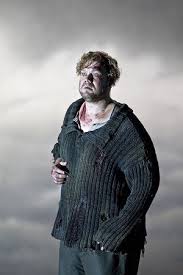
Stuart Skelton

London Philharmonic Orchestra, Vladimir Jurowski, Birmingham Symphony Hall

26 September 2013

What better way to open the new season in Birmingham than with an anniversary performance of a work which was to change the face of British opera when it was first performed in 1945.

Having given us a riveting account of Billy Budd at Glyndebourne earlier this summer, Vladimir Jurowski now brought us an impassioned and hard driven Peter Grimes in the glorious acoustic of Birmingham Symphony Hall.

Many semi-staged performances are little more than a trail of singers on and off the platform but Daniel Slater’s approach was far more dynamic. The chorus (London Voices) act and react throughout, moving position behind the orchestra, breaking into groups and, for the massive out-pouring at the end of the man-hunt, moving right to the front of the platform. Soloists were equally involved, singing from memory and inter-acting with conviction. Clothing may have been modern but was accurate to character and emotional impact. I can’t recall an Ellen Orford who looked so obviously a primary school teacher.

All of this would have been of little account had not the musical impact been equally impressive. Vladimir Jurowski drives the score with an intensity which does not let up. The storm is released with unexpected passion and power, and at a speed which left one breathless. The combination of physical and psychological unravelling was carried over into the more introspective moments, making them all the more fragile.

Cast from strength, there were no weaknesses in the ensemble. The approach of both conductor and director seemed to highlight the sheer nastiness of Borough society in the face of a troubled outsider. Stuart Skelton’s Grimes is unusually sensitive. His phrasing of Three days in the opening scene and later alone .. alone when describing the boy’s death to Balstrode, gave us an insight into Grimes’ character which was elaborated in the transcendent performance of When the Great Bear..

Pamela Armstrong’s Ellen was the troubled bridge between the Borough and Grimes, strong enough to stand up to the bullies but unable, in the long run, to save Grimes from them. She often allowed her solo singing to become unexpectedly romantic, and one could sense the impact of late Puccini on Britten’s writing – something I had not noticed before.

Alan Opie’s troubled Balstrode and Brindley Sherratt’s all too human Swallow led the Borough characters, none of whom were caricatured, making the social grouping all the more unpleasant.

Having the orchestra so exposed allowed the interludes to speak with greater authority, and without the usual coughs and squeaks which we get in the opera house. Woodwind seemed particularly edgy and acidic, making the sea a more dangerous and threatening place – a force as ominous as the folk of the Borough.

The performance was not being recorded – a pity for this was one of the most enthralling Grimes that I can recall.

And a footnote: given that this was the first night of the international season, and one of the finest casts available for a key work in the Britten anniversary season – where were the audience? I know there is a lot going on in Birmingham at present but the number of empty seats was disappointing. BH

Birmingham’s New Library

Brum LibraryI wish I were forty years younger and living in Birmingham. Why? The New Library. If you have not yet visited then put it at the top of your list of places I must visit before I die.

Let’s start with the gardens – yes, the gardens. A natural meadow is spread out around the sunken amphitheatre even before you enter the building, and then as you rise up to level 7 there are gardens aplenty, all of them intimately related to ordinary people of all ages. For above all this is a place for everyone. In the past this could too easily have meant dumbing down or playing to the lowest common denominator, but not here. I drafted this sitting on the comfy seats in level two. It is so quiet that I have no problem thinking or writing. Yet there are people all around me, hushed conversations in all parts of the building, children playing happily on the entrance level or in the many children’s areas. One of the many miracles of this place is the creation of a building which takes culture and research very seriously and yet is open to all, at whatever level they wish to access it. There are no pings, buzzers, PA messages or in fact anything to distract you from the work you want to do. And all of this within a building which is already iconic.

brum library 2


Travel up the blue-neon escalators and the glass lift to the Shakespeare Room, meticulously re-created from its original position, and then view the city itself, vibrantly laid out before you – the Symphony Hall, the canals, the resurrected New Street Station, all lie below you – and that itself seems symbolic, for the work, the research, the thought that lies at the heart of the new library must act as a driving force for what Birmingham is now and will become in the future. Many may have been doubtful that the expense was worth it – it was worth every penny, and will be worth its weight in gold as time goes on.

And I’ve not mentioned the toilets! If every public building had as many toilets per person as this has there would never again be any complaints about queues.

If this is an example of public finance and public responsibility in action, then it is the finest example I can think of to justify more power to local authorities. Birmingham can justifiably be proud of what it has achieved. Who’s next?! BH


BBC Singers

BBC Singers announce a series of four concerts in London’s newest
concert hall, the Guildhall School’s Milton Court,
as part of their 2013-14 season
 
Highlights
  • An exciting series of four concerts in Milton Court Concert Hall
  • The return of ‘Singers at Six’ in four early-evening concerts in St Giles’s Cripplegate
  • Britten 100 celebrations include a concert in the Aldeburgh Britten Centenary Weekend
  • BBC Singers celebrate the choral works of Thea Musgrave and Heitor Villa-Lobos as part of the BBC Symphony Orchestra Total Immersion Days
  • BBC Singers premiere a recently rediscovered C.P.E. Bach St John Passion with Bournemouth Symphony Orchestra under Kirill Karabits
 
Milton Court
London’s newest concert hall plays host to a range of choral masterpieces in the BBC Singers’ series of four concerts at Milton Court. Chief Conductor David Hill leads two concerts in the series, firstly with soloist Jennifer Johnston and the ensemble Endymion (October 15) in an American programme including Steve Reich’s The Desert Music; then for Richard Strauss’s Deutsche Motette (7 April) performed in the 150th anniversary of Strauss’ birth.  Four accomplished soloists star in Rossini’s operatic Petite Messe Solennelle (4 February), including soprano Ruby Hughes and mezzo soprano Clara Mouriz, conducted by Paul Brough. The BBC Singers join forces with charismatic composer-conductor Eric Whitacre (10 June), who curates a concert of his own choral music alongside works by Bob Chilcott and Morten Lauridsen, with guest artists The King’s Singers.
Handel’s Messiah
Chief Conductor David Hill conducts the BBC Singers, St James’s Baroque and a team of young soloists including Ruby Hughes and Robin Tritschler in Handel’s Messiah (20 December) in the atmospheric Temple Church – the concluding event of Radio 3’s week of Christmas concerts from this London landmark.
 
Total Immersion
The BBC Singers take part in the BBC Symphony Orchestra’s series of Total Immersion days; full days of concerts, talks and events. A celebration of distinguished Scottish composer Thea Musgrave in her 85th year will include a performance of her choral works conducted by Paul Brough, ranging from the setting of medieval Scottish words Rorate coeli, to her interpretation of verse from Poems On The Underground (15 February). In contrast, on 8 March Brazil’s most famous composer, Heitor Villa-Lobos, will get the Total Immersion treatment, including a concert of his choral music rarely heard outside his native country, directed by Brazilian conductor Celso Antunes.
 
C.P.E. Bach St John Passion
In a special Easter concert (16 April), the BBC Singers help bring back to life the 1784 St John Passion by C.P.E. Bach, long thought lost until its re-discovery a few years ago in a Ukrainian library. In the year marking the 300th anniversary of C.P.E. Bach’s birth, the BBC Singers and Bournemouth Symphony Orchestra perform the UK premiere of the work, with the orchestra’s Principal Conductor Kirill Karabits.

Brighton Unitarian Lunchtime Concerts

Brighton Unitarian Church, New Road, Brighton, BN1 1UF

Fridays 12.30 pm to 1.15 pm (doors 12.15 pm)

All tickets £3.50.

Raising money for the Building Appeal Fund

Friday 27 September: Red Gray (soprano) and Glen Capra (piano). A Spanish programme including works by Granados, de Falla, Montsalvatge and Rodrigo.

Friday 04 October: Nick Andrews and Friends, featuring soprano Rosie Evans.

Friday 11 October: Glen Capra (piano) and Ian Glen (bassoon) playing Mozart, Mossolov, Carr and Piazzolla.

Friday 18 October: Rachel Firmager (cello) and James Shenton (piano) playing Janacek’s marvellously quirky and evocative piece “A Tale” plus the first performance of James’s own sonata, which is a deeply spiritual and meditative work.

Friday 25 October: Louise Gledhill (soprano), Cathrine Long (soprano) and Lesley-Anne Sammons (piano). “Music for a while”…. A celebration of Benjamin Britten.

Friday 01 November: Lyndsay Cumming (saxophone) and Nick Andrews (piano) will play a selection of saxophone music from across the eras, including Telemann’s sonata in C minor for soprano saxophone, the delightful concerto for alto saxophone by Ronald Binge and playful swing and ragtime works by Rudy Wiedoeft.

Friday 08 November: Yoshio Akiyama (baritone) will sing songs by Gerald Finzi, Franz Schubert, Reynaldo Hahn and a selection of traditional Japanese songs.

Friday 15 November: Gabriel Jones (piano) and Marianne Wright (soprano). Graduates of Trinity College of Music will perform a selection of French and English songs, including the Arriettes Oubliées by Debussy.

Friday 22 November: Enjoy more music from the jazz greats with singer Pamela Nickels, Wook Hamilton on clarinet and accompanist/pianist Josh Mills.

Friday 29 November: Nick Andrews and Friends, featuring a piano recital by Oliver Turvey who will perform pieces by Bach, Schumann and Carl Vine.

Friday 06 December: Joss Peach, award-winning jazz pianist who can be seen busking from time to time in Brighton on his golden piano, will perform classic jazz, boogie woogie and “originals”.

Friday 13 December: A Bunch of Daphs return with their Advent and Christmas programme.