Bexhill Choral Society

Christmas concert

7th December, St Augustine’s Church  7.30pm

In addition to carols we all know and love, we have Christmas songs and arrangements by Ken Roberts, where the Cinque Ports Brass Ensemble get into Jazz, Swing and this year, Caribbean mode and Ken picks up his clarinet or sax and joins in the jam session. Great fun.

Garsington Opera; Young Artists

TWO YOUNG SINGERS WIN AWARDS 

Garsington Opera is delighted to announce the winners of two awards to support the development of young artists from the Company.   The 2013 Simon Sandbach Award  has been won by Jan Capinski and the Helen Clarke Award  by Alice Rose Privett.

J Capinsky

Jan Capinski said:  Garsington Opera has been a turning point in my career and development as a singer and I learnt so much singing in the chorus and understuding a principal role.  To be offered this prestigious award will enable me to continue my training both musically and dramatically. I am particularly delighted to be returning in 2014 not only to sing in the chorus but to perform in Fidelio as 2nd Prisoner and in the Young Artist revival of Hänsel und Gretel as the Father at West Green. Jan began his singing training at the Academy of Music in  Kraków (Poland), and went on to the Royal Welsh College of Music and Drama where he graduated in July this year.

A R Privett

I am thrilled to receive this bursary said Alice Rose Privett.   I will soon be leaving full time education and this will enable me to really focus on polishing my audition arias and pay for the expensive process of getting to auditions in all corners of Europe. Last season I was lucky enough to sing Gretel at the  dress rehearsal, the major role I understudied.  I also sang in the chorus and will return in 2014 to do that and perform the role of the Cock in the Cunning Little Vixen.   Alice graduated from the Guildhall School of Music and Drama in 2011 and is now studying at the Royal Academy of Music.

ENO: Satyagraha

satyagraha

London Coliseum 20 November 2013

Few modern operas have had three revivals within six years but ENO had no hesitation mounting a revival of Philip Glass Satyagraha. If anything, the work grows more impressive with familiarity, and the revival directors have certainly not lost any of its impact since the last time it was staged. Where the large puppets and the massively staged scenes caught the attention when first seen, it was the more reflective scenes that made a positive impression on this occasion. The simplicity of the Indian Opinion scene, with its swirling newsprint and a life lifting out of nothing was deeply moving, as was the gently authoritative burning of the identity cards.

Alan Oke returned as Gandhi, a part with which he is now almost synonymous, and his mellifluous tones convinced throughout. Sarah Pring made a strong impression as Mrs Alexander, one of the few scenes which had a direct narrative line. Phelim McDermott’s approach to the work seemed to some to be over-fussy when new in 2007 but it has aged well and lost none of its impact.

Musically Stuart Stratford held his forces together with skill, any tiny slips being rapidly mopped up in a score which has more pitfalls than a more conventional opera. The chorus were in fine form and are frequently required to create a sense of stillness and calm which is quite different from simply not moving – a feat which they brought off with aplomb.

There are five more performances – details from www.eno.org

MONTEVERDI VESPERS

Hastings Philharmonic Choir, Ensemble OrQuestra & soloists 

Christ Church St Leonards-on-Sea, 16 November 2013

It is a brave local choral society that opts to perform a work like the Monteverdi Vespers. Under the expert leadership of Musical Director Marcio da Silva Hastings Philharmonic Choir gave an enthralling performance in the sumptuous setting of Christ Church St Leonards.

The highly proficient Ensemble OrQuestra led by violinist Eleanor Harrison which included theorbo and organ alongside brass, reed and strings, effectively matched the singers whether providing accompaniment or taking the lead.

Vocal soloists Sophie Levi, Emilia Radu, Irina Loskova, Michael Butchard, Nicholas Arratoon & Leo Selleck brought flair and emotion to the performance as they sang individually and in combination.

There were magical points during the performance when the whole ensemble produced a huge wall of sound. There were moments of pathos and sheer emotion and much contrast in dynamics and mood as the piece progressed. The interplay between instruments and singers and different vocal forces was at times very effective although at times there were discrepancies with timing between the various forces, particularly in the more fugual passages. There were also sometimes problems coping with the sudden time changes. The larger homophonic sections were most effective. There was much rhythm and vitality and some beautifully dramatic swelling at the end of certain sections.

It was a shame to break for an interval but the first half came to a very positive end with Nisi Dominus.

The second half was, on the whole, more assured and the Sonata Sopra Sancte Maria was an effective contrast. Throughout the leadership of Marico da Silva was positive and enthusiastic without being distracting to those of us in the large and enthusiastic audience.

Overall this was a very enjoyable performance and a chance to hear repertoire not normally heard locally. Hastings is fortunate to have a choir that is prepared to explore more unusual repertoire as well as old favourites. The next performance for the choir is Christmas Carols for All, Saturday 21st December 5pm at St.Mary-in-the-Castle. SP


Mariinsky Ring Cycle for Birmingham in 2014

Birmingham Hippodrome to host Wagner’s Ring Cycle on a grand scale

with Valery Gergiev’s world-famous Mariinsky Opera as part

of the 2014 UK-Russia Year of Culture.

Wednesday 5 November 2014 – Das Rheingold

Thursday 6 November 2014 – Die Walküre

Saturday 8 November 2014 – Siegfried

Sunday 9 November 2014 – Götterdämmerung

More details will follow when available.

BBC: Britten, War Requiem

S Bychkov Royal Albert Hall, 10 November 2013

Fifty years ago there might have been some concerns raised if Britten’s War Requiem had been performed on Remembrance Sunday. Doubts were voiced about its pacifist overtones and the mixture of war poetry with the Latin mass upset some listeners.

It is difficult to empathise with those views today, particularly when the work is as smoothly and poignantly performed as it was last night.

Rather than the juxtaposition of verse and mass setting, it was the seamless flow from one to the other which impressed. The long passage running from Be slowly lifted up through the Lacrimosa to Move him into the sun had an inevitability and pain to it which was heart-stopping.

Moreover, the text carried with a clarity rarely heard when the work is performed in a cathedral. Allan Clayton’s tenor solos cut like steel through the vast spaces of the hall and his hushed delivery of One ever hangs was as fine as one could imagine. Roderick Williams characterised the more overt poems with skill and was very moving when he came to I am the enemy you killed my friend.

Sabina Cvilak has the top for the soprano part but her placing by the organ made her rather too distant. Recalling the cutting edge of Galina Vishnevskaya, one was aware of that Britten was writing for a more forceful voice.

The Crouch End Festival Chorus joined the BBC Symphony Chorus, both in fine voice and obviously enjoying the work. The boys of Westminster Abbey sang well but seemed a little too distant, the altos almost disappearing at times. Semyon Bychkov kept all his forces under sensitive control and the chamber orchestra had real bite.

A memorable performance and a fine tribute for Remembrance Day. BH

WNO: The Tudors

Bristol Hippodrome, 6-8 November 2013

Anna Bolena


A Tudor Ring Cycle? Well not quite, but at over ten hours of music across three evenings it makes for far more than a loosely connected series. Essential to the approach is Madeleine Boyd’s design. A black box, redolent of the RSC in the early seventies, focusses all the attention upon the singers. Costumes, again mostly in black, remove any sense of chocolate-box Tudor or of uncomfortable comparisons with actual history. Alastair Miles’ Enrico is straight out of Game of Thrones rather than any pseudo-naturalistic sixteenth century epic.

At the heart of all three operas is Elisabetta, the Queen, who appears in Anna Bolena in the opening moments as a baby and whose cot is on stage virtually the whole evening. It is she who will become the protagonist of the following two works and it was a stroke of genius by director Alessandro Talevi to make the baby a key element in the opening opera of the trilogy.

The chorus seem to be ever present, making many of the scenes uncomfortably public, and the high orchestra pit (in fact in Bristol there isn’t one!) makes the orchestral sound under Daniele Rustioni’s lively baton even crisper.

Enrico

The emotional tension of the evening is never allowed to wane even when the musical line appears to be lighter in tone. The overture may seem closer to Rossini than later Verdi, yet there are hints of anger and explosions of brass which prefigure what is to come. Serena Farmocchia’s Anna is distraught from the start, and only during the final mad scene does she show any sense of lightness or the earlier calm which drew her to Enrico in the first place. Robert McPherson has the high tessitura for Percy, but also the sensitivity to convey the constant shifts in emotion. Katherine Goeldner’s Giovanna is equally torn between her love for Enrico (difficult to understand given his characterisation) and her feelings for her friend Anna. Both women developed as the evening progressed and their final long duet was very moving. If Enrico’s authoritarian violence is the key to the work, he does not have the last word. In a blaze of red silk, Anna performs a mad scene and coda which is as formidable as the demise of Dido or Brunnhilde.  Serena Farmocchia had saved the best to last and convinced us not only that this is a magnificent work, but the final scene is one of the greatest from the belcanto repertoire.

Maria Stuarda

With Maria Stuarda we are demonstrably in the same world if now a generation on. Elisabetta is as vicious and nasty as her father, and is surrounded by a court as suspicious and ever-present. But there is some change. Where earlier there had been a connection to the outside world, now we have two small chambers, cells almost, back to back, endlessly circling one another. Each is the prison for a queen, for Elisabetta is as much a prisoner as Maria. In the opening act there is little sympathy for either woman. They are as arrogant and dismissive of would be supporters as each other. The confrontation of the queens towards the end of act one is a marvellous piece of writing, but as we have little sympathy for either it fails to make a great deal of impact. Only in act two does Maria begin to gain our emotional interest as she moves inevitably towards her death. In Rudolf Frey’s production Talbot – the ever reliable Alastair Miles – becomes her father confessor and confidant, convincingly so in the final scene. The great prayer in act two becomes the climax of the evening, and even Roberto’s suicide does not eclipse it.

If the final moments do not quite succeed this is only because the revolve could not whisk the execution away fast enough.

Adina Nitescu has a large, powerful voice but displayed little subtlety as Elisabetta. There was no sense of a human being learning as events unfold and she seemed as two-dimensional at the end as at the start. By contrast Judith Howarth’s Maria slowly unfolds before us, becoming a genuinely tragic figure as she goes to her death. Ignore history, this is a convincing portrayal of a woman out of her depths within political intrigue. Bruce Sledge’s Roberto is probably the most sympathetic character before us but as with Maria has a world against him.

Orchestra and chorus under Graeme Jenkins were in fine, brisk form, making much of the opportunities Donizetti provides for them.

 devereux 1

There may be only a few years between Anna Bolena and Roberto Devereux but the change in musical style is marked. Where much of the earlier work could be taken for Rossini, in Devereux we are distinctly Verdian. Nottingham’s great aria and his later scene with Sarah could comfortably sit in any early or mid-period Verdi opera, and were finely sung by David Kempster and Leah-Marian Jones. Moreover, the work really does make sense as the culmination of a trilogy, not thought-through in the way of the Ring Cycle but psychologically apt as we see Elisabetta progress from bastard child, through ranting autocrat to near-insane tarantula trying to control the world around her even as she withers towards death.

Alexandra Deshorties gave probably the best performance of the week as Elisabetta, her ferocity and power equalling her thrilling coloratura. Wearing what appeared to be the tattered remnants of the dress her mother wore to the scaffold, she reduces the authority of a queen to the emotions of a love-sick school-girl and drags the world down with her.

The image of the tarantula is telling. Potentially highly dangerous, it can only survive if fed from outside and kept in cocooned captivity, like the queen herself.

Leonardo Capalbo’s Roberto is equally a fish out of water, surrounded by courtiers who have been there from the start and will continue once Elisabetta has died. His vocal heroism was convincing but he stood no chance within the subtle politics around him.

As on all three evenings the chorus was not only in fine voice but an ever-present threat to wayward individuals. Daniele Rustioni was very obvious in the shallow pit and was clearly enjoying himself as he guided his forces to ever greater intensity.

The experiment of staging the trilogy may not have brought the audiences or financial results it deserved, but those of us who experienced it are all very grateful for the opportunity which I suspect will not come again. BH


 devereux 2

Brighton Philharmonic Orchestra

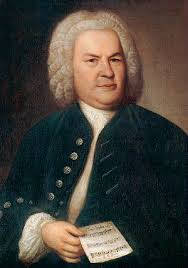
bachThe Dome, Brighton, 3 November 2013

A Bach concert, but not quite as one might expect. Opening with J S Bach’s Orchestral Suite No3 we then moved to J C Bach for an overture and finally to C P E Bach for a setting of the Magnificat.

We have become so used to original instrument performances that it is something of a novelty to hear Bach on a modern symphony orchestra. The slow opening of the Ouverture with its mellow trumpets set the tone. Barry Wordsworth moulded the suite as a whole, moving effortlessly into a more extrovert and dynamic intensity, concluding with a lively Gigue.

J C Bach’s Sinfonia in B flat is actually the overture to his failed opera Lucio Silla. However one would not know this from the three delightful movements of the work itself. There are hints of Mozart in the Andante and a bouncy folk-dance to finish. A pity the rest of the opera is not of the same quality.

C P E Bach may have written a large amount of fine music but he was unfortunate in never being as good as his father, and surrounded in adulthood by Haydn and Mozart. His Magnificat gives dramatic, often overtly operatic, music for both soloists and chorus, and the forces on this occasion relished the opportunity to explore it.

The four soloists are given one solo each and there is a duet for tenor and alto, all framed by massive choral writing. With the smaller orchestra in place, Barry Wordsworth had moved the Brighton Festival Chorus forward onto the main platform with immediate impact on their volume and richness of tone. The final chorus, which if we are honest, overstays its welcome – there is only so much one can do with Amen as even Handel accepted – was given with great panache and vibrancy.

Soprano Lucy Hall gave us a plaintive Quia respexit and Catherine Carby a moving Suscepit Israel. Tenor James Edwards threw himself at the score rather over-enthusiastically in his solo but was more relaxed in duet. Baritone Alexander Robin Baker proved suitably operatic and lively for his solo.

While this proved to be a very satisfying programme with some fine music-making, it had obviously not impressed the audience on paper, as they were thinner than usual. A pity, for they missed an unusual aspect of the Bach family and one which is worth further exploration. BH

The next concert brings works by Tchaikovsky and Humperdinck on Sunday 8 December. www.brightonphil.org.uk