Purcell’s one-act opera The Judgment of Paris


In March 2014, Resonus Classics is delighted to release the world premiere recording of Daniel Purcell’s one-act opera The Judgment of Paris.

Written in 1701 to a libretto newly commissioned from William
Congreve, one of the leading dramatists of the day, the opera was
submitted for the Music Prize established by a group of opera-loving
aristocrats with the aim to foster the development of all-sung opera
in English.
This rarely performed opera is presented here by Spiritato! and the
Rodolfus Choir under the direction of Julian Perkins. The soloists
include: Anna Dennis as Venus – Goddess of Love; Amy Freston as
Pallas – Goddess of War; Ciara Hendricks as Juno – Goddess of
Marriage; Samuel Boden as Paris – a shepherd; and Ashley Riches as
Mercury – Messenger of the Gods.

Released solely in digital formats, these recording will be available from www.resonusclassics.com and other reputable
online retailers in formats ranging from MP3 up to 96kHz/24-bit studio quality masters.

The Bach Choir: The Dream of Gerontius

Royal Festival Hall, 13 February 2014

There was a time, not very long ago, when Gerontius was considered short enough to form the second part of a programme. While this is rarely the case today, there are occasions when this can make some sense and coupling it with Strauss’ Tod und Verklarung is probably one of the most obvious.

Strauss’ tone poem makes the same journey as Gerontius through death to eternity and the comparison is fascinating in performance. More than anything else, Strauss moves us into a world of archetypes and universal spiritual journeys, whereas Elgar and Newman are deeply personal. The Strauss also gave Chetham’s Symphony Orchestra a chance to show off their strengths without the competition of choir and soloists. The combined sound of the orchestra impresses, with the strings particularly strong. Much of the solo wind was positive though some entries were hesitant. This was particularly obvious in quieter or more exposed passages. Trumpets and oboes were very finely focussed and Elizaveta Tyun was a strong leader as well as providing effective and moving solo passages.

The Bach choir were joined by Chetham’s Chamber Choir to make an unusually strong impact in the Elgar. Praise to the Holiest and Go forth were highlights of much very finely controlled choral singing, though the text was often lost even in quieter passages. The soloists were all outstanding. Andrew Staples is surely the finest Gerontius we have at present. The voice is strong, focussed and heroic, yet entirely English in quality and wonderfully sensitive to the text. The gentle fading towards I can no more and the visionary Take me away – so much more than a simple request for removal! – were illuminating. He was joined by the more familiar but ever reliable Roderick Williams, who turned the Parsifal-like phrases of the second part with heartrending emotion. Jennifer Johnston  was new to me but recalled Janet Baker at her finest in the warmth and sensitivity of her singing. David Hill kept his forces well under control and was briskly efficient throughout.


1066 Choir & Organ: March meeting

CHANGE OF VENUE

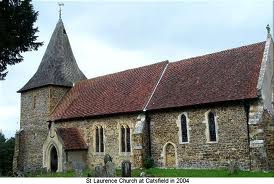
The meeting on Tuesday 11 March will now be at St Laurence Church, Catsfield at 7.30pm

st laurence catsfield

The church is situated on the road leading from Catsfield to Crowhurst, on the brow of the hill, and parking is only available on the road side. It is recommended members and friends bring a torch as there is no street lighting. The church has toilet facilities and refreshments will be available as usual. We look forward to seeing you there.

Michael Wooldridge at The Dome

M Wooldridge

The Dome, Brighton, 11 February 2014

Theatre organ performances are even rarer today than pipe organ events, so it is good that The Dome mounts occasional matinees and even better that they are well supported. The console may not rise up out of the pit but the atmospheric lighting, together with the constant movement of the up-lit shutters of the fully enclosed pipework, keeps the eyes involved as well as the ears.

Michael Wooldridge plays from memory and most of his selections are popular favourites. Individual items, including birthday requests, are carefully slotted between longer selections. In the first half we heard music from West Side Story and a Disney medley as well as numbers by Duke Ellington.

Light classical music gets a look-in, and on this occasion we heard Suppe’s Overture Light Cavalry.

Michael Wooldridge is happy to chat between items and brought us details of a forthcoming Young Theatre Organists event in Solihull in July, with which he is heavily involved.

From a purists point of view the musical approach is something of a law under itself. Closer to improvisation than focussed on the written score, the sound produced is often more impressive than the melodic line. While this is fine for most of the scores, the Suppe suffered from some lack of accuracy and finesse in registration. The reeds are certainly fiery but could be balanced with a little more subtlety.

The organ itself is still in good voice and a cypher was quickly dealt with. The large range of percussion stops were very impressive and effective, and the woolly tremulo much in evidence. It would be good to hear the more serious side of the instrument by itself on some occasions, or maybe focus on a different range of music. However, it is always better to have something and want more, than to have nothing at all. BH

Garsington Opera 2014

25th ANNIVERSARY CELEBRATIONS INCLUDE BRITISH PREMIERE

AND FIRST CONCERT ON STAGE  AT WORMSLEY

To celebrate its 25th anniversary year, Garsington Opera presents the British premiere of Offenbach’s sparkling comedyVert-Vert, Janá?ek’s 20th century masterpiece The Cunning Little Vixen and a revival of Beethoven’s only opera Fidelio.  The season at Wormsley, sponsored by JLT, runs from 6 June to 13 July and includes the first ever concert given by theGarsington Opera Orchestra at the Opera Pavilion on Sunday 6 July.  This is the culmination of a weekend commemorating the First World War with a celebrity recital and a masterclass, tours of the world-famous Getty Library and a symposium entitled  Peace in our Time?. For the first time, there will be a performance specially designated for schools as part of Garsington Opera’s OperaFirst education programme. For the third year running an opera performance will be relayed to the beach at Skegness as part of the SO Festival.

DIARY OF EVENTS AT WORMSLEY

Fidelio  (sung in German)  6,8,15,18,21,28 June, 1,5,10,13 July  6.20pm

Vert-Vert  (sung in English) 7,9,14,19,24,26 June, 3,9 July 2014  6.15pm

The Cunning Little Vixen (sung in Czech)  22,25,27 June, 4,8,12 July 2014   6.45pm

Peace in our Time? 5, 6 July

BOX OFFICE:  GENERAL PUBLIC BOOKING OPENS  14 APRIL 2014  Tickets £102 – £180 Telephone 01865 361636  The Old Garage, The Green, Great Milton, Oxford OX44 7NP

www.garsingtonopera.org

Brighton Philharmonic Orchestra

The Dome, Brighton, 9 February 2014

The Brighton Philharmonic has a strong tradition of encouraging young musicians, and so it was good to encounter William Dutton from the Yehudi Menuhin School as soloist in Mendelssohn’s violin concerto. After a surprisingly veiled opening movement the rapid pacing of the Andante, with a dance-like lift rather than romantic introspection, led into the furious intensity of the final movement which seemed to better suite his temperament. He gave a technically impressive performance even if there were times when it lacked refinement. This will come with greater experience and for a first outing was stimulating and exciting. Confidence was never lacking and his enthusiasm for the phrasing of the final movement was impressive. If you look William up on line do not be surprised by the references to him as a chorister – yes it is the same, many talented, young man, who has now replaced the violin for the treble voice.

The afternoon opened with Prokofiev’s classical symphony which, as time passes, seems less and less classical and ever more the voice of the composer. The small forces were well balanced and fleet in delivery.

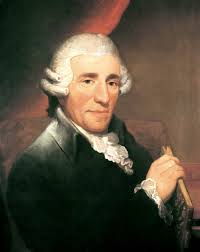
Haydn

After the interval we heard one of the finest, and in many ways, most easily overlooked masterpieces of the late 18th century. Haydn’s symphony no 104, the London, constantly challenges the listener without ever upsetting the ear. Page after page of development oozes Beethoven in its shifting patterns and clashes of rhythm and harmony. It is a masterpiece and performed here with clarity of line and a real love of the score from all concerned. More Haydn please!


Handel: Theodora

theodoraThe English Consort, Harry Bicket

Birmingham Town Hall, 6 February 2014

Cast from some of the finest Handelians available and given the vigour of Harry Bicket’s conducting, this presentation could not fail; and so it proved.

Rosemary Joshua was as limpid a heroine as one could wish, and her Didymus, Tim Mead, a florid counter-tenor who brought genuine emotion to his singing. Sarah Connolly has some of Handel’s most moving music for Irene’s passionate support and consolation, and matched the more rugged approach of Kurt Streit’s Septimus.

Jonathan Best was a late replacement as Valens and seemed a little uncomfortable at first, but soon settled. The choir of Trinity Wall Street were new to me in terms of live performance and brought bounce and enthusiasm in addition to splendid articulation.

The English Consort, for all its limited size, has some splendid soloists, with Lisa Beznosiuk a moving dove for Theodora with her baroque flute.

The important organ continuo part was somewhat lost even in the capable hands of Stephen Farr, and Harry Bicket provided the harpsichord part himself.

Theodora has never had the following it deserves and it struck me on this occasion that part of the problem may be the incomprehensibility of the text. Morell writes in Latin rather than in English, with the verbs at the end of a sentence. Consequently, as a listener, we have little understanding of what is being sung until the end of the first full phrase. To take one example, Didymus sings Deeds of kindness to display and it is not until much later we get to the verb disobey. In English, the text should read Who can disobey the call to display deed of kindness, sue for pity or woo for mercy? Perhaps we need Neil Jenkins to do for Handel what he so admirably did for Haydn! BH

February CDs & DVDs

Glorious Glynd

Glorious Glyndebourne

OPUS ARTE OA 1127 D

It is unlikely that anyone would doubt the quality of Glyndebourne’s musical heritage, but this collection, made up into a Gala event from some of the finest productions of the last decade, demonstrates the range and exceptional quality of both stagings and musicianship.

I am fortunate that I have seen most of these productions live at Glyndebourne and can report how well they transfer to the screen. The first half includes excerpts from Figaro and Cosi, two staples of the opening decades of the opera house, and concludes with passages from Tristan and Die Meistersinger. With other excerpts including Billy Budd, Gianni Schicchi and Carmen there is more than enough to entrance any opera-lover, and the range should ensure some with more limited tastes will realise what they are missing. This may look like a promotional video but on this occasion it is more than justified.


Rienzi 2Wagner: Rienzi

Frankfurter Opern- und Museums – orchester und chor, Sebastian Weigle

OEHMS OC 941

This recording comes from a live concert performance in Frankfurt in May 2013. The key singers are strongly cast with Peter Bronder a virile Rienzi and Falk Struckmann a stalwart Colonna. Christiane Libor is aptly forthright at Irene and all are stoutly supported by the Frankfurt choral forces.

The difficulty hearing the work as opposed to seeing it is that it can easily become unrelentingly bombastic, with overtones of Meyerbeer and Weber at their loudest, and little sense of reflection or characterisation which staging can bring.


cpe bach

CPE Bach: Hamburger Sinfonien WQ 182

Stuttgart Chamber Orchestra, Wolfram Christ

HANSSLER CD 98.637

It is difficult, listening to this delightful recording, to accept that these works were held to be too avant-garde and challenging when first composed; so much so that CPE Bach led from the fortepiano to keep his forces together. Here the Stuttgart forces are joined by Sebastian Kuchler-Blessing on the fortepiano, improvising convincingly throughout and adding to the sparkling impact of the scores.  You will enjoy this.


shostakovich violinShostakovich: Violin Concerto;

Rihm: Gesungene Zeit

Jaap van Zweden, violin

NAXOS 8.573271

The Shostakovich concerto is finely played with the Netherlands Radio Philharmonic under Edo de Waart, the range of emotion keenly felt without exaggeration. I had not come across Wolfgang Rihm’s Gesungene Zeit before but felt it did not live up to the enthusiasm of the sleeve notes despite a second hearing.


LindburgJacobean Lute Music

Jakob Lindberg, lute

BIS 2055

Jakob Lindberg plays a lute made by Sixtus Rauwold of Augsburg sometime in the late 1590s. It may be pathetic fallacy but the realisation that any of the pieces recorded here could almost have been composed for it gives a frisson to the impact of the music. There are works by Dowland, Robinson, Johnson and Bacheler as well as a number of anonymous dances. Reflective and personal throughout this is a very pleasing disc.


composing withoutComposing without the picture – concert works by film composers

Richard Harwood, cello

RESONUS RES 10121 (2 cds)

World premiere recordings here by a range of composers we know best from the cinema, ranging from Miklos Rozsa to Ennio Morricone. There are many pieces to enjoy and some which will challenge the expectations of those who only know these names from the big screen. Works by Christopher Gunning and Alex Heffes were written specifically for the performer.


fantasticus

Sonnerie & other portraits

French Baroque Chamber Works

Fantasticus

RESONUS RES 10122

The baroque trio Fantasticus delve into the lesser known parts of the French Baroque. Starting with the more familiar names of Marais and Rameau, they quickly move on to Francoeur, Leclair and Dornel. A fascinating journey, fully documented throughout.


Farr clavierubung

JS Bach: Clavier-Ubung III

Stephen Farr, Metzler organ, Trinity College, Cambridge.

RESONUS RES 10120

This is Stephen Farr’s first Bach recording and it will surely not be his last. Rather than going for the conventional collection of lollipops we have the whole of the Clavier-Ubung III played on the 1975 Metzler. The twenty-seven sections are finely characterised and the liner-notes include complete registrations so that we can follow the nuances of choice in the tone colour as the works progress. We look forward to the next release with keen anticipation.


MSO: Mendelssohn, Sibelius, Finzi & Beethoven

Maidstone Symphony Orchestra, Brian Wright

Mote Hall, Maidstone, 1 February 2014

There was, unexpectedly, a close romantic link between the four works we heard at the Mote Hall last night. Not a sentimental, St Valentine’s, romanticism but the emotional intensity which came from the Romantic Movement and lasted well into the 20th century.

It is there in every bar of Mendelssohn’s Hebrides Overture. We can almost close our eyes and sniff up the ozone as we indulge in the rapidly changing moods of the sea. Yet this is a beneficent ocean, exciting but never threatening even as it hurls us into the waves. The composer’s experience is closer to the cruise passenger than the surfboarder. All of this was well caught in the ebb and flow of the dynamics, with hazy strings giving way to bright edged wind.

The open-air thrill of the ocean gave way to the melancholy of Sibelius’ Valse triste. Here the strings remain deep within a dark memory, with only the flute and clarinet solos lifting us out of the presence of death. It was moving and uncomfortable at the same time.

Emma Johnson

Emma Johnson made a welcome return, and even more so with her captivating reading of Finzi’s Clarinet Concerto. Though written in 1949 the first two movements breathe late Elgar both in the introspection of the writing and the air of melancholy. The wistful second movement, with its limpid, rising melody gradually gives way to hope as the clarinet urges the strings into more open and optimistic realms. The relationship between soloist and strings was splendidly captured throughout, leading to the final Rondo whose folk-like melody suddenly moves us into the later twentieth century. Such fine playing deserved an encore and we were delighted with Paul Harvey’s Etude on a theme of Gershwin which evolves as a cheeky set of variations on It ain’t necessarily so.

The second half took us from the melancholy of Sibelius and Finzi back to the heroism inherent in Mendelssohn. Beethoven’s Eroica symphony revisits familiar material in the final movement which the composer had long associated with Napoleon, and while he might have distanced himself once Napoleon crowned himself Emperor, there is no doubting the heroic nature of the symphony. Brian Wright brought out the dance-like quality of the score in many passages, lightening the textures and allowing the solo lines to shine through. David Montague’s oboe was particularly effective in the second movement, but there were no problems with the woodwind throughout. The horns distinguished themselves with the variety of tone produced, ranging from the wild hunting calls of the Scherzo to the softer introspection of the funeral march.

A fine evening – or should I say, another fine evening.

Join us again on 22 March for Schumann, Beethoven and Sibelius. BH


Richard Jones directs ENO’s first production of Handel’s Rodelinda

Building on ENO’s reputation as the undisputed ‘House of Handel’, Richard Jones directs a new production of Rodelinda, featuring a stellar British cast conducted by baroque specialist Christian Curnyn.

ENO’s inaugural production of Rodelinda follows on from previous successful productions of Handel operas including Ariodante (1993),Alcina (1999),Semele (1999), Jeptha (2005), Agrippina (2007), Messiah (2009), Partenope (2009), Radmisto (2010) Julius Caesar (2012)and of course, Nicholas Hytner’s seminal production of Xerxes (1985).

Widely considered to be one of Handel’s operatic masterpieces, Rodelinda is infused with compelling characters and ravishing music. It is an epic story of love, power and mistaken identity. Bertarido has been driven from his kingdom by Grimoaldo and is presumed dead, leaving behind his grieving wife, Rodelinda. Grimoaldo will imprison Rodelinda unless she agrees to marry him, but then the exiled king returns in disguise.

Richard Jones’s Rodelinda transports the action from the dark ages to 1950s Italy, presenting the conflict between political manoeuvring and emotional relationships in an intense, direct way reminiscent of a contemporary, dark political thriller.

Rodelinda is the third of five new productions Richard will direct for ENO before 2016, continuing his close relationship with the Company. In 2012, his The Tales of Hoffman, was described as “inspired” by Evening Standard and Martin?’s Julietta, of which the Financial Times said, “you couldn’t want a more intelligent or entertaining production”.

Conducting Rodelinda is baroque specialist Christian Curnyn. Christian debuted at ENO in 2008 conducting the Olivier Award-winning production of Partenope. Since then he has conducted a number of baroque operas for the company including After DidoCastor and Pollux (2012 Olivier Award for Best Opera Production), Julius Caesar and most recently, Medea, described by The Independent as “the most brilliant show to have graced the Coliseum in years”. Following Rodelinda, Christian goes on to conduct L’Ormindo for The Royal Opera at the new Sam Wanamaker Theatre at the Globe.

Leading an exceptional British cast in the title role of Rodelinda is Rebecca Evans. Rebecca has previously performed at ENO as Romilda in Xerxes and most recently as the Governess in David McVicar’s production of The Turn of the Screw, in a performance described by The Guardian as “superbly judged, utterly humane”.

Countertenor Iestyn Davies plays the usurped Bertarido. Iestyn most recently played Oberon in Christopher Alden’s striking production of A Midsummer Night’s Dream, described by New York Times as “brilliant”.

Internationally renowned tenor John Mark Ainsley plays Grimoaldo. John last performed at ENO as Emilio in Partenope. Susan Bickley plays Eduige. Susan last sang at ENO in Richard Jones’ production of Julietta.

Christopher Ainslie, who made his ENO debut in 2012 in the role of Helicon in the UK premiere of Detlev Glanert’s Caligula, plays the part of Unulfo.

Completing the cast is Richard Burkhard, playing Garibaldo and Matt Casey, playing Flavio.

Rodelinda opens at the London Coliseum on 28 February 2014 for 8 performances – 28 February & March 4, 6, 11, 13 at 7pm, March 2 at 3pm and March 8, 15 at 6pm.

Pre-performance talk: Tuesday 4 March, 5.00pm-5.45pm, £5/£2.50 concessions

A co-production with the Bolshoi Theatre of Russia

New production supported by Dunard Fund, Colwinston Charitable Trust, Friends of ENO and a syndicate of individual donors