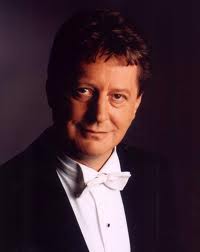
Stephen Page

Unitarian Church, 12 April 2014

The first of this summer’s recitals on the Unitarian Snetzler brought an eclectic if generally quietly focussed range of pieces from Stephen Page. He opened with a Purcell Trumpet Tune, using the Hautboy with the box open for the trumpet stop. As the stop has a bad habit of going out of tune very easily it was a pleasure to find it had retained its pitch!

A quiet Communion by Guilmant and Bach’s Arioso followed, highlighting the fine flute stops, before CPE Bach’s Sonata in F. this more extended work enabled Stephen to demonstrate the range of colour available and provided a delicious echo effect.

Always a promoter of good quality light organ music, these classical pieces were quickly followed by Lemare’s Andantino better known as Moonlight and roses.

That the organ is splendid for the early repertoire was finely demonstrated with three short early pieces by Couperin, Boyvin and Marchand, with the warm voicing of the middle piece contrasting to the more fiery writing of the outer movements.

William Lloyd Webber’s Intrada brought a move into the twentieth century before two weightier classical pieces – a toccata & fuge in A major by Muffat and Buxtehude’s extended Fantasia Chromatica. The rolling inevitability of Buxtehude’s writing was well caught and the structure never in doubt.

Two theatre organ pieces by Joyce Alldred brought the afternoon to a pleasing close.

The next concert is on 7 June and the Snetzler can be heard on Saturday 26 April when Tom McLelland-Young will play at 2.00pm as part of 1066 Choir & Organ’s book launch celebrations.

 

Huw Humphreys appointed Head of Music at the Barbican

The Barbican is very pleased to announce the appointment of Huw Humphreys as its new Head of Music.
Humphreys brings a wealth of experience from the music sector to the role. For the past eight years he has been Director of Artistic Planning at the Melbourne Symphony Orchestra, where he has been responsible for the acclaimed orchestra’s artistic programme and recording output. His previous roles including being General Manager of the European Union Youth Orchestra and eight years at arts management company Askonas Holt, including four years as Head of Tours and Projects. His education includes an MA in Music from Oxford University and a music scholarship at Winchester College
Louise Jeffreys, Director of Arts at the Barbican said:
“We’re delighted to appoint Huw to this vital role at the Barbican. His experience of working with international artists and arts organisations, as well as his role in nurturing young talent as part of the European Union Youth Orchestra, makes him the perfect candidate to help deliver our vision of world-class arts and learning.
“Huw’s work at the Melbourne Symphony Orchestra has shown him to be a truly innovative and visionary leader and we’re looking forward to the new perspectives he will bring to the Barbican’s outstanding music programme.”
Huw Humpreys said:
“After eight years with the wonderful Melbourne Symphony Orchestra, I am thrilled to be returning home to be taking up the position of Head of Music at the Barbican. The opportunity to be working with such a talented and dedicated team and to collaborate with such extraordinary resident and associate ensembles proved to be an irresistible offer. I look forward to working in the Barbican’s stimulating environment and contributing to its world-class cultural programme.”
Huw’s achievements at the Melbourne Symphony Orchestra include the appointments of Sir Andrew Davis and Diego Matheuz as Chief Conductor and Principal Guest Conductor respectively, festivals and commissioning projects with composers including Thomas Adès, Brett Dean and Matthias Pintscher, securing the orchestra’s debut performances at a number of major European Festivals and the expansion and development of the MSO’s education and outreach programme.
He will begin his new role at the Barbican in late August 2014.

Henriette Götz appointed as Executive Director of English National Opera

H Goetz

English National Opera (ENO) today, 10 April 2014, announced that Henriette Götz has been appointed as its new Executive Director.

Henriette has more than 20 years international business experience, the last ten of which were in international arts leadership. She was most recently Executive Director of the innovative Vlaamse Opera, Belgium, which she joined in 2009. Henriette will commence her role at ENO in May 2014.

Martyn Rose, Chair of ENO’s Board of Trustees said: “I am delighted to welcome Henriette as our new Executive Director.  She joins ENO at an exciting time, as the company celebrates an acclaimed Spring season and will soon announce a number of transformational projects for the future. Henriette’s financial acumen and deep knowledge of the international opera and classical music sector fully equip her to help shape and deliver our future strategy, which will create a sustainable future for ENO as one of the world’s most innovative opera houses.”

John Berry, Artistic Director of ENO, said: “Henriette is an excellent appointment to our executive team at ENO and I’m very much looking forward to working with her. She is an experienced and well respected opera administrator whose work with Vlaamse Opera,  a regular co -producing  partner of ours and one of Europe’s most exciting opera houses, will stand her in good stead for her work in London.”

Henriette Götz said: “I have a deep passion for the arts, and especially for opera, so I’m delighted by the opportunity to join an organisation as creative and courageous as ENO.  Their vision for the future is very exciting. I am very happy to work with John and I am looking forward to a productive future of great collaboration. I’m thrilled to be a part of this next chapter for ENO and I can’t wait to get started.”

The appointment of Henriette Götz comes as a result of the departure of Loretta Tomasi, who left ENO in December, after ten years with the company.


The Dream of Gerontius

A Davis Barbican Hall, 6 April 2014

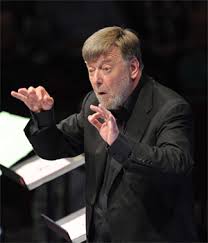
The muscular humanity of Stuart Skelton’s Gerontius informs every aspect of Sir Andrew Davis’ approach to work as revealed last night. Where cathedral performances can seem distant and ethereal there was an imminence about the reading which was powerfully moving throughout, even shattering at times in its intensity. Stuart Skelton brings us a man close to death but still fully aware of his own humanity, and it is this which carries through into the second part. The pain of Take me away mirrors that of In thine own agony from the first part. His powerful, yet beautifully sung, performance was matched by the radiance of Sarah Connelly’s Angel. No need here for a cautious approach to a fearful soul, her strength matched his and the outpouring of alleluias was thrilling.

David Soar was a young sounding Angel in both parts but matched the humanity of the others with a depth of feeling of his own.

The BBC Symphony Chorus was finely focussed throughout, with many telling moments. The end of Praise to the Holiest seemed more powerful that its explosive opening. The chorus of Demons started quite conventionally but became ever more clipped and aggressive as it progressed, dying to a pathetic dispossessed. The gently rolling finale brought subtle waves of sound which ebbed and flowed around the soul of Gerontius.

In the Barbican Hall it is very difficult to create a real ppp so Sir Andrew did not try. What he was able to do instead was create a range of dynamic intensity which was always dramatically apt. The opening of the first part was more autobiographical than spiritual, and that of the second reflective, almost charming in its relaxation.

We have been privileged to hear a number of very fine performances of Gerontius recently but this will surely be recalled as one of the finest.

It was being recorded for broadcast on 21 April. Catch it if you can live or via iPlayer or website.

Next Saturday, The Apostles.

The Regency Singers

The Regency Singers gave a Spring Concert at St Luke’s Church last Saturday. In many ways this was a sad occasion for it was to be the last time Stephen Page acted as Musical Director and Conductor for the group, but there was no sense of depression in the air for an eclectic range of song and instrumental music.

They opened with Bridge Over Troubled Water, followed by Moon River and Take the A train – all geared to helping us relax, sit back and enjoy. Two items from Les Miserables followed, with the men obviously in their element with Do you hear the people sing. 

Elgar’s As torrents in summer made a refreshing interlude and led gently in The gypsy rover.  Pianist Andrew Daniels, who accompanied throughout, vamped his way delightfully through The Sunny side of the Street before the meater offering of a selection from Evita. 

Fine renditions of You Raise Me Up and All Things Bright and Beautiful in the John Rutter setting, brought us to a more serious point in the afternoon and this slipped into a three minute overview of the whole of western music.

With the Samuel F Dallady organ now fully restored and in superb condition it was good to hear Stephen Page play a Bach Arioso. The tremulant is now back to its original condition and its soft, almost hesitant, impact is superb.

A medley from Joseph and Rutter’s Blessing brought the afternoon to a close, just in time for tea and cake.

Those wishing to hear the Dalladay organ in full flow will be welcome at St Luke’s for a concert on Saturday 26 April, which will also include the book-launch of Organs of 1066 Country which includes a biography of the organ-builder.

April CDs / DVDs

CBSO

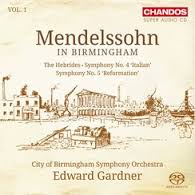
Mendelssohn in Birmingham

CBSO, Edward Gardner

CHANDOS CHSA 5132     66:04

An interesting way of bringing familiar works together, though the evidence that any of these works was actually performed by the composer in Birmingham is not forth-coming. That Mendelssohn worked regularly and to critical acclaim in the city is without doubt, and the CBSO under Edward Gardner bring us lively and committed readings of all of the works here. Listen to the hushed opening of the Hebrides Overture to get a flavour of the sound world evoked.

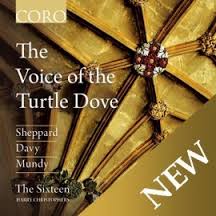
turtle dove

The Voice of the Dove

The Sixteen

CORO COR16119               70:58

The Sixteen, in their usual fine form, turn their attention to lesser known composers of Renaissance polyphony, drawing on works from the Eton Choirbook. There are three extended compositions by Davy and Mundy, while the rest comprises shorter antiphons. A captivating glimpse of rarely heard works.

string qus

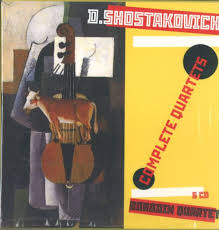
Shostakovich: Complete quartets

Borodin Quartet

MELODIA MELCD 1001077   

This release brings together the complete string quartets Nos 1-15 alongside the Piano Quintet and two pieces for string octet. Where Shostakovich is more popularly known for his symphonies, string quartets were a vital part of his output over the whole of his creative life. The recordings date from the 1980s but there is no indication of their age in the transfer. The Borodin quartet are joined by Sviatoslav Richter for the Piano Quintet. The accompanying notes are verbose and very poorly translated; one is advised to simply listen to fine performances.

CPE Bach 2

CPE Bach: Piano Concertos

Michael Rische, Rainer Maria Klaas, piano; Kammersymphonie, Leipzig

HANSSLER CD 98.027      58:47

Delightful, sprightly playing from the two pianists and well balanced accompaniment from the Leipzig Kammersymphonie. Entertaining throughout.

vivaldi bassoon

Vivaldi: 5 concertos for Bassoon, strings and basso continuo

Valery Popov, bassoon; State Chamber Orchestra of the Belorussian SSR, Valery Polyansky

MELODIA MELCD 1002098

A new recording of works which are today more familiar than they were a few years ago. With so many concerti to choose from it is not wonder that, even now, we are presented with charming works we have never come across before. Recommended.

Raff 2

Joachim Raff: Symphony No5, overtures

Orchestra de la Suisse Romande, Neeme Jarvi

CHANDOS CHSA 5135     80:55

I have only recently discovered Joachim Raff and am constantly amazed that he is not far more familiar in our concert halls. Those who love late romantic compositions – Dvorak, Smetana, Tchaikovsky – can’t fail to like this collection of works from an exhilarating overture to Dame Kobold written in 1869 to the more expansive pleasure of the 5th Symphony. Though it has a conventional structure, it is strongly programmatic, being based on Burger’s poem Lenore and reflecting the tensions of the Franco-Prussian war.

Death in Venice

Britten: Death in Venice

ENO

OPUS ARTE OA 1130 D   153:00

I recall this being a highlight of my visits to the London Coliseum last year – the full review is available elsewhere on the site – and the DVD does ample justice to the production and all involved. Don’t be put off at the beginning if the image seems a little blurred – John Graham-Hall is behind a front cloth! Highly recommended.

Trainee Conductor

GCU Trainee


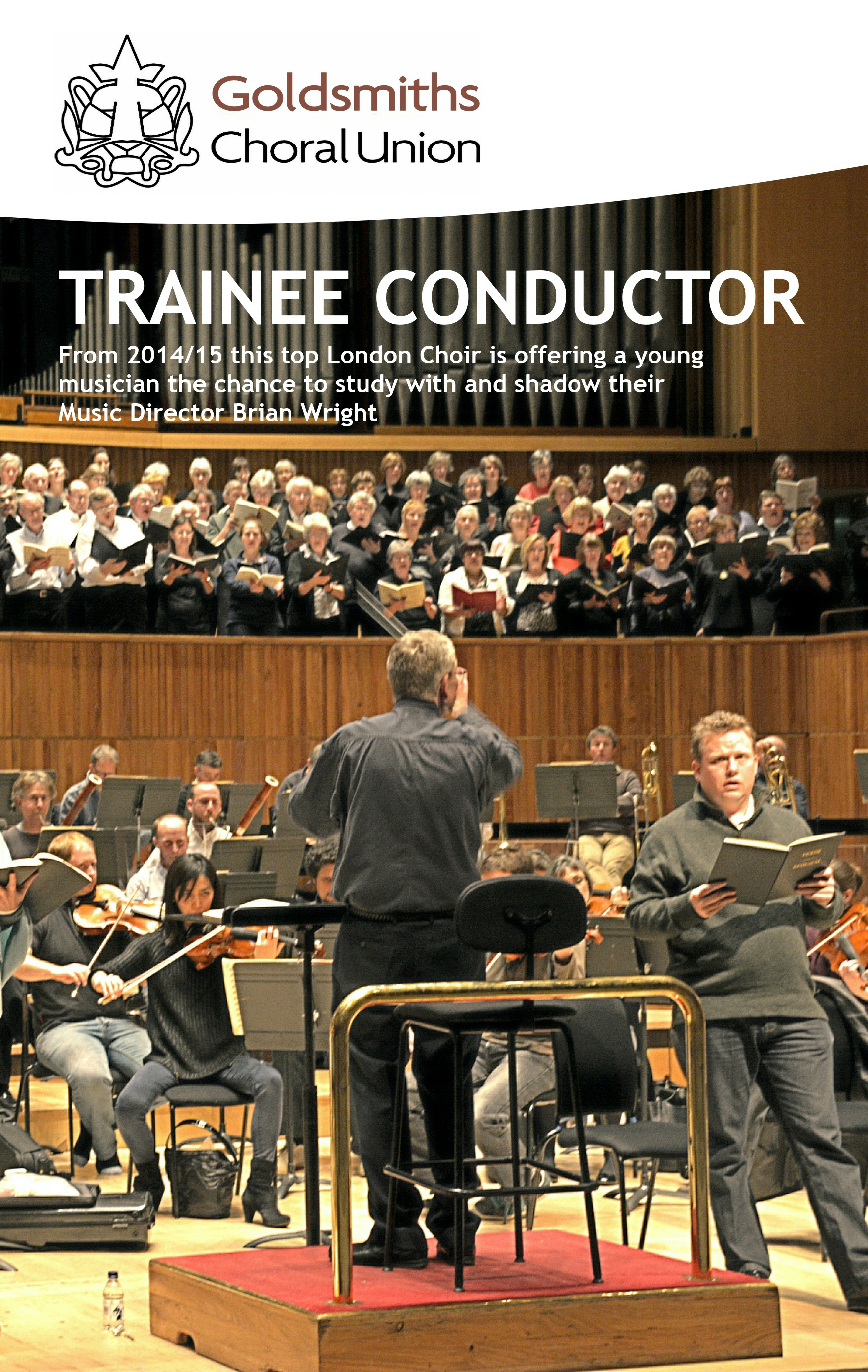
Top London choir Goldsmiths Choral Union is offering a young musician the chance to shadow and study with their Music Director, Brian Wright. The new role is designed for a student conductor as a two-season Apprenticeship starting in September 2014. Most student choral conducting tuition concentrates on the ‘a cappella’ repertoire. This is a unique opportunity to study the large-scale ‘symphonic’ choral repertoire and techniques, including 30 individual lessons per season. At the end of the second season it is envisaged the appointee would conduct at a concert.

The deadline for applications is 9 May 2014.

Full details and the application procedure can be downloaded at

www.goldsmithschoral.org.uk

Position of Trainee Conductor
This new role is designed for a student conductor as a two season
Apprenticeship starting in September 2014. Most student choral
conducting tuition concentrates on the “a cappella” repertoire. This is
a unique opportunity to study the large-scale “symphonic” choral
repertoire and techniques with GCU’s renowned music staff.
The appointment will be decided by short list, interview and practical
competition, with choir members involved in the choice. The
appointee will shadow the Music Director Brian Wright and also receive
tuition from him of approximately 30 lessons per season before GCU’s
Wednesday evening rehearsals at Baden Powell House in South
Kensington.
From time to time the appointee will conduct part of a full rehearsal
as a supervised session. He/she will also have the opportunity to direct
supervised sectional rehearsals. If a pianist, GCU’s accompanist
Stephen Jones will mentor choir accompaniment skills. At the end of
the second season it is envisaged the appointee would conduct at a
GCU concert.
Goldsmiths Young Voices Project
In addition, GCU has an ambition to establish Goldsmiths Young Voices,
a SATB youth choir based in the borough of Kensington and Chelsea.
The new choir could have a regular slot in GCU’s Christmas carol
concerts and participate in any of GCU’s concerts that require young
voices, as well as developing its own repertoire from popular
arrangements, as on “The Choir”, to more classical fare. This project
is currently in the early ‘concept stage’, and the Trainee Conductor
would be closely involved in its development, helping bring the idea
into reality, as well as training and conducting the Young Voices.

Brighton Philharmonic Orchestra

barry wordsworth

The Dome, Brighton, 30 3 2014

The last concert of the season was also a milestone for those involved. Barry Wordsworth has been Musical Director for 25 years and in that time has conducted the orchestra for 200 performances. The warmth of his reception fully supported the respect from stage and auditorium.

The afternoon opened with Frank Bridge’s suite The Sea. It is easy to understand why Britten was so impressed when he heard the work as a teenager for it is both English and romantic, conjuring up visions of the sea around our coasts. Closer to Vaughan Williams than Debussy, the opening Seascape seems to look down on the vast ocean from the safety of the shore, where Seafoam immerses us to be splashed, flecked and drenched as we skim close to the surface. Moonlight brings an entirely different vision, a human perspective of moonlight on the sea rather than an abstract mood. Storm releases real power and danger, but when the violence has run its course Bridge rounds up his love for the sea with a restatement of the noble opening theme. Throughout the orchestra proved its mettle and sectional strengths.

American composer Lowell Liebermann will be a new name to most concert goers. His piano concerto was first performed in 1983 and is in essence a transition piece in terms of his own compositions. The opening Allegro is spiky and aggressive, with even the quieter moments retaining the opening tension. If there is a lyrical underpinning it is often lost in the forward thrust and violence around any melodic structures. Think Grieg sieved through Birtwhistle. The Larghissimo opens with solo piano in deceptively remote style, picking out intervals which suggest other scores without any sense of development. It is hauntingly written but none the less disturbing. The final Maccaber Dance is heavily staccato, driven headlong towards its climax, where brass bring a quasi Dies Irae.  Robert Clark was the soloist and almost convinced us that the work was worth the considerable amount of blood, sweat and tears needed to bring it off.

After the interval we heard Brahms’ 4th Symphony. Maybe it was the exertions of the first half, but the opening movement was not as precisely phrased as one might have expected and the whole lacked energy and focus. This went for most of the second movement as well and it was not until the opening of the Allegro giocoso that the orchestra seemed to marshal itself to produce the level of attack and edge the score requires. Thankfully this continued easily into the finale with a strong muscular flow and wonderful rasping brass at the conclusion.

The next orchestral season opens on Sunday 5 October with works by Glinka, Rachmaninov and Shostakovich, but there are also four chamber concerts in Brighton Unitarian Church on Sundays from 6 July. All details from www.brightonphil.org.uk

Cameron Carpenter: The Cabinet of Dr Caligari

caligari

Royal Festival Hall, 29 March 2014

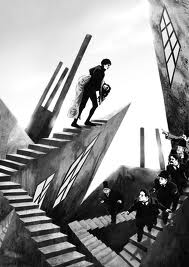
No problem with the size of the audience at the Royal Festival Hall when, as one of the final events of All the Stops Cameron Carpenter improvised for the 1920 classic horror film The Cabinet of Dr Caligari. The film will projected onto a large screen in front of the organ which allowed us only brief glimpses of the organist’s diamanté heels. However, there were two smaller screens either side of the main one which brought us direct coverage of the console from almost every angle. If this was a little disconcerting at times it proved effective in enabling us to follow the speed of his stop changes and the way he was thinking as he went.

Cameron Carpenter’s approach to improvisation is essentially a romantic one. Though he does not develop memorable melodic lines, his use of tone and colour is emotionally supportive to the narrative and he uses a very wide range of expression. The awakening of Cesare and the murder of Allen were alarmingly effective and intense. At the same time he managed to bring a subtle humour to Caligari, making the doctor almost jovial in his relationship with the students.

The climax was superbly handled. As it became increasingly clear that the hero was himself insane and the world around him focussed and supportive, Cameron Carpenter introduced a Bach inspired development, as if the chaos of the earlier scenes was giving way to the strict but loving counter-point of the Germanic character. It was masterly and deserved the ovation it received.