Brighton Festival

duo

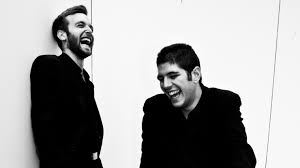
Francois-Green Piano Duo at the Dome Studio, 14 May 2014

The lunch-time recital brought a packed audience to the Studio Theatre for a programme which was both beautiful and challenging. Combining Mozart and Schubert with Berg was potentially risky but in the event completely justified.

The duo opened with Mozart’s F major sonata K497 and brought to it overtones of Beethoven as well as a lighter touch which harked back to the early 18th century. The opening movement’s development section constantly strains at the limits of baroque form and seems to yearn for greater flexibility. As if this was all too much for the composer, the Finale seems tongue-in-cheek in its lightness. 

Wozzeck is not a work one would automatically associate with the piano, and extracting the interludes and moulding them into a single movement may seem an unlikely task. That it proved so successful was as much to the credit of the composer as to the subtlety of the arrangement. Berg’s writing is so lyrical that it sweeps all before it. There were strong hints of Rosenkavalier in the opening sections, a point I can’t recall when in the opera house, and throughout the lyrical beauty out-ways any potential difficulties with the notation. The duo obviously delighted in the work and we can only hope it may be taken up by others.

The final work was Schubert’s Fantasy in F minor D940. The contrast was almost too great. Here was lyrical beauty combined with sublime melodic creation. It came close to wallowing at times, but never tipped over the edge.

For a worthy encore they played a brief contemporary Hungarian work where gentle flutterings helped an otherwise indeterminate structure. But the best was left to last with a magnificently sensitive and very gentle rendition of a Bach chorale prelude arranged for four hands. Its simplicity of approach was masterly.

May DVDs

salome

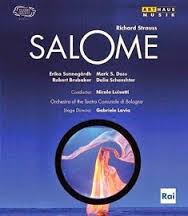
Richard Strauss: Salome

Teatro Comunale di Bologna, Nicola Luisotti

ARTHAUS 101699

Over the years there has always been a continuing concern about the stage presentation of Salome. The music is lush, romantic and carries us away on its tides of emotion, while at the same time the overtones of necrophilia and masochism can be very disturbing. Director Gabriele Lavia neatly subverts this by raising the Baptist’s head as an enormous carving which acts as a day bed for Salome to act out her fantasies. The idea works well and forces us to pay more attention to both text and music rather than being revolted at the act.

The production is very strongly sung with an outstanding Herod from Robert Brubaker and darkly impressive Jochanaan from Mark D Doss.

Erika Sunnegardh creates a complex Salome, her lightning changes of mood and body language reflecting her unstable mental state. The voice is more than ample for the part though at times can be a little tight and hard-edged.

Orchestral sound is fine and balance still allows the singers to be heard – not always true in the opera house.

orfeoGluck: Orfeo ed Euridice

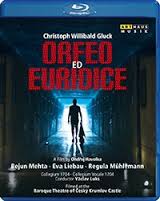
A film by Ondrej Havelka

ARTHAUS 102184

Filmed in the baroque theatre in Cesky Krumlov Castle, the film draws on the resources of the whole building, using the passages and under-stage areas to fine effect in the second act. The approach is not a simplistic baroque restaging. The director uses the baroque scenery and movement as a dream image for Orpheus who is seen in the dressing room and, most effectively in the final moments, where he views Euridice from the empty auditorium – the baroque image being merely a memory of his dead wife.

Musically this is a fine performance but the use of the 1762 Vienna version means it is very short. Bejun Mehta is a fine male-soprano in the title role with Eva Liebau an attractive Euridice. Regula Muhlemann’s Amor is allowed an unusual amount of comedy and the chorus sing and dance with enthusiasm.

The small pit band is in 18th costume, and conducted from the side while they sit along either side of one long music stand.

porgy

Gershwin: Porgy and Bess

San Francisco Opera

EUROARTS 2059638

Since Glyndebourne famously brought Porgy and Bess back into the opera house there have been a number of very fine productions and this new one by Francesca Zambello is very much in that tradition. A naturalistic approach within a claustrophobic setting which draws on container storehouses as its basis, the emphasis is on a community within which events are worked out. The choral singing and acting is of a very high order, and the stage is filled with credible activity without ever losing focus.

Singing is genuinely operatic with Eric Owens a totally convincing Porgy and Laquita Mitchell a slippery and sexy Bess. Chauncey Packer  understands the jazz potential of Sporting Life – but there are no weaknesses in the large cast.

Kay Stern manages the large forces with ease and creates many exciting and moving moments.

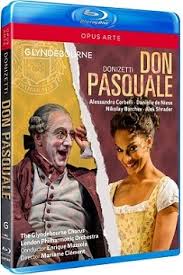
Don PasqualeDonizetti: Don Pasquale

Glyndebourne Festival Opera

OPUSARTE OA 1134 D

Mariam Clement creates a highly credible world for Glyndebourne which is lively and often very funny. The strong cast is led by Danielle de Niese, who may not be to everyone’s taste as a performer but certainly has a gift for comic works. Alessandro Corbelli is a fine Pasquale. Enrique Mazzola drives his forces with panache and the whole is highly enjoyable.


WEEKEND OF MUSIC AND POETRY MARKING THE 100th ANNIVERSARY OF THE FIRST WORLD WAR

A special Beethoven weekend (5/6 July) of music and poetry exploring the themes of tyranny, justice and freedom from oppression is planned to mark  the 100th anniversary of  the First World War. Opening with a conversation, hosted by James Naughtie with Oxford historian Professor Margaret MacMillan, writer Miranda Carter and Jeremy Paxman, it will be followed by a performance of Fidelio.

World famous cellist Steven Isserlis gives a recital of cello sonatas by Beethoven and  Frank Bridge (written in 1916) that will be interspersed by readings of war poetry, read by Samuel West, including recently discovered unpublished poems by Siegfried Sassoon ( including one addressed to Beethoven).  Renowned singer Ann Murray gives a masterclass with young Garsington Opera singers and the weekend also features tours of the Getty Library and a special cricket match with England Women’s X1 vs an international celebrity team.

The weekend’s highlight is the first ever symphony concert in the Opera Pavilion and will feature Beethoven’s incidental music to Goethe’s tragedy Egmont and Schoenberg’s  visceral A Survivor from Warsaw.  Both works will be narrated by Samuel West.  The evening culminates with Beethoven’s Symphony no 9 in D minor.  Douglas Boyd conducts the Garsington Opera Orchestra and Chorus with Natalya Romaniw, Victoria Simmonds, Paul Nilon and Matthew Rose as soloists..

Douglas Boyd, Artistic Director of Garsington Opera  said:  Beethoven has the power to express every emotion of the human spirit. I feel that as well as the overwhelming emotional appeal of his music, there are underlying messages of freedom, justice and, ultimately, love that permeate his work.  The ending of Beethoven’s Ninth Symphony with Its universal message of hope for a better world is very relevant to the centenary of the First World War.  

Garsington Opera’s 25th anniversary season opens on 6 June with three productions – the British premiere of Offenbach’s sparkling comedy Vert-Vert, Janá?ek’s 20th century masterpiece The Cunning Little Vixen and Beethoven’s only opera Fidelio.

Tickets from www.garsingtonopera.org  telephone 01865 361636

WNO win Royal Philharmonic Society Opera and Music Theatre Award

Lohengrin 1

Welsh National Opera have won the prestigious Royal Philharmonic Society [RPS] Opera and Music Theatre Award for their productions of LuluLohengrin and Paul Bunyan in 2013. The criteria for RPS Opera and Music Theatre Award is for musical and artistic excellence of a production, company (large or small-scale) or individual.

The RPS Music Awards, presented in association with BBC Radio 3, are the highest recognition for live classical music and musical excellence in the United Kingdom.   Winners in 13 categories, chosen by independent juries, were announced at a glittering ceremony at London’s Dorchester Hotel (evening – 13 May) hosted by BBC Radio 3’s Petroc Trelawny and Sara Mohr-Pietsch, with silver lyre RPS trophies presented by pianist Graham Johnson.

David Pountney, WNO Chief Executive & Artistic Director says, “WNO is incredibly proud to receive this, the most prestigious of all the music awards. It is especially gratifying for us because it acknowledges the breadth and reach of our work, from the ambitious and relatively rarefied in the case of Lulu, the classical in the case of Lohengrin, and finally encompassing our highly skilled and innovative Youth and Community programme with Paul Bunyan. This award is a true badge of quality, and we hope it will inspire all those who support WNO and culture generally to redouble their efforts to ensure that we remain a civilised, cultivated community with access to the great traditions of European culture.”

Berg’s Lulu opened WNO’s Spring season in 2013 and marked David Pountney’s first new production in his role as Chief Executive & Artistic Director of WNO. The production, which was conducted by WNO Music Director Lothar Koenigs, received rave reviews from press and was nominated for the 2014 Opera Awards in the category of ‘New Production’. The role of Lulu was sung by Marie Arnet.

Antony McDonald’s new production of Lohengrin, which was staged by WNO in Summer 2013, marked the bicentenary of Wagner’s birth and the opening performance was performed in the presence of His Royal Highness The Prince of Wales, Patron of Welsh National Opera at Wales Millennium Centre, Cardiff. The production was conducted by Lothar Koenigs, with Peter Wedd singing the role of Lohengrin and soprano Emma Bell singing Elsa von Brabant.  Fiona Maddocks from The Observer described the production as a ‘tour de force’ and it earned a 5* review from the Financial Times.

Lothar Koenigs says: “I feel very privileged to be Music Director of WNO and I want to thank all my colleagues for their commitment and passion for opera. Everyone at WNO should be proud that all their hard work has been recognized by this most prestigious award.”

Paul Bunyan was a production by WNO Youth Opera, which was performed in August 2013 and featured more than 100 singers, orchestral players, technical students, costume makers, dressers and wigs & make up students all aged between 16 & 25. Amongst the cast were Only Boys Aloud as The Lumberjack Chorus and Stephen Fry as the voice of Paul Bunyan. The production also marked the centenary of Britten’s birth last year in 2013 and was shortlisted in the Opera category of the South Bank Sky Arts Awards.

On presenting the award the RPS Jury said:  “LuluLohengrin and Paul Bunyan were three bold, contrasting productions, each of the very highest musical and theatrical standard. A showcase for Welsh National Opera’s world-class ensemble, orchestra and chorus. And forPaul Bunyan they were joined by Welsh National Youth Opera, whose collaboration with boys’ choir, Only Boys Aloud, gave a fresh and powerful insight into Britten’s first opera.”

A special programme devoted to the RPS Music Awards will be broadcast on BBC Radio 3 on Sunday 18 May at 10pm.

The RPS Music Awards are unique in the breadth of musical achievement they span – from performers, composers and inspirational arts organisations to learning, participation and engagement.  The list of winners since 1989 reads as a roll call of the finest living musicians.    www.rpsmusicawards.com

ENO: Thebans

Thebans

Saturday 10 May 2014

Few new operas make a strong and positive impact on their first encounter, but ENO seem to have struck lucky with Julian Anderson’s Thebans. The musical world he creates is compelling throughout, moving us swiftly and with great clarity through the complex narrative. As with the original text by Sophocles the chorus plays a vital part and choral writing is one of Julian Anderson’s great strengths. In the first act I put my trust in fate is the first of a number of highly effective set pieces, muscular in texture but emotionally clear and precise.

Frank McGuiness has repositioned the three Theban plays to allow for Antigone to die in the middle act and for us then to go back to the death of Oedipus to reflect on why Creon because so brutal and why Antigone makes the sacrifice she does. That this re-structuring works so well is as much a tribute to the quality and clarity of the text as to the music. There are many times when the vocal line in unaccompanied or supported by very few instruments, and even with more bravura writing there is little difficulty following the shifts in characterisation.

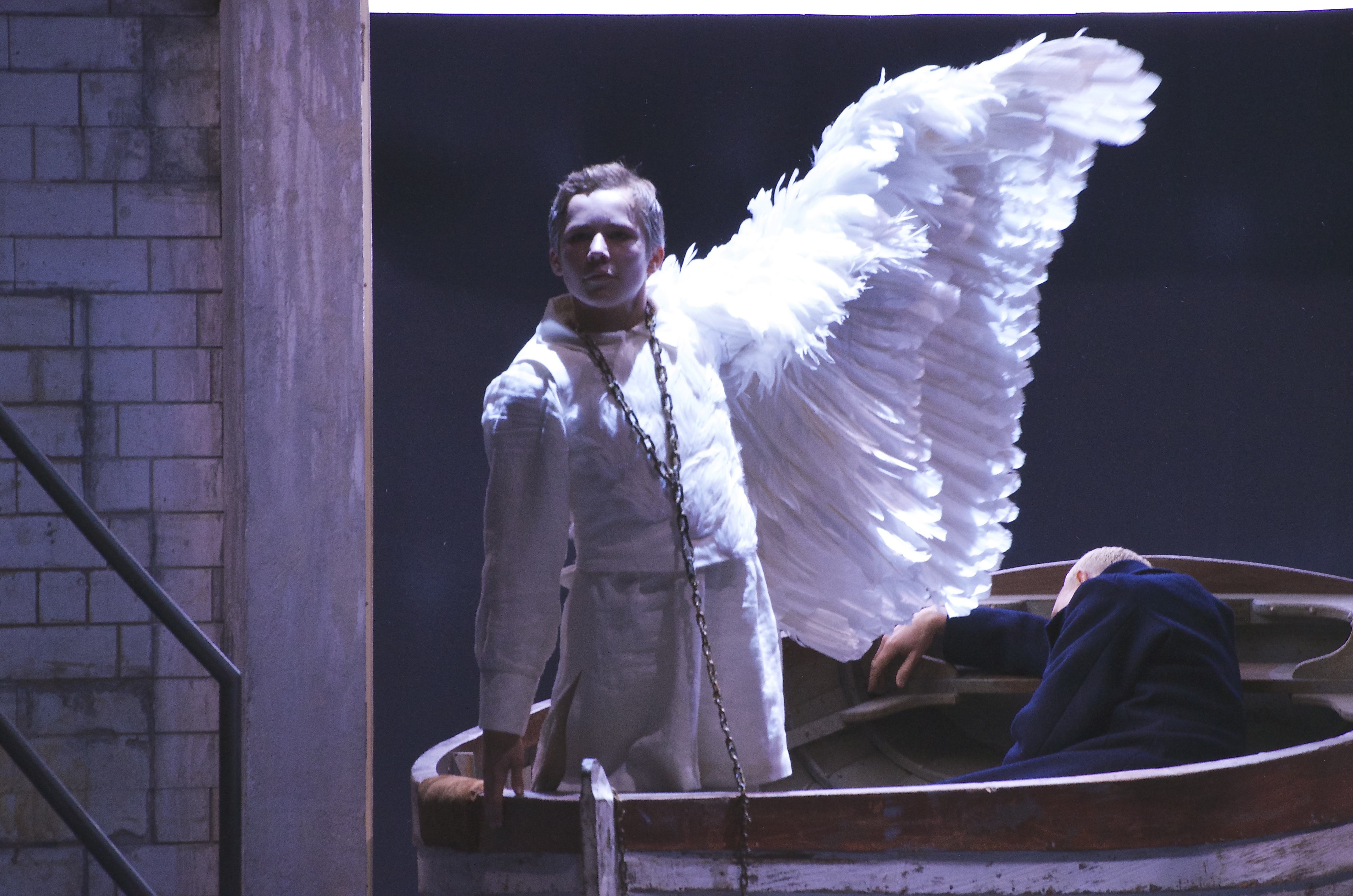
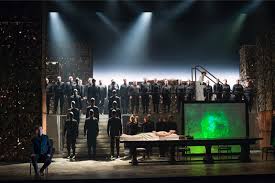
Pierre Audi’s production puts all the protagonists on stage in the first act, even those who do not sing, so that we are aware of a close, claustrophobic city, where the crowd mix and mingle uncomfortably with royalty. All this is set within Tom Pye’s cages of rough stone, the sort used for sea defences or hold back dams. It is a highly effective metaphor for the chaos to come, and the broken cage in the final act a telling image for the final destructive moments.

The vocal lines are frequently lyrical with melodic snatches in keeping with the emotional states of the characters. This is often used to dramatic effect as Peter Hoare’s creepy Creon has the most mellifluous lines to sing, while Roland Wood’s Oedipus is rarely given any moments of relaxation. Susan Bickley does not have a lot to sing as Jocasta but her presence is deeply felt as is Julia Sporsen as Antigone, whose presence grows more important as the work progresses and whose music becomes ever more engaging.

Matthew Best’s Tiresias seems to hold the tragedy together, his prophetic impact constantly challenging the wilful actions of the doomed royal family, and adding the only real bass line to the ensemble.

Edward Gardner provides firm direction from the pit, allowing the many textural nuances of the score to evolve with seeming ease and in perfect balance with the singers.

This is a work which will hopefully be revived as it will surely become even more impressive on greater exposure.

St Luke’s celebrates

J Bruce

Saturday 26 April 2014

Jonathan Bruce gathered an impressive number of local organists to celebrate the rebuilding of the Samuel F Dalladay organ in St Luke’s, Silvehill. He himself played for the setting of the opening of Charpentier’s Te Deum sung by the church choir and for the following Recitative, Aria and Choral by W D Armstrong. The bright and stirring Charpentier gave way to the gentle tones of the Aria and the rousing Choral.

Having a number of different performers allowed us to hear a wide range of registration, and Richard Eldridge’s presentation of Bach’s Prelude & Fugue BWV545 let us hear the steely upper work on the instrument and the potential North German sounds, in contrast to Nigel Howard’s softly voiced solo stops in the slow movement from Trio Sonata No3 also by Bach.

The final musical item in the first half was the ever familiar Toccata and Fugue in D minor played by Derek Carden, demonstrating the range of tone available and the fire the instrument can provide.

Before the interval Dr Brian Hick spoke about the importance of Samuel F Dalladay both as an organ-builder and as an inventor. The St Luke’s organ is a fine example of his work and the church are to be thanked and congratulated for their enthusiasm to maintain the instrument.

The second half opened with the Choir singing a setting of Schubert’s Marche Militaire, which led to a number of more romantic pieces after the classicism of the first half.

Jonathan Bruce played Dubois’ Cantelina Nuptiale with a delicate tremulo in the Swell followed by two movements from Boellmann’s Suite Gothique played by Derek Carden. Nigel Howard played Dubois’ familiar and popular Toccata before Richard Eldridge delighted with Lefebure-Wely’s Sortie in Eb, bringing a touch of the fairground into the church.

That same Gavioli sound was present when Jonathan Bruce played Turner’s Fairy Wedding Waltz before a rousing conclusion in Malcolm Archer’s Festival Finale.

A splendid evening and, hopefully, the first of many to celebrate an instrument of historical and musical importance.

1066 Choir & Organ Book Launch

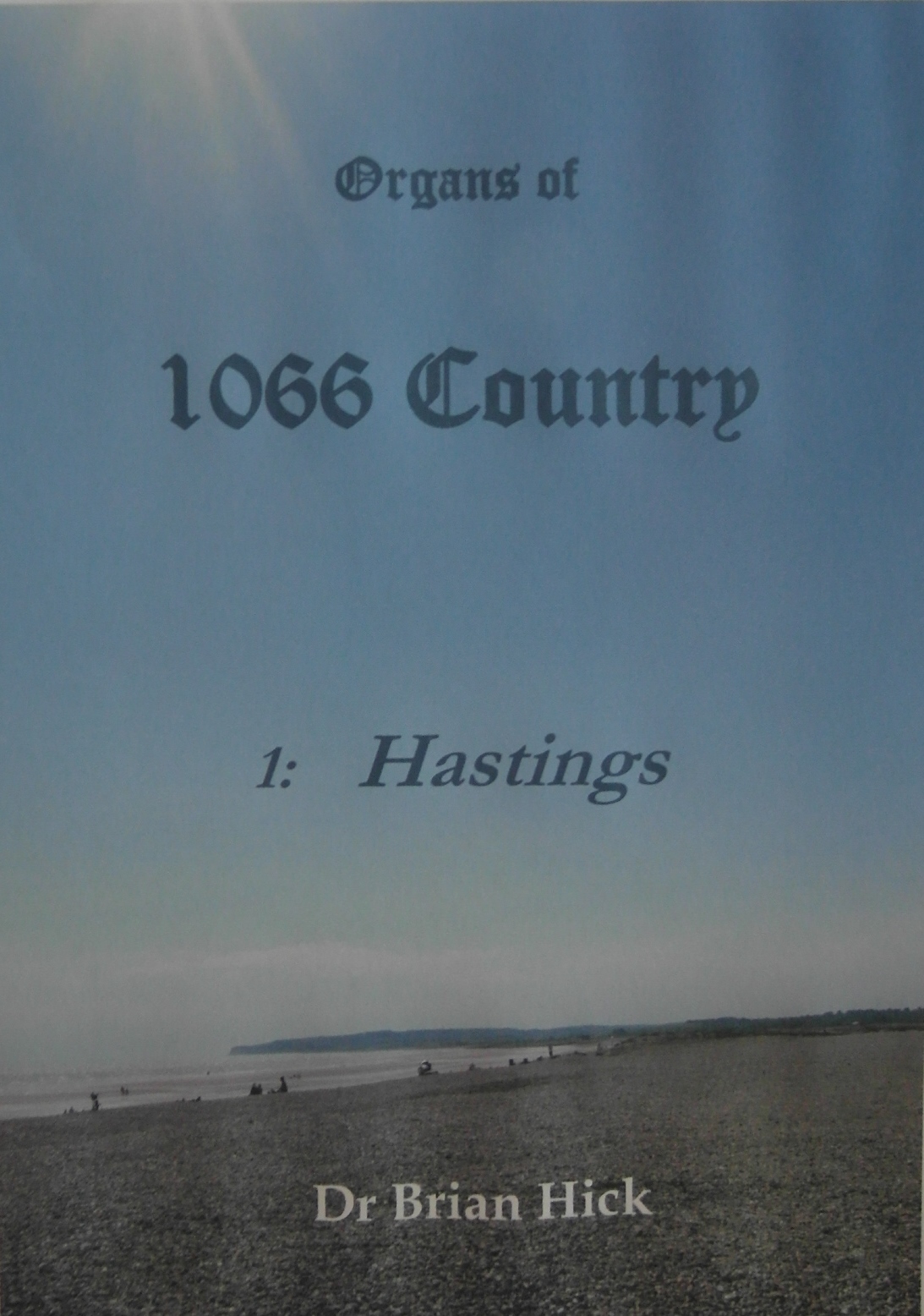
cover pic (1)The first volume of Organs of 1066 Country is published tomorrow, Saturday 26 April, 2014. The book covers, in full colour, all of the organs in Hastings, a biography of local organ builder Samuel F Dalladay and the first part of a history of Bexhill Organists & Choirmasters Association.

Price £7.50 it will be on sale across the day together with musical events by local organists.

10.30am        His Place, Robertson Street, Hastings – with music from Alan Constable & Julius Weeks

2.00pm          Hastings Unitarian Church – with music from Tom McLelland-Young

7.00pm          St Luke’s URC – a celebration of the rebuild of the Dalladay Organ

Copies of the book are available to order from bhick1066@gmail.com post free.


BBC Proms 2014

Opening at the Royal Albert Hall on 18 July 2014 the festival promises two months of many of the world’s greatest artists, composers, orchestras and ensembles across 92 concerts including four Last Night celebrations around the UK.
Nearly 50 years after the first appearance of a non-British orchestra at the Proms, 10 international ensembles from around the globe appear for the first time including orchestras from China, Greece, Iceland, Lapland, Qatar, Singapore, South Korea and Turkey. Some of the world’s most renowned orchestras make welcome returns to the festival including the Berlin Philharmoniker, Cleveland Orchestra, Budapest Festival Orchestra, West-Eastern Divan Orchestra and Leipzig Gewandhaus Orchestra. With Promming tickets remaining at £5 for the ninth year running, the finest music making from around the globe is made accessible for the widest possible audience.
A century after the outbreak of the First World War the Proms reflects on the music, musicians and musical legacy of the Great War. Works by composers who lost their lives in the trenches such as Butterworth, Stephan and Kelly, sit alongside the music of composers writing years after the conflict including Benjamin Britten’s War Requiem, based on the poetry of Wilfred Owen, and Sally Beamish’s violin concerto inspired by Erich Maria Remarque’s novel All Quiet on the Western Front
Collaborating with the National Theatre for the first time, the War Horse Prom features life-size puppets from the internationally acclaimed production, alongside music performed by the Proms Military Wives Choir directed by Gareth Malone. 
Celebrating 150 years since the birth of Richard Strauss the Proms features three of his complete operas and a host of instrumental and choral works. Glyndebourne Festival Opera, under Music Director Robin Ticciati, brings Der Rosenkavalier, while the final weekend in August sees consecutive performances of Salome, with Donald Runnicles and the Deutsche Oper Berlin in its debut performance at the Proms, and Elektra, with Semyon Bychkov and the BBC Symphony Orchestra. Singing the title roles, two of the world’s leading Strauss interpreters, Nina Stemme and Christine Goerke, lead remarkable casts.
For the first time in a single season both Bach’s St John and St Matthew Passions will be performed at the Proms. James Gilchrist, internationally renowned for his interpretation of the Evangelist in the St John Passion, will perform the role with the Zurich Chamber Orchestra under Sir Roger Norrington, and Sir Simon Rattle brings Peter Sellars’s staging of the St Matthew Passion with the Berlin Philharmoniker and a stellar cast led by Mark Padmore.
The Proms continues to offer a wide range of music with exciting debut performances by Paloma Faith and Rufus Wainwright. The Pet Shop Boys perform the world premiere of their new piece, A Man from the Future, based on the life and work of Alan Turing. Laura Mvula returns for her own Late Night Prom and John Wilson and his orchestra give a staged performance of the Shakespeare-inspired musical Kiss Me, Kate in its Proms debut.
The 80th birthdays of two of Britain’s most important living composers, Sir Harrison Birtwistle and Sir Peter Maxwell Davies, are celebrated. There are also significant birthdays for British conductors with Donald Runnicles at 60, Sir Andrew Davis at 70, Sir Roger Norrington at 80 and Sir Neville Marriner at 90, all performing during the festival. The work of Lancastrian composer William Walton is also in focus with works ranging from his early witty ‘entertainment’ Façade to rarities such as Variations on a theme by Hindemith.
In the spirit of the Proms’ enduring mission to make the best classical music available to everyone, in 2014 there will be more Proms content available to listen to online for longer than ever before across PC, mobile and tablet. With exciting new digital additions, including a dedicated Proms button on the BBC iPlayer Radio app, six interactive BBC iWonder guides, and the use of BBC Playlister, audiences can enjoy the Proms whenever and wherever they like.
A second series of BBC Two’s Saturday evening review show, Proms Extra, hosted by Katie Derham, will introduce audiences to a wealth of musical guests. Every Prom is broadcast live on BBC Radio 3 and the audio streamed online in HD quality, with additional broadcasts on Radio 1, Radio 2 and for the first time on both Radio 4, with a commission for its PM programme, and Radio 5 live in its 20th anniversary year. For further Proms broadcast details click here
Sir Andrew Davis will conduct the First Night of the Proms marking his 70th birthday with a performance of Elgar’s The Kingdom, and Sakari Oramo conducts the Last Night of the Proms for the first time. Oramo will be joined by star soloists violinist Janine Jansen and baritone Roderick Williams to lead the Last Night celebrations. Rufus Wainwright, who gives his own Late Night Prom a few days earlier, performs at Proms in the Park, Hyde Park alongside Earth, Wind & Fire and there will be Last Night celebrations around the UK in Belfast, Glasgow and Swansea.
Leading conductors also include Marin Alsop, Daniel Barenboim, Riccardo Chailly, Iván Fischer, Valery Gergiev, Bernard Haitink, Sir Simon Rattle, Franz Welser-Möst and David Zinman who gives his last ever performance as Music Director of the Tonhalle Orchestra Zurich. Soloists include Alison Balsom, Joshua Bell, James Ehnes, Julia Fisher, Ingrid Fliter, Benjamin Grosvenor, Daniel Hope and Tasmin Little.
The Proms’ ongoing commitment to New Music is demonstrated with 12 world premieres (10 of which are BBC commissions) and 23 European, UK and London premieres. Alongside some of the most popular violin works in the repertoire audiences are invited to explore some lesser-known and brand-new gems including violin concertos by Moeran, Mathias, Sally Beamish and Gabriel Prokofiev.
 
 
For full details of the season please visit: bbc.co.uk/proms

Les Talens Lyriques

Les Talens lyriquesWigmore Hall, 16 April 2014

Holy Week can often bring unusual musical offerings and that was true of last night at Wigmore Hall when we heard settings for Tenebrae, by Charpentier and Couperin, from members of Les Talens Lyriques. During the early 18th century the Paris theatres closed for Lent and singers were at something of a loose end, so a convent rather enterprisingly established a compromise between a service and a concert. Celebrated composers set the liturgical passages for singers from the opera, with considerable freedom. Music was given within the convent under liturgical circumstnaces but with all the panache of the opera house.

Most interesting, because so unexpected, is the elaboration of single letters. The verses from Jeremiah all start with a single Hebrew letter, and this is developed into a mini-aria or duet by the composer, often more elaborate than the setting of the ensuing narrative.

The result, while rather inflexible in structure, allowed for many delicious moments as the evening progressed. In Charpentier’s Seconde lecon du jeudi the scoring of prophetae tui viderunt provides a small explosion in an otherwise introspective setting, and the concluding Jerusalem convertere is very beautiful.

This was set for two sopranos who tempered their voices to the calmness of the setting. When Amel Brahim-Djelloul sang Septieme repons H117 we heard the sudden flowering of a far more operatic sound. Similarly, Judith van Wanroji brought a Mozartian warmth to Cinquiene repons H115.

After the interval, Couperin’s longer settings proved also to be rather more florid in approach.

All of the Charpentier had been accompanied from the chamber organ by Christophe Rousset, but for the Couperin setting he alternated sections from both harpsichord and organ. Francois Joubert-Caillet was the sensitive viola da gamba continuo.

A rather brief evening, but one which was warmly received and opened a window into a world we rarely encounter.

The Apostles

A DavisBarbican Hall, 12 April 2014

Before the start of The Apostles, Helen Petchey, Honorary Secretary of the Elgar Society, presented the Elgar Society Medal to Sir Andrew Davis. This was warmly applauded and recognised his outstanding support of the composer over many years, including his championing of the restored Third Symphony fifteen years ago. In replying to the presentation he hoped that He would continue to be an Apostle for the composer for many years to come.

The Apostles, even more than The Kingdom, has suffered simply because the writing is not Gerontius, and it was a pity in many ways that this performance was following on so closely after last week’s outstanding presentation of Gerontius essentially by the same forces. There was, however, a great deal to enjoy and value here.

Too often The Apostles can take time to catch fire, but there was no problem here with the Prologue breathing the essence of Elgar from the start. The constant shifts of mood in the orchestration were very finely caught, and there was never any sense of triumphalism even in more extrovert passages. A great deal hangs on the humanity of the characters involved, and here Sarah Connolly’s Mary Magdalene and Brindley Sherratt’s Judas were convincing in their psychological shading as much as their more overt emotions. Gerald Finlay and Paul Groves presented less complex characters, but the sense of ordinary men struggling with vast events was always present.

By contrast Nicole Cabell’s angel and Mary seemed to be in a different world, floating above the men and at times removed from them. Jacques Imbrailo brings us a Jesus at once human and yet removed emotionally from the turmoil around him. Elgar does not attempt to investigate Jesus’ mental state or passion, only to see it through the eyes of the Apostles.

The BBC Symphony Chorus has a less demanding task in The Apostles than in Gerontius, often singing in individual sections, but they characterised the different crowds with ease. Orchestral detail was finely controlled and the organ was evident at key points.

Another fine evening. A pity we did not get The Kingdom as well!