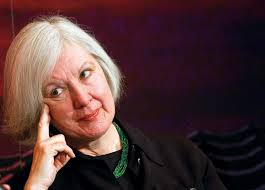
BBC Singers name Judith Weir as Associate Composer

J Weir

The BBC Singers today announced the appointment of Judith Weir CBE as their new Associate Composer from January 2015, in a tenure running until 2018.

It follows the announcement that Judith Weir will be Peter Maxwell Davies’s successor as Master of the Queen’s Music, the first ever female composer to take up the role.

Weir will be the fourth composer to take up the position with the BBC Singers, following in the footsteps of Gabriel Jackson, who held the post from 2010 to 2013, Judith Bingham, and Edward Cowie who was the first BBC Singers Associate Composer in 2002.

Weir already has a long-standing relationship with the BBC Singers, who have been performing her music for over 10 years. Her first commission for the group was Concrete which premiered in 2008 at the BBC Composer weekend. The BBC Singers have performed Weir’s music in many notable venues including the Royal Albert Hall for the BBC Proms, St Magnus International Festival, Cadogan Hall and the Barbican Centre.

Paul Hughes, General Manager of the BBC Singers, says: “I’m delighted that Judith – a long-time friend of the BBC Singers – has agreed to join us.  Her choral writing is exquisite and fits us like a glove; she has the wonderful ability to curate interesting programmes around her music, and she is an inspiration for younger generations of composers.  I look forward to many exciting times ahead.”

Judith Weir says: “Many of my best musical experiences, whether as composer or listener– in performances, recordings and workshops – have been spent in company with the BBC Singers. This world-famous choral ensemble is immensely experienced and professional, but nevertheless always friendly and flexible in rehearsal.  It’s with great enthusiasm and pleasure therefore, that I have accepted the invitation to become their next Associate Composer. In the 90th year of their foundation, their record of supporting living composers and new music has few equals, and I feel extremely fortunate to have the chance of working with them on a regular basis in the coming years.”
BPO Summer Season: 2

Brighton Unitarian Church, 20 July 2014

If there was an air of the Pump Room in Bath on this very sultry afternoon please take the comment as a compliment. The string quartet drawn from the Brighton Philharmonic Orchestra opened with a delightful arrangement of Schubert’s Marche Militaire promptly followed by an even more winning rendition of Tchaikovsky’s Andante Cantabile from the first string quartet. If not quite as familiar to Classic FM listeners as the slow movement from the Borodin quartet, it had a richness of expression without any undue emotion which was totally convincing.

The afternoon concluded with Mozart’s Oboe Quartet, where the strings were joined by Alun Darbyshire who proved that he was more than a match for Mozart’s fearsome writing. A triumph all round.

Peter Copley

Between these we heard Peter Copley’s String Quartet No2, which had been composed for the Stanford Quartet in 2009. There were hints both in the introduction and from the composer that we might find this challenging. It is certainly a very serious composition, but Peter Copley was quite right to suggest that even difficult music can be fun. This certainly is, and for all the complexity of the writing, it is easy to assimilate on a first hearing – dare I say that is not always the case with new music!

The opening Molto vivace has a strong sense of purpose and direction, its regular triple stabbing chords punctuating the musical line and marking out the structure for our journey. At other times the line dances and leads like the Pied Piper. The Adagio is a genuine cantabile, the melody moving easily from one instrument to another. The movement has warmth and an integrity which is close to its Haydnesque roots. Following the idea of having fun, the scherzo starts as if it is going to be a folk song but this rapidly fragments, only to reappear and reform itself as the music progresses. There is a quintessential Englishness to this movement without any hint of pastiche or reference to twentieth century masters. The final Presto is a hell-for-leather skittering which can only bring a smile to any listener, its furious pace easily within the technical grasp of the quartet. The crunch with any new work is the question – would I like to hear this again? Yes, very much so, and it deserves recording as soon as somebody can be persuaded to do so. Let us hope there will be occasions to hear other works by Peter Copley.

Bexhill Organ Concerts

Stephen Page, Sackville Road Methodist Church

Wednesday 23rd April, 21st May and 18th June 2014

These lunchtime concerts were a new venture for Sackville Methodist church, and proved a great success. Welcoming coffee and biscuits greeted us, and on each occasion people were soon chatting companionably.  Friends were recognised from other Methodist churches, recitals Stephen had given elsewhere, and groups like 1066 Choir and Organ, and Joyful Noise Choir.

A hallmark of Stephen’s concerts is music from a wide range of periods and styles, giving variety and incorporating the unknown and the unexpected.  Each concert demonstrated the considerable potential and versatility of the medium sized 3 manual Sackville Road organ, and members of the congregation must have taken great pleasure in hearing it played to such appreciative audiences.

As always, Stephen added to our enjoyment by his careful crafting of the items into a balanced programme, and his well researched and sometimes humorous commentary.

One highlight came from the cover of a piece composed by J. Michael Watson for Edward VII’s Coronation, from which Stephen read an advertisement for Bile Beans, claiming to cure sundry ills from biliousness and constipation to stomach pains and excessive flatulence!

Every concert featured popular items like Sullivan’s The Lost Chord, Elgar’s Salut d’Amour and Robert Farnon’s Colditz; and much loved composers from Bach to Billy Mayerl.   We were stirred by Walton’s Three Pieces from Richard III, moved to reflection by Lemmens’ Priere, and found our toes tapping to The Clog Dance from La Fille Mal Gardee. This year’s centenary of William Lloyd Webber’s birth was celebrated with Verset No 4 and Epilogue no 4.

The inclusion of two piano pieces in each concert added further variety.  We were told that Jack Fina (Bumble Boogie) was regarded as having ‘the ten most talented fingers on the radio’; in both this item and in Monti’s Czardas, the dexterity and speed of Stephen’s fingers took our breath away and surely earned him similar acclaim!

We learned to expect and enjoy a medley of songs from the shows in each concert – Sound of Music, South Pacific, and Snow White – which always sent us on our way singing. People lingered talking at the end, and it became apparent that there was much discussion about a further series of recitals next year.  Stephen is known to care passionately about the future of church organs in Hastings and the surrounding area, and to be keen to support congregations who wish to protect, preserve and promote them – so it is to be hoped that he will be persuaded! CE

BBC Proms 2014: Prom 1

rah proms

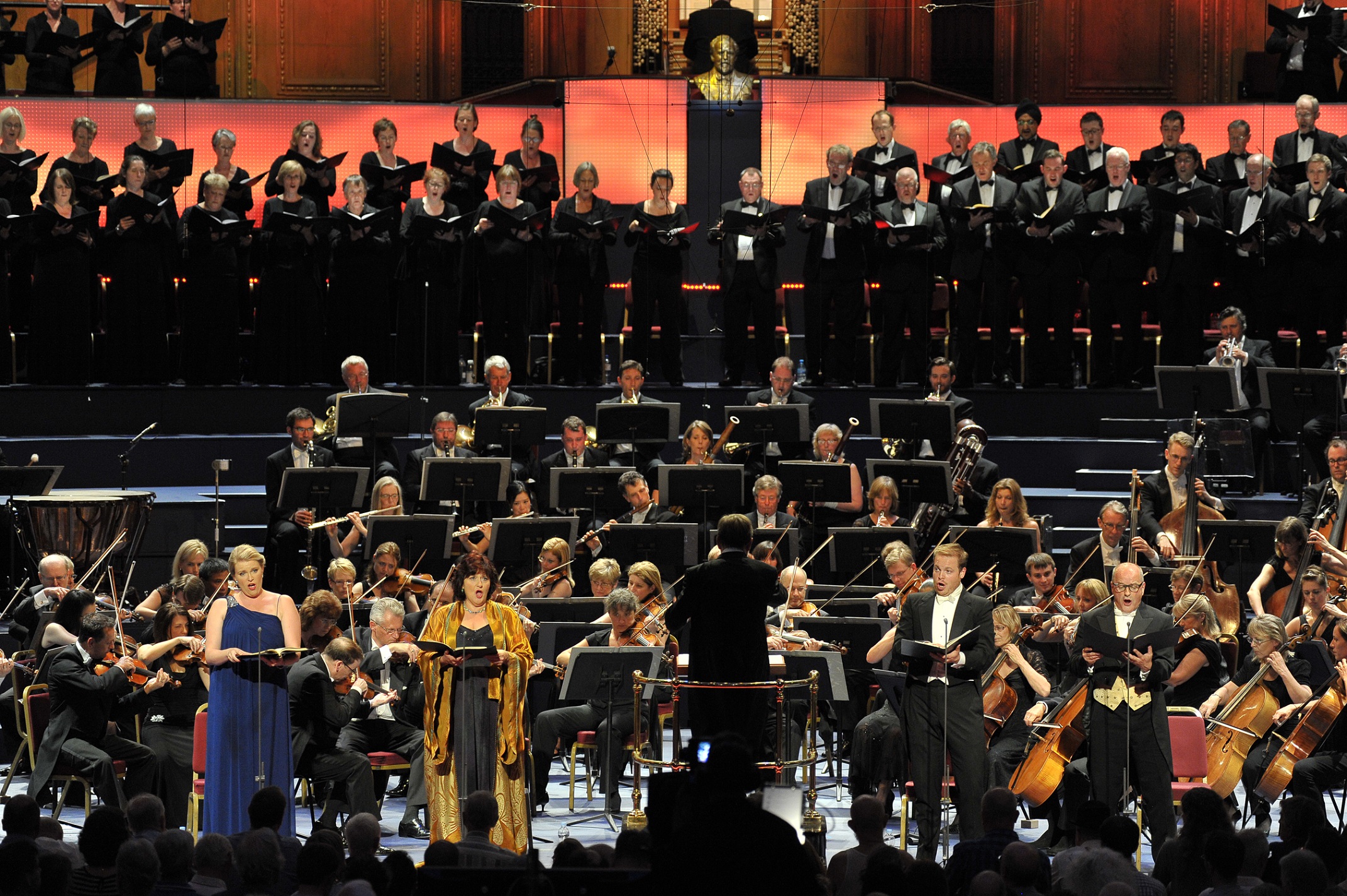
Sir Andrew Davis, the BBC Symphony Orchestra, the BBC Symphony Chorus, the BBC National Chorus of Wales

Elgar’s The Kingdom

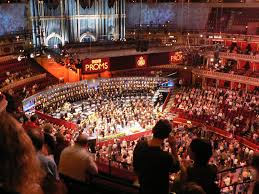
On possibly the hottest day of the year the new season was launched in quintessentially English style with Elgar’s The Kingdom. If the forces and soloists were familiar, there was a new sense of joy and often of gentleness to this reading which was captivating throughout. Frequently looking back to The Apostles, there was a sense of conviction which comes from a depth of faith and certainty, not from passion and extrovert enthusiasm. The prelude brought a gentle hesitation which blossomed into the opening scene at the heart of which was Peter’s blessed it, and brake, and gave it to us, the phrase held lovingly, almost timelessly. This same sense continued into the scene for the two Marys on the morn of Pentecost where the hints of Flower Maidens are turned into the more refined worship of the temple. There were times when the combined BBC Symphony Chorus, the BBC National Chorus of Wales came into dynamic full flood, effective in the outpouring of He, who walketh upon the wings of the wind, and controlled crescendo of There shall be a fountain opened.

The soloists were well contrasted. Catherine Wyn-Rogers may be a familiar Mary Magdalene but over the years she has made the part her own and there is still no better voice for the part. Erin Wall brought radiance to Mary’s The sun goeth down and highlighted the many subtle shifts of mood. Christopher Purves sounded slightly husky as Peter but the voice did not let him down. Andrew Staples brought a heady, Wagnerian authority to John, easily riding the full orchestra.

As this review indicates, Sir Andrew Davis knows this work from years of conducting it, yet still brings a sense of freshness and excitement as if he were conducting it for the first time.

If the rest of the season is as good as this we are in for a vintage year.

Prom 1_CR_BBC Chris Christodoulou_8

Sir Andrew Davis conducts the BBC Symphony Orchestra, the BBC Symphony Chorus, the BBC National Chorus of Wales and soloists in Elgar’s The Kingdom

Summer Organ Concerts

french flagAll Saints, Hastings

James Lloyd Thomas, 14 July

Bastille Day – and a programme of French music to celebrate the occasion. If in the end this was not quite the celebratory event that the choice of works promised, there was a much to enjoy.

The most successful work was Messiaen’s Joie et Clarte from Les Corps Glorieux. Finely chosen registration, and succinct articulation and rhythms brought the work boldly to life. Before this, movements from Couperin’s Messes pour les Paroisses seemed overlong if brightly registered, and Franck’s Second Choral lost its way in the telling with little sense of shape or direction.

The first half ended enthusiastically with the conclusion of Guilmant’s Sonata No1.

There were times when James Lloyd Thomas seemed to be fighting with the Willis. It is not an easy instrument to master, and, watching him on the large screen, there were many times he appeared hesitant about his next move – a hesitation which affected both phrasing and choice of registration.

Dupre’s Prelude in F minor worked well but the following Fugue rambled in its melancholic way.

The Willis really does not do very fast, and both Alain’s Litanies and the concluding Dubois Toccata suffered from the pace at which they were played. Exciting certainly, but a lack of clarity and some garbled phrasing.

A programme which appeared on paper to be stimulating and apt turned out to be something of a curate’s egg. Perhaps a final splash of the Marseilles would have sent us out singing?

Next week – Daniel Cook from Westminster Abbey playing Bach, Widor and Stanford.

Brighton Festival Chorus


All Saints Church, Hove, 12 July 2014lark

Gentle music for a summer evening. A full church, and thankfully not too warm, gathered to hear the European premiere of Malcolm Hawkins’ Martha and Lazarus.  The setting for baritone solo, chorus and small orchestra draws on the gospel story of the raising of Lazarus but leans heavily towards Caravaggio’s painting of the same which highlights the relationship between Lazarus and Martha rather than the focus on Jesus. As such the text highlights Martha’s loss rather than the impact of Lazarus’ resurrection. The final Alleluia is surprisingly muted and Jesus’ call to Lazarus does not speak of conviction or absolute faith. The musical language is melodically unchallenging throughout and there is rarely any sense of heightened emotion given the weight of the narrative. Carefully crafted, the work never quite thrills in the way the story does on the page.

Vaughan Williams’ The Lark Ascending may be one of the most popular compositions of all time but it never fails to lift the spirits. Benjamin Baker’s warm solo violin was as much a part of the rural landscape as of the ethereal. Its musical line seemed to keep returning to us to draw us ever further aloft, yet never escaping the beauty of the landscape below. His solo encircled the folk tunes to purify, possibly even sanctify them, uniting heaven and earth in the simplicity of a single line.

After the interval Durufle’s Requiem sat very comfortably in the rich acoustic and the organ sounded suitably French in its undulating weight from the start. There is a joyous conviction about this setting which was well caught by chorus and orchestra, the occasional moments of doubt rapidly cast aside by the assurance of salvation. The lovely antiphonal setting of the Christe eleison radiates hope and certainty that mercy will follow. The Agnus Dei  unfolds like the petals of the flower, with a soft, almost voiceless whisper of sempiternam.

Paul Reeves’ brief solos in the Durufle seemed happier than those in the Hawkins, and his assured baritone carried easily in the church. The Orpheus Sinfonia impressed throughout, and Joseph Cullen gave us considered and apt registration for the organ solos in the Durufle. James Morgan balanced his forces well in what can be a difficult acoustic, ensuring that the text carried and solo instruments spoke with clarity.

ENO opens new season with Verdi’s Otello

Reuniting the team behind Peter Grimes, ENO’s 2014/15 season opens with a new production of Otello which opens on Saturday 13 September 2014.

ENO celebrates the 450th anniversary of Shakespeare’s birth with a new production of Verdi’s Otello, reuniting the team behind five-star smash hit Peter Grimes – director David Alden, conductor and ENO Music Director Edward Gardner and Australian heldentenor Stuart Skelton.

Marking his 30th year at ENO and 25 years since the premiere of his last Verdi opera with the company, A Masked Ball in 1989, David Alden’s production combines beautiful Byzantine-influenced imagery with nineteenth-century costumes designed by Jon Morrell (Top Hat, 2013 Olivier Award for Best Costume Design) and outstanding performances by a world-class cast, chorus and orchestra, led by Edward Gardner.

Edward has collaborated with David Alden on numerous occasions, including 2013 production of Billy Budd and 2006 production of Jen?fa.  

Winner of Male Singer of the Year at 2014 International Opera Awards, Stuart Skelton makes his debut in the title role. In February 2014, Stuart’s performance of Peter Grimes was broadcast live to over 300 cinemas in UK and Ireland and was seen by over 17,000 people – the largest ever cinema audience for an opera by a British composer. Stuart will appear at the BBC Proms on 18 August in a performance of Rachmaninov’s The Bells, with the BBC Symphony Orchestra and Crouch End Festival Chorus conducted by Edward Gardner.

Completing the creative team is Lighting Designer Adam Silverman and Movement Director Maxine Braham who both worked alongside Alden and Gardner on their production of Peter Grimes.

Irish American baritone Brian Mulligan makes his role debut as Iago, while American rising star soprano Leah Crocetto makes her UK operatic debut as Desdemona, Otello’s unjustly accused wife. A former San Francisco Opera Adler Fellow, Leah was a finalist in the 2011 Cardiff Singer of the World competition and has sung the role of Desdemona to great acclaim in Bordeaux, Venice and Frankfurt.

Playing the role of Cassio is British tenor Allan Clayton, who was nominated as a Young Singer of the Year in the inaugural International Opera Awards. ENO Harewood Artist Barnaby Rea plays the role of Lodovico.

Other British castings include Cumbrian tenor Peter Van Hulle in the role of Roderigo, baritone Charles Johnston as Montano and ENO favourite Pamela Helen Stephen playing the role of Emilia.

Otello opens at the London Coliseum on 13 September 2014 for 10 performances – 13, 16, 19, 25 September and 9, 14, 17 October at 7.30pm and 27 September and 4, 11 October at 6.30pm.

A co-production with The Royal Swedish Opera and Teatro Real, Madrid


Canterbury Cathedral Boys’ Choir

canterbury boys

St Clement’s Church, Hastings Saturday 5th July 2014 

Much eager anticipation surrounded this visit of the Canterbury Choristers to Hastings, as it had been necessary to book them two years in advance.  We ourselves were excited as our appetite had been whetted by recently hearing them sing at evensong in the Cathedral. The audience arrived early and soon filled the church to capacity.  Our own pew included an immaculately behaved dog who had come to hear his young master sing!

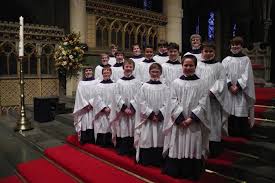
The choir caught our attention immediately with Henry Purcell’s fanfare Sound the Trumpet, and they delighted us to the last note of their recital. In a varied programme spanning five centuries, they treated us to items that were familiar and much loved – Rutter’s For the Beauty of the Earth, and Vivaldi’s Laudamus te – and others less familiar like the ethereal Wonder by Anthony Piccolo. We enjoyed Howard Goodall’s Love Divine and The Lord is my Shepherd, and an exciting and intricate arrangement of Cy Coleman’s The Rhythm of Life.  We were privileged to hear works composed by two previous Canterbury choirmasters – Timothy Noon’s Evocation to a Friend, and Bryan Kelly’s Jamaican Magnificat – which as David Flood pointed out, we would never hear again unless we bought the CD!


We were told how sought after was the opportunity to sing the solos.  The four young people chosen for this performance – one of whom was celebrating his birthday! – richly deserved the honour. Two solos played by David Newsholme demonstrated the potential of the church’s new organ, and gave the choristers a well deserved break.

The evening was over all too soon.  The choristers’ soaring voices had filled the church, and had moved and inspired us all by their conviction and their evident delight in their task. Their commitment and enthusiasm were apparent when talking to some of them before the concert started. Father Robert in his Vote of Thanks confessed that he was rarely lost for words, but was on this occasion. We all echoed his sentiment that these young people were making the very most of a very special opportunity, and that they left Hastings with our warmest wishes for their future success.   CE & VG

BPO: Summer Season

brighton unitar

Unitarian Church Brighton, Sunday 6 July 2014

Four concerts on Sunday afternoons with works by Mozart in each one, and more recent compositions by local composers, sounds like a good plan for the summer to bridge the days between the end of last season and the start of the new in October.

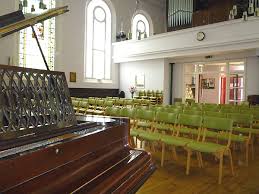
On this first occasion the string quartet brought together violinists Daniel Bhattacharya and Roland Roberts, viola Bruce White and cellist Peter Adams. They opened with a delightful reading of Mozart’s Divertimento in D major. The acoustic in the church is very close and at first the impact seemed almost too loud – like being in the front room of a hi-fi enthusiast who likes the volume too high – but this soon settled and clarity of texture returned. They found a lightness in the opening Allegro, particularly in the quieter passages, and a fine cantabile in the Andante which danced with subtle joy. The short, bright Presto brought the work to a warm climax and it was obvious the players were thoroughly enjoying themselves.

The afternoon ended with the arrangement of Mozart’s Piano Concerto No12 in A for piano and string quartet, ideal for the small venue. The Bluthner piano has a wonderfully warm tone and was perfectly balanced with the quartet, Jeremy Young being the sensitive pianist. If anything it was difficult to image so intimate a work played by larger forces, so successful is this arrangement. The playful final Allegretto brought the afternoon to a warmly received climax.

Between these two works we were to have heard two works by Ian Morgan–Williams. In the event Several Endings was not ready for performance so we heard only Five or Six Corridors. The work is scored for piano trio. Despite the introduction by the composer it was very difficult to follow the narrative of the thirteen brief pieces and one quickly became lost among the corridors themselves. Towards the middle of the set there is a slow, lyrical section led by the solo cello which builds to heavy, chunky chords on the piano, only to die away as quickly as it arrived. Near the end another lyrical outpouring for the cello – almost a folk melody – is equally impressive. Unfortunately much of the rest of the set seemed discordant and unfocussed, the intense intimacy of the writing being momentarily arresting but not adding to our overall understanding of the piece.

The next concert on 20 July brings works by Mozart, Schubert and Tchaikovsky, plus Peter Copley’s 2nd string quartet. Details on www.brightonphil.org.uk

Orff: Carmina Burana

Claremont school choirs & orchestra, St Clement’s Hastings 21 June 2014

Claremont School has always had a reputation for being in the forefront of musical appreciation, and this confirmation of their students’ musical abilities received a warm welcome at St Clement’s Church.  With the augmentation of the school choirs with the Claremont Community Choir, and accompanied by the Claremont Chamber Orchestra and Liverpool University Chamber Orchestra under its leader Tony Horrocks, this virile work truly thrilled the audience.

With approximately thirty sopranos, almost as many altos, a goodly complement of tenors and basses, plus one lone treble, youthful Sam Hickman, the sequence unfolded with unerring continuity.  The musical backing by the University of Liverpool Chamber Orchestra ensured that the story proceeded without a hitch.  The impact of the ‘effects’ of the percussion section, Dave Gonella and Elliott and Ben Laurence did not go unnoticed, as was the purity of tone of the clarinet of Richard Eldridge.

The ‘book’ of the work derives from poetry of the Middle Ages, the twelfth and thirteenth centuries mostly in Latin, thoughtfully translated into English,  a much more satisfactory means of communication for both performers and audience.

The composer referred to the work as a ‘scenic cantata’, written to be acted on stage with dancing and mime.   Neither of these were included on Saturday but the enthusiasm and professionalism of the choir more than made up for that.

This present-day treatment of the piece was the work of the Musical Director of Claremont School Monica Esslin-Peard with principals soprano Susannah Appleyard. alto Elizabeh Cole, tenor Michael Savage and baritone Andrew Robinson.

Fr Robert Featherstone introduced the performance, sang lustily throughout, and at the conclusion expressed thanks to everyone concerned who combined to make this truly an evening to remember.  MW