

Author Archives: Admin
Stephen Page: 4
HastingsUnitarianChurch, Saturday 11th October 2014
A full programme for the opening day of Hastings Week, coupled with heavy thundery showers, could have depleted our potential audience. It was wonderful therefore to see many regular supporters, and many new faces, so that every chair in the Meeting Place was taken!
Stephen never fails to delight with the amazing variety he includes within one programme. We started with Eric Thiman to whom Stephen has introduced us in previous recitals. There was a quietly humorous note to begin – the lively Short Fanfare was very, very short! Thiman’s reflective Chorale led naturally into JS Bach’s gentle Adagio in A minor, the only movement of his Toccata, Adagio and Fugue, we learned, that could be accommodated on the small pedal board of the Snetzler. JC Simon’s Prelude and Fugue, also in A minor, was in lively contrast to the Bach. Such contrasts continued in a programme which spanned four centuries, took us from England to the continent and America, and ranged from classical, sacred, and martial music, to musical comedy.
Sacred music was well represented. From the mid-twentieth century, Arthur Milner gave us In Nomine, based on Latin Chant, while Gordon Young’s Prelude on Slane and Recessional on St Anne were more familiar to the non-musicians amongst us as Be thou my vision, and O God our help in ages past. Both composers were also represented by secular works – Young’s jaunty and better known Prelude in Classical Style, and Milner’s Intermezzo and Carillon from 6 Miniatures.
The 6 Miniatures well demonstrated the organ’s range, including the delicate dulciana stop patented by Snetzler himself. Stephen had planned the entire recital to demonstrate the versatility of the organ. Each of this year’s recitals has contained a Sonata by CPE Bach as its longest item. This time it was number 5 in D major. As Stephen explained, his style was revolutionary, being playful and full of sudden contrasts, and the two manuals of the Snetzler were well able to demonstrate this. Another item chosen to show the organ’s potential, was the Humoresque (L’Organo Primitivo), of Pietro Yon. Sometimes known as Toccatina for Flute, the piece uses just this one stop throughout.
The programme displayed not only the versatility of the instrument, but also the skill and dexterity of the player. Watching Stephen’s hands brought to mind a scientist who some years ago included ‘a pianist’s fingers’ in his Seven Wonders of the Natural World, as they move faster than the brain can send messages to them!
The programme concluded with Jule Styne’s The Party’s Over, and Abe Holzmann’s Blaze Away! which set our toes tapping and sent us on our way humming. Both the titles and the music seemed a fitting end to a stimulating 2014 series of organ recitals at the Unitarian Meeting Place. Thank you, Stephen! CE
Maidstone Symphony Orchestra

A comfortably full Mote Hall greeted the new season for the Maidstone Symphony Orchestra. When subsidies and sponsorship are so difficult to come by these days it is a pleasure to realise that the series is able to continue almost entirely as a result of the generous support of individuals and the enthusiasm of the audience.
The opening concert may have seemed conventional in its planning – an overture, a concerto, a symphony. There was, however, more to it than this as Brian Wright pointed out in his introduction. Tae-Hyung Kim not only won the Hastings International Piano Competition in 2013 but was playing in Russia immediately before flying in for the Maidstone concert.
Wagner may look like the odd one out but the romanticism of the overture to Tannhauser was happily in keeping with the early Tchaikovsky symphony. The strings impressed in the Venusberg music and the horns were resplendent at the end. Balance was excellent throughout in a piece which can easily fall apart as the counter-point becomes more complex.
Tae-Hyung Kim had won the Hastings competition playing Beethoven’s Emperor Concerto and he performed this for us last night. His approach appears quite cool to the onlooker. There are no histrionics or mannerisms to detract from the score, yet his impact on the ear is very finely focused. He made a very strong opening statement, creating subtle contrasts in the more reflective passages. The second movement was particularly delicately phrased before a bravura launch into the final Rondo. Here the humour was allowed to shine through and the dance-like forms were never far away. A pity he could not be persuaded for an encore – he deserved one.
Tchaikovsky’s early symphonies suffer, like Dvorak’s, from the over-popularity of the later ones. As a result Winter Daydreams, Tchaikovsky’s first symphony, is still rarely heard, though as Brian Wright demonstrated it is a fine work.
The opening movement is clearly the voice of Tchaikovsky and the Russian themes flow throughout. Darker moments which well up from nowhere were ever present but the light is never put out. The second movement opens as if it was part of the Serenade for Strings but then moves to a more pastoral feel with the solo wind. Suddenly a long lyrical line unfolds, as if the composer could not hold it in any longer. The same is true for the Scherzo where the central movement which would normally be a trio is a flood of lyricism which could easily sit in any of the later works. After a sombre opening the final movement bursts with Schumannesque vitality and draws on the full brass section.
The orchestra is privileged to have such fine solo players and to create such a firm body of sound in its larger departments. We can only look forward to the rest of the season – with Copland, Brahms and Vaughan Williams on Saturday 29 November. www.mso.org.uk
Brighton Philharmonic Orchestra: New Season
Autumn may be in the wings but another wonderful late summer afternoon welcomed the new BPO season. New also this year – a composite programme for the first three concerts to encourage regular supporters and to bring us colour for the first time and more space for notes.
This was an all-Russian programme opening with a bright and warm reading of Glinka’s overture to Ruslan and Lyudmila. The necessary re-arrangements to bring on the piano gave Barry Wordsworth an opportunity to thank us for our continuing support and to welcome a large number of younger members to the audience. At a time when so many concerts seem to be supported only by those at or around retirement this was a very encouraging sign.

Rachmaninov’s Second Piano Concerto followed with Natasha Paremski the highly impressive soloist. She brought weight and gravity to the opening movement and a romanticism which never dwindled into sentimentality. The steely quality in her playing continued into the slow movement which was voluptuous without ever being indulgent. The attack we had sensed in the opening returned for the finale which was racy in approach and eventually allowed us to wallow in one of Rachmaninov’s most memorable melodies.
A rapturous reception provoked a fully justified encore which proved to be even more demanding than the concerto. She gave us the final movement of Prokofiev’s 7th Sonata, spitting fire amidst the torrent of notes. Masterly.
After the interval we heard Shostakovich’s Fifth Symphony. After the warmth of the Rachmaninov this all seemed very bleak at first, but Barry Wordsworth’s approach is not as cynical as some critics might wish. As the first movement progressed there were hints of hope – even in the midst of demonic militarism. Mood changes were clearly marked without over-emphasis. The cellos and basses made a great deal of the opening of the second movement and the whole provided genuine rather than reluctant enthusiasm. The Largo unfolded gently then took us on an inward journey to consider all that we have lost. The frenetic finale seemed honest rather than cynical and showed that there are many more ways of hearing this symphony than a simplistic political one.
The next concert brings us Schubert, Parry, Strauss and Elgar on 2 November.
Mozart in D Minor
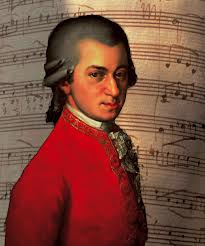 The concept of a concert based on compositions in the same key is certainly an unusual one, but for Bexhill Choral Society it proved to be remarkably effective. Mozart’s Requiem is in D minor and, as conductor Kenneth Roberts pointed out, so are many other of his more serious, not to say darker, compositions, including much of Don Giovanni.
The opening Kyrie brought finely controlled dynamics even though the choir were on the flat which can often mask the voices at the back. The brief, early, Gloria from the Missa Brevis followed, bringing with it the first contribution from the soloists; but before the operatic excerpts Robert Aldwinckle was the pianist for the final movement of Mozart’s Piano Concerto No20. Though the tempo was brisk throughout, and the musical line well formed, articulation sometimes suffered in over-hasty phrasing.
The singers may all be well known to us but that should in no way lessen the exceptional level of professionalism and musicality that they brought to the evening. Their excerpts from Don Giovanni were both apt and convincing. Sophie Pullen made a fiery Don Anna ably supported by a gently lyrical Gary Marriott as Don Ottavio in Fuggi crudele, fuggi. Peter Grevatt and Judith Buckle gave us La ci darem la mano without scores and with subtly effective characterisation. This raised the level of impact which ran over into the final scene when a stentorian Barnaby Beer as the Commendatore condemned Giovanni from the pulpit, urged on by the chorus. It was very effective.
After the interval we heard the Requiem, with a Kyrie and Dies irae full of attack and spirit. It was good to have Rosie Willcock’s splendid trombone solo for the Tuba mirum. If the men of the choir were a little hazy at the opening of Confutatis they came together again with the full chorus in the Lacrimosa and Hostias, and made much of the final Agnus Dei.
Mozart regularly draws on Handel in his setting of the Requiem and it was interesting to note that the choir seemed at its most secure in those sections.
The Sussex Concert Orchestra lead by Adrian Charlesworth sounded well balanced with enough weight to carry the concerto and the Requiem. A pleasing evening all round – now we have to prepare for Christmas!
Carols and Christmas Music, St Augustine’s, Cooden Drive, Saturday 6 December 2014
www.bexhillchoral.org.uk
WNO: Moses in Egypt

Speaking at the Press Briefing before the first night of Rossini’s Moses in Egypt David Pountney gave us an overview of the 2015-16 season and some hints of the future. One of the realities of belt-tightening is a new approach to staging which is already with us. He referred to the same scenic environment being used for a set of productions to save on the costs necessarily involved in employing not only separate designers but constructing entirely different sets for individual new productions. Thus next season’s Figaro here, Figaro there will use the same basic set designed by the veteran Ralph Koltai for all three operas.
We have some experience of how this will work already this year. The same vast screens and rostra (and the every present table!) which were in place for William Tell are here again for Moses in Egypt but, I have to say, to far finer effect. Where the icebergs had been inappropriate for the lushness of Switzerland, the vast rough coloured panels seemed highly apt as an abstract backing for the Egyptian tale. For most of the evening the Israelites keep to the blue side and the Egyptians to the red. The simplicity is highly effective and never upstages the action which is focussed on the ramifications of an inter-racial love affair rather than on the Biblical narrative.
The opening is totally unexpected. In most theatres the stage direction darkness is anything but. Light is used to suggest darkness. Here we were in the dark – literally. Only the emergency lights gave any hint of where we were. Carlo Rizzi conducted the darkened orchestra pit with a miniature light sabre which buzzed in front of us like a demented firefly. The chorus and soloists sang to us out of the void on stage and surtitles were kept to a minimum to enhance the effect. When Moses brought back the light it was truly moving. If nothing else this shows David Pountney still has the ability to surprise us.
The casting is very strong. Miklos Sebestyen and Barry Banks make a virile pair as Moses and Aaron commanding the stage whenever present. On the Egyptian side only Nicky Spence’s superb Mambre has their authority – what a pity he does not have a solo aria. Andrew Foster-Williams is a vacillating Pharaoh buffeted by the whims of those around him and rightly cowed by the presence of his wife Amaltea sung by Christine Rice. Her temple aria was a high-spot of the evening, the movement of the candles reflecting her emotional torment. The love interest was convincingly caught by Claire Booth and David Alegret but Rossini’s characterisation does not really help either of them.
The chorus were again in superb form and the moveable panels reflected their power even more effectively than in William Tell.
Carlo Rizzi relishes this music and his passion is reflected across the whole evening in the quality of orchestral playing and the constant engagement with the narrative. He returns next season to conduct a new production of I Puritani.
ENO: The Girl of the Golden West

Richard Jones’ new production of Puccini’s The Girl of the Golden West has many of the hallmarks of his style. The settings are bright, colourful and modern, the strip lights cheerfully at odds with the late nineteenth century costumes. The action is naturalistic, the crowd movement fluid and convincing, the voices placed forward and reflected from the heavy sets. This all places the emotional impact of the work firmly in the hands of the soloists, who are given the weight and authority of the old frontier rather than of svelte opera singers.
Susan Bullock and Peter Auty are presented as middle-aged lovers. This may be her first kiss but there is no pretence that she is a young woman. Susan Bullock’s Minnie is a genuine mother-figure, and she convinces us that she has the emotional strength to overcome all of the potential barbarities of the Wild West. The voice is large and often thrilling even if it became a little squally at the top under the pressures of the first night. Peter Auty makes an heroic Dick Johnson, his big numbers ringing out with ease and splendid musicality. If these two are credible human beings, Craig Colclough’s Jack Rance is closer to stereotypical western Sheriff, with broad gestures and large cigars.
Of the large number of smaller parts Graham Clark’s assured Nick was outstanding, but there were no weaknesses on stage – a tribute to the quality of ENO’s ensemble.
In the pit Keri-Lynn Wilson made the most of the romantic, often sentimental, orchestration and lulled us into believing what we were experiencing on stage.
Another fine night at the Coliseum – and what a splendid idea to start the work by fully lighting the proscenium so that we could enjoy the magnificence of the theatre itself just for once.
Sarah Nicolls to be first artist in residence at Brighton Dome’s earsthetic festival
Experimental pianist is to become the first artist in residence at Brighton Dome’s earsthetic festival (8-13 December) – an annual celebration of artists who break new ground with their symbiosis of sound and visuals – following a successful funding award from Arts Council England.

The musician, who invented the ‘Inside-Out Piano’; a sculptural feast of an instrument on which she creates her own music, will present two pieces of work as part of the mini-season of interdisciplinary performance which returns to Brighton Dome for the second time this year. Meshing together visual art, new electronic music and experimental soundscapes, this year’s bill also includes a mixture of live shows, DJ sets and installations from analogue heroes Simian Mobile Disco, electroclash and multimedia artistsChicks on Speed, abstract techno-merchants Emptyset and composer and artist Claudia Molitor.
Sarah Nicolls – Inside Out Piano (8-13 Dec) will see the artist inviting members of the public to play her original creation in a fully interactive installation in Brighton Dome foyer. Visitors can discover their own favourite sound, take their photo with this unique instrument and also see Sarah play it herself in a series of short intervention performances. On 10 December Nicolls will then perform Moments of weightlessness: Pendulum Piano; a brand new commission specially created for earsthetic featuring her second Inside-Out Piano which includes has surprising extra characteristics. Calling on parallels between her exploration of new instrument and her own journey into motherhood, this live show promises to be visually, narratively and sonically breath-taking. Expect to see a piano swinging in mid-air, to hear the achingly beautiful melodies and textures of Sarah’s piano-songs and to contemplate the intense moments of life where everything seems to stop still.
earsthetic will also play host to The Works (8 Dec); a regular night at Brighton Dome that provides a chance for theatre makers, dancers, choreographers and musicians to present their cross-artform and interdisciplinary work in development. This special earsthetic edition is particularly focussed on presenting work by musicians and visually led artists. Hosted and facilitated by dramaturg Lou Cope and Sarah Nicolls, a handful of artists will be selected to present short 10-15 minute excerpts of site-specific work in development; offering opportunity for them to seek the opinions of the audience they wish to attract, and an opportunity for people who care about performance to engage in collective dramaturgy and development.
Details & tickets www.brightondome.org
Peter Sellars directs the World Staged Premiere of John Adams’s The Gospel According To The Other Mary
 Peter Sellars returns to English National Opera to direct the world staged premiere of John Adams’s The Gospel According To The Other Mary as part of his role as the Director-in-Residence of the 14/15 season. Commissioned in 2012 by Gustavo Dudamel and the LA Philharmonic, The Other Mary has been performed in concert around the world, including at the Barbican in March 2013 to great critical acclaim. The Guardian described the performance at the Barbican as “vivid and immaculate…a remarkable occasion”.
The Other Mary continues the long-time creative collaboration between ENO, Peter Sellars and John Adams. Sellars’ “unmissable” (Evening Standard) production of Adams’s Nixon in China was presented by ENO in 2000 (revived in 2006) and Doctor Atomic, a“landmark work” (The Observer) with a libretto by Sellars, was directed by Penny Woolcock in 2009.
Like John Adams’s opera-oratorio El Niño, the Nativity work to which The Other Mary is a companion piece, the text has been created by weaving together an assortment of literary extracts – ranging from both Old and New Testaments to a variety of twentieth-century writers. Sellars described the work as an attempt to “set the Passion story in the eternal present, in the tradition of sacred art”, and so the narrative continuously attempts to combine the Biblical past with themes and references that remain relevant to a contemporary audience. The story unfolds from the point of view of Mary Magdalene, her sister Martha and their brother Lazarus.
Making her ENO debut, The Other Mary is conducted by Joana Carneiro. In 2010, Carneiro led performances of Peter Sellars’s stagings of Stravinsky’s Oedipus Rex and Symphony of Psalms at the Sydney Festival, which won Australia’s Helpmann Award for Best Symphony Orchestra Concert in 2010. Carneiro is currently Music Director of Berkeley Symphony and in January 2014 she was appointed Principal Conductor of the Orquesta Sinfonica Portuguesa.
Set Designer George Tsypin is a sculptor, architect and designer of opera, film and video. Tyspin was Artistic Director, Production Designer and Co-author of the script for the Opening Ceremony of the Winter Olympic Games in Sochi in 2014.
Completing the creative team is Gabriel Berry (Costume Designer), James F. Ingalls (Lighting Designer) and Mark Gray (Sound Designer).
Playing the role of Mary Magdalene is Patricia Bardon. In 2008, Bardon sang the roles of Rosmira in Partenope and Maurya in Riders to the Sea, for which she nominated for an Olivier Award for Outstanding Achievement in Opera.
American contralto Meredith Arwady plays the role of Martha. Arwardy made her UK debut as Pasqualita in John Adams’s Doctor Atomic for ENO in 2009.
The Gospel According To The Other Mary opens at the London Coliseum on 21 November 2014 for 6 performances – 21, 25, 27 November and 3, 5 December at 7.30pm and 29 November, 6.30pm
