Brighton Philharmonic Orchestra

J Bradbury

The Dome, Brighton

Sunday 7 December


Barry Wordsworth may be basking in the delights of the Antipodes but that has not stopped the season from providing exceptional music-making. On paper, yesterday’s concert looked somewhat odd. Most programmes hang themselves on one or two key items but here we had eight shorter works reflecting a composer’s response to the life and landscape of the country as a whole.

In one sense they were all national composers for even Mendelssohn came to be seen as an English composer in the same way that Handel had done. His Hebrides Overture set the tone for masterly reflection on the impact of the sea. This was followed by Butterworth’s hauntingly subtle vision of A Shropshire Lad. In the opening passages the dawn eases in before the sun rises, but this is not the cathartic explosion we experience in Strauss but the gentle warming of an English summer sun. The structure was very finely caught by conductor Richard Balcombe who seems to have an innate sensitivity towards English music.

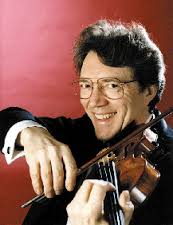
John Bradbury is far too rarely heard as a soloist. His magnificent New Year’s Day concert a few years ago remains firmly fixed in the memory, but his superb playing was very much in evidence for Vaughan Williams’ The Lark Ascending. Rarely have I sensed the various levels of the open-air as in this reading. While the woodwind provide hints of the bird life close to the ground and the cheerful folk melodies of the people below them, the lark sores above dipping and diving until at last it disappears not just from view but from our aural perspective. This certainly was a blithe spirit reflecting on the spiritual life of the world below. A masterly performance – when we will hear him again as soloist?

By contrast Hamish MacCunn’s youthful overture Land of the Mountain and the Flood seemed rather prosaic if easy to assimilate.

Sullivan’s Pirates of Penzance has little to do with Cornwall but the overture proved a cheerful opener to the second half before the more demanding Norfolk Rhapsody from Vaughan Williams. Though not as popular as the Lark its subtle beauty charmed us with ease.

The final two items were unarguably popular. Malcolm Arnold’s brief Four Cornish Dances have rather more to do with Cornwall than the Sullivan but they are distinctly tongue-in-cheek, particularly the rousing third dance in homage to Sankey & Moody. Then we came to Eric Coates and his London Suite, concluding with a rousing rendition of the Knightsbridge March. Most of us in the audience recalled this only too easily from In Town Tonight, but it was none the less nostalgically very welcome.

The next concert is the New Year’s Day Viennese Gala on 31 December, followed by a programme of Brahms and Beethoven on 11 January.

Bexhill Choral Society

carols

St Augustine’s, Bexhill

Saturday 6 December


Christmas Concerts seem to come around all too quickly these days – or is it just that I am getting older? The key features of Bexhill Choral Society’s programme of Carols and Christmas Music was the gentle tension between the three very prominent arrangers. David Willcocks was represented by a number of traditional carols in a pleasantly familiar format, in contrast to John Rutter’s more modern and at times more challenging settings. Over-arching all of these was Kenneth Robert’s own arrangements, many involving Cinque Ports Brass Ensemble and even, in the last item, himself on clarinet.

This all made for a highly convincing programme which ranged from some exquisite early music by Praetorius and cheerfully sung Bach, to contemporary carols. Throughout, the choir was joined by baritone Peter Grevatt who was called upon far more than usual, not only to sing with the choir in The Boar’s Head Carol and Gaudete, but to provide solos. He gave us the first part of The Trumpet Shall Sound – most ably supported by solo trumpeter Andy Gill – and a rollicking version of Sterndale-Bennett’s The Carol Singers.

Nigel Howard was kept busy moving from organ to keyboard, and was joined by Robert Aldwinckle at the piano in some items.

As is customary, we were encouraged to join in six of the carols, which we did with enthusiasm, and to relax a little more towards the end when we heard Walking in the air, Let it Snow and Santa Claus is coming to Town.  These concerts always leave us asking for more, but then it is only 52 weeks until the next time!


Buxted Symphony Orchestra

Sophie Pullen

St Margaret The Queen, Buxted Park

Saturday 6 December

St Margaret The Queen in Buxted Park is a fine venue for a concert and its acoustic adds a bloom to the orchestra even on a very cold winter’s afternoon. The programme brought us two rarely performed English works and a familiar Beethoven Symphony.

Though I have heard Finzi’s Dies Natalis a number of times over the years it is infrequently performed given the spiritual sensitivity of the writing and the clarity with which the text can carry through the lush string sounds. Sophie Pullen proved to be an ideal soloist, enthusiastic and engaged with Traherne’s mystical text, her line floating easily above the orchestra. Finzi’s string writing is often complex and divides into nine parts on occasion across the string ensemble. Given the small numbers in the Buxted Symphony Orchestra this meant that at times desks would be playing by themselves, a difficulty for a fully professional orchestra and approached here with considerable skill. Julian Broughton maintained a firm sense of pace throughout which moved the score forward to its gentle speculative conclusion.

Elgar’s Romance for Bassoon and Orchestra is even less familiar than the Finzi. A short work, first heard in 1911, it has a drifting, haunted quality well captured by the Portuguese soloist Susana Dias.

Beethoven’s Fourth Symphony is possibly less well known than the rest of the canon but was given a highly convincing reading with firmer intonation from the strings and a tighter sense of ensemble throughout. Pacing was crisp and clear, with a bravura sense of attack in the final movement.

The concert was well supported, and enthusiastically received – such encouragement well justified by the standard of music presented.

ENO revives La Traviata in February

Elizabeth ZharoffElizabeth Zharoff makes her UK debut in the first revival of Peter Konwitschny’s Olivier Award-nominated La traviata.

Described by The Guardian as a ‘totally convincing piece of music theatre’, this production was nominated for the Olivier Award for Best New Opera production in 2013.

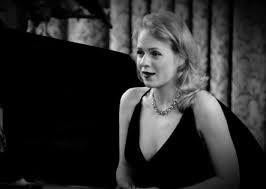
Making her UK debut in the role of Violetta, which launched the European career of soprano Corinne Winters in 2013, is young superstar soprano Elizabeth Zharoff. Fast emerging as one of opera’s most exciting young artists, Zharoff was a member of the Junges Ensemble at the Semperoper Dresden in their 2012-13 season, where she performed the role of Violetta for the first time. 2015 will also see her create the role of Esther in the world premiere of Ricky Ian Gordon’s Morning Star at Cincinnati Opera.

ENO Harewood Artist and Wigmore Hall Emerging Talent Ben Johnson returns as Alfredo. His previous performances in the role were sung ‘with lovely lyricism’ (The Observer). He was most recently seen at the London Coliseum singing the role of Tamino in Simon McBurney’s production of The Magic Flute, where he sang ‘superbly throughout’ (Daily Express). In 2013 he was awarded the Audience Prize at the BBC Cardiff Singer of the World.

British mezzo soprano and former ENO Opera Works student Clare Presland will sing the role of Flora while acclaimed British baritone Anthony Michaels-Moore, who sang the role ‘with real style’ in 2013 (The Arts Desk), revisits the role of Germont. Paul Hopwood (Gaston), Matthew Hargreaves (Baron Douphol), Charles Johnston (Marquis d’Obigny), Martin Lamb (Dr Grenvil) and Valerie Reid (Annina) will also revive their roles from the 2013 performances.

La traviata will be conducted by Roland Böer. Music Director of the Cantiere Internazionale d’Arte in Montepulciano, he first appeared at the London Coliseum in 2005, where he ‘thrillingly conducted’ (Financial Times) David McVicar’s production of La clemenza di Tito.

La traviata opens at the London Coliseum on Monday 9th February for 9 performances – Feb 9, 13, 17, 20, 24, 27 & Mar 5, 11, 13 at 7.30pm.

Tickets from £12-£115
Running time: 1 hour 50 minutes

Pre-performance talk 13 Feb, 5.15-6pm, £5/£2.50 concessions

Broadcast live in cinemas across UK and Ireland, and selected cinemas worldwide, as part of ENO Screen on 11th March 2015

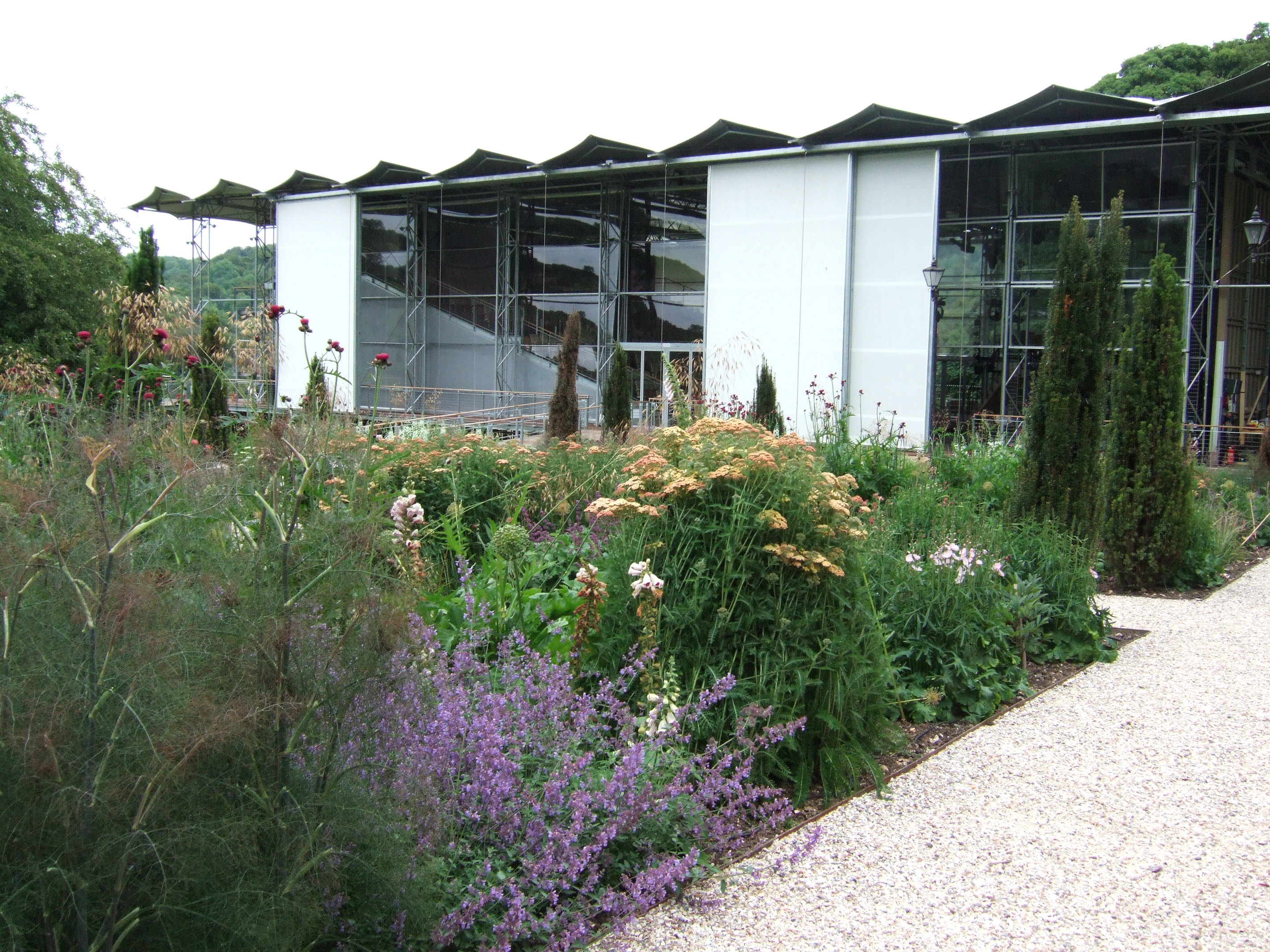
Garsington Opera 2015

Garsington 11 (11)

Friday 5 June – Sunday 26 July 2015

Three new productions and the first collaboration on a joint project with the Royal Shakespeare Company in an abridged version of Shakespeare’s A Midsummer Night’s Dream with Mendelssohn’s incidental music.

Così fan tutte

Wolfgang Amadeus Mozart (sung in Italian)

Conductor Douglas Boyd  Director John Fulljames  Designer Dick Bird

Cast Andreea Soare, Kathryn Rudge, Ashley Riches, Robin Tritschler, Lesley Garrett, Neal Davies

5, 7, 13, 19, 22, 25, 28 June & 3, 8, 11 July. Start time 5.40pm

Intermezzo

Richard Strauss  (sung in English)

Conductor Jac van Steen Director Bruno Ravella Designer Giles Cadle

Cast  Kate Valentine, Mark Stone, Ailish Tynan, Sam Furness, Benjamin Bevan, Sarah Redgwick, Oliver Johnston, James Cleverton, Gerard Collett, Barnaby Rea

6, 8, 14, 20, 26 June & 2, 5, 7, 9 July. Start time 6pm

Death in Venice

Benjamin Britten

(sung in English)

Conductor Steuart Bedford

Director Paul Curran

Designer Kevin Knight

Cast  Paul Nilon, William Dazeley, Tom Verney, Joshua Owen Mills, Henry Manning

21, 23, 27 June & 1, 4, 10 July. Start time 6pm

Garsington Opera Orchestra & Chorus

A Midsummer Night’s Dream

William Shakespeare’s play (abridged)

with incidental music by Felix Mendelssohn

Royal Shakespeare Company under the creative guidance of Gregory Doran

Conductor Douglas Boyd

RSC Actors, Garsington Opera Orchestra & Chorus

16, 17, 18 July at Wormsley. Start time 6.30pm

26 July at the Royal Shakespeare Theatre, Stratford-upon-Avon. Start time 7.30pm

Garsington copy

Garsington Opera at Wormsley General enquiries 01865 361636

www.garsingtonopera.org

Maidstone Symphony Orchestra

G Guzzo

Mote Hall, Maidstone,

29 November 2014

Brian Wright was quite correct in his thinking that the programme of works this evening epitomised both the planning and strengths of the orchestra. What might appear to be a conventional set of items – Suite, Concerto, Symphony – brought a number of specific challenges both for the players and the audience, and a soloist of international acclaim.

Aaron Copland’s Appalachian Spring may seem very familiar but its rhythmic complexities and solo lines are traps for the unwary. The hushed, almost sultry, opening lulls us into a false sense of ease which is gently dispelled as dawn breaks. The playing had a slight rawness to it which was in keeping with the integrity of the score. This is not a sentimental work but a vision of the openness, both physically and spiritually, of a community prior to mass industrialisation and urbanisation. Copland looks back with his eyes open even if nostalgia creeps in. Once we passed through the variations of Simple Gifts we returned to the focus of the work, the love of the newly married couple and their relationship to the world around them. In the final bars, three stars come out, like a gentle blessing on their love. A magical moment.

It should be difficult to follow this but Giovanni Guzzo’s handling of the Brahms’ violin concerto was so captivating it almost made us overlook the start. He produced a radiant sweetness of tone, across the full range of his Stradivarius, but no violin is as important as the quality of the musician playing it. The orchestra rose the challenge of his playing, producing a bite and pulse which supported the clarity of his phrasing. The second movement seemed faster than usual moving the music forward with a subtle passion and heading us into the joyful exuberance of the finale. Thankfully he gave us an encore – the slow movement from a Bach violin sonata – which proved intoxicating in its slow unfolding and gentle phrases. Please ask him to return for the Mendelssohn!

Vaughan Williams’ Fourth Symphony may have been written ten years before the Copland but it has all the shock of the new. The terror explodes from the opening bars and the intensity of the writing never lets up. The slow movement may be quieter but it never smiles, and even when the Scherzo arrives, the outward sign is more a grimace than a greeting. The marches of the final movement prefigure Shostakovich and have all of his doubled-edged attack. Is there any hope here? Not a lot. Is this a vision of the future or a man distracted by the building of the Dorking by-pass? In the end neither matter for the symphony, played with remarkably tight control of its rhythms and some fine solo playing, is a massive outpouring of pain in a world which seems to be running out of control.

Next time – Weber, Taffanel, Nielsen and Dvorak – Saturday 31 January 2015.


ENO: The Gospel According to the Other Mary

mary 1

London Coliseum 27 November 2014

ENO have mounted a number of highly successful productions of new works by John Adams, in collaboration with Peter Sellars. If The Gospel According to the Other Mary does not quite live up to the expectation of earlier stagings that should not imply that there is not much to appreciate here. The real problem is with the approach to the text and characterisation. While in essence a retelling of the passion, Jesus is never present. His words are given to a trio of counter-tenors, and occasionally spread across the rest of the cast. All of the named characters have at least one character double, and Lazarus is split over a singing tenor, a dancer and an actor. As such our sympathies are dissipated. It is difficult to empathise with a group rather than a single individual. It is the opposite of the Bach’s passions where we are drawn in by the emotional intensity of the singer and made to feel their pain.

The constant shifts in emphasis are also confused by the movement from mythical to contemporary time. We frequently lose the sense of where the focus is in any one scene, and the often powerful writing is lost in the hazy visual impact.

The small cast sing the score with enthusiasm and Russell Thomas is particularly effective as Lazarus, his long solo towards the end of act one at last galvanising our attention. Patricia Bardon’s Mary is often an outsider, ill at ease with the action around her, though this is never brought to real focus until the end.

The set of sand-coloured soft gauzes is effective though the constant drifting of the back cloths can be distracting. James F Ingalls provides very effective lighting which tries to guide our attention throughout, and is particularly effective in the choral scenes.

There is not a lot for the chorus to do dramatically and for much of the time they stand as a block, gesturing to the score in a way now familiar in Peter Sellars’ productions. Though frequently effective it can also be distracting.

Joana Carneiro drives the score with great intensity from the pit and it will be interesting to compare her approach to the new recording of the work.

mary 2

CDs – November 2014

 Great European Organs No 95

Rudolf Muller, Steinmeyer organ, Monastery Church, Marianhill, Wurzburg, Germany

PRCD 1127

“Bach is the beginning and the end of all music”. This quotation from Reger ends the programme notes, restating the structure of this well balanced recital, beginning with JSB’s Prelude & Fugue in G major and ending with Reger’s Fantasie & Fugue on B-A-C-H. This long running series continues to present superb recitals on organs of note from throughout the continent. The organist here has been familiar with this instrument for 10 years and certainly uses it to great effect. Amongst the less familiar items on this recording are Zsolt Gardonyi’s Hommage a F. Liszt & Eugene Reuchsel’s Recuillement et Beatitude.

The Harrogate Harrison

David Halls, Harrison & Harrison organ, St Wilfrid’s Church, Harrogate

PRCD 1114     77’25

This is another enjoyable CD. I was not aware of this organ before, little changed since its installation in 1928. As with the previous CD the organist here has a long association with the instrument. The programme begins and ends with trumpets (Charpentier’s Prelude to the Te Deum and the organist’s own Sound the trumpet). I particularly appreciated the inclusion of 2 pieces by Ernest Farrar –Elegy and A Wedding Piece and Chorale Prelude on Wachet auf, ruft uns die Stimme by Flor Peeters. The 3 longest works here are Rheinberger’s Sonata No 6 in E minor and Jesus Guridi’s Triptych of the Good Shepherd together with Bach’s Prelude & Fugue in B minor.

Carl Rutti Symphony – The Visions of Niklaus von Flue / Caspar Diethelm –Last works for string orchestra

Maria C. Schmid, Sop  Marin Heini, organ  Mario Schubiger, percussion.

State Philharmonic Chamber Orchestra of Novosibirsk.  Rainer Held, conductor.

GUILD GMCD 7407/2      92’46

This CD transports the listener into an exciting soundworld. The work is scored for solo soprano and supported by organ, percussion and string orchestra. The mystical texts come from Brother Klaus (von Flue), the patron Saint of Switzerland. Rutti writes with both drama and introspection. Full texts are included in the booklet. The second CD consists of three works for string orchestra by Caspar Diethelm –Passacaglia, Consolation and Now the path completes the circle. This music provides a contrast with the first CD.

The Complete Psalms of David Volume 6 (Series 2)

Choir of Lincoln Cathedral. Director- Aric Prentice.  Organ -Charles Harrison.

PRIORY PRCD 1115           69’45

Another long running series from Priory is the recordings of the complete Psalms sung to Anglican chant. I have long enjoyed my set of the first series. Here is Volume 6 of the 2nd series. The booklet states “We are attempting to use chants hitherto unrecorded and the psalms are set down from Day 1 to Day 30”. Full texts are included in the booklet making this a useful devotional aid. Here we have Psalms 78-88. A number of different chants and composers are featured including Stainer, Brewer, Howells and CS Lang. The first psalm shows imaginative use of no less than 6 chants, providing variety and to complement the text. Other psalms use just one or two chants. The accompaniment is varied and together with the choir shows a familiarity with these words and music that come from the regular pattern of cathedral worship.

Nowell Sing We – Contemporary Carols Volume 2

Choir of Worcester College, Oxford.  Stephen Farr (conductor & organ)

RESONUS  RES 10138        72’35

Here is another enjoyable collection of contemporary Christmas music. It is recorded in the spacious acoustic of the college chapel to good effect. Punctuating the vocal pieces are individual movements from Nico Muhly’s O Antiphon Preludes. It is good to hear the organ as a solo instrument as well as in accompanying mode. There are many familiar composers here, alongside a few less well known – Gabriel Jackson, Edmund Rubbra, Lennox Berkeley, Richard Rodney Bennett, John Scott, Colin Matthews, Herbert Howells, Peter Maxwell Davies, Philip Moore, Giles Swayne, Haflioi Hallgrimsson, Francis Pott, Grayston Ives, Richard Lloyd, Michael Finnissy & Jamie W Hall. There are a variety of styles including the more exuberant (Jackson Nowell sing we), the dissonant (Swayne O magnum mysterium) and pieces based on chant  (Finnissy Ave regina coelorum) In line with previous recordings from this company the booklet is in PDF format. As with the Psalms collection this is more music to be immersed in.

Debussy – Images – Preludes II

Marc-Andre Hamelin, piano

HYPERION  CDA67920     70’36

Claude Debussy Piano Music Vol III

Michael Korstick, piano

SWR MUSIC  HANSLER CLASSIC  CD 93.319   79’35

Here are 2 releases of Debussy’s piano music. Both include Images I & 2. The first CD also includes the complete Preludes Bk 2. Korstick has Images oubliees, 6 Epigraphes antiques, Morceau de concours, Hommage a Haydn, La plus que lente and Ballade.

These are both very good recordings. Perhaps Korstick’s playing is a little more reflective in places than Hamelin’s. It depends what you are looking for but I prefer the slightly more unusual  repertoire from Korstick, including the lovely La plus que lente. It should be remembered, however, that this CD is part of a series.

Domenico Scarlatti Complete Keyboard Sonatas Vol 15

Orion Weiss, piano

NAXOS 8.573222    79’20

I have to confess that the listing on this CD did not excite me. I still wonder at the prospect of at least another 14 volumes of this music! However, I really enjoyed listening to it. There is a surprising variety within the programme which is played with commitment and style. Apparently 555 of Scarlatti’s keyboard sonatas survive so this could be another long-running series. I would like now to compare with some of the other volumes.

SP  25/11/14


Hastings Philharmonic Choir

harp

St Clements Church, 15 11 14

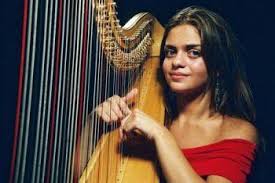
It is not often a solo harp is required for a choral work, and the presentation of Saint-Saens’ little known Oratorio de Noel not only brought us the superb playing of Cecilia Sultana de Maria but the added benefit of Debussy’s Danses Sacree et Profane. This work opened the evening, the gentle line of the solo harp carrying easily in the new acoustic of St Clements. The strings of Ensemble OrQuesta were equally impressive and the whole eased us into an evening of lesser known masterpieces.

Saint-Saens was only 23 when he composed the Oratorio de Noel but is has all the romantic nuances we associate with his more mature compositions. There are many hints of Berlioz here, particularly in the choral writing, which was performed with precision and panache. Originally written for solo organ and harp, the organ writing is far more than a simple continuo and was played with considerable subtlety and apt registration by Robert Leach.

Arvo Part’s Berlin Mass dates from 1990 and is well within the range of a well-trained choir, even if it at times may challenge an audience more used to romantic lyricism. The Gloria comes in a succession of billowing waves of sound and the Credo has the staccato attack of early Stravinsky. The lovely Sanctus, set for lower voices, is reverential rather than ecstatic, and very moving.

By contrast, Mozart’s Solemn Vespers of 1779 was the least spiritual piece of the evening, its heady operatic style and ornamentation being a world away from the sensitivity of Saint-Saens and Part. The choir, who had sang so well in the earlier works, seemed less at ease here and some of the exposed lines were a little raw.

Four young singers provided all the solo parts with particularly impressive contributions from mezzo-soprano Rozanna Madylus and baritone Dominic Sedgewick.

With so much that was so good it seems uncharitable to point to problems with the evening, both of which were obviously out of the control of the performers. The programme gave solid background information but no sense of the text we were hearing. This was not such a problem for the Part and Mozart, where the mass setting is familiar to most, but the Saint-Saens was effectively incomprehensible. The other problem was the large amount of noise at the back and side of the church with late arrivals and refreshments. Anyone further away than the first few rows would have been acutely aware of the interruption to the gentle opening of the Debussy.

Marcio da Silva has made a real impact on the musical life of Hastings and his choice of works was vindicated last night not only in the high quality he creates but the very large audience he attracts. Long may it continue!

The Christmas Concert will be, as usual, at St Mary in the Castle at 5.00pm on 20 December.