BPO: Summer Season – 2

Brighton Unitarian Church, Sunday 5 July 2015
F Bridge

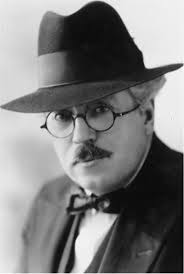
Frank Bridge is still something of an unknown quantity and we rarely hear his chamber music. All the more enjoyable then to hear three sets of Miniatures for Piano Trio. Written between 1908 and 1915 for one of his students, they lie comfortably midway between Percy Grainger and the Palm Court of Grand Hotel. The opening Minuet is charming and gives way to a graceful Gavotte and whimsical Allegretto con moto. The second set is more serious with a reflective Romance and a dark, fierce Saltarello. The cello opening melody of the Vale Russe is very beautiful before a jolly Hornpipe and a final March Militaire. The enthusiastic piano chords here seem at once more sinister or possibly more tongue-in-cheek – the jury is out! Jeremy Young’s piano playing was tightly focussed and expressive throughout, finding excellent balance against cello and violin.

The second half was more familiar with Haydn’s Emperor String Quartet Op76 No3. The bravura of the opening Allegro slips into the increasingly gentle tones of the variations on Austria, before the rustic simplicity of the Menuetto. The Presto Finale almost came unstuck at one moment such was the intensity of the playing but easily regained control to finish with aplomb.

The now familiar quartet of Daniel Bhattacharya, violin, Ani Batikian, violin, Roland Roberts, viola and Peter Adams, cello, are to be congratulated on the continuing enthusiasm and professionalism they bring to these Sunday afternoons.

The next concert on Sunday 19 July brings works by Schubert and Haydn, together with Peter Copley’s Partita for Piano Quartet.
SUMMER ORGAN SHOWCASE

Michael Maine, Brighton Dome Concert Hall 6 July 2015

M Maine

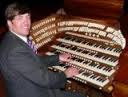
I have only ever heard this organ on the radio before and opportunities to hear it live are few and far between so it was a great pleasure to be in the audience at the Dome for this concert.

The organ is dual-purpose with a full complement of both “straight” and “cinema” ranks and percussion, making this a very versatile instrument. (Rev) Michael Maine knows this large instrument very well, having been largely responsible for saving the organ when the Dome was rebuilt. He presented a very varied programme in a relaxed and friendly manner, showing the organ off to great effect.

Von Suppe’s Light Cavalry Overture opened the proceedings, utilising a variety of registrations including some fiery reeds. I’ll follow my secret heart/ A Foggy day in London town followed, moving from concert to cinema mode, complete with various tremulants. Selections from La Traviata and Carousel were included, alongside Easthope Martin’s Evensong and Toccatas by Boellmann and Widor.

A less successful element of the concert was the inclusion of several songs with the organist accompanying himself. Despite being amplified there were times when the more dramatic organ accompaniment drowned out the voice. Although I applaud contrast in programming perhaps one or two songs would have sufficed.

There were a few times when the pace of playing was too fast for the response of the organ. This was particularly noticeable in Elgar’s Pomp & Circumstance No 4.

A very satisfying part of the second half was a short demonstration of various organ ranks and effects. This began with Michael specifically showing us some of the pipework which originally formed part of the Willis instrument in the Organ Room at Glyndebourne. It was also lovely to hear the Tuba Mirabilis and some of the tuned percussion in isolation. Following this was a great novelty number.

The presentation of the organ was first rate with console centre-stage and subtle lighting effects illuminating the drapes and the swell shutters on either side of the stage.

This was a wonderful opportunity to hear an expert musician handling a complex instrument which he knows intimately. The range of registration and the contrast between the bombastic/virtuosic and the mellow/reflective was superb. A highly enjoyable occasion and I hope there will be many more.

Stephen Page

Bath Camerata: Spirit of America

The Guildhall, Bath, 4 July 2015

Bath Camerata

Bath’s prestigious chamber choir chose to celebrate American Independence Day this Saturday with an all-American programme, and where more appropriate than the splendours of Bath’s Guildhall, built at precisely the same moment as our cousins across The Pond were fighting to cede from the English Crown. Sir Joshua Reynolds’s portrait of George III looked out across the Guildhall audience as Bath Camerata took to the stage. He would hardly have approved of such celebrations.

After 29 years under the leadership of former King’s Singer Nigel Perrin, Bath Camerata was also marking its own quiet revolution. This was the first outing under the direction of their gifted new conductor, Benjamin Goodson. And what a splendid debut it was, announcing a renewed focus and purpose from this much-loved choir.

At the heart of the concert stood a beautiful arrangement of the traditional American song Shenandoah, sung with quiet intensity. Tippett’s Spiritual arrangements, Barber’s famous Adagio arranged for voices, and Bernstein’s jazzy Warm Up demonstrated to the full the choir’s impressive expressive range, moving with ease between very different styles. When they sing softly, the music has a powerful concentration; when the 24 voices go off at full tilt, they blow you out of your seat.

Britten’s exceedingly English Flower Songs seemed a little out of place in this programme, and the choir too did not appear entirely convinced, but their strength is their trademark arrangements of popular songs. Regulars will have heard Billy Joel’s And So It Goes many times before, and they perform it brilliantly. Everyone was tapping their feet by the end, and the lengthy ovation was richly deserved.

An excellent start, then, for a new era with Bath Camerata. We look forward with excitement to their development over the coming years. They are truly the jewel in Bath’s choral crown.

Jonathan Cross


HASTINGS PHILHARMONIC CHOIR

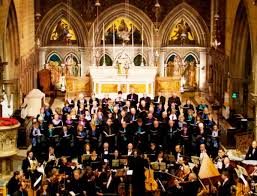
Christchurch, St Leonards-on-Sea,  Saturday 4th July 2015

Hastings Phil Choir

The last time I saw the choir in action was in an exuberant performance of Carmina Burana. Today’s concert was intended to be a complete contrast – it certainly was!

In the sumptuous Anglo-Catholic surroundings of Christchurch, St Leonards,  the choir presented a concert which was rather unusual. Firstly it began at 5pm and was preceded by tea and cake. Secondly the choir sat in a less formal arrangement, around the piano and their stalwart accompanist, Francis Raynor.

Groups of Items were introduced by members of the choir and the audience was requested to refrain from applause until the end of the concert. The music was therefore allowed to proceed in a manner which created a more reflective mood.

The first four sections presented contrasting settings of the texts Ubi caritas, Ave verum, Ave Maria and O magnum mysterium. Each section began with Gregorian chant sung by three male soloists and the conductor. Composers of other settings included Durufle, Arcadelt & Victoria. Contemporary works came from Lauridsen, Mawby & the musical director himself, Marcio da Silva.

It was also very good to hear three short songs by Da Silva which formed part of the final, mixed, section ending with two pieces by Eric Whitacre. The longest and most demanding, for audience and performers, was the most avant-garde piece of the evening, When David heard.

This complex work sets a very short text in a number of ways, contrasting sound and silence, dynamics and texture, broken and smooth lines and much repetition with minimalist tendencies. In the Christchurch acoustic the performance was highly effective. It was very moving, especially with the background to the piece being explained as a response to the death of the son of the composer’s friend.

It is difficult to select other highlights but mention should be made of the septet, made up of soloists and members of the choir – Lin Westcott, Barbara Cornish and Alexander McMillan – who gave a marvellous performance of Ave Verum by Imant Raminsh, a composer I would have liked to have learned more about, being a new name to me.

The soloists Sarah Rowley, Victor Soares, Phil O’Meara & Henry Bennett gave some beautiful performances. I did, however, feel that the men were less comfortable with some of the chant, which is a different discipline in itself. However the male voices of the chant gave a lovely contrast to the mixed forces at work in the other settings.

Hastings Philharmonic Choir was once again on top form. They have shown a high level of control and depth of feeling in this music. To create a programme which does not rely on exuberance and flashiness is a risk today. How refreshing to be able to sit back and be transported to a higher realm as this sustained, luxurious and highly emotive music works its magic.  What’s next?

For more information on the choir visit  www.hastingsphilchoir.org.uk

Stephen Page

Garsington Opera; Death in Venice

Wormsley, 1 July 2015

Death 1

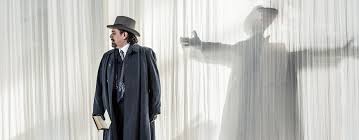
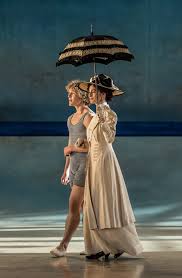
The vast drifting, billowing white curtains of Kevin Knight’s setting create the perfect environment for Paul Curran’s insightful and sensitive re-appraisal of Britten’s final masterpiece. More than any recent production I can recall we are constantly made aware of Aschenbach’s isolation. Though he is surrounded by the life of La Serenissima it passes in an instant from sharp reality to hazy memory. There are many telling moments – the crowd reading the cholera notices, Tadzio walking past oblivious because distanced by the change of light through the curtain, hotel guests so close yet outside Aschenbach’s world. More than anything else this puts the whole focus of the work firmly on Paul Nilon’s Aschenbach and he brings us a man of intense humanity and passion, attempting to make sense of his creative life but always on the brink of collapse, just as life in Venice is itself about to go down under the tide of cholera. His voice has weight and a fragile authority which reflects the changes of mood with ease and the many moments of pain and exquisite beauty. It is the heart of the work but he is fortunate to be surrounded by so fine a company for the myriad of smaller parts.

Because the work is conceived within a dreamlike world, the dancing seems to make a bigger impact. There is no sense of dream sequences, more a case of Aschenbach moving in and out of memory. As a consequence it is easier for us to take all the dancers seriously as a normal part of Aschenbach’s world rather than an addition to it. In this Celestin Boutin is particularly successful as Tazio. He presents us with a very real young man – at least in his late teens – who is as open to a heterosexual interest in the Governess as he is to larking about with his friends. The very normality of his Tadzio makes Aschenbach’s infatuation all the more striking.

The other key performer is William Dazeley’s shape-shifting Traveller, ever present to undermine Aschenbach’s flights of fancy. His changes of costume and personality are subtle enough to confuse and accurate enough to combine all of them into the antagonist that Aschenbach finds so difficult to confront.

Death 2

The large cast of characters are drawn from strength and while many are necessarily rapidly pencilled stereotypes, the production manages to keep them convincingly naturalistic. As ever the Garsington Chorus provide fine voices and real presence.

Holding the whole evening together is Steuart Bedford’s masterly control of the glorious nuances of Britten’s orchestral writing. He conducted the first performance in 1973 at a time when the composer was too ill to conduct himself. It was the only work to have been mounted without the direct involvement of the composer himself and in many ways has a closer association with Steuart Bedford than any other. Garsington Opera are privileged to have his experienced hand on the tiller for a production which, yet again, speaks of the growth of this company as far more than a summer opera.

Edward Gardner takes his final bow as Music Director of English National Opera

ENO_EdGardner020715_photoRichardHubertSmith-0937

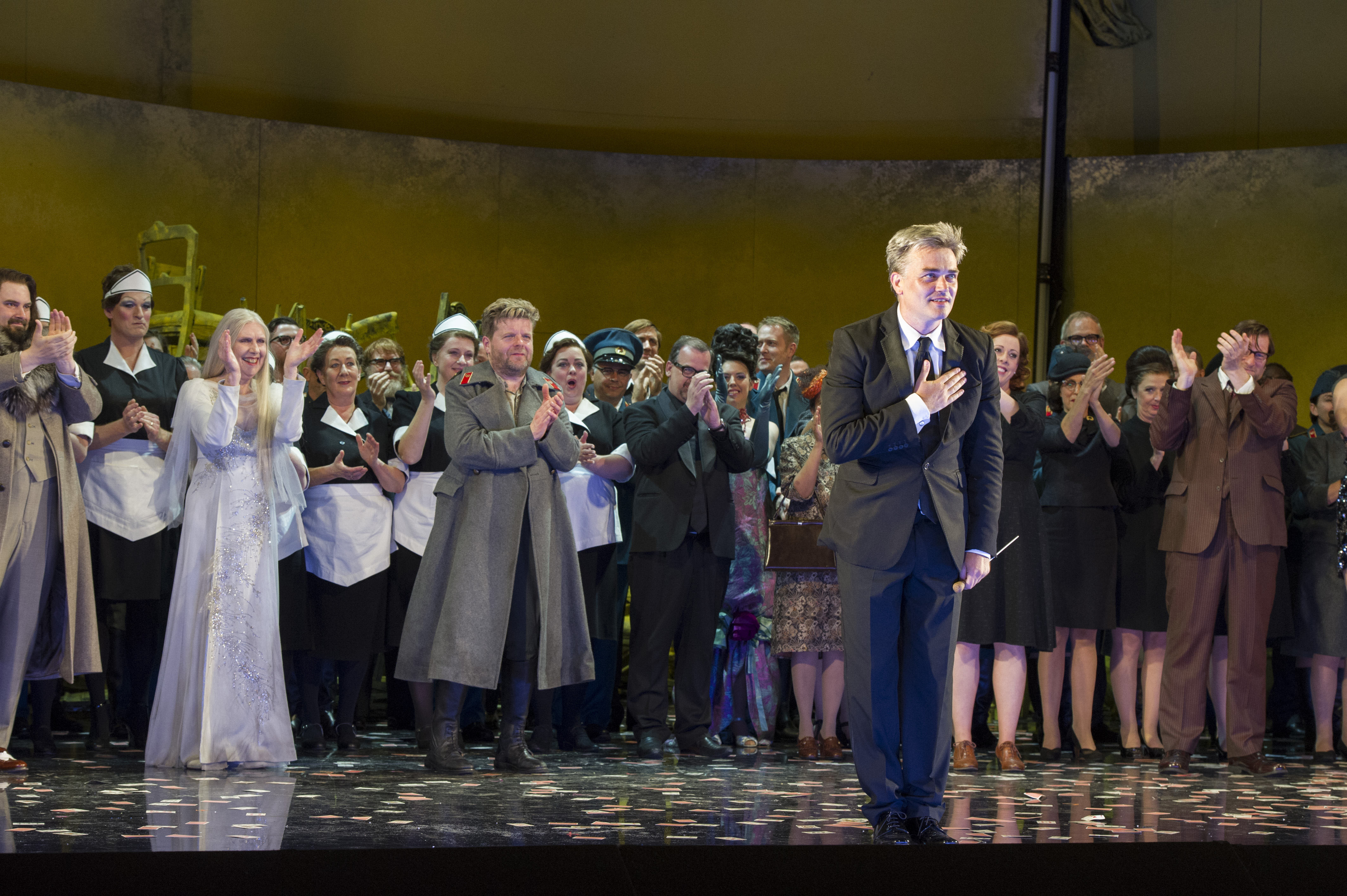
Last night (2 July 2015) Edward Gardner conducted the final performance of Tchaikovsky’s The Queen of Spades – his final performance as Music Director of ENO.

At the curtain call he was joined onstage by the full ENO Orchestra and chorus, who he has lead for the past eight and a half seasons. A presentation was made onstage by Artistic Director, John Berry.

During his tenure, Gardner has conducted some 37 productions. He will return to ENO in 2015/16 season as a guest conductor to conduct the new production of Wagner’s Tristan and Isolde, directed by Daniel Kramer and designed by Anish Kapoor.

He will be succeeded by Mark Wigglesworth who joins ENO for the 2015/16 season.

The Fourteenth Oxford Lieder Festival 2016

The Fourteenth Oxford Lieder Festival – Singing Words: Poets and their Songs – will run from 16-31 October 2015 and will once again bring a glittering array of musicians to Oxford in a diverse and enticing programme. It will focus on poets and the words that shape songs, with many programmes devoted to specific poets and a series of related cultural events.

The opening recital of the Festival will be given by superstar duo Sarah Connolly and Graham Johnson (16 Oct), who perform Schubert, Brahms and Wolf. Sophie Kartäuser and Eugene Asti (17 Oct) will explore Mörike and Éluard via the music of Wolf, Schumann and Poulenc. Former BBC Cardiff Singer of the World winner Katarina Karnéus and Stephan Loges join Festival director Sholto Kynoch for an evening devoted to settings of Goethe (18 Oct). Other recital highlights include performances given by Elizabeth Watts and Julius Drake (20 Oct), Matthew Rose (30 Oct) and Christoph Prégardien and Roger Vignoles (31 Oct). Anna Stéphany and Sholto Kynoch perform a major new song cycle commissioned by Oxford Lieder from Rhian Samuel (28 Oct), and John Mark Ainsley and Catherine Hopper perform a programme of Shakespeare in Music (21 Oct). The Festival will also feature an event devoted to Mary Stuart, with music by Schumann and new works by Judith BinghamEddie McGuire and Dee IsaacsImogen Cooper will be Artist in Residence, giving recitals with Wolfgang Holzmair and Henk Neven, as well as a solo performance and masterclasses.

A lunchtime recital series will feature the complete songs of Gabriel Fauré (paired with Schubert songs), with artists including Lucy Crowe (27 Oct) and James Gilchrist (20 Oct). This series will be launched at a lecture-recital weekend withGraham Johnson (17 & 18 Oct), whose series Schubert’s Life & Times was a Festival highlight for many in 2014. There will be a study day on the life and songs of Hector Berlioz (24 Oct), with speakers to include the author of the definitive Berlioz biography, David Cairns.

Chamber, instrumental and choral works, with artists including the Doric String Quartet (20 & 26 Oct), the Phoenix Piano Trio (22 Oct) and Tom Poster (23 Oct), will be heard throughout the Festival, in addition to a wide range of talks, readings, and other events. Masterclasses will be given by artists including Robert HollAnn Murray and Roger Vignoles. Oxford Lieder continues to develop its well-established programme of projects in local schools and opportunities for people of all ages and abilities to participate in the Festival.

CDs/DVDs June (2)

J S Bach: Duo Recital
Janos Starker, Cello; Zuzana Ruzickova, harpsichord
HANSSLER SCM CD 93.726            66’51
The performances here were recorded in 1971 at the Schwetzingen Festival. They stand the test of time remarkably well not only in the quality of the recording but also in the authenticity of the playing, which predates our assumptions about original instrument approaches to style, yet remains alive and convincing throughout.


Cello Sonatas
Steven Isserlis, cello; Stephen Hough, piano
HYPERION CDA 68079     71’41
The cd includes two fairly familiar works by Grieg and Mendelssohn – even if they are not heard very often in live performance. Grieg’s Cello Sonata Op36 has had a chequered history though I am pleased to note that the critic writing in Musical Opinion in 1889 thoroughly approved of the piece. What connects the three is the fact that all the composers were also professional pianists, which may account for the often fearsomely difficult writing. The real value of this recording, however, is the inclusion of Stephen Hough’s Sonata for cello and piano left hand les adieux. Romantically cast, it is a fitting companion piece to the other two and deserves to be more widely known.


Sibelius: Lemminkainen Legends; Pohjola’s Daughter
Finnish Radio Symphony Orchestra, Hannu Lintu
ONDINE ODE 1262-5       61’40
There is a real value in hearing Finnish music from Finnish players, as I discovered some years ago when visiting Finland for the Lahti Organ Festivals. This new recording is no exception having the bite and austerity, almost at times the pain which underpins so much of the writing. Where others might stress Sibelius’ more romantic side, here we are at odds with the wilderness. I doubt if The Swan of Tuonela has ever sounded so convincingly bleak.


Folke Grasbeck plays Sibelius on the Ainola Piano
BIS 2132               80’54
The generous length of the cd and the liveliness of the recordings make it a bonus in its own right before one considers that we are hearing Sibelius’ own works performed on the piano at which many of them were written. Many of the pieces are very short but none the less give an excellent impression of the range of works which the composer produced, with many unfamiliar pieces alongside the more popular.


Haydn & Mozart
Arcangelo, Jonathan Cohen
HYPERION CDA 68090     57’44
This new release combines three familiar works. Haydn’s Sinfonia Concertante in B flat, with Mozart’s Oboe and Bassoon concerti. All are given clean, pleasing performances.


Richard Strauss: Feuersnot
Orchestra chorus and youth chorus of the Teatro Massimo, Gabriele Ferro
ARTHAUS 109065
This is very much a festival performance. Strauss’ early work was a failure in 1902 and even here it has nothing like the command of operas which were to follow very soon afterwards. There are hints of Meistersinger and also of Humperdinck in the scoring, which is for large orchestra and chorus with a wide range of soloists. The stage direction under Emma Dante keeps the stage alive if at times it seems over busy. Gabriele Ferro marshals his forces with some skill and while it makes for a pleasant experience it is not a work one would wish to return to regularly.

BPO: Summer Season

Brighton Unitarian Church, Sunday 21 June 2015

H Blake

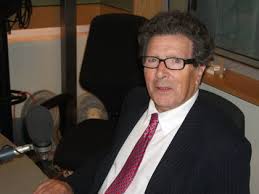
Solstice, and the first of the Summer Season of chamber concerts which have now become a familiar feature of Brighton Philharmonic’s programme. Howard Blake is a very familiar figure as a result of his many film scores – to say nothing of The Snowman – but his other compositions are equally appealing. Though a recent injury to his wrist meant he was not able to play the piano parts himself he was present to introduce the music with a gentle humour which suited the occasion and the intimacy of the setting.

The short programme reflected a long-standing interest in the complexity of writing for chamber instruments, opening with a recent arrangement of Pennillion for cello and piano. Originally conceived for harp and piano, it has gone through a number of arrangements before arriving at the present one. The opening melody is intensely lyrical. Blake’s melodic gift is similar to that of Elgar or Tippett in that the melodies seem so inevitable that we can’t believe we have not known them all our lives and he is just recalling a tune we all know already. The work moves rapidly through a set of variations which allow the cellist, Peter Adams, to show his technical skill as well as his sensitivity towards the subtleties of the melody.

The following Fantasy Trio was being given its first performance though the original idea for the score goes back to his early school days. It is obviously difficult on a first hearing to judge how much is the work of the 17 year old and how much the mature composer, but the melodic ideas and the confidence of the work must have been part of the original spark and as such are a tribute to his genius from an early age. The part writing is exemplary, maintaining a balance between them which never allows one voice to dominate. The final Scherzando is more complex both in rhythm and harmonic density.

Howard Blake admitted that the String Trio is probably the most challenging form for him as it constantly misses the fourth note of the chord. The Trio dating from 1975 is a fierce work with a dark edge to it, strengthened by the deeper tones of viola and cello. The violin, Daniel Bhattacharya, takes the lead throughout though he is often challenged by the viola line from Bruce White.

The final piece was a recent extended single movement entitled Elegia Stravagante – a title suggested by a waiter as it is a reflective elegy which ends with unexpected enthusiasm. Though Howard Blake admitted there are strong auto-biographical elements within it, the piece moves rapidly as a whole with universal rather than personal impact. The seven sections are difficult to follow but the sense of achievement by the climax is persuasive.

As Howard Blake was not able to play the piano parts Sasha Grynyuk proved to be a more than ample substitute, bringing a fine mix of subtlety and bravura to his playing.

The next concert is on Sunday 5 July with music by Frank Bridge and Haydn.

Sussex Chorus: A Tribute to Ralph Vaughan Williams

St Bartholomew, Brighton, 20 June 2015

V Williams

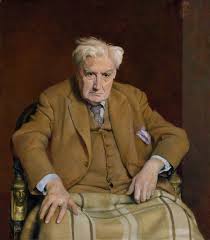
It is easy to see why Toward the Unknown Region was such a success at its first hearing in Leeds in 1907. The score has echoes of Gerontius yet its spirituality is not linked to any specific belief system. Instead it seems more akin to current demands to be allowed to be spiritual without being religious. The score takes us on a brief but exultant journey towards spiritual freedom where the Soul bursts forth to float in Time and Space.

The acoustic in St Bartholomew’s is always a problem for any performers but once one had accepted that the text was, for most of the time, going to be completely incomprehensible, one could simply wallow in the sound world Vaughan Williams creates. If the thrust of Toward the Unknown Region was uncomplicated, the dichotomy within The Lark Ascending was on this occasion more so. Christian Halstead’s solo violin often disappeared within the richness of the orchestra, particularly in the lower passages, or seemed remarkably distant. In this way the balance shifted and rather than concentrating on the clarity of the lark we were forced to realise how elusive the sound is and how fragile. This may not have been what Vaughan Williams intended but it was a fascinating approach.

Both of these works seem to be about escape, and, somewhat surprisingly, A Sea Symphony continued the same theme.

After the tempestuous outpouring of the early movements it was the yearning and spiritual passion of the final Explorers that made an indelible impression. Walt Whitman’s poem uses the sea as a parable for spiritual freedom where risk and danger are all subverted by the love of God who is ever present. The Sussex Chorus were alive to the impact of the text even when the words themselves were clouded by the acoustic and caught the mood changes of the work with considerable skill. Soloists Jacquelyn Fugelle and Simon Thorpe rode the waves of sound with ease, her voice in particular cutting cleanly through chorus and orchestra. The Kent Sinfonia provided strong support though it was difficult to hear individual instruments. Alan Vincent brought authority to his handling of the scores and a deep sense of commitment. A splendid evening – just a pity there is nowhere else in Brighton affordable to forces like these.