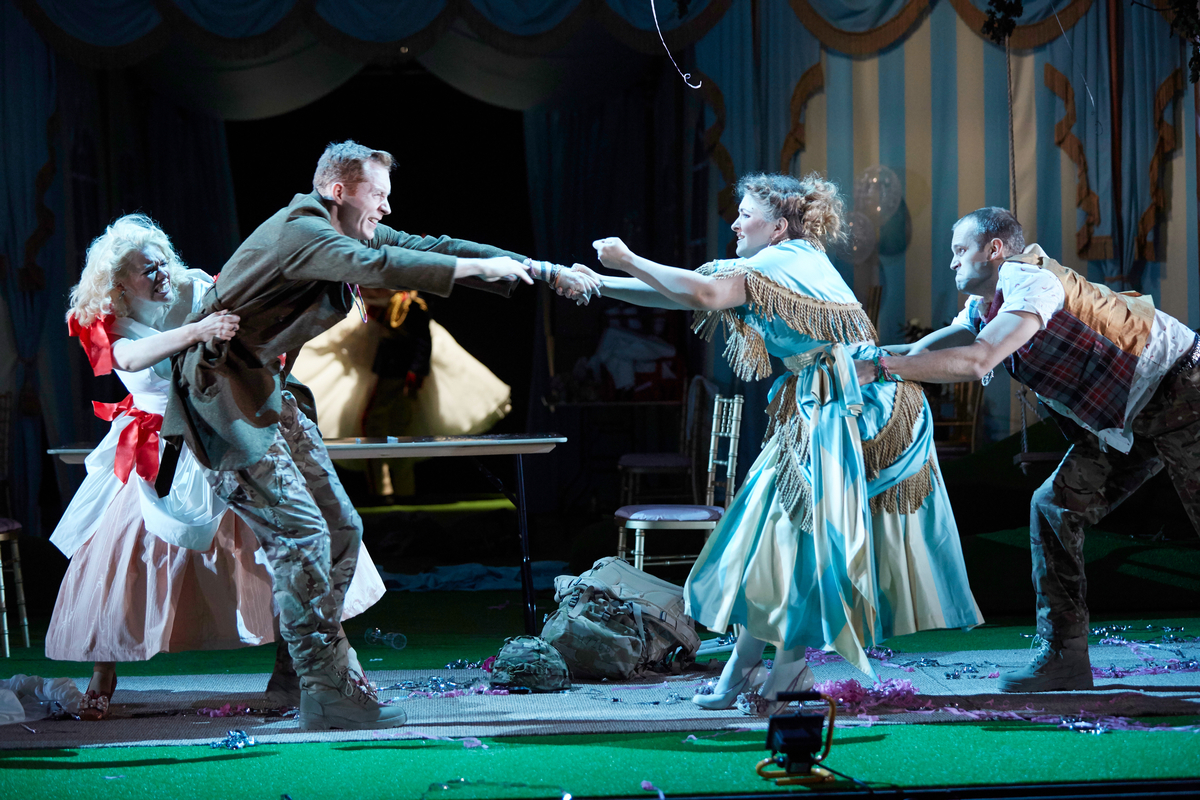
BPO Summer Series: 4

Brighton Unitarian Church

Sunday 9 August 2015
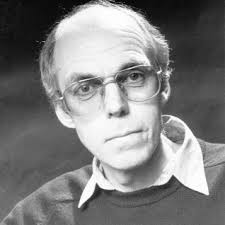
Barry Mills

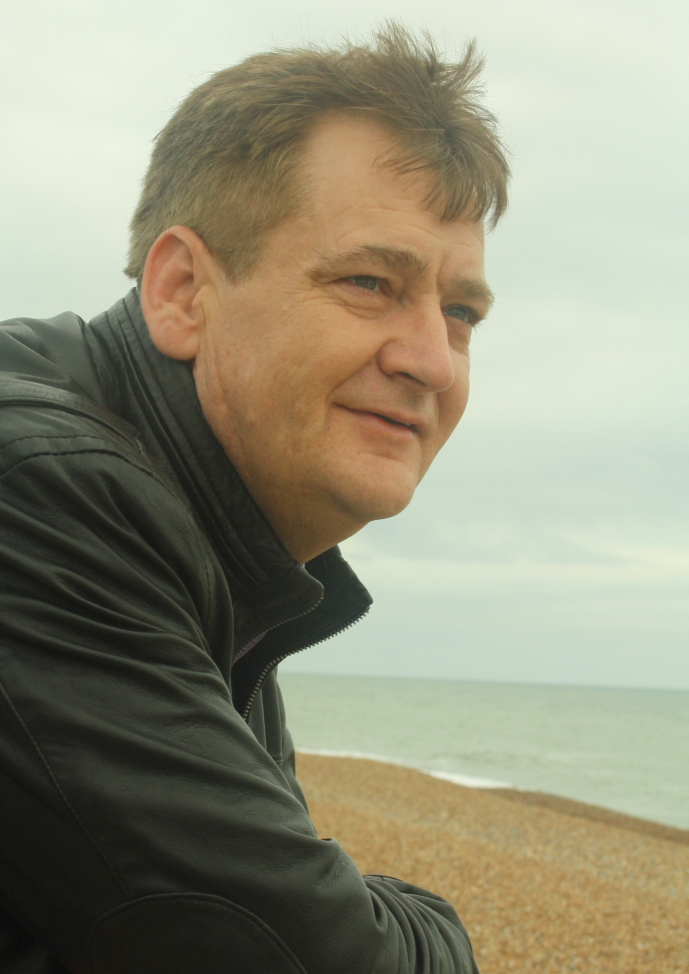
The final concert brought an unexpected mix of pieces, opening with Barry Mills’ String Quartet written in 2007. The composer introduced the work but it was difficult to sense all the nuances his comments anticipated. The opening movement is based on the sea, but there is no hint here of Debussy or Britten. In fact I doubt if any listener would recognise the sounds as sea-like unless they had been warned in advance. The movement is melancholic and dark, giving way to an edgy, strident second movement which seems too introspective to be playful. The third movement is by far the most successful with a sense of cohesion and refinement, the melodic line passing smoothly between the members of the quartet. The final movement returns to musical ideas drawn from the first two movements and adds birdsong, the most obvious of which was the aggressive call of the gulls.

Gordon Jacob’s Suite for Bassoon and String Quartet is a brief but pleasing work, and brought Brighton Phil’s first bassoon, Jonathan Price, to us for first time. His sound was almost too much for the small venue but well balanced with the quartet across the four short movements. The second and final movements are playful, almost skittish at times, and there is an effective yearning quality to the Elegy. The work was written for the Cheltenham Festival in 1968 and was presumably given alongside other works featuring the bassoon. On this occasion we felt rather cheated at getting so little of the soloist.

The final work was Haydn’s G minor Quarte The Rider. A late work, this has all the passion and depth of a Beethoven quartet and much of the same intensity. The opening textures are dense and the focus moves freely across all four players. The romantic second movement is an absolute delight leading into the mellifluous Menuetto and the genial finale. The soloists from the BPO have changed over the four afternoons and on this occasion were Ani Batikian and Leo Payne, violin, Roland Roberts, viola and Peter Adams, cello. That the orchestra can provide such high standards for chamber concerts is a tribute to its continuing success.

The autumn season opens at Brighton Dome on Sunday 11 October with works by Tchaikovsky, Beethoven and Kalinnikov.
CDs & DVDs: August 2015

Wagner: Tannhauser
Bayreuth Festival 2014
OPUS ARTE OA 1177 D

Tannhauser

It is many years since I was last in Bayreuth but regular releases have enabled us to keep up with the changes in production style which the house has undergone. Few can be stranger than this new Tannhauser. Musically there is a great deal to commend it and if it were a CD release I would be full of praise both for Axel Kober conducting and the immaculate singing of the Bayreuth chorus. Solo singing is strong and frequently beautiful in its line.

However the approach seems almost entirely perverse. Wagner created Bayreuth to enable the audience to immerse themselves in the work, to focus entirely upon it without distraction. The stage setting should enable the audience to forget everything except the work itself. Here, the stage is converted into a factory – and moreover a factory which works on regardless of the action in which the singers are involved. There is even a lengthy non-communion service prior to act three. The designer and director state in a lengthy programme note that they wanted the setting to create a non-world within which the opera could take place. It seems reasonable to ask why they did this at Bayreuth? If they want to set it in a factory why not do just that? There were surely plenty of redundant buildings which could have been put to use, but to use all the resources available at Bayreuth for a static factory set seemed counter-productive and constantly worked against both the music and the narrative. Some recent productions have been dull, some – like the recent Mesistersinger- have proved challenging but highly effective. Visually, this Tannhauser was neither.

Aulis Sallinen: King Lear
Finnish National Opera, Okko Kamu
ONDINE ODV 4010

king lear

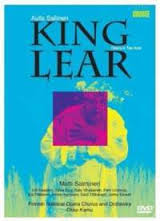
King Lear has been a provocation to composers for at least two centuries. Verdi and Britten both contemplated it but in the end abandoned their schemes. This recent version, recorded in 2002 at the Finnish National Opera, by Aulis Sallinen is more traditionally operatic than one might expect of a contemporary composer. The chorus is used liberally throughout and much of the vocal writing is lyrically based. Matti Salminen makes a strong protagonist and he is well supported by strongly focussed characterisation from those around him. Lear is never an easy work but this version could sit comfortably alongside more familiar settings of Shakespeare.

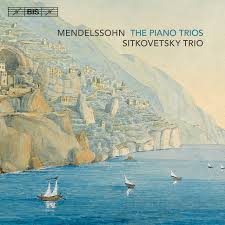
Mendelssohn: Piano Trios
Sitkovetsky Trio
BIS 2109                               56’59

Sitkovetsky

This new CD was featured recently on the radio and hopefully that will have brought this lovely recording to a far wider audience. The performances are crisp and bright throughout; well worthy investing in.

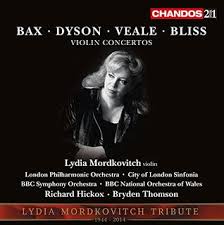
British Violin Concertos
Lydia Mordkovitch, violin
CHANDOS CHAN 241-53                  78’39; 77’36

Mordkovitch

This is a timely issue, bringing together the collective talents of Richard Hickox and Bryden Thomson with Lydia Mordkovitch who was a founding artist for Chandos records. It includes violin concerti by Arnold Bax, George Dyson, Arthur Bliss and John Veale, the most interesting of which is the most recent – and least known – by John Veale. It also demonstrates the continuing strength of more conventional composition throughout the twentieth century in the face of the avant-garde. There is a great deal to enjoy here.

Sibelius: Belshazzar’s Feast
Turku Philharmonic Orchestra, Leif Segerstam
NAXOS 8.573300               63’03
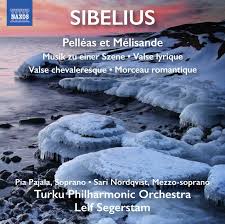
Sibelius: Pelleas et Melisande
Turku Philharmonic Orchestra, Leif Segerstam
NAXOS 8.573301               57’49

Pelleas Sibelius

These two new releases bring together a large number of smaller works, often lesser known, in the company of the complete incidental music for Pelleas et Melisande and Belshazzar’s Feast. Leif Segerstam has a lean, often dry, approach to the scores which is convincing in its honesty and the tonal finesse of the orchestra. The Turku Philharmonic Orchestra is joined by soprano Pia Pajala and mezzo Sari Nordqvist in Autrefois. For those of us who value Sibelius and are keen to add to our collections his shorter pieces these are a valuable addition.

Schumann: Complete Symphonies
Odense Symphony Orchestra, Simon Gaudenz
CPO 777 925-2                   123’52

Odense Schumann

There are many recordings of the Schumann symphonies so what have these Odense recordings have to offer? That they are presented in chronological rather than numerical order may seem a minor point but when listening straight through it moves the fourth symphony into its correct (second) place. Doing this, we get a far better sense of the growth of the composer as a symphonist. The first is light, Mendelssohnian in touch and sensitivity. This lightness continues right through with a sense that Schumann is closer in emotional temperament to the classical mode than the later romanticism. We experience the burgeoning romanticism through Mozart’s eyes rather than Brahms. I found this very convincing, though I realise some readers may prefer a more profound, not to say heavier, sound world.


Prom 23: 2015

Sunday 2 August

Prom 23

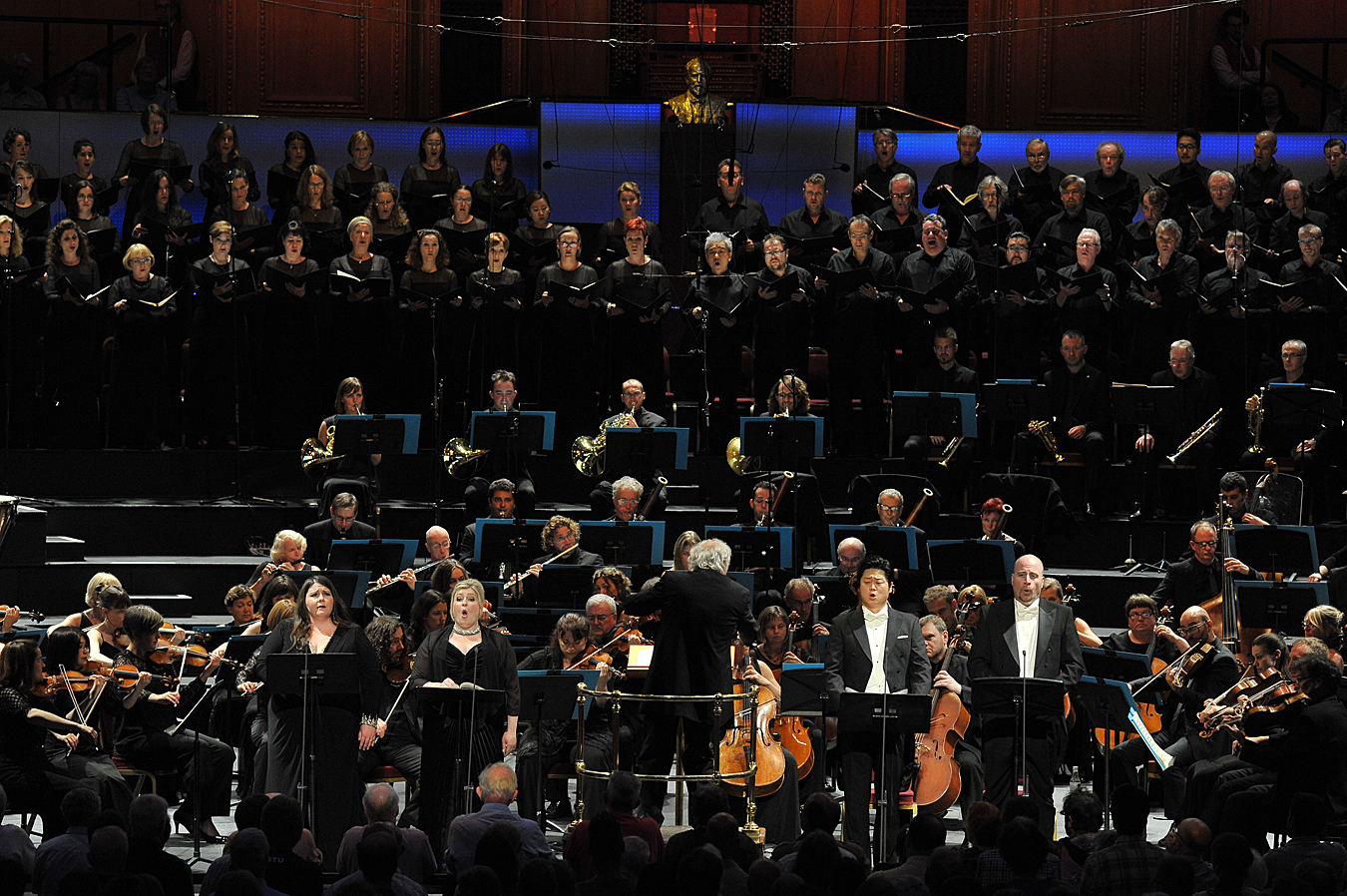
Verdi’s Requiem has had a strong presence at the Proms over the last fifty years and I heard my first live performance under Carlo Maria Giulini in 1963 to electrifying effect.

If Donald Runnicles’ performance last night did not quite eclipse that memory there was certainly a great deal to enjoy in the handling of the large forces and, in particular, the sensitivity to the quieter passages. The opening was so soft it hardly reached the extremities of the Royal Albert Hall but when it erupted there was a violence in the momentum which seemed unstoppable. He was greatly helped by the impact of the Chorus of the Deutsche Oper Berlin. Using somewhat smaller choral forces than is often the case, but a force which is entirely professional and used to singing from memory, made for an intensity of attack and boldness of line which easily road the orchestral forces. Dies ira  and Tuba mirum were thrilling in their impact, but as  noted above, it was the more reflective moments which particularly impressed. Angela Meade’s soprano floated effortlessly through the hall but it was the human warmth of Karen Cargill’s mezzo which seemed to be the key to Donald Runnicles’ approach.

Bass Raymond Aceto gave stalwart support even if occasionally it lacked passion. Tenor Yosep Kang has a strong top to the voice but he had considerable difficulty in the middle register and the voice was often out of focus and at times off pitch. A pity when so much around him was so good.

The concert will be repeated on BBC Radio 3 on Wednesday at 2.00pm.

Prom 22: 2015

Sunday 2 August 2015

Prom 22

Though this was advertised as a family prom there seemed to be very few children in the audience. Maybe the presence of two new works put off some parents. A pity, for both were easily accessible and made an excellent foil for the Mozart and Beethoven.

The Aurora Orchestra has made a virtue of playing from memory though the opening Pastoral Symphony by Brett Dean was securely from the score. Moving back to Australia, the composer was struck by the sounds of nature in the antipodes which are so different from those of the European world. The symphony reflects these differences and also the gradual loss of natural sounds to those of the city and industry. Electronic and recorded sounds are used sensitively throughout, blending in seamlessly with the orchestral instruments, which are themselves used to create breathy, voiceless sounds as well as conventional notation. If the score often sounds closer to Messiaen than to Beethoven this should not imply it is difficult on the ear, with its jazz overtones and pleasing sense of narrative line.

Mozart’s Coronation piano concerto K537 is far less familiar to us than the core concerti and therefore all the more welcome. Soloist Francesco Piemontesi had made his own version of the score as the original is incomplete and in places needs more than a simple reconstruction. The result was totally convincing, with a freshness and intimacy balancing the many touches where Mozart seems to be moving in an entirely new direction. It is a ghostly indication of what he might have achieved had he lived longer.

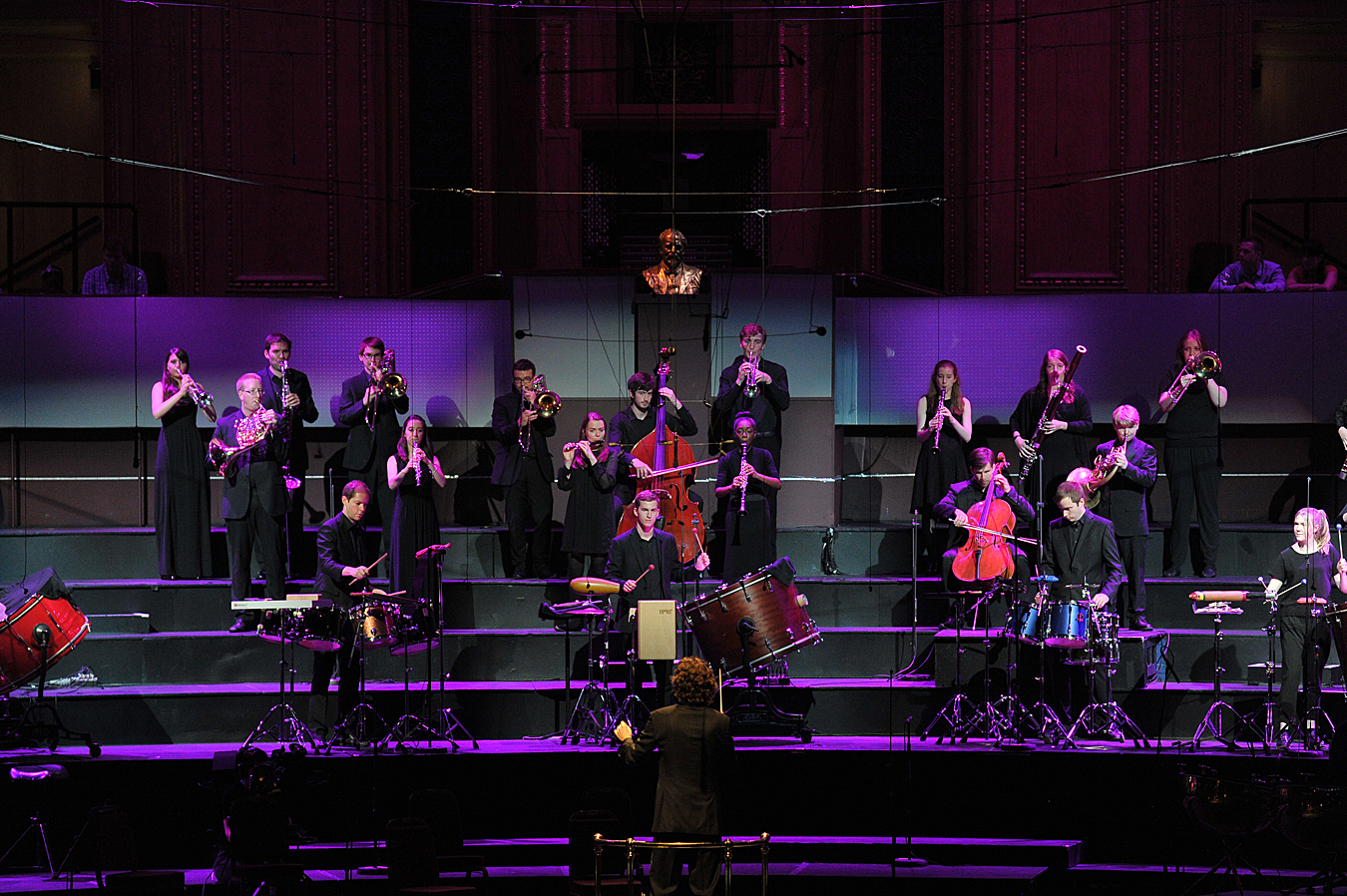
Anna Meredith’s Smatter Hauler opened the second half and here the Aurora Orchestra were joined by a group of highly enthusiastic, not to say skilled, members of the BBC Proms Youth Ensemble. The work is brash and invigorating, as intended, and for once the use of lighting was highly effective to point to the sections playing and the focus of a particular part of the score. There is more to music-making than thwacking a drum, but it can be infectious and certainly set the hall alight in its brief five minutes. I hope we not only hear the piece again but that it encourages others to commission works from Anna Meredith.

Last season the Nicholas Collon and his orchestra played Mozart Forty from memory, this year it was Beethoven’s Pastoral. In the event this was far more than a feat of memory. With virtually all the players standing there was a freedom to the playing which can’t happen when all are seated and concentrating on the scores before them. There was a frequent sense of dance movement across the orchestra and each musician became a soloist in their own right. Added to this, the need for constant eye contact meant there was a much tighter sense of ensemble. Tempi were fast and buoyant. The birdsong at the end of the slow movement brought us full circle to Brett Dean’s vision of Australian nature, and led us into a joyous relaxed final movement.

The concert is repeated on BBC Radio 3 this Friday at 2.00pm and the concert will be televised on BBC Four on Sunday at 7.00pm – and for 30 days on the BBC iPlayer.

ENO: Lady Macbeth of Mtsensk

New ENO Music Director Mark Wigglesworth conducts Dmitri Tcherniakov’s new production of Lady Macbeth of Mtsensk


Award-winning Russian director Dmitri Tcherniakov returns to ENO with a new production of Shostakovich’s Lady Macbeth of Mtsensk. First seen in Düsseldorf in 2008, Tcherniakov’s bold and contemporary production goes to the core of Shostakovich’s powerful drama. Mark Wigglesworth conducts his first production as ENO Music Director.

Shostakovich’s operatic masterpiece of the Soviet era, Lady Macbeth of Mtsensk tells the story of a bored and lonely merchant’s wife, who seeks solace and excitement in an affair that ultimately leads to her downfall. Its graphic language and explicit portrayal of sex and violence led to the work being banned in the Soviet Union for almost 30 years.

Opera and theatre director Dmitri Tcherniakov has a global reputation for his daring and often contentious directorial style. For ENO he has directed Simon Boccanegra in 2011. The Independent noted “there is an extraordinary director at work here”. He has also created the design of this production.

ENO’s new Music Director Mark Wigglesworth is an acclaimed Shostakovich interpreter, having recorded all of the composer’s symphonies to critical acclaim, BBC Music Magazine named him as “the finest Shostakovich interpreter of his generation”. He conducted a previous production of Lady Macbeth of Mtsensk for the Company in 2001. For ENO Mark has also conducted Così fan tutte, Falstaff, Katya Kabanova and Parsifal.

Leading a world class cast is soprano Patricia Racette making her debut as Katerina (the title role). British tenor John Daszak made his professional opera debut with ENO in Jen?fa and has since appeared in a number of productions including Boris GodunovManon LescautNabuccoA Masked Ball and The Trojans. He will perform the role of Sergei. Bass baritone Robert Hayward will play Boris, Katerina’s father-in-law. Robert has performed in numerous productions for ENO including OtelloPelleas and MelisandeLulu and The Ring Cycle.

Bradford-born tenor Peter Hoare will sing the role of Zinovy Ismailov. Peter last performed at English National Opera in the role of Hermann in David Alden’s new production of The Queen of Spades. British bass Matthew Best was last seen at ENO as Tiresias in the world premiere of Julian Anderson’s Thebans and as Swallow in David Alden’s critically acclaimed production of Peter Grimes.  He will sing the role of the Old Convict. Danish bass Per Bach Nissen makes his ENO debut as the Chief of Police.

Lady Macbeth of Mtsensk opens at the London Coliseum on 26 September 2015 for 8 performances – 26, 29 September, 2, 8, 10, 13, 20 October at 7.30pm, 17 October at 6.30pm.

It will also be broadcast live on BBC Radio 3 on Tuesday 13 October at 7.00pm.

All Saints, Hastings

DANIEL COOK   20 July 2015

D Cook

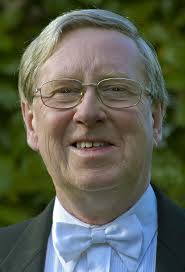
Each year this series delivers a number of enjoyable concerts by experienced organists, many of whom are employed by cathedrals and larger churches. Some of these organists are great entertainers, some have a real gift of communication with the audience and some demonstrate great technical ability or particular gifts of registration and expression. Every now and again an organist displays all of these qualities. Tonight was one such occasion.

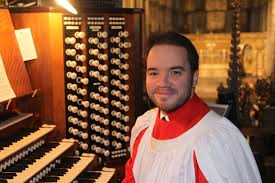
Daniel Cook, sub-organist of Westminster Abbey, presented a highly enjoyable programme which favoured the Romantic and Neo-Romantic repertoire. From the beginning he developed a wonderful rapport with his audience which combined humour and gentleness with enthusiasm for and knowledge of the music he was to perform.

Parry’s Fantasia and Fugue in G opened the proceedings in grand style. Daniel’s performance left no-one in any doubt that the concert was to be an exciting one. His ability to use a wide range of registration from the largest choruses to more subtle combinations, coupled with a lightness of touch despite the heaviness of this organ’s action was to be a hallmark of the whole evening’s programme. This piece was written in 1877, the year of construction of the All Saints Willis.

Two movements from Whitlock’s Sonata in C minor followed, providing a lovely contrast to the bombastic opening piece. Here some of the organ’s beautiful flutes and strings were to the fore. Rhythms and articulation were well handled. Prelude & Angels Farewell (Dream of Gerontius) by Elgar, in an arrangement by Brewer, effectively demonstrated the orchestral use of this instrument.

William Lloyd Webber’s Benedictus allowed Daniel to demonstrate how the organ can be used to build a great crescendo, here based around the Diapasons, but also incorporating Mixtures and Reeds. Further music by Whitlock brought the first half to a close.  The March:Dignity & Impudence (transcribed by Riley) is a witty pastiche reminiscent of Elgar’s Pomp & Circumstance marches and was delivered with apparent ease!

The second half included a beautifully rhythmic Scherzetto  by Jongen and Meditation  by Vierne. As before these pieces were performed with real feeling and demonstrated Daniel’s expert handling of this particular organ and acoustic. Dupre’s transcription of Bach’s Sinfonia from Cantata No 29 was an exciting conclusion to the main concert. This once again showed the possibility of combining speed, “big” registration as well as quieter passages with good articulation and control.

Another piece by Bach had opened this half. Toccata, Adagio & Fugue has to be one of Bach’s most satisfying organ works with its contrasts of texture, speed and registration. This, for me, was the overall highlight in a concert which contained many gems. I have never before heard a performance of this piece which even included a very effective echo effect in the extended solo pedal passage. The whole piece was presented in an exciting but controlled and highly musical way.

A short Elegy by Parry as an encore brought us full circle to the composer with which the concert began.

This was an outstanding concert. I hope this will not be Daniel Cook’s last visit to Hastings.

BPO Summer Season: 3

Brighton Unitarian Church, 19 July 2015

Peter Copley

This summer series has once again focused on Sussex composers and it was good to welcome back Peter Copley who introduced his Partita for String Quartet. The work has had a very slow gestation, starting as a single lively movement for amateur or young players and then developing, one movement per year, until it reached its final form. His friend Paul Carr was the driving force behind the work which was produced, movement by movement, as a birthday present for him each August. Peter Copley is clearly a man of very regular habits as he admitted that the work was written on his free days at summer school, though turning out music of this quality hardly looks like a leisure activity.

The opening movement sounds like fun to play and communicates its enthusiasm with ease. Peter Copley is a master at slipping short lyrical passages into otherwise complex ideas to deflate any notion that this is going to be difficult to listen to. If the first movement leaves us somewhat breathless the second moves us into another realm entirely. Entitled 42 it is unclear in the opening sections where we are time-wise or where we are going. Gradually however the piano seems to pull the other instruments into line and we become aware of a structure which is underpinning the apparent disparity. When the opening sections are eventually repeated, either from our increasing familiarity or the piano’s school-masterly control, we feel at ease even in a world as far removed from this as that of Arthur Dent.

The Shcherzo seems to take us into the wilds of Eastern Europe with its earthy dance rhythms and slapping chords, but even here there is a delicate, if brief, moment of intense lyricism for the piano. The finale is an homage to Paul Carr as it uses a lovely cello solo of his as the opening melody before gently retracing the earlier movements until it fades away into the distance. It left most of the audience with a smile on their faces. Peter Copley had said at the start he was calling the work a Partita as Quartet sounded too grand. He wanted something more enjoyable and he has certainly achieved this.

Rachel Fryer was the pianist keeping our regular Sunday quartet in order and all more than justified Paul Carr’s confidence that the opening movement was worthy of three more.

The concert had opened with a brisk and beautifully balanced reading of Schubert’s Quartettsatz in C minor and concluded with Haydn’s Lark Quartet. In reality this is a violin concerto for soloist and trio, as the others are, with the exception of the Minuet , little more than background to the virtuosic playing of Roland Roberts.

The final concert in this fine summer series is on 9 August when we will hear music by Barry Mills, Gordon Jacob and Haydn.


A Midsummer Night’s Dream

Garsington Opera & the RSC

Garsington Opera, Wormsley, 17 July 2015

Dream 1

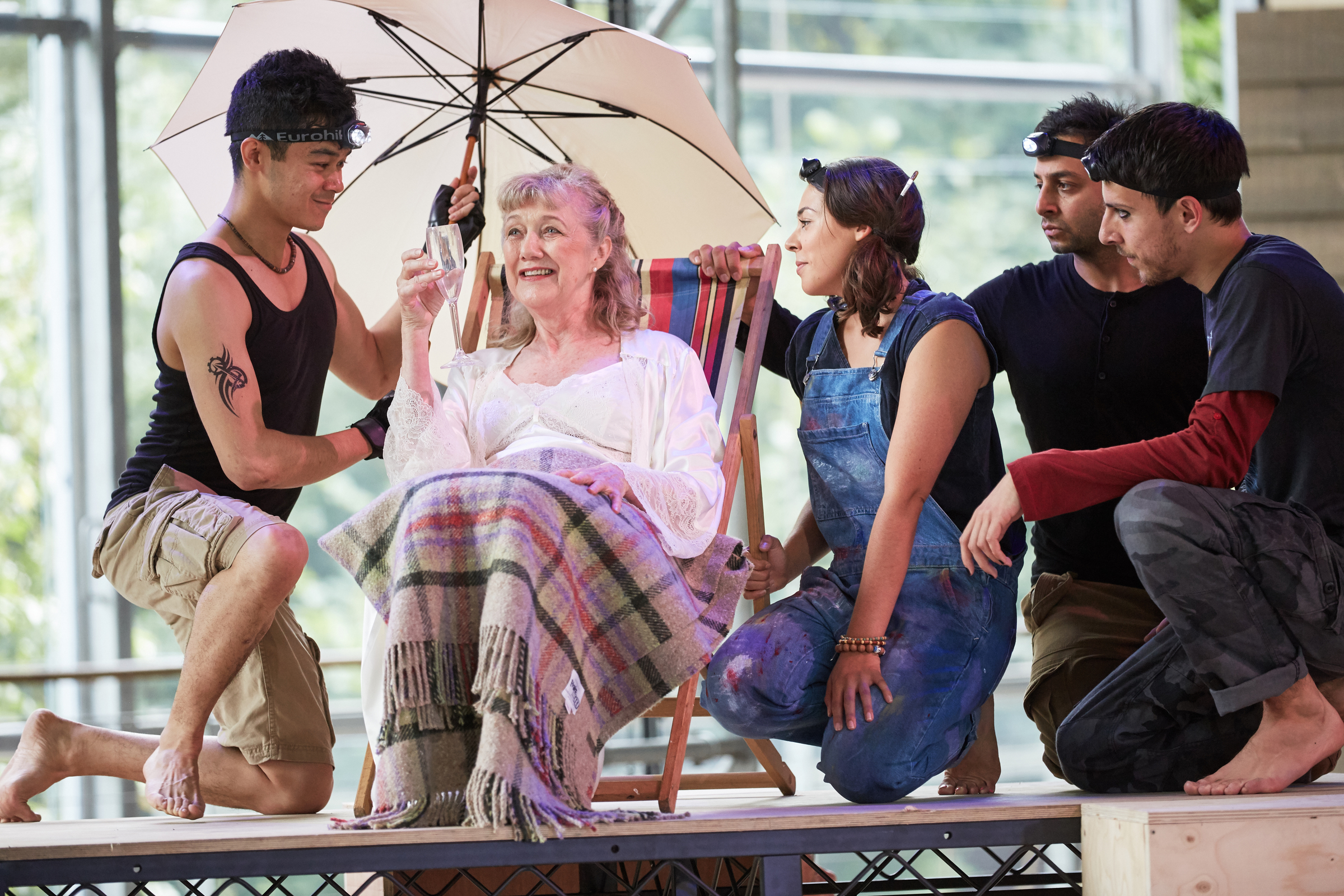
It is not often that two artists of unimpeachable genius can be brought together to create something that excels their individually created works, but such is the case with Mendelssohn’s music for A Midsummer Night’s Dream. In the concert hall, while convincingly beautiful, it can seem remote from the play, particularly if one is aware of many recent productions. However, put together with the sensitivity that Douglas Boyd and Owen Horsley have brought to the current presentation at Wormsley, we begin to see that Mendelssohn’s score is far more than incidental music. While it does not go so far as to become a singspiel the impact of the score makes a profound effect upon the action and the characterisation. Most operatic versions of Shakespeare are so far removed from the original as to be works in their own right but here we are faced with a combination which regularly seems to exceed either. The final moments alone attest to this. Puck’s closing speech can seem a little flippant, a call for applause, but here, underpinned by Mendelssohn it has a far deeper spiritual impact. The only other time I can recall anything similar was in Peter Brook’s famous RSC production where give me your hands meant literally that and the cast went through the audience passing the peace. A magical moment, which was echoed at Wormsley. This should not imply that the whole was over serious. The comic moments, focused on more cleanly with the abridged text, were newly minted and genuinely funny. The regional accents for the mechanicals worked well, with Chris Nayak’s Wall particularly effective. Using David Rintoul and Marty Cruickshank as both Theseus/Hippolyta and Oberon/Titania may be encountered quite often today but was made to highlight the parallelisms in the text and across the couples. Their age also gave weight to their presence and authority. Oliver Johnstone’s Puck and David Collings Egeus/Philostrate were finely etched.

Dream 2

Placing the Garsington Orchestra on stage not only ensured we could hear all the detail of the score but helped focus the attention of the audience. All too often in the theatre, once the actors have disappeared the audience starts to shuffle or whisper. With Douglas Boyd centre stage there was no hint of sound, even during the long nocturne at the end of act one. I am not aware that this production is being recorded but it will be a great pity if it is not.

Moreover the venture is promised to be the first of a series and we can look forward to a danced interpretation of Haydn’s The Creation next year.

If you missed the sold out performances of The Dream at Wormsely you may be able to catch it at the Queen Elizabeth Hall on 22, 23, 24 July and at the Royal Shakespeare Theatre, Stratford upon Avon, on 26 July.

All Saints, Hastings: Organ Concerts

Monday 13 July 2013

Martin Setchell launched the 27th season of Organ Concerts with a wide ranging and highly enjoyable programme before a large and enthusiastic audience. Some years it takes a few weeks for numbers to grow but there was no problem last night, which augers well for the following seven weeks.

Martin Setchell

The first half was more classically orientated if not over serious, opening with Elgar’s Imperial March and Bach’s G major Prelude and Fugue BWV541. He brought a restrained approach to both, with careful articulation and sensitive registration allowing clarity of texture, though tempi were on the slow side.

Two of Schumann’s Studies in Canonic Form brought a more relaxed, romantic approach before an enthusiastic Tromba solo for Hollins A Trumpet Minuet. The first real triumph of the evening came with Bossi’s Scherzo in G minor. This may be familiar but the articulation of the arpeggios and the lightness of touch was remarkably effective.

Those of us who know Wagner well in the opera house tend to be wary of transcriptions and the Pilgrims’ Chorus from Tannhauser was no exception. While much of it works well there were bars which seemed out of place in the line of the music and the conclusion was odd to say to least. I don’t blame Martin Setchell, I suspect Liszt who tends to mess around for his own purposes!

The second half may have looked lighter but was if anything more succinct and successful, opening with a splendid Handel in the Strand before three dances from Edward German’s incidental music to Henry VIII. Less familiar than the Merrie England dances, these are none the less wonderful pieces, the Shepherd’s Dance particularly apt for a summer evening.

Given the age range of the audience I suspect that most of us were singing along quietly to The Lost Chord which, as the soloist noted, works very well as an organ arrangement. But it hardly prepared us for the spiky jazz syncopations of Mons Leidvin Takle’s Blues Toccata. This was a wonderful tonic after so much that was familiar, though it was not the end. Ever one to entertain, the final piece was his own Wedding March Extraordinaire which collates not only Wagner and Mendelssohn but Suppe, Bizet and Sousa, leaving everyone with a smile. The encore – the Drinking Song from La Traviata – seemed a little superfluous after this but was welcomed.

Next week Daniel Cook from Westminster Abbey.

Garsington Opera: Cosi fan tutte

Garsington Opera at Wormsley, 8 July 2015

Cosi Gars 1

With the exception of the fine Figaro from John Cox, recent Mozart productions by Garsington Opera have, to say the least, been questionable, but this reimagining of Cosi from John Fulljames and Douglas Boyd is about as good as it gets.

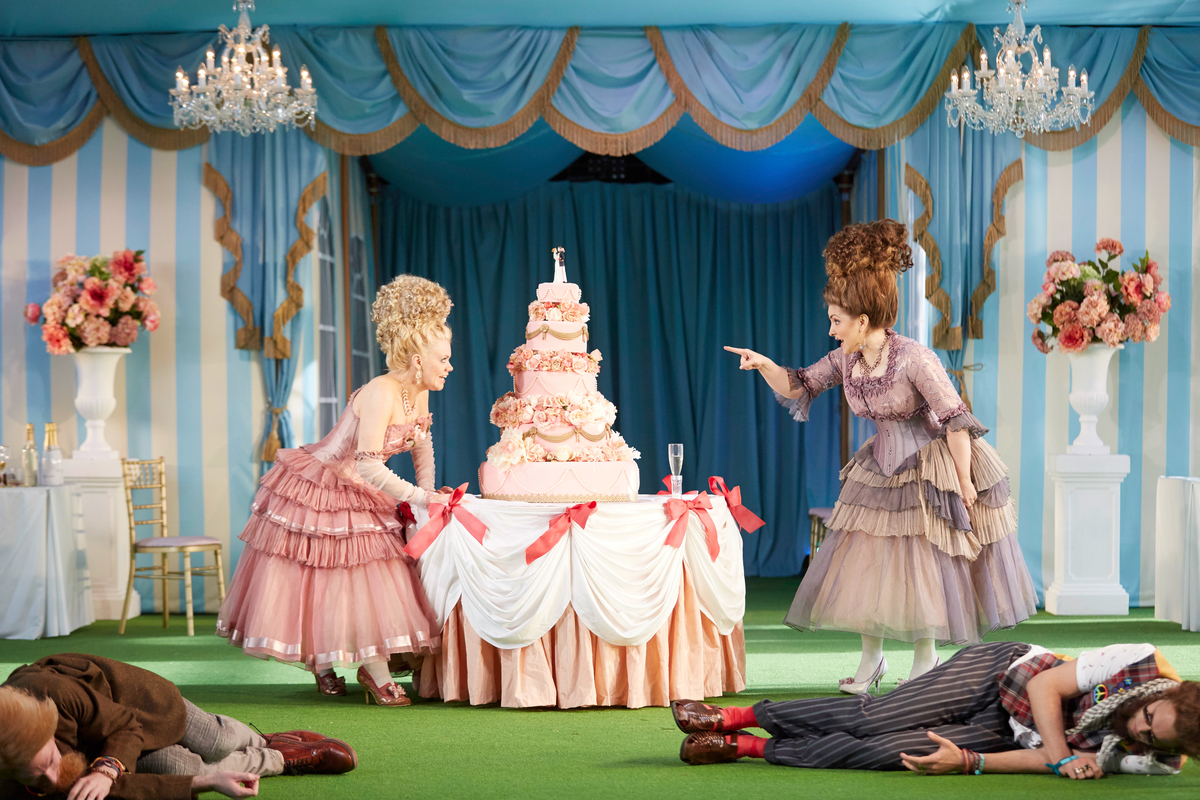
Setting the whole evening within a wedding celebration could seem yet another director’s concept but in practice it works splendidly. At no point does the action seem strained and the unfamiliar circumstances, the endlessly free flowing alcohol and the loss of inhibitions all make the unlikely events seem all the more credible. Even the outlandish costumes – the younger women in eighteenth century dresses and vast wigs – are not too far-fetched. Anyone who has seen a few episodes of Don’t Tell The Bride will know that!

Within the unfolding events of the wedding the two couples are put through their paces by a cynic who has seen it all before and an organiser – Despina – who is used to playing games. What proves so convincing is the quality of the characterisation which unfolds. Where at the start there is little to choose between them, the moral character of each develops before us, until the conclusion – though startling – is in retrospect inevitable. Kathryn Rudge’s Dorabella is a fiery individual, out to enjoy herself, and Smanie implacabili is hurled across the stage with passion. It is no wonder that she is easily seduced by Ashley Riches’ louche Guglielmo. As he draws her on they start to undress and their off stage sex is clearly happening. In contrast Andreea Soare’s beautifully sung Fiordiligi remains moral and unmoved, her Come scoglio the heart of her character. Robin Tritschler’s Ferrando is equally uncomfortable with the games until he starts to realise that maybe Fiordiligi has more to offer than the flighty Dorabella. It comes as little surprise in the final moments to find Fiordiligi and Ferrando together, leaving a distraught Guglielmo and Dorabella to face up to what they have done and lost.

Through all of this Douglas Boyd keeps the score moving with a sense of attack and immediacy which focuses on the narrative rather than allowing singers to indulge themselves. This does not mean that it is ever rushed or over-hasty. Ferrando’s un’aura amorosa is lovingly phrased, and there are many moments of real intimacy even in the extrovert surroundings of the wedding breakfast. Above all, the work is taken seriously. This may be a drama giocoso but it is not a light comedy. Lives are broken here – and though the young people may be able to pick up and start again, they will never be the same afterwards. Though Neal Davies’ avuncular Don Alfonso may set the games in progress, it is the young couples themselves who see them through and there is never any sense that he is a puppet master. If things end unhappily then Don Alfonso has proved his point.

Cosi Gars 2

Is it simply the mishaps of an over-enthusiastic wedding? Possibly, but then life is full of events over which we think we have control, only to learn later that maybe we didn’t. Mozart’s genius is to show us the mistakes before we make them.