ENO announces joint recipients of the ENO Charles Mackerras Fellowship

  • Conductors Toby Purser and Matthew Waldren appointed as joint recipients of the ENO Charles Mackerras Fellowship. This is the first time that the award will be shared by two conductors.
  • The award is a joint initiative between ENO and the Philip Loubser Foundation, and celebrates the legacy of Sir Charles Mackerras.
  • The ENO Charles Mackerras Fellowship offers exceptionally talented young conductors the opportunity to work and develop at ENO, mentored by ENO Music Director Mark Wigglesworth.
  • Former recipients of the ENO Charles Mackerras Fellowship include inaugural recipient Gergely Madaras and current ENO Charles Mackerras Fellow Fergus Macleod.

English National Opera (ENO) today (26 January 2016) announced conductors Toby Purser and Matthew Waldren as the joint recipients of the ENO Charles Mackerras Fellowship. They will take up their positions in September 2016. Both Toby and Matthew will have the opportunity to assist on ENO productions, and will have full access to the casting, staging and production departments at ENO alongside the opportunity to travel with the Music Director and make important contacts across the international opera scene.

A final shortlist of six international candidates interviewed and auditioned for the Fellowship in January at Henry Wood Hall. The auditions involved rehearsing with singers and the ENO Orchestra, who also provided feedback on each candidate. On the panel were Mark Wigglesworth (ENO Music Director), Martin Fitzpatrick (ENO Head of Music), Sophie Joyce (ENO Head of Casting), Susan Bullock (singer), Janice Graham (ENO Orchestra leader) and David Nice (arts journalist). ENO Senior Artistic Advisor John McMurray, Michael Loubser and three board members from the Philip Loubser Foundation also oversaw the process in an advisory capacity.

Matthew Waldren said: “Having assisted at ENO last year, I am thrilled to have been asked to return to the Company as a Sir Charles Mackerras Fellow. To work further with this world-class orchestra, chorus and team of musicians – and to be supported and guided by Mark Wigglesworth – will be an absolute privilege. I relish the opportunity of contributing to the artistic excellence of ENO, and look forward to embracing the many opportunities that this Fellowship presents.”

Toby Purser said: “Having had the pleasure and privilege of both assisting and conducting at ENO, I am absolutely thrilled to have the opportunity to begin a more formal relationship with the Company. The chance to work with this wonderful Company, its superb orchestra and chorus and in this beautiful theatre under the guidance of Mark Wigglesworth and the ENO team is one that I am already looking forward to eagerly.”

ENO Music Director Mark Wigglesworth said: “The English National Opera and the Philip Loubser Foundation partnership is unique in enabling seriously gifted conductors a real opportunity to develop. The panel was unanimous that both Matthew Waldren and Toby Purser revealed the right combination of potential and skill to benefit from this amazing opportunity, and so sharing the Fellowship was the inevitable and exciting outcome of this year’s audition process. I look forward to welcoming these two exceptional talents to English National Opera.”
O Magnum Mysterium

Noteworthy Voices, St Nicholas, Pevensey, 23 January 2016

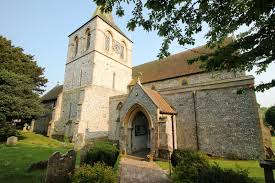
St Nic Pevensey

The first in the new season of events to celebrate the 800th anniversary of the founding of St Nicholas Church in Pevensey certainly set a very high standard. Noteworthy Voices have only been singing together for a year, under their conductor Ansy Boothroyd, but already have established a high quality a cappella sound and balance.

Their performance was arranged around three very different settings of the verse O Magnum Mysterium opening with the familiar version by Victoria. The key structure in this work is allusive to say the least but the group found no difficulty in bringing the musical lines into play and setting the tone for the evening which balanced beauty of line against spiritual reflection.

Many may be only too happy that Christmas is over but we are still, liturgically, in Christmas until Candlemas so it was fitting to hear carols as part of the concert. Two settings of the Coventry Carol – the familiar one bringing great clarity and fine dynamic control, while the recent setting by Philip Stopford is gentler, more obviously a lullaby – sat comfortably alongside Tchaikovsky’s The Crown of Roses and the close richness of Pierre Villette’s Hymne a la Vierge.

The second setting of O Magnum Mysterium was by Poulenc, the ravishing beauty of the spun musical texture being finely honed by the group. If Cornelius’ The Three Kings lacked balance between soloist and choir, there was less problem in Jesus Christ the Apple Tree where Zoe Harris floated the top line with ease above the massed voices.

The third setting of O Magnum Mysterium, by Morten Lauridsen, with its gentle enfolding of the listener, proved to be as successful as the fine interpretation of Tavener’s The Lamb.

It was possibly a slight miscalculation to end with arrangements of two popular Christmas songs. They were actually very complex pieces in terms of both pitch and rhythm, and after the splendid spiritual intensity we had experienced earlier it was a pity to end of a less successful, if bright and happy, note.

The group will be performing again soon. They are certainly worth following and details can be found at www.noteworthyvoices.co.uk

ENO: Akhnaten

Phelim McDermott returns to ENO to direct a once-in-a-generation staging of Philip Glass’s iconic opera

Improbable Theatre Company’s Artistic Director Phelim McDermott returns to ENO to direct Philip Glass’s Akhnaten. This iconic opera received its UK premiere at ENO in 1985 and has not been performed fully-staged in the UK since ENO’s 1987 revival. One of the most exciting cultural events of 2016, The Guardian has described these performances as “a once-in-a-generation chance to hear Glass’s score in the theatrical flesh”.

Watching Akhnaten is a visually spectacular and powerfully mesmerising experience. The opera explores the life and religious convictions of the Egyptian pharaoh, and uses texts drawn from ancient hymns, prayers, letters and inscriptions sung in their original Egyptian, Hebrew and Akkadian. It forms the last of Philip Glass’s trilogy of ‘portrait’ operas in which he explores the lives of great historical figures in the fields of science (Einstein), politics (Gandhi) and religion (Akhnaten).

The UK premiere of the opera by ENO in 1985 marked the beginning of a very special relationship between Philip Glass and the Company. Phelim McDermott, described by The Guardian as “one of the most energising and provocative forces in British theatre”, has since directed the London premiere of Glass’s Satyagraha (2007) and the UK premiere of The Perfect American (2013) for ENO. Described by The Times as “a masterwork of theatrical intensity and integrity”, the UK premiere of Satyagraha broke box office records for contemporary opera, making it the most popular contemporary work to have been performed by ENO.

Conductor Karen Kamensek, Music Director at Hannover’s Staatstheater since 2011, makes her ENO debut. An expert in the work of Philip Glass, she premiered his work Orphée with the Brooklyn Philharmonic Orchestra in New York. She has also conducted the world premiere of Glass’s Les Enfants Terribles at the Spoleto Festival in the USA, and his music for Büchner’s play Woyzeck at the New York Shakespeare Festival.

Countertenor Anthony Roth Costanzo will return to the London Coliseum to take the title role in this production. Winner of Placido Domingo’s Operalia competition in 2013, he made his ENO debut in Peter Sellars’s 2015 production of The Indian Queen; his performance as Ixbalanqué was described as “superb” by theartsdesk.com.

British Mezzo soprano Emma Carrington will make her ENO and role debuts as Akhnaten’s wife, Nefertiti. She has previously performed at opera houses in the UK and around the world, including with Opera North, Welsh National Opera, Grange Park Opera and at the Buxton Festival.

English soprano Rebecca Bottone will sing the role of Queen Tye, Akhnaten’s Mother, for the first time. She has previously appeared at English National Opera in Gilbert and Sullivan’s The Gondoliers (2006, 2007) and Ligeti’s Grand Macabre (2009).

British baritone James Cleverton returns to ENO to debut the role of General and future Pharaoh, Horemhab. He first performed with ENO in 2009 singing the role of Oppenheimer in Penny Woolcock’s production of John Adams’s Doctor Atomic.

Clive Bayley will sing the bass role of Aye, Nefertiti’s father and advisor to the Pharaoh, for the first time. His regular appearances with ENO include an “impressive” (The Stage) performance as Daland in The Flying Dutchman and “outstanding vocally and dramatically” (The Daily Mail) appearances as Coppelius in The Tales of Hoffmann (both 2012).

Completing the cast are Colin Judson as the High Priest of Amon and Clare Eggington, Alexa Mason, Rosie Lomas, Anna Huntley, Katie Bray and Victoria Gray as the six Daughters of Akhnaten.

Brighton Festival announces major new commission for 2016 inspired by untold story of First World War

Brighton Festival – alongside commissioning partners 14-18 NOW and Royal Pavilion & Museums, Brighton & Hove – has today announced a major new commission inspired by the untold story of the hundreds of thousands of men who travelled from India to fight for the Allies in the First World War.

Created by performance company Nutkhut and brought together by a creative team that includes designer Tom Piper (Tower of London poppies), the ambitious, large-scale, immersive outdoor experience Dr Blighty is the latest event revealed for the 50th edition of Brighton Festival in May 2016.

More than a million men travelled from India to fight for the Allies during the First World War, their collective experiences constituting one of military history’s great untold stories. Between 1914 and 1916, over 2000 Indian soldiers wounded on the Western Front would be brought to a temporary hospital housed in Brighton’s Royal Pavilion Estate.

This major new collaboration, Dr Blighty, recalls this episode in Brighton’s wartime history, bringing the experiences of the soldiers – and the locals who came to care for them – movingly back to life via an immersive walk-through installation across the Royal Pavilion Estate. Animated by actors and enhanced by immersive installations, enthralling video projections, ambient soundscapes and theatrical interludes, inspired by letters the soldiers sent back home, the event will seek to capture the essence of the hospital and those who recuperated here.

The hospital installation will be complemented by a series of related performances and participatory outreach activities, drawing parallels with contemporary events while bringing this moving episode in Brighton’s history back to life. For four nights, a spectacular after-dark production will incorporate video projections on the Royal Pavilion, evoking memories of a very distant home for the soldier convalescents. In addition, the Philharmonia Orchestra will perform in a special ticketed concert at Brighton Dome with some of India’s leading contemporary musicians, marrying Western and Eastern classical music traditions.

Ajay Chhabra, Artistic Director of Nutkhut says: ‘Thousands of letters were written from the Western Front back home to wives, mothers, daughters and sisters, and it’s the emotion within these letters that Dr Blighty is trying to bring into the public domain. They, alongside the propaganda and the censorship, give us an insight into the lives of these young men, and give these many anonymous soldiers a voice. The project will essentially tell a 100-year-old story, and make it a contemporary one for new audiences.

Andrew Comben, Chief Executive, Brighton Dome & Brighton Festival said: ‘This is an important story, both in the history of Brighton & Hove and in the wider context of the First World War – one which we think deserves to be better known. In Brighton Festival’s 50th year, it’s even more appropriate that we present this piece now and I am delighted to be working with our partners to bring it to fruition.’

Jenny Waldman, Director, 14-18 NOW, said: ‘We are thrilled to be working with Brighton Festival to present this ambitious project with an amazing group of artists brought together by Nutkhut, which will offer audiences an insight into the little-known and remarkable story underpinning the city’s involvement with the First World War.

Brighton Festival marks its milestone 50th year in 2016 with the pioneering artist and musician Laurie Anderson as its Guest Director. Established in 1967, Brighton Festival has become one of the city’s most enduring symbols of inventiveness and celebration over the past half century. Renowned for its pioneering spirit and experimental reputation, Brighton Festival’s inaugural programme controversially included the first ever exhibition of Concrete Poetry in the UK, alongside performances by Laurence OlivierAnthony Hopkins andYehudi Menuhin. Now one of Europe’s leading arts festivals, Brighton Festival is known for its ambitious and daring programme that aims to make the most of the city’s distinctive cultural atmosphere, drawing some of the most innovative artists and companies and adventurous audiences from the UK and around the world.

Full programme details of Brighton Festival 2016 will be announced on 17 February 2016.

London Philharmonic Orchestra

The Dome Brighton, 16 January 2016

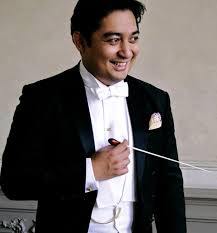
Adrian Prabava

Indonesian conductor  Adrian Prabava was making his debut with the LPO at Brighton last night and very impressive it turned out to be. He led the whole evening from memory and showed a warm relationship with his players which allowed them some freedom while maintaining an overall control and tight sense of rhythm.

This was particularly true of Beethoven’s Seventh Symphony whose dance rhythms were tight and joyous throughout. Though tempi, particularly in the final movement, were brisk, there was never any sense of rushing the players whose articulation was well up to the demands he made. The Allegretto was sombre without being too serious and set the scene for the extrovert enthusiasm of the Presto. Changes of tempi and dynamic were all carefully controlled without bring too rigid.

The opening Overture to Lucio Silla is hardly a masterpiece even if it is early Mozart. While well played, the size of the orchestra was over heavy for it and made for a lack of internal detail where the woodwind should have shone through more clearly.

The only problem of the evening came with Brahms’ Second Piano Concerto. It was obvious from some of the orchestral passages and the sublime cello solo (superbly played by Kristina Blaumane) that Adrian Prabava had a different and more subtle approach to the work than the soloist Stefan Ciric. His approach was forthright and aggressive from the start with little sensitivity to the nuances of the score or the possibilities it has for inner tensions and sudden moments of radiance. He seemed to put passion and intensity (to say nothing of volume) above all else. This may be acceptable in Liszt or Prokofiev but seemed ill judged for Brahms. The opening of the final movement brought some lightness of texture but even here it soon reverted to a strong dynamic intensity. His body language throughout was very tense and this showed in the playing. Most of the audience seemed to relish the approach, though there were voices overheard in the bar at the interval who seemed as disconcerted as I had been by the apparent disparity between conductor and soloist.

The next LPO concert at the Dome is on Saturday 27 February 2016 with works by Mendelssohn, Strauss, Khachaturian & Stravinsky.

BBC Symphony Orchestra

Barbican Hall, 15 January 2016

For many years now I have thought of Sakari Oramo as one of our finest interpreters of Elgar and his handling of the Second Symphony certainly lived up to expectation. He finds so much life and energy in the work without it ever becoming raucous or course, which it so easily can in insensitive hands. Moments of introspection in the first movement never cloud the vitality of the musical line and the wonderful flourish of the end brought a smattering of applause.

The second movement had a nobility to it which countered any sentimentality that might have crept in and he is unafraid of the radiant climaxes within the score which come close to Mahler in their impact. The Rondo was clipped and exhilarant – even dangerous in its impact at times – with great clarity from the brass players. If the final movement felt a little calmer at the outset this was something of a mirage for it built in tension and authority to mirror the darker passages of the Rondo. It is difficult to believe the work had a difficult birth – but then it is far more forward looking than earlier Elgar as this reading clearly showed.

The evening had opened with a finely honed reading of Butterworth’s A Shropshire Lad, the ultra-hushed ppp at the start almost unheard. Sakari Oramo is not afraid of the lush sentimentality which the work allows and he encouraged his soloists to indulge themselves in the beauty of the lines spun.

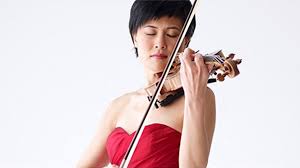
Jennifer Koh

Between these two we had the UK premiere of Anna Clyne’s The Seamstress. This is a disconcerting title which I admit I don’t really understand for the work is a well-constructed single movement violin concerto. Jennifer Koh had given the world premiere and brought warmth and sensitivity to a work which is commendably easy to take in on a first hearing but I suspect will more than merit a return visit. There are hints of minimalism throughout, with rolling, wavelike figures returning to underpin the narrative. A longer slow pizzicato section falls like exaggerated rain drops, turning into a brief but violent storm, which eases itself into a more aggressive confrontation between soloist and orchestra. When the calm returns we seem to be in a classically refined slow movement with hints of a gentle romanticism. A bridge passage takes us to a lyrically expansive melody and more of the rolling measures we had encountered at the opening until the whole quietly fades. There are hints of Irish folk music present throughout and the sense of a strong narrative line, which is never overtly spelt out, makes it all the easier to engage with on a first hearing. I hope the BBC will let us hear it again – probably too late for this year’s Proms but you never know!

St Nicolas and St Wilfrid’s Churches, Pevensey

A ‘Noteworthy’ Concert 
23rd January at 7:00PM – Tickets £6

Music-lovers who enjoy hearing sublime choral singing in a church that enhances the pleasure, will not want to miss Noteworthy Voices’ Epiphany Concert on Saturday 23rd of January in St. Nicolas Church, Pevensey. Founded by chorister Richard Long, Noteworthy is a mixed choir of about 20 members. Their fine ‘a cappella’ debut in 2015 was highly rated by local audiences.

As Epiphany is the season of gladness, hope and light, Musical Director Ansy Boothroyd has chosen a beautiful programme of atmospheric and joyful pieces: Morten Lauridsen’s much-loved work ‘O Magnum Mysterium’ is complemented by two earlier versions from Victoria and Poulenc. Other delights in store include works by Tavener, Grieg and Tchaikovsky as well as favourite modern classics such as Peter Gritton’s ‘Winter Wonderland’: rich close-harmony at its very best.

‘This is our first concert in St. Nicolas Church’s 800th anniversary year and we are delighted to welcome ‘Noteworthy’ back to begin our season of concerts, after a very successful first visit last year,’ says George Stephens, Deputy Churchwarden.

The concert is at St Nicholas Church Pevensey, on the 23rd of January 2016 at 7.00p.m. Tickets £6 on the door. Student concessions.

The St. Nicolas Concerts are supported by Gaby Hardwicke, BPE Business Consultants, Priory Court Hotel, Visick Cars, Carr Taylor Wines and Sunshine Music.

For more information see: www.noteworthyvoices.co.uk., or www.stnicolas800.org.uk

Bournemouth Symphony Orchestra

Lighthouse, Poole; 13 January 2016

Liadov’s folk tale-inspired programme piece Kikimora is a sparky concert opener, new to me and, I suspect, to most of the audience in the packed Lighthouse.  Full of unexpected woodwind and other flourishes, it was played with colourful clarity and a lot of wit.

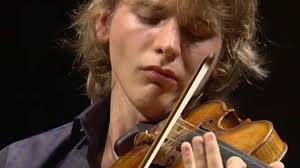
Valeriy Sokolov

Shostakovich’s unusually structured first violin concerto totally rejects any hint of classicism by opening with a long slow movement. It isn’t easy to sustain but Kees Bakels – a baton-free conductor with an un-histrionic focus on beating time – ensured that the orchestra engaged fully with the soulful enigmatic mystery of Valeriy Sokolov’s lyrical account of the solo violin part. Sokolov then delighted me and (I think) most others present in his contrasting take on the virtuosic passages of high speed Schostakovichian jazzy rhythms which packed exactly the right level of manic melodic wildness with plenty of complementary woodwind detail in the latter three movements – especially the scherzo – and Sokolov’s spectacular, and diabolically difficult, double stopping in the cadenza was delivered with terrific panache.

Notwithstanding the ongoing debate about Beethoven’s metronome markings and intentions, I don’t accept that the opening movement of the glorious Fifth Symphony should be a gallop. The first two bars are three crotchets and a minim and the movement is marked allegro con brio. Had Beethoven meant three semiquavers and a quaver I’m pretty sure he would have written that and marked it prestissimo. In this performance Bakels pushed the orchestra so fast that far too much of the detail became an aural blur which was a pity. The latter three movements worked much better with a rich warm sound, especially from the lower strings in the andante; and what fun – after they’ve sat waiting for three movements – to have the trombones stand when they eventually played. It certainly drives Beethoven’s triumphant message home as the piccolo, perfectly played here, weaved its excited magic at the top of the texture. SE

THE SCHUMANN PROJECT – OXFORD LIEDER 2016

Schumann’s complete songs will be the focus of the fifteenth Oxford Lieder Festival (14-29 October 2016). The Schumann Project, which falls on the 160th anniversary of the composer’s death, places his works for voice alongside an array of his other works and songs by his friends and contemporaries. The two-week Lieder Festival, which won an RPS Award for the 2014 Schubert Project, encompasses chamber and choral works, study events, artistic partnerships and world-class musicians. It will explore Schumann’s life and times, his friends and contemporaries, his influences and his legacies, and his literary and artistic interests; all illuminating and casting a fresh light on his remarkable body of songs.

Graham Johnson returns for two lecture-recitals exploring Schumann’s life and music; study days will look at Schumann’s fascination with Bach, and at the political upheaval and revolution of the 1840s; Wolfgang Holzmair will lead the residential mastercourse; and there will be film screenings, masterclasses and talks.  2016 is also the 120th anniversary of Clara Schumann’s death; her 29 songs will be included in the Festival.

Christian Gerhaher and Gerold Huber will give the opening recital of the Festival, and other artists appearing in Oxford for the first time include Anne Sofie von Otter, Bo Skovhus and Juliane Banse. The roster also features Thomas Allen, Sarah Connolly, Felicity Lott, James Gilchrist, Sophie Karthäuser, Christopher Maltman, Mark Padmore, Christoph Prégardien, and Roderick Williams, alongside many other leading artists and emerging stars.

Passes for the entire festival cost £460 and a week pass £280 – available now from www.oxfordlieder.co.uk / 01865 591276. General booking opens 1st June.

www.oxfordlieder.co.uk