The Dublin Legends

White Rock Theatre, Hastings, 13 February 2016
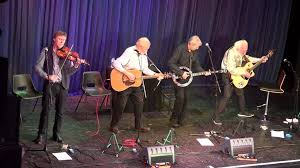
Dublin legendsWe are used to the idea of tribute bands these days but you really need to ignore that when you are in the company of The Dublin Legends – for this is the real thing. The connections between Sean Cannon, Paul Watchorn, Gerry O’Connor and Eamonn (who was unfortunately ill on this occasion though his place more than adequately taken by Shea Cavanagh) are so closely interwoven that there is a continuous outpouring of the joy of traditional  Irish music making – from a raucous rendition of Wild Rover to the intimate sentimentality of Galway Shawl.

And what is more, you certainly get value for money with almost two hours of continuous music making. A couple of traditional dance numbers opened the first half before we were launched into Hot Asphalt. This unleashed a thread of familiar numbers which gave a ready excuse for us to join in the choruses – I’ll tell me ma, Mountain Dew & Black Velvet Band – led by Paul Watchorn on banjo.

But this was not just a trip down memory lane. The dances which followed, including the Races of Mullingar, showed off the virtuosity of the players as well as their popular instincts. This was equally true of the Dawning of the Day and later Galway Shawl with Sean Cannon at his lyrical best deep in the Irish countryside.

After a fine banjo solo from Gerry O’Connor – who seems equally at home on banjo and fiddle – we sang our way to the interval with 7 Nights Drunk & When the boys come rolling home.

The second half followed the same pattern, opening with All for me grog (a gentle allusion to the amount of time spent in the bar – though as there was no draft Guinness I was surprised there was not minor riot) and Working on the railway. A Belfast hornpipe and Flowers of Redhill led into Galway Races and Dominic Behan’s Liverpool Lou.

The evening included two more recent songs by Pete St John – The Fields Of Athenry and Ferry Man – but concluded with a run-down of the ones most of the audience seemed to be waiting for – Rocky Road to Dublin, Wild Rover,  & Whisky in the Jar.

As an encore – before joining the audience in the foyer – we all joined in a repeat of the Wild Rover and, possibly to calm us down a little, a gentler rendition of Molly Malone, which those of us of a certain age have sung since our Primary School days.

The theatre was very comfortably full and the audience enthusiastic. Maybe they should come again – we’ll be ready!
 

CDs & DVDs: February 2016

THE BRITANNIC ORGAN  VOL 11 – Historic Improvisations by British & German organists
Welte-Philharmonie organ, Museum fur Musikautomaten, Seewen.
OEHMS  OC 850  (2 CDs) 74’41 & 68’22

I continue to enjoy the releases in this series. They can be savoured on different levels – as a record of the reproducing technology, of the organ itself, as a social history document and here as genuine “recordings” of expert exponents of the art of organ improvisation.

The first CD contains recordings from rolls of William Wolstenholme, Alfred Hollins and Edwin Lemare – all of whom are very familiar names from the British concert organ scene. It was not easy to pick out much familiar thematic material on either disc. Here, though, I particularly enjoyed Lemare’s improvisation on The Swannee River (Old Folks at Home) and the more extended Improvisation on a theme of Alfred Hollins. The longest track is Wolstenholme’s Ich hatt’ einen Kameraden. These longer improvisations provide an excellent range of contrasting registrations.

The German improvisers on CD2 were not familiar to me. They are Carl Hofner, Kurt Grosse, Paul Mania, Otto Dunkelberg & Henry Burkard. Familiar material can be heard in Mania’s Fantasie uber Wagner’sche Themen, the longest improvisation on this disc. His Gavotte is much more playful, as is Burkard’s  Stummfilm-improvisation – which really does conjure up silent movie scenes. The other familiar thematic material is to be found in Mania’s Fantasie uber alte niederlandische Lieder which includes the familiar Pilgrim’s hymn. Another fascinating volume.


Mahler: Symphony No2 (arr for piano four hands)
Maasa Nakazawa & Suhrud Athavale
NAXOS 8.573350

Once one has got used to the dynamic range of four hands at one piano to represent the might of Mahler’s orchestration for the Resurrection Symphony this actually works really well and allows us to hear many details which pass unnoticed in the vast canvas, particularly of the final movement. At other times it is interesting to hear just how close the musical lines are to each other, with the reduced dynamic helping us to hear afresh the intimacy of much of the writing. This was obviously a labour of love for Bruno Walter making the original arrangement at a time when few would be able to hear the work live, but even today it has an important place among Mahler recordings.


Philip Glass: Glassworlds 3; Metamorphosis
Nicolas Horvath, piano
GRANDPIANO GP691

This collection includes Metamorphosis I – V as well as the extended Trilogy Sonata based on Satyagraha.  Philip Glass’ compositions transfer easily to the piano and I found this a very appealing recording. All the more so as it includes a number of short works we have not heard on record before, including the very early Piano Sonatina which predates minimalism.


Copland: Billy the Kid & Rodeo
Colorado Symphony, Andrew Litton
BIS 2164

A popular collection of familiar pieces with the addition of the rarer An Outdoor Overture from 1938, the same year as Billy the Kid. All well played and given a bright intensity from the Colorado Symphony.

Chopin: Piano Concertos  51621 & 2
Joseph-Maurice Weder, Berliner Camerata
OEHMS OC 1831

This recording uses a string quintet arrangement rather than full orchestra to enable us to hear a different balance and so reconsider the impact of the orchestration as it affects the way we listen to the piano solo. Where many may consider Chopin’s orchestrations to be limited it is clear from this cd that his harmonic choices and lyrical development are quite secure and not outstripped by the relative enthusiasm of the solo writing.

Saint-Saens: Cello Concertos 1 & 2; Carnival of the Animals
Bergen Philharmonic Orchestra, Neeme Jarvi
CHANDOS CHSA 5162

This is a fine collection of works giving us over 75 minutes of music. The Carnival of the animals and the cello concertos may be familiar but the addition of the tone poem Africa and the Caprice Waltz Wedding Cake make it doubly welcome.

Respighi: Antiche Danze ed Arie; Gli Uccelli
Munchner Rundfunkorchester, Henry Raudales
CPO 777 233-2

Gli Uccelli  may be very familiar – and is well played here – but the Antiche Danze ed Arie are less so and all the more welcome in a gently understate performance from Munich Radio.

The Melodians

a community choir of all ages and experiences.

We have two aims – to enjoy a good sing together and to raise money for St Michael’s Hospice. 

melodians


Our concerts are eclectic.

We love all music and try to include many different styles in each performance from popular classics to show tunes, pop songs and unusual items you may not have heard before. 

The singing will be interspersed with instrumental items on the organ and piano, and we often make the audience do some work too. We want you to leave our concerts with a smile on your face!  


Our Summer concerts will be on
11th June 7pm at
St Peter & St Paul’s Church, Parkstone Road Hastings.
And on the 25th June 7pm at
Bexhill United Reformed Church, Cantelupe Road Bexhill.


The entrance for both concerts is £5 each and there will be a retiring collection, all of which will go to support our local Hospice. 


Come and join us for a marvellous musical journey from the Cornish coast to the Moon by way of King Arthur’s Court and Rydell High, featuring music by Mancini, Vaughan Williams, Beethoven and Billy Joel.

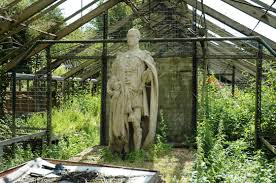
THE PRINCE ALBERT STATUE – Hastings

P Albert

Planning permission to erect the statue of Prince Albert on a new Portland stone plinth alongside the Town Hall is now in place. Funds for this community project are being raised by the Albert Statue Group.

To make a donation, or for information about the project, please e-mail:

albertstatue@outlook.com

An illustrated booklet, The Story of Albert and his Memorial, has been produced by Brian Lawes and Hastings Local History Group. This costs £3 and is available from BOOK-BUSTER, 39 Queen’s Road, Hastings (open 9am-6pm Mon to Sat; 10am-4pm Sun).

All proceeds from the sale of the booklet go towards the project.

ENO: The Magic Flute

London Coliseum, 5 February 2016

eno flute 16

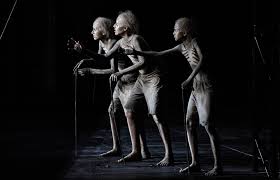
There are as many approaches to The Magic Flute as there are directors to stage them, but Simon McBurney’s has to be one of the most engaging of recent attempts. Visually exciting throughout, the videos and rapid lighting changes never inhibit the music. Added to this, the raised pit adds a cutting edge to the orchestral sound which is crisper than usual.

If some of the ideas wear less well as the evening draws on – the birds are fine the first time but after that lose their impact – the basic concept is sound and puts the complex narrative line to the fore.

The revival is also cast from strength. Allan Clayton may not look the dashing hero but he sings with easy lyricism and is a fine foil for Lucy Crowe’s radiant Pamina. James Creswell is a rock as Sarastro, not only in the gravitas of the voice but the authority he brings by his presence. Peter Coleman-Wright is a surprisingly elderly Papagano, though there is nothing in the text to preclude this, and his humour is more reserved than most other singers in this part. Ambur Braid certainly has the coloratura for the Queen of Night but sounded rather harsh edged on the first night. Hopefully it will settle as the run proceeds. Smaller parts are all well sung, particularly the three boys dressed – in this production – as old men.

The staging includes a large number of extras, some of whom are justified, some simply get in the way. The same is true of the use of the orchestra pit as an entrance – there are times when it works well and others when it distracts from the action. A little gentle rethinking here could smooth the transitions.

Mark Wigglesworth drives the score with enthusiasm and his chorus respond succinctly.

There are twelve more performances until 19 March 2016.

City of Birmingham Symphony Orchestra appoints Mirga Gražinyte-Tyla as its Music Director

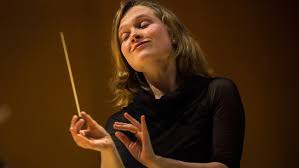
The City of Birmingham Symphony Orchestra (CBSO) is delighted to announce that Lithuanian conductor Mirga Gražinyte-Tyla has been appointed as its 12th Music Director, with effect from September 2016 for an initial three-year period.

Mirga

Gražinyte-Tyla made her debut with the CBSO in July 2015 and impressed the Orchestra so much that she returned last month to conduct a specially arranged concert featuring works by Debussy, Schumann and Sibelius. Following an extensive search process led by a committee made up of CBSO musicians, board members and management, and with strong support from Orchestra and audience alike, a unanimous decision was made by the board of trustees to invite Gražinyte-Tyla to be the CBSO’s next Music Director. She succeeds Andris Nelsons, who held the position from 2008-2015.

The CBSO is known for performing the widest range of orchestral and choral music, and Gražinyte-Tyla will continue this tradition in her role as Music Director. Her artistic plans with the CBSO will range widely from Mozart and Haydn to 20thcentury classics and works by living composers. Coming from the strong choral traditions of the Baltic states (her father is a choir conductor in Lithuania), and following her role in Salzburg, she will also lead opera projects in Birmingham and will work closely with Simon Halsey CBE, CBSO Chorus Director, on projects with the CBSO’s internationally renowned choruses. Full details of the CBSO’s 2016-17 concert season in Symphony Hall, Birmingham will be announced in April 2016.

Mirga Gražinyte-Tyla said:

‘Every single musician of the CBSO is an artist with great individuality and sense of responsibility. They are driven to be one of the world’s leading orchestras and their shared spirit for team work helps them to achieve this. I felt so at ease working with the Orchestra at the CBSO Centre and at Symphony Hall and I can’t wait to get started and to call these my homes too. I am also very excited about working with the CBSO family including its brilliant choirs led by Simon Halsey, and  getting involved with its extensive learning and participation programme both locally and further afield. I believe we will be a great team and really look forward to making music together.’

CBSO Chief Executive Stephen Maddock commented:

‘We are absolutely delighted to be appointing Mirga as the CBSO’s next Music Director. There was an instant chemistry between Mirga and our musicians, and the excitement in Symphony Hall at her concerts both on stage and in the audience was palpable. The CBSO is world-famous for its track record in finding brilliant young conducting talent: Sir Simon Rattle, appointed at just 25 years old, held the post for 18 years before moving to the Berlin Philharmonic. He passed the baton to the superbly talented Sakari Oramo (appointed at 30), who is now with the BBC Symphony Orchestra. Andris Nelsons (appointed at 28) had seven wonderful years here and has gone on to lead the Boston Symphony and Leipzig Gewandhaus orchestras. Mirga is 29 and is thrilling audiences wherever she goes: we can’t wait to start making music with her.’

Gražinyte-Tyla has been Music Director of the Salzburg Landestheater since 2015. She is currently the Assistant Conductor at the Los Angeles Philharmonic, where she was a Dudamel Fellow in 2012-13, and she takes up a new post of Associate Conductor from July 2016. She won the prestigious Salzburg Festival Young Conductors Award in 2012.

EMINENT BRITISH STARS COME TO GARSINGTON OPERA

Garsington Opera’s 2016 season, from 3 June to 17 July, will present Tchaikovsky’s powerful Eugene Onegin, Mozart’s great opera seria Idomeneo, Rossini’s sparkling L’italiana in Algeri, and an innovative collaboration with Rambert, one of Britain’s leading dance companies, with a unique realisation of Haydn’s The Creation combining music and dance.

Garsington Opera welcomes celebrated British artists of international distinction. Toby Spence (tenor) and Roderick Williams (baritone) make both title role and festival debuts, the former in Idomeneo and the latterEugene Onegin.  Michael Boyd (director), former Artistic Director of the Royal Shakespeare Company andTom Piper (designer), praised for his commemorative poppy installation, Blood Swept Lands and Seas of Redat the Tower of London, produce Eugene Onegin, conducted by Douglas Boyd (Garsington Opera’s Artistic Director).  Tim Albery (director) and Hannah Clark (designer), whose recent designs for Queen Anne at the RSC were critically acclaimed, produce Idomeneo with leading Swedish conductor Tobias Ringborg.  Will Tuckett (director), director of The Royal Ballet’s acclaimed production of Elizabeth, and George Souglides(designer) combine with distinguished Rossini expert David Parry (conductor) for a new production of L’italiana in Algeri.

Garsington Opera continues its policy of seeking out the very best singers from around the world and showcasing rising stars from Britain.  The distinguished Garsington Opera Orchestra, many of whom have been with the company for over 20 years, will be joined by the Garsington Opera Chorus, comprising emerging talent from the UK and beyond.

EUGENE ONEGIN

Based on Russian poet and author Alexander Pushkin’s novella, Tchaikovsky’s powerful and moving opera about youth and first love features British baritone Roderick Williams making his debut in the title role and Welsh soprano Natalya Romaniw making her role debut as the young heroine Tatyana.  Lithuanian mezzo-soprano Jurgita Adamonyt? sings Olga and Cardiff Singer of the World 2015 finalist Ukrainian tenor Oleksiy Palchykov sings Lensky.  The role of Prince Gremin is sung by international bass Brindley Sherratt.  They are joined by Louise Winter (Larina), Kathleen Wilkinson(Filippyevna) and Mark Wilde (Triquet).  Douglas Boyd conducts with Michael Boyd, a fluent Russian speaker, directing and Tom Piper designing.

IDOMENEO

War hero Idomeneo, to be sung by international opera star Toby Spence making his debut in the title role, promises the gods he will sacrifice the first person he sees in return for a safe passage. That person is his son Idamante, to be sung by Australian mezzo-soprano Caitlin Hulcup.  Added to the anguished love triangle between his son, the Trojan princess Ilia, performed by rising star Louise Alder, and Greek princess Elettra sung by Rebecca von Lipinski, a terrible struggle ensues between fatherly devotion, staying true to a promise and young love.  Timothy Robinson (Arbace), Robert Murray(High Priest) and Nicholas Masters (Neptune) complete the cast.  Swedish Tobias Ringborg conducts with distinguished international opera director Tim Albery directing with designs by Hannah Clark.

L’ITALIANA IN ALGERI

Written at the height of Rossini’s inventive powers, madness, hilarity and a sense of the surreal permeate the opera with the courageous heroine Isabella at the centre of a maelstrom of confusion, suffused throughout with humour and tenderness.Ezgi Kutlu sings the young Isabella searching for her beloved Lindoro sung by the Brazilian tenor Luciano Botelho.  The blustering Mustafà is performed by Quirijn de Lang and his long-suffering wife Elvira by rising star Mary Bevan.  They are joined by Geoffrey Dolton (Taddeo), Katie Bray (Zulma) and Božidar Smiljani? (Haly).  Conductor David Parry returns to conduct his thirteenth Rossini opera for Garsington with Olivier award-winner Will Tuckett directing and George Souglides designing.

THE CREATION

Conductor Douglas Boyd, Garsington Opera’s Artistic Director, collaborates with Mark Baldwin, Choreographer and Artistic Director of Rambert, to bring an inspiring realisation of  The Creation through music and dance.  40 dancers from Rambert and the Rambert School of Ballet and Contemporary Dance will be joined on stage by Garsington Opera’s orchestra and chorus with soloists Sarah Tynan (soprano), James Gilchrist (tenor) and Neal Davies (bass).  Designs by renowned visual artist Pablo Bronstein, whose site specific work for the Duveen Galleries at Tate Britain opens in April, will add a spectacular visual dimension to Haydn’s music.

Maidstone Symphony Orchestra

Mote Hall, Saturday 30 January 2016

This may not have been the coldest of winters but the long grey days seem to have been with us for an eternity. It was an inspired choice therefore on Brian Wright’s part to open this darkest of concerts with the full glory of Nielsen’s Overture Helios. Written when the Danish composer was living in Greece, it traces a full day in the life of the sun, opening with the deep C major chord which seems to reflect the open innocence of the sun for so many composers. There was a nobility to the playing, particularly from the horns who experienced many exposed passages across the evening and acquitted themselves with honour. Also worthy of note was the solo piccolo whose brightness draws us to the full brilliance of the sun before it starts to sink into its gentle rest.

Martin James Bartlett

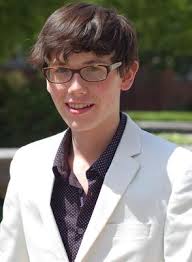
An early Mozart piano concerto might seem a long way away from Greece but the clarity and lightness of touch which Martin James Bartlett brought to it was entirely convincing. Earlier that day he had been in Hamburg, playing for an International Piano Competition, but there was no sense of this being the end of a very long day in the enthusiasm and care he brought to the piano concerto No12 in A K414. It may be an early piece but the Andante is a mature and sensitive composition which drew even greater insight from the young pianist. He gave us a scintillating encore (Poulenc’s Toccata, No.3 of Three Pieces, Op.2) which was certainly well deserved.

Brian Wright argued that Dvorak’s Seventh Symphony is his finest and I have to agree in its complexity and muscularity, both of which the orchestra demonstrated with their usual aplomb. The shadow of Brahms is ever present but where the elder composer can become Teutonic ally weighty Dvorak manages to see the sun even when it is behind the clouds. The third movement danced with a Czech vitality though the writing is significantly complex, and the final movement returned us to the nobility we had caught in the Nielsen at the start of the evening.

A splendid way to drive out winter greyness – and a pleasure to see far more in the audience than at the end of last year!

Next time – Saturday 19 March, Barber Adagio for Strings; Arutiunian Trumpet Concerto; Mahler Symphony No 9.

Bath Bachfest 2016

Surely the most enjoyable way to enlighten the chilly winter days. 


Orchestra of the Age of Enlightenment – Thursday 18th February 7:30pm at the Assembly Rooms
Steven Devine director
Ian Bostridge tenor

Telemann – Ouverture in F major TWV55: F3 (excerpts)
Telemann – Ich weiss, dass meine Erlöser lebt from Cantata TWV1:873
Telemann – So stehet ein Berg Gottes from Der Tod Jesu TWV 5:6
Handel – Concerto Grosso in E minor, Op 6 No 3
Handel – Scherza infida from Ariodante
Handel – Love sounds th’alarm from Acis and Galatea
Handel – Motet: Silete venti
Handel – Water Music Suite No 1 in F major (excerpts)


Rachel Podger – Friday 19th February 1:00pm at the Guildhall
Rachel Podger violin

J S Bach – Sonata No 1 in G minor BWV 1001
J S Bach – Partita No 1 in B minor BWV 1002
J S Bach – Partita in G minor after the Partita for flute BWV 1013


Florilegium – Friday 19th February 7:30pm at the Assembly Rooms
Ashley Solomon director/flute/recorder
Bojan Cicic violin

Terence Charlston harpsichord

J S Bach – Brandenburg Concerto No 3 in G major BWV 1048
Vivaldi – Concerto in C major for two flutes RV 533
J S Bach – Brandenburg Concerto No 5 in D major BWV 1050
Telemann 
– Ouverture and Conclusion in E minor from Musique de table Part 1
J S Bach – Brandenburg Concerto No 4 in G major BWV 1049


Mahan Esfahani – Saturday 20th February 11:00am at the Guildhall
Mahan Esfahani harpsichord

Peter Phillips – Pavan (1580)
Giles Farnaby – Farmer’s Paven
Richard Farnaby – Nobody’s Gigge
J S Bach – French Suite No 4 in E flat major BWV 815
J S Bach – French Suite No 6 in E major BWV 817
François Couperin– Les vieux seigneurs; Les jeunes seigneurs
J S Bach – French Suite No 5 in G major BWV 816


Academy of Ancient Music – Saturday 20th February 7:30pm at Bath Abbey
Richard Egarr director
Mary Bevan soprano

(NB no interval – ends c. 9.15 pm)

J S Bach – Brandenburg Concerto No 1 in F major BWV 1046
Vivaldi – Motet: In turbato mare irato RV 627
J S Bach 
– Wedding Cantata: Weichet nur, betrübte Schatten BWV 202
Vivaldi – Concerto alla Rustica in G major RV 151
Vivaldi – Concerto in D major for violin, 2 oboes and 2 horns RV 562


£5 million funding boost for the Royal Pavilion Estate

Brighton & Hove City Council, Royal Pavilion & Museums, Brighton & Hove and Brighton Dome & Brighton Festival are delighted to announce that their joint vision to revitalise the Royal Pavilion Estate has been awarded nearly £5 million from the Heritage Lottery Fund (HLF).

The money will help to pay for a major refurbishment of the Brighton Dome Corn Exchange and the Studio Theatre. The project forms the first phase of an ambitious regeneration of the Royal Pavilion Estate to create a world-class cultural destination for heritage, culture and the performing arts in the heart of the city.

The £4.99m HLF funding (which includes development phase support) comes on top of £5.8m pledged by Arts Council England, along with money from the city council, charitable trusts and individual patrons (see notes to editors). Together this now secures 66% of the funding required for the project.

Refurbishment and essential conservation work will secure the future of the Corn Exchange, a Grade I listed building, and the Grade ll listed Studio Theatre. Breathtaking and previously hidden heritage spaces will be restored for public viewing, and a new interpretation strategy and activity plan for the Estate will be developed to reveal inspirational stories, unfold layers of history, thought and knowledge and help more people learn, understand and care about the Estate and its history. Work is due to start in the autumn of this year.

Councillor Warren Morgan, Leader of Brighton & Hove City Council said: “We are delighted that the bid for Heritage Lottery funding for this important project has been successful. It marks a major step forward in our joint plans to transform these unique historic assets, to enable more local people and visitors from around the world to enjoy them, and secure the future of the entire estate, which includes the Royal Pavilion, for generations to come.”

Andrew Comben, Chief Executive, Brighton Dome & Brighton Festival, said: “We are delighted that Heritage Lottery Fund (HLF) has confirmed its significant support for this major redevelopment project. This is tremendous news. It is a fantastic endorsement of our vision and – alongside major contributions from Arts Council England (ACE), other charitable trusts and individual donors – creates a really strong foundation with which to launch our public appeal in the coming months.”

Stuart McLeod, Head of Heritage Lottery Fund South East, said: “Thanks to money raised by National Lottery players we’re delighted to support this first crucial step towards the regeneration of Brighton’s cultural heart and securing the future of two of the city’s historic listed buildings.”