12th HASTINGS INTERNATIONAL PIANO CONCERTO COMPETITION FINALS

White Rock Theatre, Hastings   4th & 5th March 2016

In recent years this competition has grown to become an important fixture in the country’s musical calendar. Under the inspirational guidance of artistic director, Frank Wibaut, the event is known throughout the world and has been made more attractive and accessible to young musicians.

This year live auditions were held in Japan, USA, Hamburg and London. Video entries were also considered. Competitors this year were required to perform part of either a Beethoven or Mozart concerto in addition to their other chosen repertoire. Also, for the first time each participant had to perform a specially commissioned work – The Hastings Toccata by Paul Patterson.

This year for the first time the finals were spread over two evenings, leaving this reviewer in the unfortunate position of only hearing half of the finalists and not hearing the overall winner of the competition.

The six finalists were Michelle Nam (Canada), Samuel Deason (Canada), Tzu-Yin Huang (Taiwan), Ke Ma (China), Eric Zuber (USA) and Jung Eun Severine Kim.

Despite a wide choice five out of the six finalists chose to perform a Prokofiev concerto (No. 2 or 3), with the other choice being Tchaikovsky No. 1.

By all accounts Friday evening yielded an excellent experience for the audience, with high standards of performance all round and including the overall winner.

Saturday’s event was also very enjoyable. The Royal Philharmonic Concert Orchestra were on great form under the genial leadership of Brian Wright, himself an active supporter of the competition. The orchestra put us all in the mood with a spirited rendition of Mozart’s Overture: The Marriage of Figaro.  We then heard in turn Prokofiev Piano Concerto No.2, Tchaikovsky Piano Concerto No. 1 and Prokofiev Piano Concerto No. 3. These were tremendous performances. Each young pianist really gave of their all, demonstrating mental and physical stamina, understanding and feeling for the music and an ability to interact – both leading and responding to the orchestra. Only one of the evening’s performances briefly faltered in this respect.

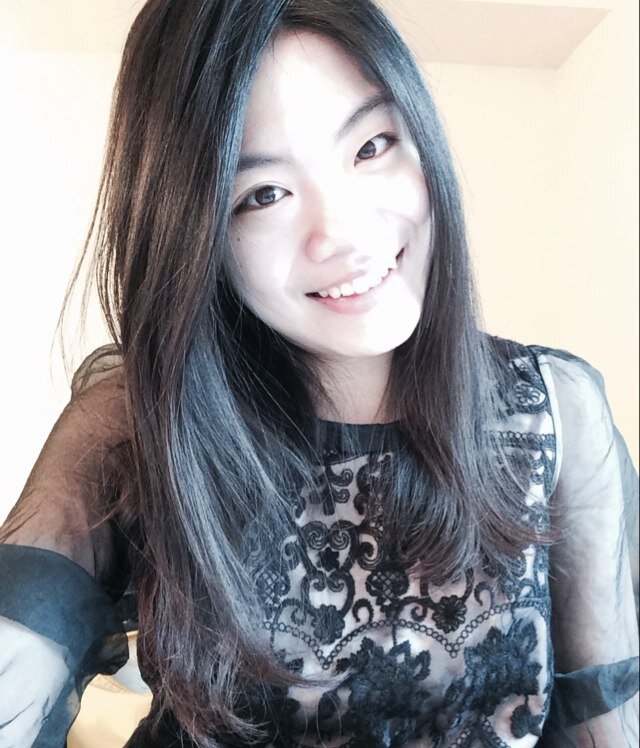
After much deliberation presentations were made to all the semi-finalists. Tzu-Yin Huang was declared the overall winner with Samuel Deason in 2nd place. A special prize for a British semi-finalist was awarded to Andreas Ioannides.

Tzu-Yin Huang

The competition is, of course, much more than just the finals and it is to be hoped that next year the whole event continues to be well supported by audiences and sponsors. This must be the jewel in the crown of the musical calendar for Hastings. It now deserves much wider recognition nationally. Perhaps we will soon see some good television / radio coverage alongside that of the Leeds festival.

Stephen Page

ENO: Akhnaten

London Coliseum, 4 March 2016

Akhnaten 2

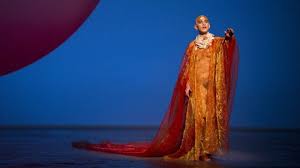
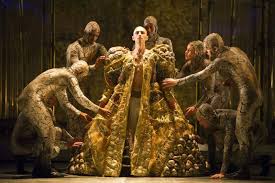
ENO’s production of Akhnaten some thirty years ago still vibrates in the memory and made a huge impact at the time. It is possible that Phelim McDermott’s approach will do the same. Without a doubt it will be remembered for the brilliance of the jugglers but this would be to miss the vision he brings to the work. The court of the dead pharaoh Amenhotep is one of angular steel and imperialistic weight. Even the juggling is confined within the structures and the chorus follow the professionals with some skill if little enthusiasm. It is a world of oppression and weight. The new pharaoh throws all of this over. The steel splits apart to be replaced by a vast white sphere; all is light and space, the intensely heavy costumes are replaced by diaphanous muslins, trailing gently across the stage, transparent, to reveal the androgynous sexuality beneath. The jugglers of Improbable steal the ritual items from the priests to establish a world of joy which soon gives way to enormous gently floating balls, themselves mirroring the vast globe of the sun. But it cannot last and as Akhnaten dies, the imperialistic weight returns and the ghosts are left to mourn what might have been.

Sung in Egyptian and Hebrew, with some narrated passages in English, but without surtitles, we are forced – as many of us recall from our early days of opera-going – to concentrate fully on the music and the stage. We are involved and engrossed, even though the action is unnaturally slow and often static. We are caught up in the unfolding inevitability of the narrative, for which the juggling acts as a constant gently moving stream, its rhythms catching those of the orchestra.

Akhnaten

Within this world Phelim McDermott is not afraid to use iconic references from Christianity. Akhnaten prostrates himself like a novitiate monk before his coronation, and as he dies, he does so in the arms of the Scribe like a Pieta.

If all of this was impressive, the musical quality on the first night came close to matching it. Solo parts – particularly Anthony Roth Costanzo as Akhnaten – were beautifully floated in a work which requires bel canto voices. His radiant Hymn to the Sun was captivating. The chorus excelled as they always do.

Under Karen Kamensek the orchestra took a little time to settle. Though the scoring may appear to be straightforward in its writing, the need for utterly crisp rhythms and balance is essential. By the second act things were tighter and the third act was very moving in its intensity and ambience. ENO may have its problems at the moment – but this should be yet another example of risk taking which really pays off.


London Philharmonic Orchestra

The Dome, Brighton, 27 February 2016

Two very popular works seem to have been the main draw for this concert but it may equally have been that the two rare pieces attracted attention.

Mendelssohn’s incidental music for A Midsummer Night’s Dream will probably be heard even more often this year with the Shakespeare anniversary but its quality will withstand any number of repeats. Andres Orozco-Estrada takes a full-bloodied approach to the Overture. There is nothing delicate about these fairies and the rustics are distinctly raucous. However the piece came to a gentle restorative conclusion which was very effective.

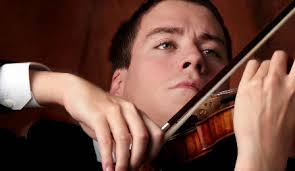
Kristof Barati

Khachaturian’s violin concerto was written for David Oistrakh in 1940 and was an instant success, though it is hardly ever heard today. One can see why. Though Kristof Barati  brought outstanding technical finesse to his playing and indulged in the more lyrical passages, the work has little depth. As passing entertainment it may suffice but even in this popular programme it seemed out of place. His brief encore had more authority than the concerto.


Richard Strauss’ Macbeth is equally rare though this is presumably because it takes a very large orchestra and was superseded by even greater works. It should not however be overlooked as the writing is secure throughout and demonstrates a mature approach to orchestral colour. If the narrative has little relationship to the text – and there is no hint of Scotland in the melodic lines – this is probably all to the good. Enjoyed as an abstract tone poem it is highly successful and was given the extrovert enthusiasm it needs.

Stravinsky’s 1919 Suite from The Firebird may be a regular Classic FM favourite but, as with the Strauss and Mendelssohn, the quality of the writing and orchestral colour cannot be dampened by familiarity. This was a splendid conclusion which blazed from all sections after some of the most delicate playing of the evening in the Princesses’ Khorovod.

The LPO return to the Dome on 16 April with works by Rodrigo, De Falla and Prokofiev.

Merry Opera Company: La Boheme

Opera House Pub, Tunbridge Wells
21 February 2016

Half the audience has not seen La Boheme before and a handful are opera virgins. We know this because musical director Harry Sever asks for a show of hands during his brief spoken introduction which includes a demonstration of Puccini’s signature music for each of the four main characters.

Merry Boheme

Kent-based Merry Opera Company has made a specialism of presenting opera accessibly for new audiences to enjoy, alongside the cognoscenti. This concise (two hours) bijoux account of La Boheme sung in English with a cast of eleven does that pretty effectively.

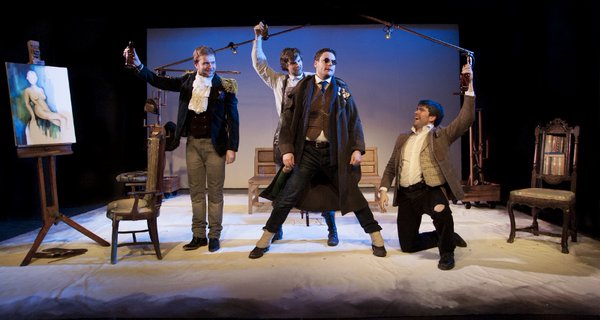
Lawrence Thackeray as Rudolfo brings pleasing tonal and dynamic range and makes young love seem fresh and interesting as he is gradually captivated by Andrea Tweedale’s excellent Mimi. Then he finds all the requisite powerful and moving lyricism in Act 4 as Mimi inevitably succumbs to her illness. Several audience members around me – taken aback by the plot itself maybe – were weeping at the end, exactly as Puccini intended.  Andrea Tweedale is deeply convincing, soaring the high notes in the famous Act 1 love duet and letting her voice, on lower notes, fade away almost to nothing in her prostrate death scene. All the quartet and sextet work was musically well balanced and realistically acted too – this is, after all, a pretty ordinary tale of nineteenth century life of artists (or would be artists) and their circle in Paris. It has to be naturalistic to work and director Christopher Cowell gets that absolutely right.

Sever is a very unusual musical director because, accompanying from digital piano, positioned stage right, he plays the entire opera from memory without music. That means that his eyes never leave the singers and action. It makes for striking focused and sensitive musical coherence. It is one of the factors which make this production so very watchable.

On the other hand, much as I applaud the decision to use language which the audience understands there are always problems with translation. In Chris Cowell’s libretto banal lines such as “no more waking up together” and “anxious on the landing” do not sit within the texture of the music as the original mellifluous long-vowelled Italian does. SE

Tour dates:
Kenton Theatre, Henley 27 February
The Theatre, Chipping Norton, 2 March
Millfield Theatre, Edmonton, 3 March
Sarah Thorne Memorial Theatre, Broadstairs, 5 March
St Mildred’s Church, Tenterden, 6 March
The Beacon, Wantage, 12 March

CDs February 2016 (2)

JANACEK : ORCHESTRAL WORKS Vol 3 – Glagolitic Mass
BERGEN PHILHARMONIC ORCHESTRA & CHOIRS, Edward Gardner, conductor
CHANDOS CHSA 5165     64’30

This Super audio CD presents Janacek’s ever-pleasing Glagolictic Mass alongside less familiar works –Adagio, Zdravas Maria(Hail Mary) and Otce nas (The Lord’s Prayer). This an interesting collection of fine performances. However, I am not sure that all of these pieces should really be categorised as orchestral works.

DOMENICO SCARLATTI –SONATAS
ANGELA HEWITT, piano
HYPERION CDA 67613    76’10

Audiences are divided as to whether this music should be played on the piano or harpsichord. I personally feel that the music can be enjoyed on either. Angela Hewitt’s first collection of Scarlatti’s sonatas presents a small fraction of the total of his output. An enjoyable disk which makes this 250 year old repertoire come alive once again.

VINCENZO GALILEI – The Well-Tempered Lute
ZAK OZMO, Lute
HYPERION CDA 68017   63’03

I thoroughly enjoyed this CD. A beautiful recording of music I had never heard before, from the pen of the father of the famous astronomer! This music really deserves to be better known and has an important place in the development of the Western musical tradition. An informative booklet gives good background notes.

JOHANN SEBASTIAN BACH – MASS IN B MINOR
CONCERTO COPENHAGEN & soloists, directed by Lars Ulrik Mortensen
CPO  777 851-2  (2 CDs/ SACD) 103’35

The B minor mass is very familiar territory. This substantial choral work has been recorded on numerous occasions. Here we have a surround sound / multi-channel recording on super audio CD. Regardless of the technology the performace is impressive, maintaining a lightness of touch which allows the music to dance, even in the larger scale moments.


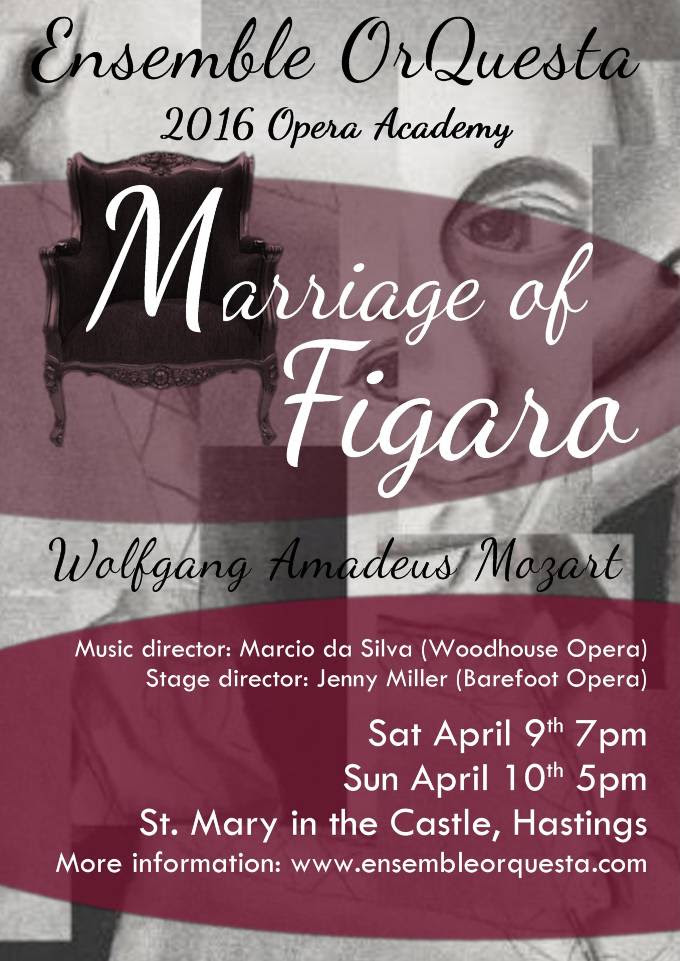
Figaro @ St Mary in the Castle

Orquesta Figaro


After a hugely successful 2015 production of L’Incoronazione di Poppea and the 2014 production of Les Indes Galantes in cooperation with Woodhouse Opera, Ensemble OrQuesta has announced it’s 2016 Opera Academy which will take place from 31 March to 10 April in Hastings, UK. The course is in preparation for the fully staged production of Le Nozze di Figaro by W.A.Mozart (in Italian) with the accompaniment of a professional orchestral ensemble and harpsichord and also comprises sessions on pronunciation and style. The course will be ministered by the music director of Woodhouse Opera/Ensemble OrQuesta, Marcio da Silva, and Jenny Miller (Barefoot Opera). It is open to singers for all roles. For more details, see:

http://www.ensembleorquesta.com/figaro-2016

Performances will be on April 9th and 10th at St. Mary in the Castle, Hastings..

Bath Bach Fest 2016

Thursday 18 February 2016

A beautiful evening across Bath with a clear sky as the sun went down before we made our way to the Assembly Rooms for the opening performance of this year’s Bath Bach Fest. Ian Bostridge was surely the reason for the full house and he did not disappoint. The platform may have been a little cramped when he appeared, together with the Orchestra of the Age of Enlightenment, but there was nothing cramped about the music-making.
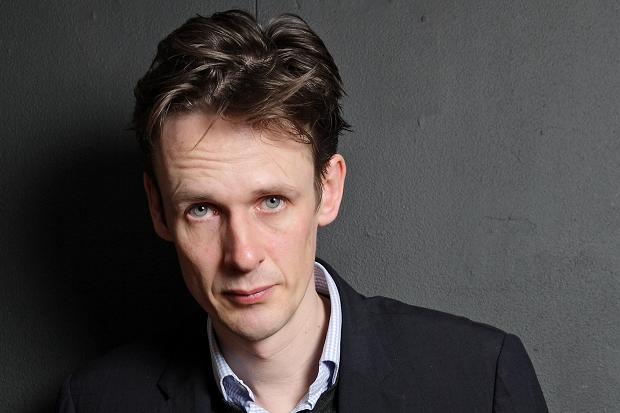
Ian Bostridge

The evening was formed around the vocal items. In the first half we had the calm authority of Telemann’s Das mein Erloserlebt from Cantata TWV 1:873 and the fury of So stehet ein Berg Gottes, before moving to Handel. Ariodante is possibly the greatest of his operas, its endless flow of glorious melody surely unsurpassed even for Handel. Ariodante’s aria Scherza infida combines despair with real pain at the loss of love and Ian Bostridge gave us the complexity of the emotional state while spinning out the most mellifluous of musical lines. Spell-binding – but to break the spell he then sang Love sounds the alarm from Acis and Galatea, a cheeky little number to send us happily into the bar for the interval.

The main vocal work in the second half was Handel’s bravura Silente venti. A strange work liturgically. The Latin text reflects a highly Protestant thinking with its confidence and joy. This is never more obvious than in the florid lines of the concluding Alleluia, though the dramatic interruption of the opening sets the scene for the excitement to come.

I am sorry if this has implied that the OAE did little more than accompany the singer. Far from it. They opened with Telemann’s Overture in F major, following later with Handel’s Concerto Grosso Op6 No3 and the evening concluded with the First Suite from Handel’s Water Music. In these, natural horn players Roger Montgomery and Martin Lawrence were particularly impressive, but the bite and energy at all times meant that there was never a moment one could think of losing interest. This was a captivating occasion and has set a very high standard for the rest of the weekend.

Friday 19 February 2016

Bojan Cicic at the Guildhall

Less than forty-eight hours before this lunchtime concert Bojan Cicic was blissfully unaware that he would be playing but the sudden indisposition of Rachel Podger meant that a replacement was needed and he just happened to be in Bath for the evening concert.
Bojan Cicic

Apart from a minor change to the programme, hardly anyone would have guessed that he had not been prepared – like most soloists – for many months ahead.

He spoke to us about the regrettable change because of Rachel’s illness and also of his particular approach to the works he was to perform. Unlike keyboard players, there are few baroque works for solo performer, which means that there are very few occasions when – as a baroque violinist – he is actually alone. And this was one such occasion. He also told us, later, why he has the score with him. Though he knows the works from memory and has played them as such, he now works with the facsimile of the original scores, with all their smudges and strange markings, which give a very personal relationship with the composer. He feels that it is easier to pick up the nuances of the work from the original where it is available.

This was very obvious from his performance. He opened with the Sonata No 1 in G minor, the Adagio having a certain astringency to it and the Fuga a deliberate almost resolute pace. The graceful Siciliana still retained a melancholic feel and even the final Presto – for all its attack and brilliance – had a deceptively dark side to it.

After this the Partita No3 seemed almost too easy on the ear with its familiar opening Preludio and Gavotte. The final Gigue had a biting intensity to its rhythms which recalled the earlier sonata but without the darker edges.

He then returned to the Partita No2 in D minor with its jumpy staccato rhythms in the Corrente and yearning, wandering Sarabanda. If the Giga seems brighter with its energetic fluency it is only a foil before the magnificence of the concluding Ciaconna. This is as good as it gets in Bach – which is to say it is surely as near perfection as we are ever likely to encounter. It can easily be set alongside the Art of Fugue as a work of stunning virtuosity yet one which far exceeds the purely technical.

It was superb and received as such by a full house – and in five hours’ time Bojan Cicic plays again with Florilegium!

Friday 19 February 2016

Florilegium had considerable success with their recording of Bach’s Brandenburg Concertos recently and they brought three of them to the Assembly Rooms on Friday evening. In between they played works by Vivaldi and Telemann. Though the former wrote 25 concerti for two violins there is only one extant concerto for two flutes and it is this which we heard. It is a friendly little work in C major and has all the innocence and joy one might expect. It also has a splendid bass line for the solo cello, which sang with warm confidence throughout.
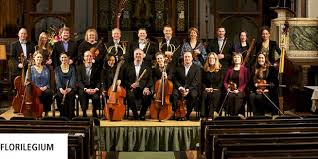
Florilegium

After the interval we heard movements from Telemann’s Musique de Table. I suspect these pieces are more fun to play than to sit through, though the instrumentation frequently sounded denser and more complex that the eight musicians would appear to be able to provide. There was a playfully brisk Gigue and a gentle Loure but it was very much a case that less might have been more in terms of enjoyment.

The three Brandenburgs opened with No3 which is for strings alone. The use of period instruments and gut strings makes for a softer, more intimate sound. There was also a real sense of individual players passing the lead along the line as the score develops. It was true ensemble rather than a directed work. Bojan Cicic, who had covered the lunchtime concert so successfully, played throughout the evening and provided the top line where necessary for the Bach. He even improvised the two linking bars of the 3rd Concerto. I hope he had some time to relax after a day which has proved so rewarding to those of us listening.

The fifth concerto brought Ashley Solomon to the stage for the solo flute, and gave Terence Charlston a chance to shine from the harpsichord. Somewhat hidden behind the strings for most of the evening the long solo passage at the end of the first movement was magnificently played with a genuinely improvisatory feel to it. Had this been a jazz event we would have applauded enthusiastically as he ended!

The forth concerto brought the evening to a close, with two recorders joining the strings. Crisp and fluid throughout, with no hint of sentimentality, the ensemble was, as throughout the evening, exemplary and highly enjoyable.

Saturday 20 February 2016

Mahan Esfahani is certainly one of the finest exponents of the harpsichord and a champion of its particular delights. As such it was disconcerting to learn when he spoke to us that he was actually performing the Bach French suites for the first time in public. Not that there was any doubt as to his technical excellence or his  commitment, just that he had come to realise that in order to play ‘lighter’ music one needed more maturity, which he hoped he now had!
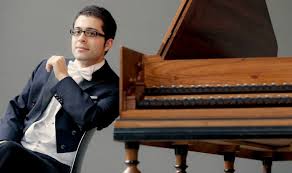
Mahan Esfahani

He opened with three earlier works from the Fitzwilliam Virginal Book by Peter Philips, Giles and Richard Farnaby. The highly florid textures of Philips’ Pavan gave way to the more rooted but no less extrovert Farmer’s Pavan by Giles Farnaby and the genuine dance textures of Nobody’s Gigue  from Richard.

We were then into three of Bach’s French suites opening with No4 in E flat major. Conversations with his Czech teacher had hinted that these were love letters to Bach’s wife, which Mahan rejected at the time but has come to see as closer to the truth than may at first be obvious. There is also the possibility that the suites were written for clavichord, a far more intimate instrument altogether. Taking both into consideration he produced beautifully crafted phrasing and an intimacy of touch which was compelling throughout. If the weight of the final Gigue brought a more virile enthusiasm it could not out-weight what had gone before.

For the 6th French Suite he followed an early copy which added a Prelude, taken from the Well-Tempered Clavier, before launching into the standard seven movements. The Sarabande has a gentle introspection which offsets the folk-like quality of the later movements.

After the interval we heard two pieces from Couperin’s Pieces de Clavecin-Les Vieux Seigneurs  and Les Jeunes Seigneurs. If the older men are cynical there is a glorious sense of look at us how we sparkle from the younger fops.

The final French Suite was No5 with its familiar but very welcome concluding Gigue given here with all the enthusiasm and clarity which the whole performance had shown.

A bravura encore by Rameau – accelerating to the point where it was impossible to believe he actually had enough fingers to play all the notes – brought the concert to a close, sending us out ready for lunch.

Saturday 20 February 2016

Academy of Ancient Music, Bath Abbey

As is traditional, the final performance of the festival was in Bath Abbey and brought together themes we had come to appreciate over the last three days. Opening with Bach’s First Brandenburg concerto, the Academy of Ancient Music demonstrated a very different approach to the pieces. Richard Egarr shaped and directed the score from the harpsichord, conducting more than he played and ensuring the whole was very much under his control. If the horns were a little wild at the start they soon came into focus and the whole was well balanced even if the acoustic of the Abbey is not as conducive to chamber music as the Assembly Rooms.
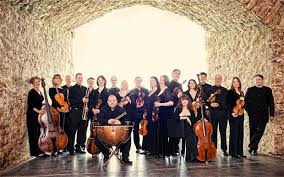
AAM

Vivaldi’s motet In turbato mare irato is a barn-storming virtuoso piece which held no fears for Mary Bevan who threw off its coloratura with aplomb. After a brief pause – it is always difficult to have a real interval in the Abbey – she returned to sing Bach’s Wedding Cantata. If this was less showy than the Vivaldi it had the benefit of allowing the oboe and cello soloists to demonstrate their prowess without ever undermining the soprano line.

Two shorter works brought the evening to a close. Vivaldi’s brief Concerto alla Rustica was almost over before it started and proved a curtain-raiser for his Concerto for violin, two oboes and two horns. The hero of the hour was definitely first violin Pavlo Beznosiuk, who was required not only to pretend to be a Ruritanian peasant fiddler but then turn into Paganini for the final eighty solo bars. It was a tour-de-force and brought the festival to a lively conclusion – until we all meet again next year.

 

ENO: Norma

London Coliseum, 17 February 2016

Norma

Christopher Alden has brought us Norma for the first time at ENO in its 85 years. In the same period we have had Joan Sutherland at Covent Garden and a memorable WNO production – so what has taken a masterpiece of this stature so long to surface? Perhaps it is simply the quality of the singers. The cast may be small in number but the demands are phenomenal, particularly for the protagonist.

Marjorie Owens certainly comes very close to the part. She may not (could anyone?) blot out the memory of Maria Callas in the role but her singing is ample and firm throughout, with no sense of terror at the range of tone needed. What she lacked on the first night was the fire and emotional range to take us fully along the roller-coaster of the narrative. Unusually for operas of the period Norma moves quite rapidly in its emotional challenges and the audience need to be fully engaged in these rather than simply watching them as outsiders. That this was not the case was obvious from a number of giggles across the stalls at key moments which should have been jaw-dropping.

None of this was the fault of the singers. Peter Auty made an heroic foil to Marjorie Owens’ Norma and was often thrilling at the top of the voice. Jennifer Holloway was a sympathetic Adalgisa yet had the weight of voice to match those around her. James Creswell, the only heavy voice on stage, brought an unexpected complexity to Oroveso as we watched his world unravel around him.

The chorus were magnificent throughout and their bitterness in the last act was compelling.

Stephen Lord has a fine reputation as a conductor of Bellini and showed his considerable talents in moving through the minefield of the score. Orchestral detail was secure and well-focused.

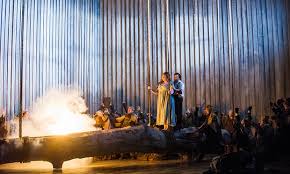
Christopher Alden has chosen to set the production in mid 19th century America, within a community of Druids who have separated themselves from the rest of society. In itself this is a perfectly reasonable premise and for much of the time – particularly in the second act – worked smoothly, allowing the relationships to flourish rather than the time scale detract. There were however some anomalies which would not go away. Oroveso is on stage throughout the first act. Are we to assume he simply ignores Norma’s children and is deaf to the conversations around him? And why do the Romans remain on stage during Casta Diva. The vast barn within which all the action takes place does provide a neutral space, forcing us to concentrate on the characters, but there is no sense of the natural world which is so regularly referred to – no moon, no sense of day or night. And then there is the tree trunk. As a visual image it is very striking and appropriate. As a raised area to be negotiated by the singers it becomes a problem as we are simply waiting for someone to fall off. The final flaming coup de theatre is impressive but it will interesting to see if the run gets to its end without accident.

The 50th Brighton Festival launches with Laurie Anderson as Guest Director

The full programme for the 50th Brighton Festival (7-29 May 2016) – the largest and most established curated annual multi-arts festival in England – is unveiled today with experimental artist and musician Laurie Anderson as Guest Director.

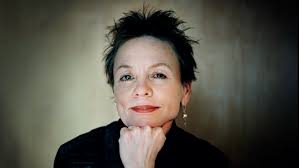
Laurie Anderson

Renowned for her inventive use of technology, Anderson is one of America’s most daring creative pioneers. In roles as varied as artist, composer, poet, photographer, filmmaker, vocalist and instrumentalist, she has been experimenting, creating and challenging audiences all over the world for almost as long as Brighton Festival has existed. Anderson takes the helm as Brighton Festival marks its milestone50th year of commissioning and producing innovative arts and culture by exploring the theme of ‘home and place’across its 2016 programme.

Anderson’s own events include the UK premiere of her unique Music for Dogs, a concert specially designed for the canine ear; a screening of her acclaimed new film Heart of a Dog, described by Anderson herself as: ‘full of stories about how you make a story . . . nominally a film about me and my dog but really it’s not, it’s about love and language‘; an exclusive new performance monologue about place and places called Slideshow; and a freewheeling walk through sonic spaces with fellow musician-composers, pianist Nik Bärtsch and guitarist Eivind Aarset.

Many of Anderson’s interests, passions and achievements are also explored including the UK premiere of Lou Reed Drones, an installation of her late husband’s guitars and amps in feedback mode which she describes as ‘kind of as close to Lou’s music as we can get these days‘; a special screening of critically acclaimed film Sans Soleil (Sunless) – an elegiac masterpiece by Anderson’s favourite director Chris Marker; and a series of events that explore innovation and technology in the arts, including Complicite /Simon Burney‘s acclaimed The Encounter and Brighton-based Art of Disappearing‘s outdoor adventure The Last Resort.

With the theme of ‘home’at the heart of the programme, Brighton Festival 2016 will celebrate its relationship with the unique, energetic and creative city of Brighton, its artists, its characters, its sense of place and spirit whilst also considering universal issues and ideas around home, our communities and places of safety. Highlights include a new work from Argentinian artist Lola Arias developed with and performed by veterans of the Falklands conflict; experimental composer and musician Yuval Avital‘s potent and thought-provoking new work, Fuga Perpetua, which reflects on the situation of refugees; and the UK premiere of Berlin‘s Zvizdal, a filmic portrait of an elderly couple’s self-imposed solitude in the region affected by the 1986 Chernobyl disaster.

The rich diversity of home-grown artists and companies are celebrated in a series of special commissions that include two works marking the 400th anniversary of William Shakespeare‘s death: The Complete Deaths, a re-enactment of every onstage death from Brighton-based artistic powerhouses Spymonkey and Tim Crouch, and Digging for Shakespeare by Marc Rees, a site-specific homage to 19th Century Brighton eccentric and world-renowned Shakespearean scholar James Orchard Halliwell-Phillipps; Stella, a theatrical love letter to one half of the infamous Victorian cross-dressing duo Fanny and Stella by playwright Neil Bartlett; and the world premiere of Blast Theory & Hydrocracker‘s immersive undercover police drama Operation Black Antler.

Other city-inspired highlights include a specially commissioned film Brighton: Symphony of a City, screened to a new score performed by Orchestra of Sound and Light, and the entire Royal Pavilion Estate playing host to Dr Blighty; an ambitious, large-scale, immersive outdoor experience which highlights the untold story of wounded Indian soldiers hospitalised in Brighton during World War One. Kicking off with the Children’s Parade – the largest of its kind in Europe – Brighton Festival 2016 will also see a record number of community-focussed events throughout the programme including the annual City Reads and Young City Reads produced in partnership with Collected Works and Future Gazers which asks school pupils to imagine the world in 50 years’time.

2016 also sees Brighton Festival work with Guardian Live in a special partnership to deliver the Books and Debate programme with an impressive line-up of writers and commentators that includes a panel debate on the looming EU Referendum and a visit from former Greek finance minister Yanis Varoufakis as well as appearances from an Orange prize winner (Lionel Shriver) and two Booker prize winners (Marlon James and Howard Jacobson). Brighton Festival 2016 will also see the return of caravan (15-17 May 2016), a three-day biennial curated industry showcase of the best new theatre from across England, which this year features eight performances open to the public.

Brighton Philharmonic Orchestra

The Dome, Brighton, 14 February 2016

A Valentine’s Day concert and one of the largest audiences for a good while. Perhaps it was the popular programme which drew the numbers? It was certainly all very familiar and given with the enthusiasm to which we have become accustomed under Barry Wordsworth.

The afternoon opened with Berlioz’ reworking of Weber’s Invitation to the Dance – made famous in the early twentieth century when Nijinsky appeared as the Spectre de la Rose, covered in imitation rose petals, exiting the stage through a window with what was long held to be the finest jete in the history of ballet.

To calm us down a little we then heard the Intermezzo from Mascagni’s Cavalleria Rusticana. This is a miniature master-piece and lovingly played by the strings.

Melvyn Tang

The heart of the afternoon came with Melvyn Tang joining the orchestra in Chopin’s Second Piano Concerto. His cheeky good-humour belies the phenomenal technique and experience he brings to the work, making it sound charmingly easy. The gently flowing tempo of the Larghetto led straight into the joy of the final Allegro with the lightest of touches for the flourishes of the final pages.

He played a romantic Liszt encore and we could have easily stayed for more.

This being Valentine’s Day, he was presented with the usual soloist’s bottle at the end – plus a dozen red roses!

After the interval the single work in the second half was Rimsky-Korsakov’s Scheherazade. Almost over familiar thanks to Classic FM, it is nonetheless a good excuse for the orchestra to show off its range of colour, which it did with ease.

The penultimate concert this season brings us Brahms, Shostakovich and Mendelssohn under Howard Shelley on Sunday 20 March.