Tasmin Little with the Philharmonia Orchestra

Wednesday 6 April, Marlowe Theatre Canterbury.
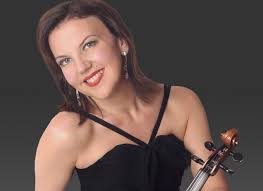
Tasmin Little

Can there be a happier musician than Tasmin Little? Appearing to enjoy every note she played, she smiled her way right through Mendelssohn’s violin concerto, finding tremendous warmth and lyricism in it as she went. Little is a very unshowy player too. Dressed in a simple flame coloured dress, she simply stood and played the piece, occasionally leaning in, beaming with delight, towards Kazuki Yamada on the podium or Philharmonia leader, Bradley Creswick. It was a performance completely free of flamboyant histrionics, so all the focus was on her masterly playing – the beautifully controlled cross string work and double stopping in the first movement, a good example. Then she gently teased every possible bit of melodious charm out of the lilting 3/4 Andante, each harmonic perfectly placed.

The diminutive, youthful looking (he’s actually 37) Yamada had already opened the evening with a spirited account of Beethoven’s Overture Leonore 3. He’s an unfussy performer too, but totally on top of the orchestra from which he drew a pleasing, incisive balance between the flute and strings in the slow passages.

One of the secrets of a good performance of Tchaikovsky’s Fifth Symphony is not to start too slowly because you need enough momentum to build the tension through the long introductory passage. This, Yamada brought off with aplomb, coaxing strange but engagingly menacing growls from the clarinet before he eventually let rip with full strings and all that tuneful Tchaikovian fervour.

I’ve rarely heard the exquisite horn solo in the Andante Cantabile played quite so evocatively and Yamada really milked the melody from the point when the rest of the orchestra picks it up. Then came a sparky rendering of the Valse with lots of enjoyable attention to detail. It was especially fine when it reached the symphony’s recurrent motif at the end of the movement, pre-figuring the opening of the finale in which Yamada found lush grandiloquence, although his emphasis on the arpeggios in the brass was not always to my taste. I think the Philharmonia’s string sound has really developed in recent years. It is now, almost always, impressively rich and coherent.

Susan Elkin
A Marriage of the talents at St Mary in the Castle

Everybody loves a wedding; add upstairs downstairs intrigue, farce, mistaken identity and a happy ending and we have the world’s most perfect opera, Mozart’s Marriage of Figaro. An exciting new collaboration will culminate in a fully staged production of this opera at St Mary in the Castle on Saturday and Sunday 9th and 10th April.

Marcio da Silva Music Director of Woodhouse Opera (and Hastings Philharmonic Choir) has joined with Jenny Miller, founder of Barefoot Opera, to produce this ‘day of madness’ opera by Mozart, using Marcio’s orchestra, Ensemble OrQuesta, and the students of the 2016 Opera Academy, the divas of tomorrow.

Marcio is now going into his fourth year as Woodhouse Opera’s Music Director. Woodhouse Opera (http://www.woodhousesounds.com/) stages several operas a year in the beautiful arts and crafts house and Gertrude Jekyll gardens of Woodhouse Copse near Leith Hill, Surrey. Marcio moved to St Leonards with his wife and young family late last year and promises to enrich Hastings’ musical life with his boundless energy.

Jenny Miller is well known in Hastings for her innovative and imaginative stagings of great opera at St Mary in the Castle over the last five years where she makes full use of the unique surroundings. Her ensemble work and physical theatre techniques create a close emotional and physical connection between performers and audience and Barefoot Opera productions (http://barefootoperacompany.tumblr.com/about) have gone on to tour various locations including participation in the Longborough Festival Opera. As  a National Opera Studio graduate,    Jenny Miller has a lifetime of experience in opera. (http://barefootoperacompany.tumblr.com/jenny).

May this be the start of a beautiful artistic partnership!

Marriage of Figaro at St Mary in the Castle, 7 Pelham Cres, Hastings TN34 3AF 9 April at 7pm and 10 April at 5pm, Tickets Stalls £20/£18 concs. and Gallery £17/£15 concs. available at Hastings Tourist Information Centre Aquila House, Breeds Place, Hastings TN34 3UY  01424 451111,  at door and at https://www.musicglue.com/stmaryinthecastle/events/10-apr-16-marriage-of-figaro-st-mary-in-the-castle/

PLEASE NOTE THE CORRECT START TIMES ARE 7PM ON SATURDAY 9TH APRIL AND 5PM ON SUNDAY 10TH APRIL

CDs April 2016

Mendelssohn: Piano Trios
Fournier Trio
RESONUS RES10161

I love these works, and the Fournier Trio, who are new to Resonus, bring real enthusiasm as well as musical finesse to their performances. They argue that these are the best of Mendelssohn’s chamber pieces and, played like this, one can believe it.

Bach: French Suites
Julian Perkins, clavichord
RESONUS RES10163

This CD arrived soon after we had returned from the Bath Bach Fest at which Mahan Esfahani had played three of the suites on a harpsichord while admitting they were probably written for the clavichord. And here we have an excellent example of why that is surely true. These works sit perfectly on the clavichord and are here given lively yet intimate performances which are highly convincing.

Suk & Dvorak
Christian Tetzflaff, violin, Helsinki Philharmonic Orchestra, John Storgards
ONDINE ODE 1279-5

Dvorak’s violin concerto is popular enough but the other two works I suspect are less well known which makes the combination all the more compelling. Suk’s Fantasy in G minor for violin and orchestra  is a concerto in all but name and of equivalent length, while Dvorak’s Romance Op11 is far more than a make-weight. Well worth investigating.

Dvorak & Schumann Piano Concertos
Stephen Hough, CBSO, Andris Nelsons
HYPERION CDA 68099

This recent recording of two popular concertos is a delight. Stephen Hough is one of the most convincing romantic pianists performing today and he is coupled with the CBSO in sterling form under Andris Nelsons. I am only sorry I did not get to hear them live.

Haydn: String Quartets Op76
Doric String Quartet
CHANDOS CHAN 10886(2)
Haydn: String Quartets Op50
The London Haydn Quartet
HYPERION CDA 68122 (2 CDS)

Can we have too many recordings of Haydn’s chamber music? When we get performances like these it is hard to argue against them. The Op50 Prussian Quartets are played in from the Artaria edition of 1787 which gives them something of an edge over other recordings while the Doric Quartet brings a freshness and authority to Op76.

Stephen Page

Hastings Unitarian Meeting Place, 2 April 2016

S Page

It has been almost eighteen months since Stephen Page’s last series of concerts at the Unitarian Meeting Place and there was a large audience eagerly anticipating a programme made up of rare and more familiar items.

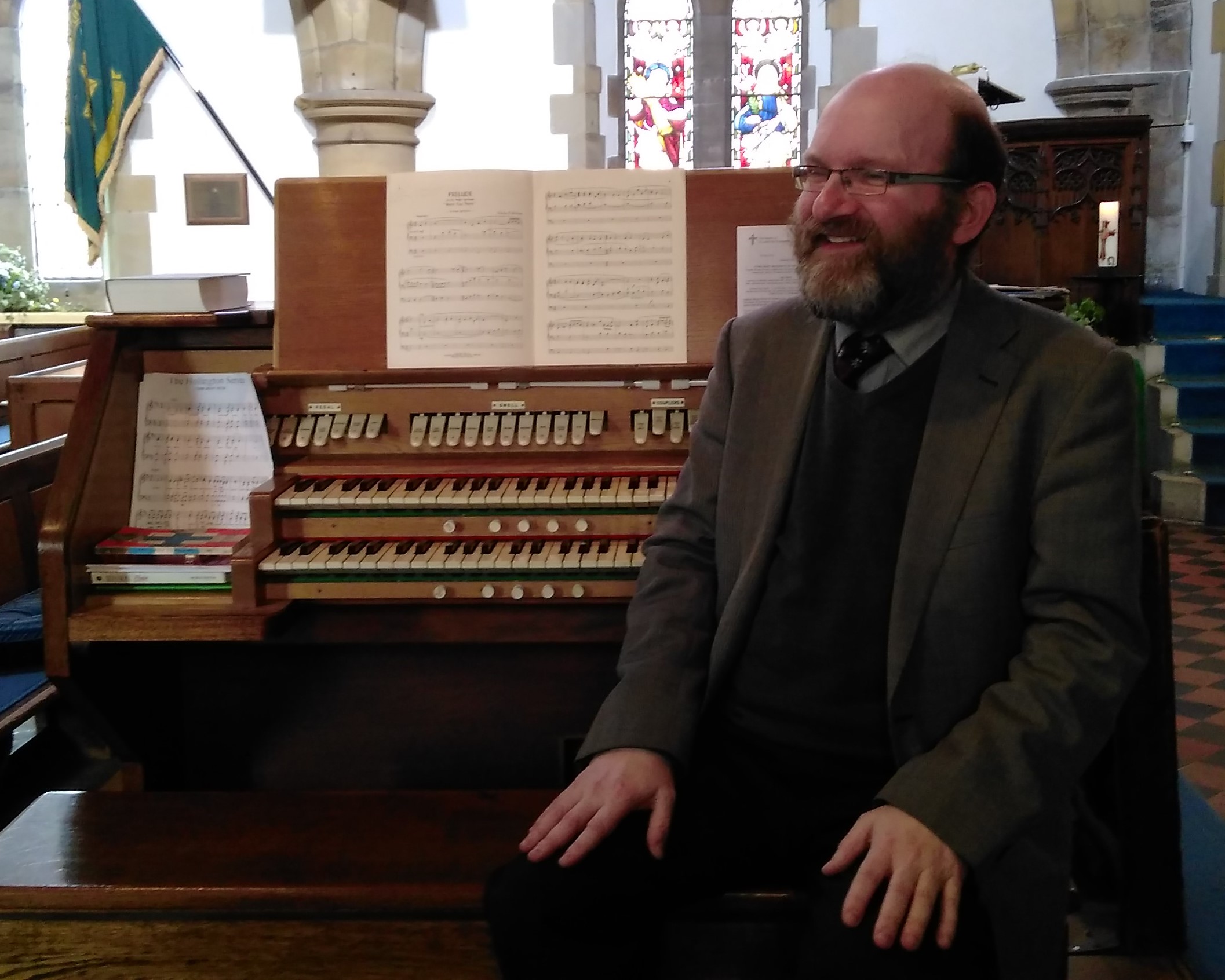
He opened with a number of works written somewhat before the 1760 Snetzler he was playing – Purcell’s Trumpet Tune together with its Almand and a Voluntary in D by John Alcock. This latter piece had the easy charm of a work for mechanical clock. Although the organ is not really suited to larger works, Stephen has made many adaptations over the years to enable us to hear works which were originally composed for much larger instruments. He played an arrangement of Bach’s Prelude & Fugue in C minor BWV549 which has a very dark tone to the fugue and followed this with the more positive tones of the chorale Herzlich thut mich verlangen –better known to most by its English translation as O sacred head surrounded.

He has played a large amount of Handel on this organ over the years and it is an ideal instrument for the composer. Today we heard movements from The Water Music before two brief pieces by Samuel Wesley. In his introduction Stephen noted that he had a date in the score of the Wesley which reminded him that he had first played the piece at the Unitarians in 1993 when, in his youth, he had asked if he could play the organ and had been encouraged to do so.

Flor Peters’ Aria  brought us rather more up to date with its slightly acidic beauty and was followed by Weckmann’s Praeambulum a 5 vocum. It is the composer’s 400th anniversary this year and we will hear more from him as the series progresses.

The final section was in a lighter vein with two dances from Praetorius, Elgar’s Salut d’amour, Gordon Young’s Prelude in a Classic Style and concluding with a great favourite – Abe Holzmann’s Blaze Away.

The next concert at the Unitarians is on Saturday 2 July, but you can hear Stephen again in two weeks – Saturday 16 April @ 2.30pm – when he plays at His Place, Robertson Street, Hastings, for the Book Launch of Vol3 of Organs of 1066 Country.


CLASSICUS SALON

From the people that brought you the International Composers Festival

CLASSICUS SALON

Meet established and up-and-coming classical composers, musicians and singers from Sussex and beyond in the warm and welcoming atmosphere of the ‘Royal Vic Hotel’. Join us for an informal evening of beautiful music, songs and great conversation. Don’t miss it!
 
TUESDAY 5th APRIL 2016 – 6pm
FREE ADMISSION
Piano Lounge – Royal Victoria Hotel – Marina – Hastings TN38 0BD
____________________________________________________________________________________ _______________________
free parking from 6pm opposite the venue

DVDs April 2016

Janacek: The Cunning Little Vixen
Chatelet Theatre Paris, Sir Charles Mackerras
ARTHAUS 109206

This production by Nicholas Hytner dates from 1995 and while it may seem rather too whimsical for contemporary tastes has such wonderful performances that it is entirely captivating. Thomas Allen is outstanding as the Forester but there are no weak singers here and the orchestra under Sir Charles Mackerras is as fine as one could ask. Bob Crowley’s setting float with an easy grace and his costumes are a constant delight.

Weber: Der Freischutz
Zurich Opera, Nikolaus Harnoncourt
ARTHAUS 109194

Ruth Bergaus directed a number of very striking productions in the 1990s and this Zurich presentation of Der Freischutz dates from 1999. Starkly set with costumes almost entirely in black it focuses closely on the psychology of the characters. It also has a thrilling dynamism from the pit under Nicholas Harnoncourt which he manages to maintain throughout. The Wolf’s Glen scene is danced which lacks any sense of horror but this was new at the time. Good to have this available.

Bruckner: Symphony No9
Staatskapelle Dresden, Christian Thielemann
UNITEL CLASSICA 733308

One of the benefits of DVDs of orchestral concerts is the close concentration it gives us on the conductor. Here we can study the way Christian Thielemann shapes and moulds the extended paragraphs of Bruckner’s score.  That he appears to do it so easily, yet create so great an impact is telling in itself. A masterly performance and worth studying.

Johann Adolf Hasse: Artaserse
Orchestra Internazionale d’Italia, Corrado Rovaris
DYNAMIC 37715

I suspect that for most of us Baroque Opera does not extend much further than Handel and Vivaldi. A pity as there is a vast repertoire beyond this which we have yet to explore. All the more welcome then is this production of Hasse’s Artaserse to a familiar libretto by Metastasio. A favourite work of Farinelli, it has a series of fearsomely difficult arias which need singers of world class. Thankfully the singing here is very good if not quite of the immaculate quality for which it was presumably written. Corrado Rovaris, directing from the harpsichord, drives the pace hard and keeps the (very complex) action moving rapidly towards its sympathetic if unlikely denouement.

Stravinsky’s La Sacre de Printemps
A film by Peter Rump
ARTHAUS 109210

This film is based on Valery Gergiev’s love of the work and he is seen in rehearsal and performance, as well as discussing the origin of the composition. There are rare archive shots of the composer, both conducting and talking about the work.


Bach: St Matthew Passion

Barbican Hall, Saturday 26 March 2016

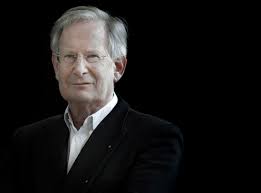
Sir John Eliot Gardiner asks a lot of his musicians – and equally so of his audience. The singers perform without scores and the many solo instrumentalists perform from memory. The effect is one of immediacy and intense dramatic impact. When this is united with the immaculate beauty of line, the intimacy of so many of the solo arias, and the rapport of all concerned, the impact is frequently overwhelming. I can’t recall a St Matthew Passion where the words have seemed quite so important, driving the text and insisting we follow the narrative. There was never a moment when we simply relaxed into beautiful singing, though that itself was never in doubt.

J Eliot Gardiner

In the programme note John Eliot Gardiner makes a strong case for his approach, which avoids the pitfalls of a ‘staged’ event and the often sterile impact of a concert. Instead we have soloists who move easily about the stage to find their place to address us directly. They make eye contact with the instrumentalists and with the audience. In the final choruses, both Evangelist and Christus join the chorus, and throughout, the solo voices have come out of the chorus and returned to it.

There is a sense that the music really is more important than those who are performing it, though I doubt we could find a finer performance anywhere today.

Mark Padmore brings an urgency to the Evangelist which involves us throughout and is finely contrasted to Stephan Loges humane Christus. Trinity Boys Choirs may not have a lot to do – they rightly left the stage for much of the time – but their surprisingly continental sound brings unexpected authority to their choruses. The sudden changes in dynamic make for a thrilling choral sound from the Monteverdi Choir, and the English Baroque Soloists are just that – a collection of expert individual players who come together to be more than the sum of their parts.

There was a standing ovation at the end. I’m not normally keen on this type of emotional outburst but on this occasion it was certainly justified.

My First Ballet: Sleeping Beauty

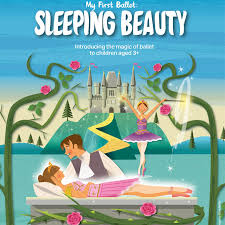
my first balletEnglish National Ballet and English National Ballet School have, in recent years, developed an interesting way of offering a real experience of classical ballet to children as young as three. Students from ENBS dance an abridged version of an ENB show – carefully choreographed for young dancers by George Williamson with Dramaturgy by Adam Peck. A narrator – in this case Saskia Portway – is woven into the action to make the story absolutely clear to the audience. Having opened at Peacock Theatre in London, My First Sleeping Beauty tours until the end of May. It provides valuable experience for young performers at the very beginning of their careers and lots of opportunities for families to experience ballet, possibly for the first time.

Tchaikovsky’s lush melodious score is well enough played by City of Prague Philharmonic conducted by Gavin Sutherland and Daryl Griffith although it must be much harder to dance in sync when you’re working to a recording without a conductor to watch – and some of the cuts are a bit abrupt. The young dancers do well in general although their youth shows occasionally in a strained wobble or two. Especially enjoyable are the set pieces by the benign fairies in the first act, the prince’s show piece dance in the enchanted wood and the series of dances by the fairy tale characters with a particularly witty contribution by two dancers as a pair of cats. And at the end Aurora and the Prince are suitably appealing and impressive in their final romantic pas de deux. The company of 25 – ENBS students are recruited from all over the world – rotate the principal and corps de ballet roles and no one is named in the programme other than as a member of the ensemble.

I have, as with previous shows in this series, some reservations about the narration. Saskia Portway, who co-wrote her own script, plays the older Aurora looking back on her youth sometimes wandering through the action and sometimes standing to the side. Her voice is warm although it sometimes strays dangerously close to the sanctimonious sugariness of Vanessa Redgrave in the TV series Call the Midwife. Moreover she struggles to be heard when the music is rising to one of Tchaikovsky’s magnificent dramatic crescendi. It is more effective at quieter moments when she speaks in rhythm with the music. Why though, at points when the dance makes it completely clear what is happening do we need words at all? When the Queen is counting, for example, it really doesn’t need to be spelt out by a narrator.

On the whole, though, the “My First” concept works. I saw My First Sleeping Beauty with hundreds of children and almost every one of them was totally engrossed for the full 90 minutes and that’s a terrific achievement for cast and creators. I regret though that the vast majority of them are little girls. Why on earth don’t people take boys to ballet as well?

Susan Elkin

Anthony Minghella’s Madam Butterfly returns to ENO

Opens Monday 16 May at 7.30pm at London Coliseum for 17 performances

eno butterfly

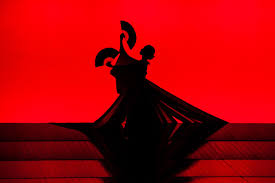
Described by The Times as ‘one of the most deeply thoughtful and ravishingly beautiful re-creations of Puccini’s opera that you’re ever likely to see’ Anthony Minghella’s stunning production of Madam Butterfly returns to ENO for its sixth revival.

This is the first and only opera directed by the late Anthony Minghella and his wife Carolyn Choa, who assisted him as choreographer and associate director. Best known for his work in film, Minghella won an Oscar for his film The English Patient and a BAFTA for The Talented Mr Ripley.

Madam Butterfly is one of opera’s most enduring tales of unrequited love. With its breathtaking mix of cinematic images, traditional Japanese theatre, colourful costumes and stunning sets, Anthony Minghella’s Oliver Award-winning production has been hailed as’ The most beautiful show of the year’ (Sunday Telegraph).

The original creative team consists of set designer Michael Levine, award-winning lighting designer Peter Mumford and fashion designer Han Feng, whose costumes for the opera launched Feng’s career in costume design.

Acclaimed British conductor Sir Richard Armstrong conducts his first Puccini opera for ENO. Formerly Music Director of Welsh National Opera and Scottish Opera, his recent appearances at the London Coliseum include five star productions of both The Passenger (2011) and The Makropulos Case (2010) and the revival of Calixto Bieito’s Carmen (2015).

Soprano Rena Harms returns to ENO to make her role debut as Cio-Cio San. She previously performed the role of Amelia in Dmitri Tcherniakov’s production of Simon Boccanegra for the Company in 2011.

British tenor David Butt Philip makes his role debut as F.B. Pinkerton. He was last seen at ENO as Rodolfo in Jonathan Miller’s production of La bohème in 2014, with The Guardian commenting on his performance that he was ‘a Rodolfo to treasure’.

ENO Harewood Artists Matthew Durkan and Samantha Price make their debuts in the roles of Prince Yamadori and Kate Pinkerton respectively.

Reprising their roles are Harewood Artist George von Bergen as Sharpless, Pamela Helen Stephen as Suzuki, Alan Rhys Jenkins as Goro and Mark Richardson as The Bonze