LSO @ Barbican Hall

Thursday 28 April 2016

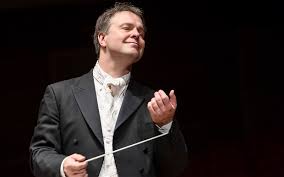
Is Vaughan Williams’ Third Symphony really so rarely performed? Sir Mark Elder obviously thinks so and spoke strongly about its merits prior to the performance though, with fine playing throughout, it hardly seemed to need such a large plug. Moreover, performing it immediately after Butterworth’s A Shropshire Lad and before Debussy’s Las mer gave it a solid context which hardly needed added explanation. I am not against conductors speaking to the audience but felt that, on this occasion, it did little to add to our understanding and lengthened an evening which, unfortunately, over-ran badly.

Butterworth’s A Shropshire Lad can come across as a rural idyll but Elder finds levels of melancholy and loneliness in the work which are highly convincing. The touches of portamento in the strings hint at an understanding which is more than simply archaic. In the light of this interpretation we were well prepared for the ambivalence of the Vaughan Williams. Again this is very far from a pastoral idyll but none the less is clearly wedded to an understanding of the relationship of humanity to nature. The first movement, for all its introspection, seems to regularly flood with birdsong, calling us to a world of innocence which might exist if only man did not. This mood is carried over into the second movement where the solo trumpet provides a distant, cold, reminder of man’s presence and final judgement. It is a world away from the trumpet solos in Mahler and chillingly so. The third movement’s heartiness contrasts with the continuing bird song, but seems shallow in comparison and so we are led to the keening of the solo soprano in the final movement. Louise Alder, off-stage throughout, filled the hall easily with a gentle warmth and Mark Elder drew our attention to the different impact of the two passages she sings. At the opening her line is underpinned by a soft but uncomfortable tympani; at the end it is supported by high strings. Though the pain continues, we know we have moved from despair to resolution and compassion. It is a wonderful work, and yes we do not hear it often enough.
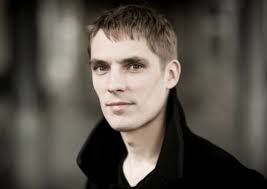
Cedric Tiberghien

After the interval we had moved from English impressionism to French, opening with a forthright account of Ravels’ Piano Concerto for the left hand, with Cedric Tiberghien as soloist. The strident writing and vivid colours contrast the fluid lyricism of the cadenzas which were given limpid clarity by the soloist. His sensitivity towards the period was exemplified in the Debussyan encore which followed.

Ending the evening with Debussy’s La mer almost came as a shock after the earlier works. The crisp open clarity, the sparkle and enthusiasm which the orchestra conjured up, was like a splendid cold shower after a very sweaty race. Detail was exemplary and dynamic changes always firmly focused. Those who had to slip away before the Debussy started, given that we were now running thirty minutes behind the expected time, missed a wonderful conclusion, and there was something of a scramble to get out following the final note. A pity, music making of this quality deserves better – and that is down to the planning.

Hastings Philharmonic Choir

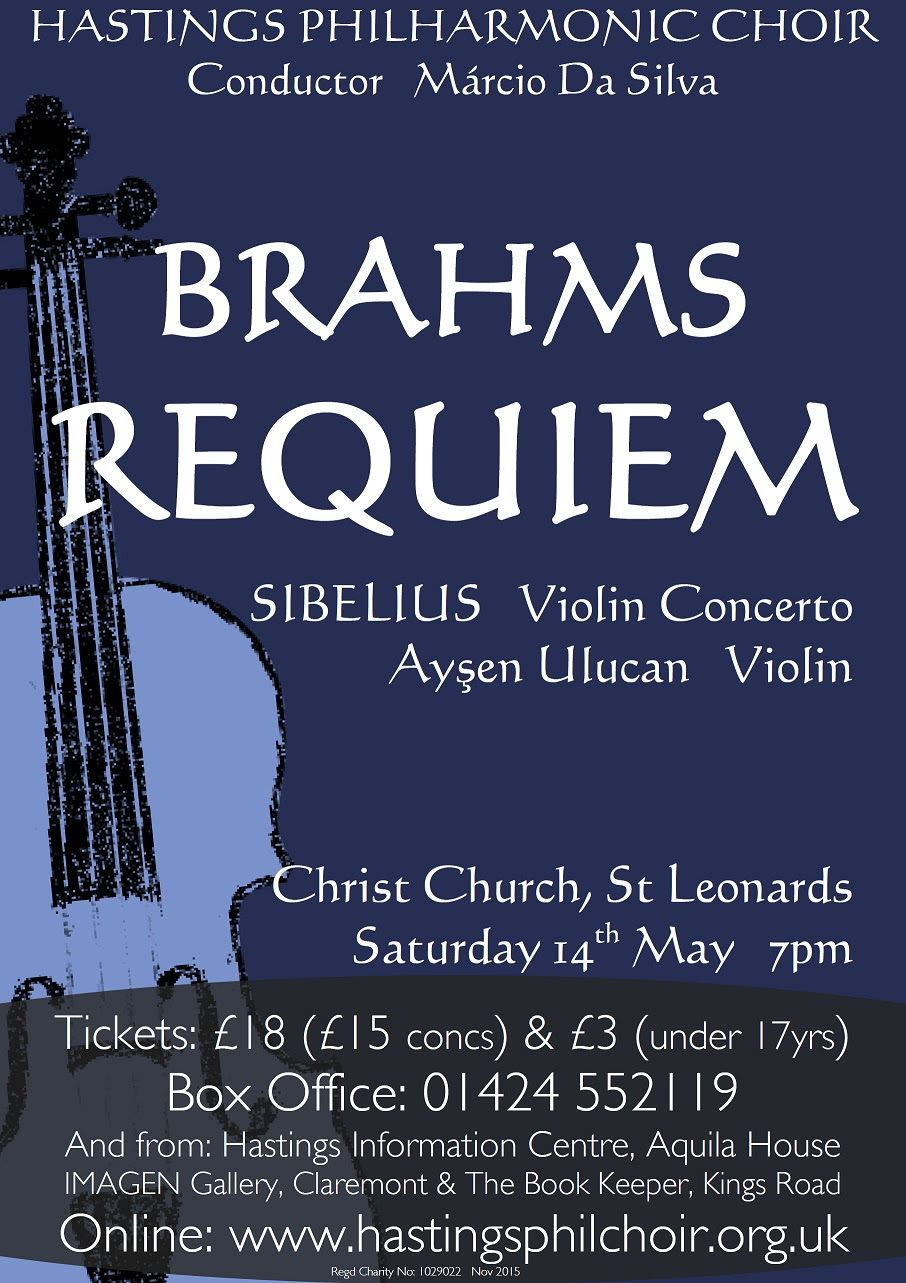
The choir is returning to the glorious Christ Church, St Leonards for an evening of sumptuous music in a sumptuous setting! Brahms’s magnificent Requiem is a masterpiece for choir and orchestra; a groundbreaking ‘Mass for the Living’ as it is sometimes known. The choir sings in German and a translation can be read in the concert programme.

There will be a full romantic orchestra for this piece and another lesser known Brahms piece, ‘Gesang der Parzen’ with  text taken from Goethe’s Iphigenie auf Tauris. This is a little gem, a mini-symphony with similarities to the Brahms’ 3rd Symphony.

aysenulucan

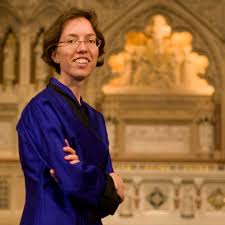
Sibelius’s Op 47  violin concerto reaches tumultuous heights; here the soloist’s first note—delicately dissonant and off the beat— could not be more beautiful!

The choir welcomes Aysen Ulucan again to perform this concerto with her trademark virtuosity.

Tickets cost £18 (£15 concs) or £3 for children under 17yrs.

You can reserve tickets by calling the Box Office on 01424 552119 or online, subject to £1.80 booking fee, at http://www.wegottickets.com/event/357670

Elgar: The Dream of Gerontius

Barbican Hall, Sunday 24 April 2016

Sir Mark Elder has a fine reputation for his Elgar interpretations and this was very much in evidence last night. If the tempi are often on the slow side, the phrasing and balance are exemplary, and when the choruses need to bite, they certainly do so.

Allan Clayton

Allan Clayton brings a clean, very English, voice to Gerontius himself, but to this is added a ringing heroic top which made Firmly I believe, and Take me away genuinely thrilling. His diction allows the text to have real impact, particularly in the second half where his encounters with the Angel were warmly human. There is little sense of pain or angst here, more of commitment and conviction. It was very moving.

Gerald Finley was equally moving as the Priest. If the voice is not the stentorian bass which we often hear, its warm baritone is more affective for its lighter tones. This was even more true of the intensity he brought to the Angel of the Agony.

Alice Coote has a real gift in being able to sing with the lightest of touches and yet be hear d over Elgar’s often dense orchestration. The opening of part two was delicate and personal, with no sense of triumphalism even in the more explosive alleluias. The Angel’s farewell was moving without every becoming sentimental. Together, the three voices brought us an interpretation based far more on hope and confidence than on pain and judgement. It was totally convincing.

The LSO chorus were in fine form, the dynamic changes made with ease and the text carrying well. They were joined by members of the Guildhall School Singers for some of the choruses, where the extra voices gave us even greater impact. The final bars of Praise to the Holiest seemed to go on into eternity.

The LSO know this work well but there was never any hint of this being just another performance.  Solo parts are always well found, and on this occasion the harps seemed to be even more important than usual at key moments.

There was no sign that this was being recorded. A pity – many could benefit from a reading of this intensity and joy.

BBCSO: Bax, Dean & Elgar

Barbican Hall, 13 April 2016

Sakari Oramo

Sakari Oramo has proved himself to be our finest living Elgar conductor. I say this without hesitation for while we have many fine Elgar conductors today, none brings the sense of vitality and complexity to the scores that he does.

The performance of the First Symphony at the Barbican was a good case in point. The opening was heroic, gently flowing without any hard edges, yet had a luminous quality which lifted the spirits from the opening bars. Sakari Oramo creates the most subtle fluctuations of dynamics and tempi to highlight inner voices and tensions which might otherwise go unnoticed. Solo playing was exceptional with the brass blazing into life without any sense of raw edges.

The clarity of the string figuration at the start of the second movement impressed, and Oramo drew our attention to Elgar’s closeness to Mahler rather than Brahms in these inner movements. There is a ferocity to the brass which Brahms would never have allowed but which looks forward to the turmoil of Elgar’s second symphony.

The clipped staccato opening to the final movement hinted at a world held in suspense before it is finally released, revisiting all of the former ideas but seeing them now through the eyes of wisdom.

A magnificent performance, with some exceptionally fine solo playing, not least from the two harps.

The evening had opened with Bax’s The Garden of Fand. Though not as well-known as Tintagel this is a fine romantic work which moves easily between the glistening sea and the earthbound dances. If the programmatic narrative leaves us a little bemused these days that does not affect the pleasure the work itself gives.

Brett Dean was the soloist in his own Viola Concerto. The two main movements have a brief, melancholic preamble before they launch into a dense score which is full of atmospheric detail. This is often effective but the sense of structure is difficult to follow and there is little to grasp melodically. Rhythms are frequently strong and powerful, with a full percussion section used throughout. The second movement opens quietly but soon builds to the ferocity of the first, though there is a fine extended solo passage for cor anglais at the end. The concerto was very well received.

Harvey’s Brass in Pevensey

St. George’s Day Brass Concert
23rd  April 7:00PM
St. Nicolas Church, Pevensey

Harvey's Brass

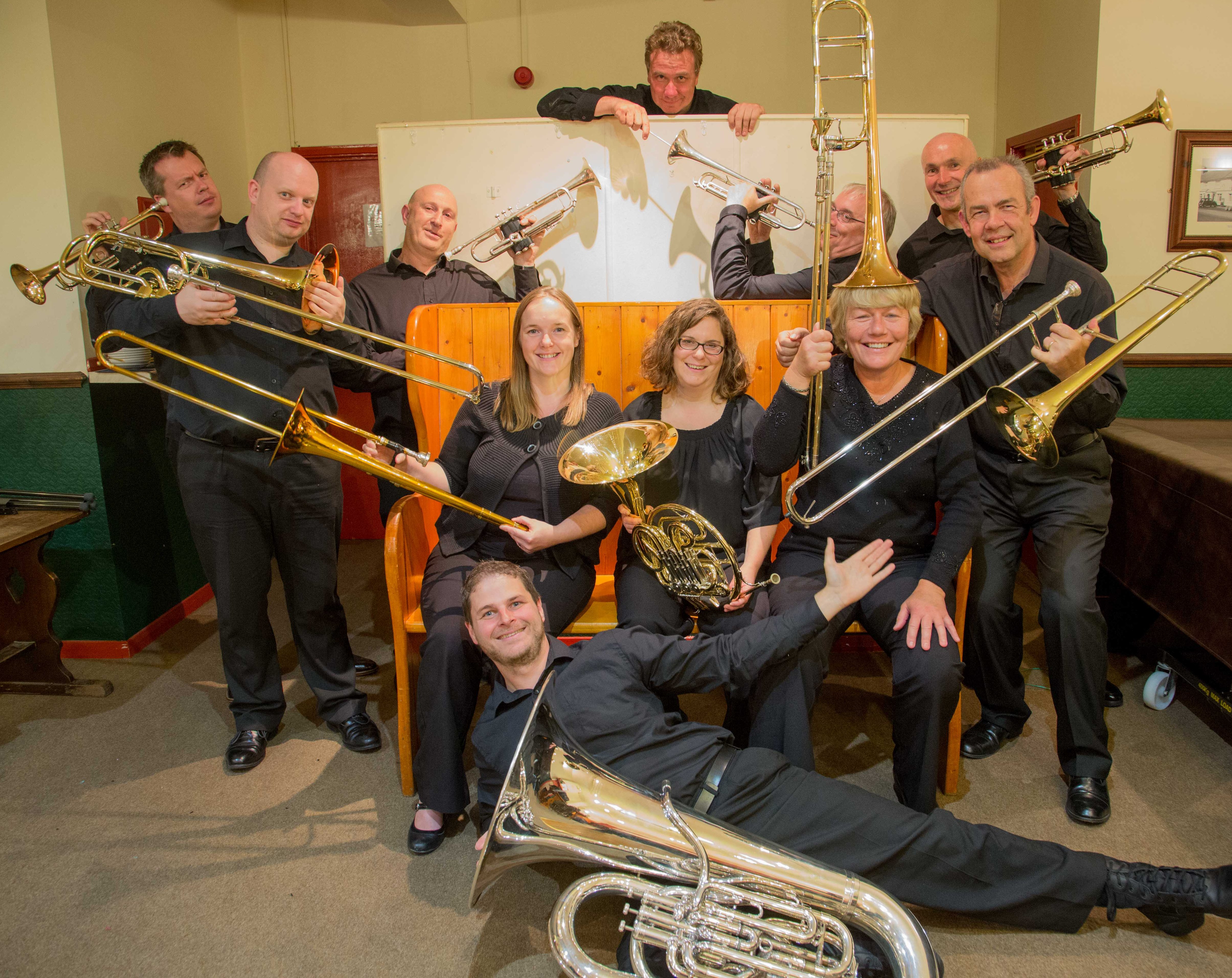
St. Nicolas church, Pevensey hosts Harvey’s Brass at a concert on April 23rd at 7:00PM.

It is their first concert at the church as part of the church’s 800th anniversary fund raising programme. Tickets are £10.

“We are really thrilled to have this outstanding ten piece symphonic brass ensemble give a concert in our wonderful acoustics,” said George Stephens, deputy church warden at St. Nicolas. ‘It will be a fun evening and their first concert at the church. The programme includes a mixture of well known classical and modern music, some big-band arrangements, and dance music. Composers are as varied as Quincy-Jones, Handel, Gershwin, Joplin, Offenbach, Sondheim, Quincy-Jones and many more with pieces from a wide selection of musical genres.”

Harvey’s Brass is based in Sussex and made up of experienced musicians from across the county. It was formed in 2003 by Neal Bland and Peter Cowlett, and received generous early sponsorship from the Harvey’s Brewery based in Lewes. Its aim is to play music from the Renaissance to the modern day, including modern arrangements specifically for the group.

The group has performed in over 30 concerts across the breadth of Sussex, and included guest artists such as Crispian Steele-Perkins and local jazz trombonist Mark Bassey. They have a regular berth at the Eastbourne bandstand during the summer, and also perform in various music festivals and churches around the county.

Concert Tickets are available from George at 01424 216651, g.stephens45@btinternet.com, or at the door.

The concert is supported by Gaby Hardwicke, BPE Communications, 1066 Country,  Priory Court Hotel, Starshine Music, Carr Taylor Wines, Visick Cars Pevensey Town Trust and Wealden District Council.


PULL OUT ALL THE STOPS 4 – ISABELLE DEMERS

Royal Festival Hall, London, 11 April 2016

ISABELLE DEMERS

This recital was billed as ‘A celebration of the Music of Max Reger’. Through a selection of Reger’s own compositions, the appreciative audience of around 400 were entertained and entranced by this young North American organist.

The first half of the evening was partly given over to Reger’s arrangements of Bach’s Chromatic Fantasia & Fugue in D minor, BWV 903, followed by his arrangements of four of Bach’s Two-part Inventions. These arrangements gave an interesting insight into Reger’s compositional world, particularly his desire to draw out individual lines and colours. I have to confess that I prefer my Bach to be ‘unspoiled’ and so although impressed by the scale and variety of the opening piece I was more drawn to the smaller scale, delicately registered first three Inventions. The fourth was rendered in bombastic style!

There followed two of Reger’s own large scale compositions, Chorale fantasia: Wachet auf, ruft uns die Stimme and the Introduction, passacaglia and fugue in E minor. Both of these works draw on the original thematic material to create immense structures with extremes of dynamic and colourful contrasting registrations. The sound world is neo-romantic with complex and often chromatic harmonies and shifting rhythms.

Although I can’t say this is my favourite music I was entranced by Isabelle Demers’ authoritative performances, her dexterous handling of this instrument and the fact that she seemed so at one with music and instrument. I was especially impressed to see this whole programme performed without a score in sight.

The RFH is very well suited to this music and there were moments when the exposed layout of the pipework produced some lovely more-than-stereo effects. As before it was a pleasure to see such a range of people in the audience – proof that quality organ performances can be popular.

Another very successful and enjoyable entry in this series. The final concert of the season in on 6th June. The 2016-17 series has just been announced.

Stephen Page

BBC Proms 2016

For full details of the season please visit: bbc.co.uk/proms

To view the BBC Proms launch film, please visit: http://www.bbc.co.uk/programmes/p03qvk7

Tickets go on sale from 9am on Saturday 7 May 2016 via bbc.co.uk/proms 

or 0845 401 5040 and in person at the Royal Albert Hall

Promming season tickets are available from 9am on Thursday 5 May

CBeebies and Ten Pieces II tickets are available from 9am on Friday 6 May

Proms in the Park tickets are available from 11am on Friday 6 May

Ensemble OrQuesta Opera Academy: Le Nozze di Figaro

St Mary-in-the-Castle, Hastings, Sunday 10 April 2016

As a critic one is normally faced with professional performances, amateur performances or a mix of the two. The Academy run by Marcio de Silva lies somewhere outside of these parameters. Singers are auditioned for a course which ensures them a solo part in a professional production but in effect they only get one go at it in public, as there is a separate cast for each of the two performances. What I enjoyed on Sunday may therefore be very different from what happened on Saturday, and any of the singers may have learned far more from the experience as a whole than simply appearing before an audience, as most of them have had considerable exposure before the public.

If this seems a lengthy preamble it is necessary to set the scene as the performances we encountered were, of necessity, a mixed bag. Elizabeth Reeves’ Marcellina and Wagner Moreira’ Basilio were both outstanding. The clarity of diction, in a very difficult acoustic, was exemplary and their characterisation subtle and effective. I was glad that Marcellina’s Act 4 aria was included and a little saddened that Basilio’s was cut – though I realise this still tends to be standard practice.

Zsuzsa Zseni was a lively Cherubino with a voice to match, her two arias at correct tempi for a young man bursting with energy. Ricardo Panela’s Almaviva was more complex. Though he obviously can’t sing the part in The Barber of Seville his characterisation was far closer to Rossini than to Mozart. He often seemed ill at ease, though his singing was pleasing and his ensemble work fine. There was never any real sense of menace here or of dangerous authority which is needed if we are to believe that he really does have total autocratic power. Roxana Nite’s Countess was suitably subdued and her two arias brought us introspective insights into her past history, with much beautiful phrasing.

Judith Charron sang Barbarina’s only aria with real pathos, though for much of the rest of the evening she seemed over-excited. Figaro and Susanna – Gheorghe Palcu and Julia Cubo – were well matched dramatically but neither were quite right vocally. This is not a criticism of their individual voices, more that the parts did not really suite them. Neither brought the clarity of diction we need in the recitatives, and the arias, while pleasantly sung, never really hit the spot. Only Susanna’s Deh vieni non tardar in the fourth act finally started to move us.

There was nothing in the programme to indicate who had provided the orchestral arrangement which was convincing throughout. A string quintet plus two clarinets – an odd combination – but one that proved to be absolutely right for the acoustic in St Mary’s. When one added to this the splendid harpsichord continuo of Petra Hadjuchova – filling in the gaps with aplomb and linking scenes to avoid unnecessary applause – the orchestral side under Marcio de Silva was as near faultless as one could ask.

Jenny Miller’s production made much of the building and its potential, not only for a wide range of entrances but equally allowing us to see what other characters were doing while another was singing. This worked well and characterisation was clear and well-focused throughout. The empty picture frame provided a strong link between the settings, though bringing all the characters together at the end seemed a little too close to wish-fulfilment after all that has gone before.

This was a highly enjoyable evening, and one which was hopefully of benefit to all involved, not least the singers.


Figaro Forever @ WNO

Theatre Royal, Plymouth, 5-7 April 2016

Over the last three years WNO has been grouping its seasonal productions to give them some sort of internal integrity. Some of these have worked very well – I particularly enjoyed the Donizetti Tudor season which flowed like a sort of bel canto Ring cycle. Because of this, the idea of a Figaro cycle seemed an obvious choice. We have two major repertory works in The Barber of Seville and The Marriage of Figaro plus the excuse for a new commission to fill in the final chapter with Figaro Gets a Divorce. So far so good – and even better when the cycle was to be designed by Ralph Koltai throughout, which gave a visual integrity to the whole as well as being exceptionally successful at focusing our attention on the action and singers rather than the scenery.

WNO Barber

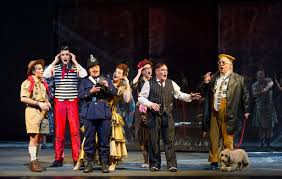
What then was the problem? Three different directors who brought very different approaches not only to the characters, who after all remain the same throughout, but also to their dramatic style. Sam Brown appears to see The Barber of Seville as little more than an excuse for comedy, ignoring the possible psychological insights which Rossini draws on, to go instead for light comedy and sight gags. Why Almaviva is given a one-man-band in the first scene is beyond comprehension and this is only the first of many unfortunate choices – though I have to admit I loved the dogs. That the opera survives despite the weight of the comic invention is a tribute not just to the score but also to the singers. Nico Darmanin is a light but engaging Almaviva, and Claire Booth a florid Rosina who seems far too knowing (and scantily dressed) for her own good. Andrew Shore’s familiar Dr Bartolo added some weight to an otherwise rather facile concept and James Southall kept the orchestra moving with aplomb. There was no attempt to connect this with the following evening’s The Marriage of Figaro even though they are actually more closely linked in narrative than Figaro is with Divorce.

WNO Figaro

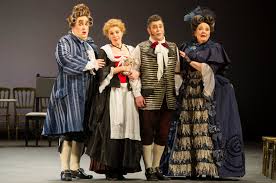
The following evening we were in a different world. This was one of the finest Figaro’s  I can recall with everything falling magnificently into place, genuine ensemble playing and some of the most stylish Mozartian singing I have heard in a long time. Add to this Jeremy Sams’ witty and fluid translation, in an acoustic where every word can be heard, and it was no wonder it was all so impressive. Tobias Richter’s production seemed deceptively simple, keeping the setting within its historic period and making no attempt to be relevant or conceptual except through the interplay of the characters. In this he was highly successful and helped by Ralph Koltai’s set with its hints of below-stairs redecoration and the fading gilt of the aristocracy. Mark Stone’s Almaviva is at the heart of the evening as everything depends on his whims, which are calculated and dangerous. Elizabeth Watts’ Countess is magnificent, her two arias heartfelt and devastating in their sense of claustrophobia and despair. Anna Devin and David Stout proved to be an intelligent pair of servants as Susannah and Figaro, though they never move out of their sphere of influence. But there were no weak links in an evening of consummate artistry. I very much hope this production survives and is repeated – it certainly deserves it.

wno divorce

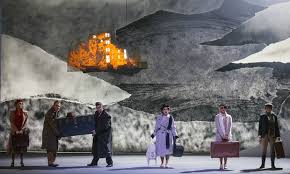
Figaro Gets a Divorce was commissioned by WNO from Elena Langer with a text by David Pountney who also directed. The score is digestible on a first hearing and has the advantage of allowing the text to be easily followed. I enjoyed much of her writing, in particular the bridge passages between scenes. There are obvious leanings towards Berg in the orchestration, with the use of accordion and percussion, while the musical line itself is post-modern enough not to upset by constant discord. Justin Brown created beautiful washes of sound from the pit, with many atmospheric moments. However there are few passages of extended melody to involve us in individual characters. Only the Countess –Elizabeth Watts, again in splendid form – and the Major, Alan Oke, have any introspective passages, while Susanna, Marie Arnet, has two cabaret songs. These cabaret songs are the closest we get to any real musical development as the Major picks up the themes and uses them as he plots the downfall of the family.

Mark Stone was again the Count, though now addicted to gambling and eventually a broken man. Figaro and Susanna do not get a divorce, though they come close to it. David Pountney’s production moves smoothly but his text frequently plods. After the wit of Jeremy Sams the previous evening it was difficult to believe that much of the text for Divorce got past the first draft. Opera for generations has been based on poetry – a setting where the words really mattered. Too often in Divorce the text was mundane to the point of discomfort, or lacked any hint of the emotional state of the character. At the interval I overheard someone say How can a work be stressful, unpleasant and boring all at the same time. We need to care about these characters. In Figaro we did; in Divorce we didn’t.

Is there a case for a Figaro cycle? Yes, I think there is. Is this the way to do it? Unfortunately not on this showing – though WNO can revive the Figaro any time they want to!