Brighton Festival: Dido and Aeneas

Theatre Royal Brighton, Sunday 8 May 2016

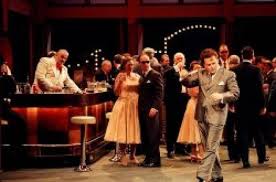
There was a time, not many years ago, when Opera was a key feature of the Brighton Festival. Whether the exigencies of finance have caused the change or a simpler matter of taste, Opera is a rarity these days. Moreover, fully staged performances are becoming rarer in themselves, so it was not unusual to find that Purcell’s Dido and Aeneas was advertised as a concert performance. No problem there for there is little action in the work itself, the focus being essentially on the emotional state of the characters.

Ann Murray

Musically this was impressive throughout. Ann Murray is a splendidly convincing Dido, bringing authority and passion to the part as well as musical sensitivity to Purcell’s beautifully spun lines. Charlotte Beamont’s lighter, crisper Belinda was a fine foil, encouraging in the opening scenes but deeply sympathetic in the tragic conclusion. Benjamin Appl was an unusually forthright Aeneas and drawing on a counter-tenor, the heroic ally voiced Rupert Enticknap, as the Sorceress was a stroke of genius. So far so good. There was no chorus but four solo singers added all the other, smaller, parts and the choral sections.

La Nuova Musica formed the instrumental band – nine musicians led from the muselar by David Bates. While there was considerable sensitivity in their playing, there was a lack of diversity to the range of tone available, and some of the accompaniments – particularly the use of harp and percussion – were unconvincing.

Dido is a short work and this has always been a problem for producers. Should it form part of an evening, alongside another, similar, work; should it stand alone or should it be augmented? The programme note argued against augmentation but this is what we got in a compromise which went against the flow of the narrative. Purcell is not writing an opera-ballet as Rameau did. The dances should be fully integrated into the action but alas here they regularly seemed to act against it, and the choreography was out of keeping with the score. In the end, the added dances simply held back the inevitable denouement. The evening was rescued at the end by the superb staging of Dido’s lament by Ann Murray. A standard concert performance (in The Dome surely?) would arguably have been far more satisfying.

Bexhill Choral Society

St Augustine’s, Bexhill, Saturday 7 May

Summer music for a Summer evening – and what a lovely evening from both the weather and the singing. Puccini’s Messa di Gloria is an early work and there is little indication of the operatic master that was to follow, but the high-flying tessitura for the tenor certainly hints in that direction. Gary Marriott was un-phased by this, throwing off the long lyrical lines with ease and riding both chorus and orchestra. Barnaby Beer brought warmth to the baritone part and their duet was impressively well balanced.

If the Puccini leans heavily towards mid-period Verdi, Poulenc’s Gloria comes with a burst of mid-twentieth century clarity and freshness. The ethereal writing in the more introspective passages is captivating and Sophie Pullen found a gentle melancholy in these which was absolutely right. The Domine Deus picks this up and the setting seems to work against the overt meaning of the text. It is as if Poulenc is challenging us to re-think an over-familiar liturgy.

The chorus were better balanced than on recent occasions with a stronger male division – important in the exposed lines of the Poulenc – and a good grasp on the dynamics of the works. Kenneth Roberts kept things moving crisply with tight rhythms throughout. I do wonder if there is a need for both chorus and orchestra to warm up for longer before they start? This was not the first occasion on which they settled quickly to produce well focused and accurate sound after a rather unnerving first few bars. It is obvious they sing and play very well but the opening can be challenging for those of us listening. A pity when there is so much fine music-making across the rest of the evening.

The next concert in Haydn’s Creation on Saturday 8 October.

CDs May 2016

THE COMPLETE PSALMS OF DAVID SERIES 2 VOLUME 10
CHICHESTER CATHEDRAL CHOIR, CHARLES HARRISON, director,TIMOTHY RAVALDE, organ
PRIORY PRCD1155 (74.12)

The second complete series of 150 psalms concludes with this offering from Chichester. As in previous volumes there is much variety and interest in the sequence of chants and all is presented with conviction and attention to detail. Each CD can be enjoyed in its own right but as a collection they are a wonderful resource for entertaining listening or private devotion as well as being a wonderful record of the current state of cathedral music.

SIR CHARLES VILLIERS STANFORD – THE COMPLETE ORGAN WORKS 3
DANIEL COOK, organ of SALISBURY CATHEDRAL
PRIORY PRCD 1146 (71’14)

This volume continues the survey of Stanford’s organ music with this excellent programme by Daniel Cook. Included are Sonata No 4in C minor, Canzona, Three Preludes & Fugues & Six Preludes & Postludes Set 2 as well as an arrangement of a short piece originally for piano & violin.

GREAT EUROPEAN ORGANS No. 99
DAVID LEIGH, organ of ST PATRICK’S CATHEDRAL, DUBLIN
PRIORY PRCD 1168
GREAT EUROPEAN ORGANS No. 100
DAVID POULTER, organ of LIVERPOOL (ANGLICAN) CATHEDRAL
PRIORY PRCD 1158

With these two releases another long-running series from Priory comes to an end. The GREAT EUROPEAN ORGANS series has been a mammoth undertaking, showcasing the very best of organs and organists and an immensely diverse repertoire of familiar and unfamiliar music.

The St Patrick’s CD presents some wonderful music spanning the late 19th and twentieth centuries. Larger works here include Concert Fantasia in D minor by Sir Robert Prescott Stewart and Lemare’s Organ Symphony No 1 in G minor.

The final CD, from Liverpool, presents a programme of mostly familiar music well suited to this grandest of organs and cathedrals. Beginning with Elgar’s Sonata in G and ending with Walton’s Orb & Sceptre the programme also features further music by Walton, Bridge, Howells, Rawsthorne & a transcription of Whitlock’s brilliant Elgar-pastiche, Dignity & Impudence. This series will be missed but it leaves behind a treasure trove of fine recordings which will hopefully continue to be available for many years to come.

TALLIS – LAMENTATIONS
THE CARDINALL’S MUSICK, directed by ANDREW CARWOOD
HYPERION CDA68121 (73’09)

Two settings of Lamentations of Jeremiah form  the core of this all-Tallis recording by The Cardinall’s Musick. Alongside these can be found items from the Short ‘Dorian’ Service, psalms and a Te Deum. The Fitzalan Chapel of Arundel Castle seems a fitting place for singing and recording this music. The programme highlights the variety of composing styles employed, from the polyphony of the expansive choral settings to simpler homophonic forms.

CONDUCTUS 3 – Music & Poetry from 13th Century France
JOHN POTTER, CHRISTOPHER O’GORMAN & ROGERS COVEY-CRUMP
HYPERION  CDA68115  (61’35)

The Conductus form sits alongside Organum and early motets but is less well explored by musicians today. This third compilation comes from experts in the field, recorded at the National Centre for Early Music in York. The performers breathe life into this ancient music, creating a compelling performance.

HOWELLS – Collegium Regale
CHOIR OF TRINITY COLLEGE, CAMBRIDGE, director STEPHEN LAYTON, organ ELEANOR KORNAS & OWAIN PARK
HYPERION CDA68105 (61’14)

A beautiful recording of a selection of Howells’ church music-  Holy Communion, morning and evening canticles, anthems and and a solo organ piece, the Rhapsody No 1 in D flat major. This music never fails to move me.

SONGS OF LOVE, WAR & MELANCHOLY – The operatic fantasias of JEAN-FRANCOIS GALLAY
ANNEKE SCOTT, natural horn, STEVEN DEVINE, piano, LUCY CROWE, soprano
RESONUS RES10153 (66’41)

This is the final volume of three by Anneke Scott of music by Jean-Francois Gallay, himself a natural horn player. There is great vitality in these performances of music which was all new to me.

THE SOLDIER’S RETURN – Guitar works inspired by Scotland
JAMES AKERS, romantic guitar
RESONUS RES10165 (61’00)

Resonus is to be congratulated on its ability to produce fine recordings of  interesting and unusual repertoire. This CD features music inspired by Scotland from a number of guitarist/composers, many of the 19th Century,  from continental Europe. It is a beautiful CD.

CONVERSED MONOLOGUE – Concerti by JG GRAUN, J-M LECLAIR & WF BACH
FANTASTICUS XL
RESONUS RES10166 (70’08)

An interesting assemblage of 18th Century instrumental music written for courtly patrons. Using authentic instruments this ensemble transport the listener to a different age and culture in committed performances of these three concerti.

HER HEAVENLY HARMONY – Profane music from the royal court
THE QUEEN’S SIX
RESONUS RES10164 (62’19)

Further courtly music, this time vocal music from the reign of Elizabeth I. This is the second album from this choir devoted to music by familiar names of the Tudor and Jacobean royal courts. Morley, Tomkins, Tallis, Byrd, Gibbons & Weelkes are all represented by secular songs of love, death and other themes. A lovely collection.

BRITISH VIOLIN SONATAS VOL 2
TASMIN LITTLE, violin, PIERS LANE, piano
CHANDOS  CHAN10899 (66’05)

This 2nd Volume collects violin music by influential British composers who span the 19th/20th centuries. Sonatas by Bridge, Bliss & Ireland sit alongside Vaughan Williams’ Two Pieces and a very late piece by William Lloyd Webber, The Gardens at Eastwell. A fine programme.

DOMENICO SCARLATTI – 18 KEYBOARD SONATAS
YEVGENY SUBDIN, piano
BIS RECORDS BIS-2138 SACD (74’30)

This collection of keyboard sonatas is very enjoyable. Whilst opinions differ about the piano being a suitable vehicle for this repertoire it is without doubt that Yevgeny Subdin’s expressive playing brings life and feeling to this music.

J S BACH – SECULAR CANTATAS Vol 6 (TRAUERODE)
BACH COLLEGIUM JAPAN chorus & orchestra, MASAAKI SUZUKI, director
BIS RECORDS BIS-2181 SACD (78’55)

This volume presents performances of the Trauerode, Lass, Furstin, Lass noch einen Strahl,Schlage doch, Gewunschte Stunde (a work thought now to be possibly composed by Georg M Hoffmann) and Tilge, Hochster, meine Sunden (after Pergolesi’s Stabat Mater). A further substantial offering from the Collegium and soloists.

SP



Pevensey’s significance in British History – the archaeological record

“2016 offers an opportunity for re- evaluation, reflection and celebration of the significance of Pevensey and its place in British History,” says Dr Scott Mclean in a talk to be given at St. Nicolas Church, Pevensey on 18th May at 7:00PM . Tickets are £7.    

Dr Maclean is an Associate Professor of History and was director of British Archaeology at the Hertsmonceux Bader International Study Centre’s Field School. His specialty is British history and archaeology.

 Scott MacLean

Dr. Maclean says, “Despite Pevensey developing into an important centre of trade in the Middle Ages and being awarded the status of being a Cinque Port, local historical and archaeological focus has remained on the town of Battle, the site of the Battle of Hastings. 950 years on,

With a connection to such an important event in British history one would expect Pevensey to have received a significant amount of attention from historians and archaeologists alike. However, the opposite is true,” argues De Mclean.

This highly illustrated presentation will provide an overview of Pevensey’s early development and the factors that shaped its growth, with a particular focus on the archaeological record. The most recent excavation took place in 2014 immediately south of St. Nicolas Church, itself celebrating its 800th anniversary. This excavation made some interesting discoveries and demonstrated that the history of Pevensey is rich.

All funds raised from ticket sales will go towards the church’s 800th anniversary Restoration Fund.

This Event is in association with Gaby Hardwicke (solicitors), BPE Business consultants, The Priory Court Hotel, Visick Cars, Carr Taylor Wines, Starshine Music, ‘1066 Country’, Pevensey Town Trust and Wealden District Council.


ENGLISH NATIONAL OPERA ANNOUNCES 2016/17 SEASON

At a Press Conference this morning, ENO announced its new season and the changes it will be making over the next few years. It has been a rough time for the Company over the last year but things really do seem to have turned a corner, even if there are still a significant number of problems – not least the on-going financial concerns which have led to a change of focus. This however should be all for the good as it is spreading the work of the Company outside of central London and aiming to bring in ever wider audiences while clearly focused on classical opera.

Daniel Kramer

Daniel Kramer spoke with real enthusiasm of his new post which he takes up on 1 August and the skills he will bring to the Company – skills already in evidence from his easy capacity to enthuse his audience and to praise the quality of those working with him.

There will be a particular focus this year on the work of Jonathan Miller’s whose iconic production of Rigoletto will return to the Coliseum in addition to his Mikado. Let us hope that this leads to a revival of his fine La boheme given the poor reception of the most recent version.

ENO Rigoletto

Season highlights include:

  • ENO’s Composer-in-Residence, Ryan Wigglesworth, conducts the World Premiere of his first opera The Winter’s Tale, with actor Rory Kinnear making his directorial debut
  • The European Premiere of Charlie Parker’s YARDBIRD, a jazz-infused chamber opera by Daniel Schnyder that tells the story of the great bebop pioneer, starring Lawrence Brownlee in the title role. Ron Daniels directs YARDBIRD at Hackney Empire – the first opera to be performed as part of a long-term collaboration with Hackney Empire and Opera Philadelphia
  • World-renowned artist and director William Kentridge directs a new production of Berg’s Lulu, conducted by Mark Wigglesworth
  • Olivier Award-winning director Richard Jones returns to ENO to direct a new production of Don Giovanni, conducted by Mark Wigglesworth, with Christopher Purves in the title role
  • ENO takes Jonathan Miller’s popular production of Gilbert and Sullivan’s The Mikado to the Opera House at the Winter Gardens, Blackpool
  • A new partnership with the Southbank Centre. In summer 2017, ENO will present a concert hall performance of Elgar’s The Dream of Gerontius
  • ENO celebrates the work of director Jonathan Miller with a special evening marking well over 1,000 performances of his work over a 38-year period
  • Revivals include Jonathan Miller’s Rigoletto, Mike Leigh’s The Pirates of Penzance, Christopher Alden’s Olivier Award-winning production of Handel’s Partenope, Catherine Malfitano’s Tosca and Penny Woolcock’s The Pearl Fishers
  • ENO announces a new partnership with Silent Opera, supporting young British director Daisy Evans

Philharmonia Orchestra

Marlowe Theatre Canterbury, 4 May 2016

The structure of this concert reminded me of a water hole on an African safari. First came Mozart, light footed like a gazelle, then Beethoven arrived, giraffe like, with elegance, panache and beauty, then finally we got Elgar – colossal, like an elephant but with all the delicacy and sensitivity of a highly intelligent animal.

To this, Edward Gardner, assisted by the Marlowe Theatre’s acoustic which is surprisingly good for a dual purpose performing space, found unusual clarity in the music. With second violins facing the firsts, and cellos and violas tucked between them, the balance worked beautifully especially in the light semi quaver passages in the overture to The Magic Flute, although I have reservations about hearing Mozart overtures in concerts. They always leave me aching for curtain up and the rest of the opera.


Martin Helmchen played Beethoven’s second piano concerto with intensity but without gratuitous flamboyance, although his left foot seems to have an independent life of its own, shaking and tapping. He packed plenty of brio into the fortissimo development passages in the allegro and played the adagio with much gentle eloquence. The triplets, which tumble playfully over the brass and woodwind interjections, were especially fine in the adagio. So was the control with which Helmchen and Gardner bounced, attacca, out of the adagio into a spirited account of the rondo which tripped away with plenty of verve and wit.

The busy, awkward opening of Elgar’s second symphony came off fairly well although I have a feeling that had this been a rehearsal they might have done it again. High spots included the richly melodious string work in the larghetto, incisive “conversations” between sections in the rondo and the sustained drama of the final chords as they die away at the end of the final movement. Gardner resisted the urge to milk Elgar’s favourite instruction “noblimente” too much and although it was a rendering with plenty of heart it was also crisp and clearly defined.

Two more general points strike me. First, the Marlowe’s playing space is large enough for a classical orchestra plus piano but only just. It’s a tight squeeze in some sections and when the orchestra was augmented with the extra brass, woodwind and percussion for the Elgar and the 20th century it took really careful stage management. Second, did Gardner forget his outfit and have to pop into Canterbury to buy a cheap off-the-peg suit in the afternoon? He really looked very odd in a dark suit which didn’t fit properly when everyone else, even the soloist, was in tails.

Susan Elkin

GARSINGTON SCREENINGS ON BEACHES, RIVER BANKS AND PARKS

Following Garsington Opera for All’s successful first year of public screenings in isolated coastal and rural communities, Tchaikovsky’s powerful opera Eugene Onegin will be screened in four areas across the UK.

Free events are programmed for Skegness (2 July), Ramsgate (25 – 30 July), Bridgewater (20 August) and Grimsby (30 September).  Garsington Opera’s 2015 production of Mozart’s Così fan tutte will be also be screened this year at the Buckingham Fringe Festival (11 June) and Marlow Town Festival (12 June).  In each location a large-scale programme of education and outreach work is firmly integrated with the digital free public screenings and will provide ground breaking opportunities for communities to be involved in creating, learning about, and performing opera .

Opera for All is a programme which challenges expectation by uncovering the ingredients and foundation of opera – drama, music, story-telling and expressive emotion.  In 2015 Opera for All’s touring participation programme involved over 1000 young people taking part in creative residencies at both primary and secondary schools.  For the students in each of the 25 schools, the experience of working alongside a team of professional artists to create and perform their own pieces in relation to the opera that was screened, was transformative.  For many it was their first experience of live professional singing and it set confidence and aspiration soaring.

Grant Edgar, Associate Head, Skegness Grammar commented: ‘The confidence that the young people can develop by performing challenging tasks, really takes them out of their comfort zone. To see them ‘buzzing’ from the experience is really very pleasing indeed’

Opera for All is a three-year partnership project between Garsington Opera, the charitable trust Magna Vitae, and the Coastal Communities Alliance, and is supported by Arts Council England’s Strategic Touring Fund.

Tchaikovsky’s powerful and moving opera Eugene Onegin (director Michael Boyd, designer Tom Piper, conductor Douglas Boyd) about youth and first love, features British baritone Roderick Williams in the title role and Welsh soprano Natalya Romaniw singing the young heroine Tatyana.  Mozart’s Così fan tutte featuring international star Lesley Garrett, is a bittersweet comedy in which real people face real and painful predicaments.

SCREENING DATES FOR EUGENE ONEGIN   
SKEGNESS   Saturday 2 July 12.30pm                         Tower Esplanade SO Festival
RAMSGATE   25 – 30 July                             Ramsgate Beach, Ramsgate Arts Festival
BRIDGEWATER & BURNHAM  Saturday 20 August     APEX Park, Burnham-on-Sea
GRIMSBY       Friday 30 September 7pm                        Grimsby Central Hall


SCREENING DATES FOR COSÌ FAN TUTTE
BUCKINGHAM   Saturday 11 June          The Film Place, Buckingham Fringe Festival
MARLOW           Sunday 12 June  Higginson Park Marlow Town Regatta and Festival

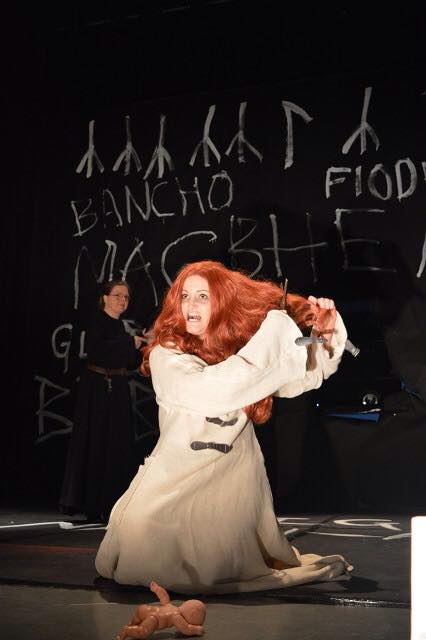
Opera South East: Verdi Macbeth

White Rock Theatre Hastings; Friday 22nd April 2016

OSE Macbeth

With the combination of celebrations for the anniversary of Shakespeare’s death and Verdi’s splendid music Macbeth was  the ideal choice for the 2016  production, with Fraser Grant exploring the dark, politically intriguing, world of the play.

The soloist’s diction was first class and of course being sung in English helped the audience, but there were times when I found it extremely hard to follow the ensemble lyrics, although the harmonies and strength were thrilling.  Returning to Opera South East, international soprano, Mari Wyn Williams, played the exacting role of Lady Macbeth superbly, opposite regular OSE baritone Peter Grevett as a deadly Macbeth.  Rich bass Richard Woodall gave a strong performance as Banquo, managing an enormously long cloak with precision.  He doubled as the white-coated doctor who wielded an enormous hypodermic needle. Benjie del Rosario, tenor, performed an admirable Macduff with soprano Talitha McIntyre-Burnie giving her first performance with OSE as the Lady-in-Waiting.

At the opening of act one, the coven of pregnant witches foretell the prophecy and the writing is on the wall – quite literally – the three paint white text onto the photographic paper backdrop in Gaelic!  Fortunately for us there was a glossary for easy translation and for the finale the whole thing was pulled to a pile and revealed a back-drop in blue with a white cross marked SAOR ALBA – Scotland is Free. Brilliant. An impressive banqueting table was set up hiding the group of assassins and the final tearing down of the wall of corruption, with the bodies of Lady Macbeth and her husband left in the central pile, was amazing. Anne Lawson

LINK to video clip of Lady Macbeth siging at the sitzprobe  (if you are on Facebook)

https://www.facebook.com/groups/48161597333/

Daniel Kramer announced as new Artistic Director of English National Opera

Today (29 April 2016), ENO announces that award-winning opera and theatre director Daniel Kramer will become Artistic Director of the Company from 1 August 2016.

Daniel Kramer

British-American director Daniel Kramer’s work with ENO extends backs to 2008. He was selected as part of ENO’s young director’s initiative for which he directed Punch and Judy at the Young Vic which subsequently won the South Bank Show Award for Outstanding Achievement in Opera. Kramer returned to ENO in 2009 to direct Bartok’s Duke Bluebeard’s Castle at the London Coliseum and is currently directing Wagner’s Tristan and Isolde, conducted by former ENO Music Director Edward Gardner and designed by Anish Kapoor.

Daniel Kramer has been an Associate at the Gate Theatre, Notting Hill and the Young Vic, and a Creative Associate at the Royal Shakespeare Company.

The appointment was made by a panel of ENO Board Members chaired by Harry Brunjes, including Louise Jeffreys and Anthony Whitworth-Jones. The views of members of the Orchestra and Chorus and the senior artistic team were also taken into account. Daniel was unanimously chosen as the exceptional individual from a very strong field of candidates.

Speaking about his appointment, Daniel Kramer said,

“I am honoured to join this wonderful Company. The core of English National Opera is its unique Company spirit – its award-winning orchestra and chorus and its incredible staff, stage and house crew. My intention is to champion this family and to inspire audiences night after night with a thrilling programme of musical diversity, attracting audiences from opera to operetta through to popular music. We will work, too, with the wider community outside the Coliseum, to develop emerging talent and new audiences. We are here to play and sing for you. I hope you will join us in this new chapter of our evolution.“

St Nicolas, Pevensey

18th May at 7:00 PM,  the first of two talks to be given this year as part of the 800th anniversary celebrations by leading historian and archaeologist, Dr Scott Mclean. Tickets are £7:00. Dr Mclean’s talk on The Archaeology of St. Nicolas’, will be highly illustrated. Dr Maclean is an Associate Professor of History and was director of British Archaeology at the Herstmonceux Bader International Study Centre’s Field School.

The talk will provide a particular focus on the archaeological record and an overview of Pevensey’s early development and the factors that shaped it’s growth. Over several decades excavations have taken place in land adjoining St. Nicolas churchyard, close to where William the Conqueror may have landed, within easy reach of the then existing Pevensey Castle which he enlarged and fortified. Dr. Mclean’s most recent excavations took place in 2014 in an area in the north-east corner of Church Farm immediately south of St. Nicolas Church. This excavation made some interesting discoveries and demonstrated that the history of Pevensey is not only long but rich. Dr Mclean will show some of his excavated findings – some dating back centuries, and some from continental Europe

28th May at 7:00 PM, the first jazz concert to be held in the church’s 800 year history. It will be given by the ‘Pasadena Roof Orchestra ‘Hot Five’. The ‘Hot Five’ will play two sets of 50 minutes each. Tickets are £12:50

John Arthy who founded the world famous ‘PRO’ in November 1969, will be accompanied on double bass and tuba, by four other musicians: John Nichols, piano, Ron Drake, saxophone/clarinet, Martin Wheatley guitar/banjo and Andy Woon trumpet. All have played with some of the world’s most famous jazz bands and performers over the years in Britain, The United States and Europe.

The five musicians are all widely recognized jazz musicians in their own right and specialize in music from the 20’s and 30’s. Advance booking is strongly recommended.

Ticket Booking

If you choose to purchase tickets directly in advance, (especially advisable for the 28th May concert, as there is a strictly limited capacity) please email your ticket request and send your cheque to 10, Leasingham Gardens, Bexhill on Sea TN39 4DZ, made payable to ‘St. Nicolas Pevensey Restoration Fund’.

If tickets are purchased for the Concert on line, (http://www.wegottickets.com/event/348443) you will receive confirmation directly and this confirmation document should be shown at the church when attending.