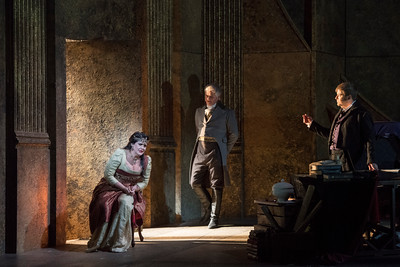
ENO: The Pearl Fishers

London Coliseum, 19 October 2016

pearl-fishers

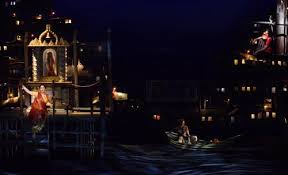
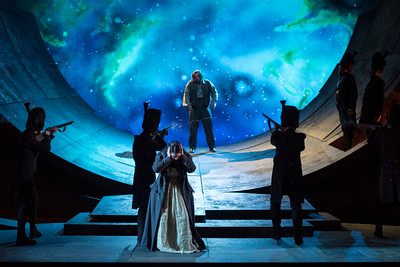
This is the second revival of Penny Woolcock’s production and it maintains the same balance of strengths and weaknesses as have been apparent on both previous occasions. The new soloists are strongly cast and the men are particularly impressive. Jacques Imbrailo as Zurga and Robert McPherson as Nadir impress in the act one duet, which is also well lit. Robert McPherson makes a great deal of his act one aria, floating the top line with ease.

Claudia Boyle may settle into Leila as the run develops but, while the voice is focused, much of her acting seems exaggerated. This worked well last year in Pirates but needs more subtlety for Bizet. James Creswell is a solid Naurabad and often quite sinister in his presence. Roland Boer handles the score with romantic aplomb from the pit, moving the narrative forward while allowing the soloists to enjoy their individual set pieces.

The chorus are in fine form but the production does not help. As I noted at the last revival, the set severely restricts the chorus movement so that the opening scene is both static and additionally is poorly lit. After the impressive diving scene at the start this is a real let-down, and visually the production does not pick up again until Leila appears on her tower and the sea comes in.

An musically worthy evening but I wish somebody had nudged the production values.


DVDs / CDs October 2016

Britten; The Rape of Lucretia
Glyndebourne Festival Opera
OPUS ARTE OA 1219 D

Britten’s opera was given its premiere at Glyndebourne seventy years ago and this new staging is a tribute to its continuing impact as a great work, as well as to the intimacy and sensitivity of the staging. The modern setting works well and Allen Clayton and Kate Royal are particularly effective as the Chorus who form the link between ourselves and the action. Christine Rice is a vulnerable Lucretia in Fiona Shaw’s intelligent production.


Glinka: Ruslan and Lyudmila
Bolshoi Theatre Orchestra and Chorus, Vladimir Jurowski
BELAIR BAC 120

For a work so familiar from its overture it is surprising that it is so rarely staged. This fine new recording, in an evocative and visually impressive production by Dmitri Tcherniakov, goes some way to explain why it might be such a rarity. It is very long. What is more, the score often repeats itself, with soloists given an extra verse or two where fewer may have been more effective. The production is well sung under Vladimir Jurowski and the Wagnerian parallels are enhanced by the staging. Worth following up.


Cav & Pag
Royal Opera House, Antonio Pappano
OPUS ARTE OA 1210 D

I really enjoyed this production by Damiano Michieletto. He links the two works together without forcing the narrative lines. In both operas the intermezzi are used to bring us characters from the other opera, most effectively in Pag where we see Santuzza and Mamma Lucia reconciled and turning positively to the birth of the baby. It serves to link the people of the village without forcing them into a single story. Aleksandrs Antonenko is strongly cast as both Turiddu and Canio, but there are no weaknesses in a highly compelling staging, driven from the pit by Antonio Pappano at his most romantic.


Antoine-Esprit Blanchard: Magnificat a la Chapelle Royale
Les Passions, Jean-Marc Andrieu
LIGIA Lidi 0202313-16

Jean-Marc Andrieu has been working on the scores of Antoine-Esprit Blanchard for thirty years now and this is the latest of his re-discoveries. Three motets are recorded here – Magnificat, De Profundis and In exitu Israel. In 1738 Blanchard was made music master to the Chapelle Royale, having been born in central France in 1696, and got to Paris by a highly circuitous route. Two of the motets are recorded here for the first time and are given with the professional skill and excitement we have come to expect from the group who brought us such thrilling recordings of Jean Gilles. There is a detailed booklet together with the CD and the full text of the motets.

More details of Les Passions and CD purchase available from www.les-passions.fr

Chopin Mazurkas
Pavel Kolenikov, piano
HYPERION CDA 68137

Pavel Kolenikov was one of the BBC New Generation Artists 2014-16 and this recording adds to the many fine performances he has already given. Elegance is not a word often used of performers today but it certainly suits his approach to Chopin, which has a delicacy, an intimacy which reflects the domestic potential of the works as well as their more obvious place in the concert hall. Let us hope we will hear a lot more from him both on stage and in the recording studio.

Celtic Airs
Barry Douglas, piano with ensemble
CHANDOS CHAN 10934

This might not appear to be an obvious ‘classical’ choice but it is a fascinating cross over. Barry Douglas is joined by Irish flute and penny-whistle, Scottish harp and Shetland fiddle, for a collection of Celtic music. Some of it is played straight and other items are used as the basis for improvisation and embellishment . it is easy on the ear but also reflects a high level of professionalism.


Haydn: Sun Quartets
Chiaroscuro Quartet
BIS 2158

I enjoyed Tom Service’s notes in which he is effectively doing himself out of job – arguing that we should not read the notes but simply listen to the music. And one can see what he means for these are delightful renditions of delightful music. Just enjoy!


Fritz Wunderlich; Festive Arias
SWR 19026CD

For those of us old enough to remember Fritz Wunderlich this is a wonderful disc of the singer at his best. While the Bach and Schutz items are familiar, it is the recording of ten pieces from Handel’s Messiah which are of particular interest as they are sung in German, which is interestingly challenging for those of us who know it so well in English. The recordings were made between 1955-59 though they do not sound their age.


Beethoven: Piano Sonatas
Steven Osborne
HYPERION CDA 68073

The three sonatas included here are the Hammerklavier Op106, the Op101 in A major and Op90 in E minor. For some reason, that is not quite clear, they are presented in reverse order to that in which they were written, even when the liner notes point out how well they work if played as a set of three in correct order! None of this affects the quality of the playing which has both subtlety and clarity of texture throughout. This is the third Beethoven disc from Steven Osborne and we can surely hope for more.


J S Bach: Goldberg Variations
Angela Hewitt, piano
HYPERION CDA 68146

This is clearly marked 2015 recording to distinguish it from Angela Hewitt’s first recording in 2000. The work itself, as she tells us in an extended article in the accompanying notes, is an essential part of her musical life and has been with her at key moments. She is particularly concerned at its intimacy and potential to make the most impact where the audience is smallest. Better still, the version we hear is a single take, not a patch-work of edits. That reality shines through in a remarkable performance which gets to the heart of the work, communicating with ease, and with a flow that seems effortless.

BH

THE YOUNG J.S. BACH
Andrew Arthur, Carsen Lund organ, Trinity Hall, Cambridge
PRIORY PRCD 1176 (2CDs) 155’31

This welcome release presents the ‘Neumeister chorales’ in lovely performances to celebrate the 10th anniversary of the inauguration of this organ. Providing added variety this well-structured 2 CD release places a number of other contrasting works to punctuate the collection.

THE COMPLETE ORGAN WORKS OF THOMAS TERTIUS NOBLE  Volume 2
John Scott Whiteley, organ of York Minster
PRIORY PRCD 1129
The second volume of this project includes a number of hymn preludes based on well-known tunes (Melcombe, Dominus regit me, Stracathro, Walsall, Picardy) as well as the Sonata in A and Introduction & Fugue in F minor. The CD opens with Toccata & Fugue in F minor. John Scott Whiteley obviously has a great affinity with this music and uses his experience of this organ to the full.


MALCOLM WILLIAMSON ORGAN MUSIC
Tom Winpenny, organ, St John the Evangelist, Duncan Terrace, London
NAXOS 8.571375-76 (2 CDs)  99’22

The music of Malcolm Williamson is ripe for rediscovery as this collection of some of his organ works from the late 1950s to the mid ‘70s shows. This is not a complete survey, with several of the more well-known titles missing. However, what is included is lovingly brought back to life by Tom Winpenny, who is developing his reputation as an advocate of twentieth century repertoire.  Shorter pieces include Epitaths for Edith Sitwell and Elegy-JFK. More lengthy works are the fascinating Peace Pieces, Little Carols of the Saints and Mass of a Medieval Saint. A wonderful release.


FITZWILLIAM VIRGINAL BOOK EXCERPTS
Ton Koopman, cembalo/ harpsichord
CAPRICCIO ENCORE C8002
This is an enjoyable collection of a selection of pieces from the Fitzwilliam book. It could serve as an excellent introduction to the delights of the keyboard repertoire of this era or purely as an entertaining listening experience. The recordings are some years old but Ton Koopman’s mastery of the keyboard shines through.


STILL, O HIMMEL – Christmas Carols by Joseph Haas & his contemporaries
Muncher Frauenchor & Munchen Madchenchor
directed by Katrin Wende-Ehmer, organist Norbert Duchtei
TYZart CHROMART CLASSICS TXA15070  77’00

This recording of German Christmas carols by the Munich Ladies’ & Girls’ choirs gives an insight into music that was largely unknown to me. The first part of the CD consists of extracts from Haas’ Christmas oratorio, Christnacht, which draws on Bavarian and Tyrolean folk melodies. Alongside this are carols by Rheinberger and Reger, as well as less familiar names including Erna Woll and Christian Lahusen. A welcome alternative for the Christmas season.


DICH MARIA HEUT ZU PREISEN – The most beautiful compositions in praise of the Virgin Mary by South German and Italian masters of the 18th & 19th centuries
MECHTHILD KEINDL, soprano, ANNE DUFRESNE, oboe, NORBERT DUCHTEL, organ
TYZart CHROMART CLASSICS TXA15069  71’00

Works by Rheinberger, Reger, Konigsperger and others form an interesting and varied programme.

SP



Maidstone Symphony Orchestra

Mote Hall, Maidstone, 15 October 2016

The weather may have taken a turn for the worse but there was no doubting the enthusiasm of Maidstone Symphony Orchestra who seemed to have retained all the warmth and joy of the summer, in an evening full of romantic extravagance.

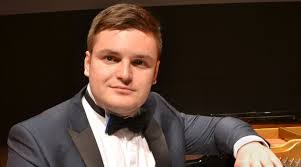
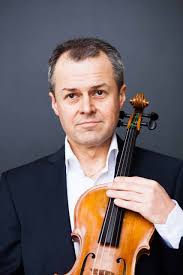
Brian Wright opened with a thrilling reading of Dvorak’s Carnival Overture, the delicacy of the harp fending off the brashness of the brass and the thwack of the tambourine. Shostakovich’s Second Piano Concerto followed with Alexander Panfilov its vibrant soloist. He brought a highly percussive approach to the work which was both exciting and convincing, though he has all the subtlety for the familiar Andante slow movement. The fire he brought to his reading was mirrored in the Rachmaninov Prelude which he gave as an encore. We would happily have asked for more but that would not have been fair on him after the exertions of the concert.

alexander-panfilov

Berlioz’ Symphonie Fantastique is equally familiar and gained in authority as it progressed. There was sound dynamic contrast in the first two movements, with the two harps particularly impressive, but it was from the third movement that it really began to impress. From the offstage oboe to the sinister drum rolls at the end it was beautifully phrased in long, lingering paragraphs.

I don’t normally mention soloists by name but the two tympanists, William Burgess and George Barton, really stood out in the final movements. The March to the Scaffold had an intensity and power which came to fruition in the finale movement, where textures were crystal clear even in the density of Berlioz’ orchestration.

If the orchestra can maintain this level of musicality for the rest of the season we are in for a fantastic year. Tell your friends – there are still seats available!

The next concert which includes familiar works by Elgar, Bruch and Schumann is on Saturday 3 December.  mso.ticketsource.co.uk  friends@mso.org.uk

Robin Hood

robin-hoodBarbican Hall, 14 October 2016

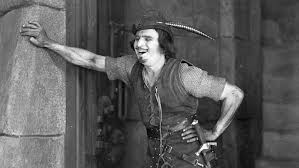
Neil Brand has been honing the art of improvisation for silent films for many years (as those of us in Hastings will recall from many fine evening at St Mary in the Castle). He has also had a desire to write a score for Douglas Fairbanks’ 1922 Robin Hood. Happily the two have come together in the magnificent unveiling of a renewed print of the film and a full score for the BBC Symphony Orchestra under Timothy Brock.

The film was always over the top, with Fairbanks’ outlaw closer to Peter Pan than Mel Gibson – think Men in Tights rather than Prince of Thieves – and from the moment he leaps into the forest it is a joy until the final tongue-in-cheek scenes where the king is banging on the bridal chamber door.

Neil Brand’s score mirrors this enthusiasm with aplomb, its rich romantic passages offset by some nastier scenes drawn from Vaughan Williams at his most introspective. Unlike Carl Davis’ scores for Ben Hur or Napoleon there are no obvious big themes to delineate the characters, rather there is a more subtle atmospheric background which gives us an emotional underpinning to the action and allows characters to develop musically as the film progresses.

As the BBC was involved we can only hope that we will see (and hear) the score again with presumably the potential for a DVD.

Marvellous Miller – A celebration of Jonathan Miller’s phenomenal contribution to ENO featuring exclusive performances from some of Britain’s best loved operatic stars

Wednesday 16 November at 7.00pm at the London Coliseum

jonathan-miller

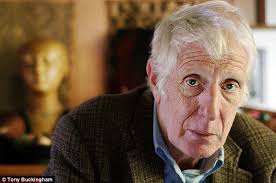
Over the last four decades Jonathan Miller’s much-loved productions have been at the heart of ENO’s work. From his insightful The Marriage of Figaro in 1978 to his charming and witty The Elixir of Love in 2010, Jonathan has provided the company with fifteen productions, many of them now staples of our repertoire. Only last season his classic productions ofThe Barber of Seville and The Mikado returned to our stage. In 2015 The Mikado celebrated its 200th show, with over 20,000 people attending this run of performances. In February 2017 his legendary ‘Mafia’ production of Rigoletto will be seen once again at the London Coliseum.

For one night only ENO celebrates this great director’s phenomenal contribution to the Company. Some of the UK’s best loved opera singers will come together to perform excerpts from many of his productions  including The MikadoRigoletto,The Barber of SevilleThe Elixir of LoveThe Marriage of FigaroLa traviataTosca and Carmen. The evening also offers a rare chance to enjoy a series of filmed interviews with the man himself.

The all British cast features representatives from some of the productions first performances through to the latest generation of artists to have benefitted from Miller’s experience.  Performances include Bonaventura Bottone performing ‘Wand’ring Minstrel’ (The Mikado), Alan Opie with Germont’s aria ‘The sea and soil of Provence’ ( La traviata), Andrew Shore with ‘To a doctor of my class’ (The Barber of Seville) and Richard Suart with his infamous ‘Little List’ (The Mikado). They are joined by a host of ENO favourites including Peter Auty, Susan Bullock, Graeme Danby, Jean Rigby, Mark Richardson, Sarah Tynan and Roland Wood alongside ENO’s award-winning chorus and orchestra conducted by Peter Robinson and Martin Fitzpatrick.

For almost 40 years audiences at the London Coliseum have been thrilled and delighted, moved and entertained by more than 1,000 performances of Jonathan’s work. This special evening offers an opportunity to relive many of those wonderful moments whilst fundraising for ENO’s world-class work.

Brighton Philharmonic Orchestra

The Dome, Brighton, 9 October 2016

Introducing the new season, Barry Wordsworth pointed out the very wide range of music which the concerts cover and the equally wide range of conductors as he will not be seen on the podium again until next March for the final event.

Though the range of works we will hear over the year is certainly not in doubt, the choice for the opening concert was more problematic. Liszt’s Les Preludes is a rambling piece, closer to Weber than to Wagner. While the brass did well it was difficult to get to grips with its structure and it was only the occasional blaze of glory which held our attention.

This might have been acceptable if the following concerto, though not necessarily populist, had been more engaging, but Walton’s Viola Concerto is a dark offering. Andriy Viytovych was an adroit soloist, conveying the brooding warmth of the opening movement with ease but remaining serious and focused throughout, conveying a sense of introspection which did little to engage the listener.

andriy-viytovych

After the interval Tchaikovsky’s Fifth Symphony brought a greater level of enthusiasm and emotional contact. After a very slow opening it soon took fire and there was some exceptionally fine playing from soloists, particularly first horn and bassoon. Barry Wordsworth knows the work well and shapes long passages with ease and a real sense of narrative line. In the final movement the fast pace was wedded to crisp, clean phrasing which led to a genuinely exciting climax.

For their next concert on Sunday 6 November, the orchestra is joined by Brighton Festival Chorus for Brahms’ Ein Deutsches Requiem .

Haydn: The Creation

Bexhill Choral Society
St Augustine’s, Bexhill, 8 October 2016

bexhill-choral

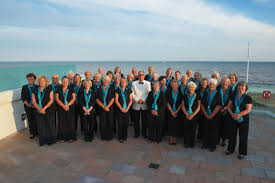
There are few works that convey such a glorious sense of joy as Haydn’s Creation and Bexhill Choral Society’s singing last night certainly lived up to it in the enthusiasm and quality of their performance. In many ways the reduced orchestral forces added an extra clarity to the score, so that the scene painting became even clearer. Haydn’s depiction of the forces of nature, the storms, rivers, tinkling brooks and the panoply of the stars were all there. If anything they were too good and the roaring lion managed to sweep away Ken Roberts score and stand, not that this affected the narrative, such is the professionalism of all concerned.

The chorus proved to be well balanced and able to give full force to Haydn’s moments of greatest enthusiasm. The Heavens are Telling and Awake the Harp had a gutsy intensity in contrast to the gentler moments, though Haydn has little here of real introspection. The text reveals a delight in creation in all its romantic glory, the fall being dismissed in a single sentence before the final chorus unites everyone in happy praise.

The three soloists may be very familiar to us but were nevertheless rightly in angelic voice. Sophie Pullen’s voice seems even more radiant now than on earlier occasions and the top of the voice carried easily over the combined forces around her. Peter Grevatt brought a keen sense of humour to the narrative, descending playfully with the sinuous worm. Gary Marriott’s arch-angel was heroic and warm throughout.

Solo instrumentalists were note-worthy with some lovely bassoon passages very evident, and the woodwind for the birds. Robert Aldwinckle’s improvisations at the harpsichord added an immediacy to the recitatives, as did the occasional ornamentation from the soloists.

This was the third Creation I have heard this year and by far the most enjoyable.

The Christmas Concert at St Augustine’s is on Saturday 10 December but if you can’t wait until then there is a Come & Join Us for a Hallelujah Morning on 5 November at Springfield Road Methodist.

Details www.bexhillchoral.org.uk


Stephen Page

Hastings Unitarian Meeting Place
Saturday 8 October 2016

S Page

It’s Hastings Week and the final recital of this year’s series brought a record turn out to the Unitarian Meeting Place for Stephen Page’s concert. There wasn’t a seat left empty – including all the spares normally kept in the gallery.

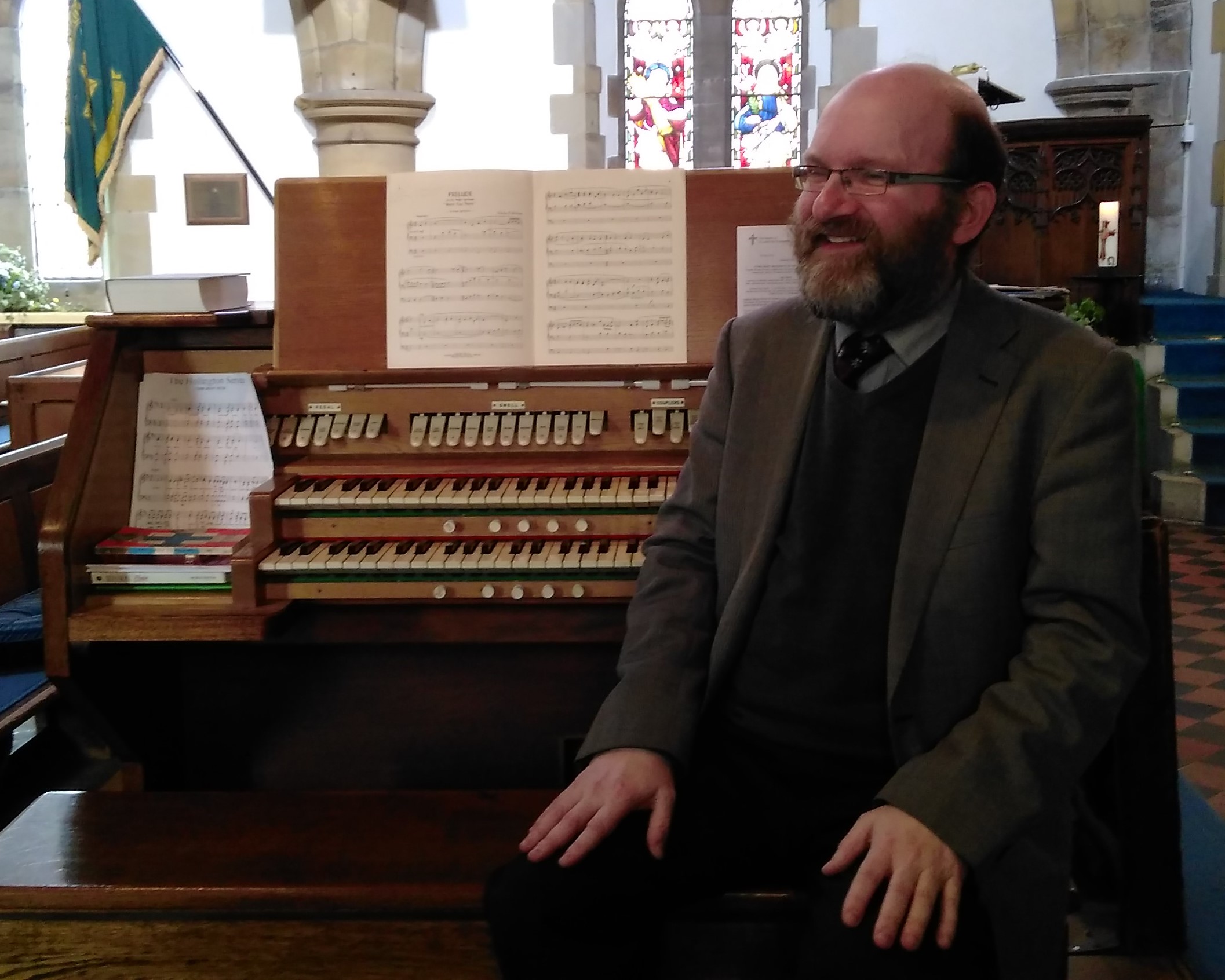
He opened with an arrangement of Suppe’s Overture Poet and Peasant and then moved into four pieces by Bach – though none of them J S Bach. The first was a Prelude and Fugue in Eb by J Christoph Bach, followed by J M Bach’s Dies sind die heil’gen zehn Gebot. The composers were J S Bach’s uncles but there is no connection between the genius of JS and the tongue-in-cheek PDQ, who’s Prelude and Fugue in C minor includes references to Roll out the barrel and Beethoven’s 5th!

On a more serious note Richard Jones Toccata in D minor has a solid feel to it and brought wide registration. Jean Langlais Priere may have been written for harmonium but sits very comfortably on the Snetzler – the oboe snarling gently out of tune.

We have heard a lot of Handel from this instrument over the years but it is always a pleasure to do so and so three short movements from the Fireworks Music were very welcome.

Boellmann is so well known for the Suite Gothique that is was refreshing to hear some of his other music – in this case three pieces from Six Characteristic Pieces of which the Offertoire is particularly effective.

Robin Milford is not a familiar name but his two dances are gently compelling, bringing a moment of calm before the end.

It is not often the encore comes before the final work, but in this case Stephen squeezed in The Teddy Bears’ Picnic before going out in a blaze of glory with Walford Davies’ RAF March Past.

It is always a pleasure to hear Stephen play and the large and enthusiastic audience were obviously keen to hear him again as soon as possible.


PULL OUT ALL THE STOPS

Jane Parker-Smith, organ
Royal Festival Hall, 3 October 2016

The 2016/17 season of this international organ series started with a bang in this recital by the renowned concert organist who is based in London. The programme notes included a quote from Gramophone magazine which describes her approach as “musically assertive organ-playing” and her championing of “big, gutsy, colourful” repertoire.  There is no doubting that Jane Parker-Smith is a fine organist with a tremendous command of the instrument but my problem with this evening was the amount of music which was overly loud, percussive and fast.

Beginning with Marcel Lanquetuit’s Toccata in D the first sounds from the organ were insistent and “in your face”! Guillou’s transcription of Lizst’s Orpheus followed, with some good orchestral registration but at times it felt like some of the accompaniment was running away with itself. Andreas Willscher’s Toccata alla Rumba brought some rhythmic contrast but was in many ways a return to the sound world of the opening piece. The most substantial work in the first half was Healey Willan’s Introduction, Passacaglia & Fugue in Eb minor. This was the nearest we came to baroque / classical structures and was well played with some lovely registration and overall a more measured approach. The beginning of the Passacaglia was beautifully constructed with well defined lines.

The second half consisted of just one work, Vierne’s Symphonie No 2 in E minor. This was a well-executed performance with a lot more contrast in registration and some sublime passages in the Chorale as well as the delightfully playful Scherzo as well as some more evidence of the might of this organ and organist.

An interesting evening which I am sure appealed to many in the audience. I enjoy organ music of varying styles and was impressed by much of the programme as individual items. For an entertaining evening and a showcase for this remarkable instrument I personally would have appreciated a more balanced diet.

The next concert in the series, an all Bach-programme, is given by Robert Quinney on 3rd February.

Stephen Page

ENO: Tosca

London Coliseum, 3 October 2016

tosca-1

Catherine Malfitano’s Tosca takes no prisoners. This is opera at its most visceral and, certainly in this revival, full-blooded and exciting. Some may dismiss the approach as old-fashioned, but what a delight it is to be able to sit through a whole evening without having to justify what is being presented to us, or make allowances for occasional weak casting.

The brooding sets by Frank Philipp Schlossman are just on the edge of naturalism, leading us gradually across the three acts to a world that is literally on the edge. When Tosca allows herself to fall backwards into the void it is as if she is being taken up rather than jumping to her death. A magnificent end to an evening which is full of thoughtful and moving moments.

American soprano, Keri Alkema was making her ENO debut in the title role and she will be welcome back at any time. Her Tosca is credible and sung with a careless abandon quite in keeping with the production. Vissi d’arte was rightly applauded though she maintained a sense of continuity even here.

Gwyn Hughes Jones is an heroic tenor, who throws off the top lines with aplomb and, having the stamina for Wagner, was in bright voice right to the end. E lucevan le stelle was assisted, not that it needed it, by the reflective nature of the set, the voice filling the auditorium with glorious power.

tosca-2

Craig Colcough, a fine Kurvenal in ENO’s recent Tristan, brings us an unusual Scarpia. This is a man who is so confident of his own power he is eternally relaxed and frequently jokey – the real threat lying with the unspeaking henchmen who surround him. His death comes as a shock to him – he can’t believe that it has come at the hands of a woman.

All the smaller parts are well characterised and I particularly enjoyed the idea of the Sacristan’s little helper.

Oleg Caetani allows the score its full force, though the introduction to act three showed unexpected sensitivity. The orchestra has lost none of its momentum over the summer and this promises to be, musically, an excellent season.