WNO: Shakespeare 400

Mayflower, Southampton, 1-3 November 2016
wno-macbeth

WNO have been theming their seasons for some time now and so it was inevitable that this year would provide a Shakespeare slot. However, the outcome was not quite what one might have expected. Though each of the three works chosen had their enjoyable moments none of them was of the high standard we have come to expect from WNO.

Firstly the works themselves – Andre Tchaikovsky’s The Merchant of Venice; Verdi’s Macbeth; Cole Porter’s Kiss me Kate. Any one of these alongside greater works – Otello, Falstaff, even Beatrice & Benedict – would have made sense, but three works all from the second tier does not.

Tchaikovsky’s opera dates from the 1980s when it was turned down by ENO, and one can sense why. Scored in post-Bergian style it is relentless in attack throughout, with few reflective moments and little sense of individual characterisation. While this works quite well in the opening Venetian act it is far less convincing in the Belmont scenes. Character seems to come from the individual singers rather than the score, and here Lester Lynch is an impressive Shylock. The scene in the stock exchange is particularly effective as it becomes clear that it is Antonio who is the outsider rather than Shylock. Counter-tenor Martin Wolfel is an aloof Antonio and the younger men are given no individual personalities. Sarah Castle does what she can with Portia though the score does not give her much scope for developing a broader interpretation. Keith Warner has impressed as a director over the years and the outer acts work well, but the poor setting for act two, with its mishandled caskets, was simply not good enough.

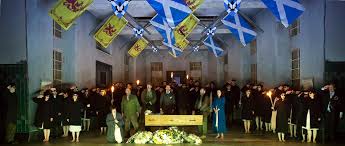
Had this been the one problem across the week it might have been acceptable but the following night’s Macbeth had an equal share of problems. It may be that the stage crew was simply not used to the set but the gaps between scenes were simply far too long and any continuity that Andriy Yurkevych was trying to create in the pit was lost in the silences. Luis Cansino was a stalwart Macbeth and Bruce Sledge an eloquent Macduff. Miriam Murphy has a very large voice to go with her large stage presence. In the opening scenes this was on the wild side even if exciting in its impact. As the evening progressed it came under better control and the sleep-walking scene was effective. Her acting however was perfunctory and it was unclear what Oliver Mears was attempting in his direction. I liked Annemarie Woods’ design, setting the whole in an abandoned hospital. The sense of a place which should bring healing providing only destruction was often poignantly made. In the final scene Macbeth sits at an invalid’s table, reminding us of the sickness he has brought to society. Moments like this worked well though what on earth the witches were supposed to be was anybody’s guess. At times they seemed to be sending themselves up but I can’t think this was intended. Orchestra and chorus were in fine form and the music overcame the sticker moments in the production.
wno-kmk

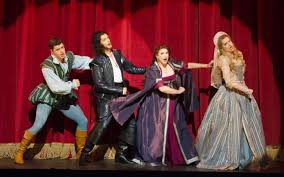
We seem to have had quite a few presentation of Kiss Me Kate recently. It is a work I really enjoy and there was a great deal to please here, if only in comparison to the two previous evenings. In addition, the score being used was the full orchestral version and included much music I had not encountered before – always a bonus for potentially jaded critics. However the production had an air of amateurism about its setting and presentation. It really did look like a touring version at the end of a very long run. While most of the music under James Holmes was exhilarating the dialogue too frequently lowered the temperature, particularly in the first half. Thankfully the dancing was splendid, with Too darned hot and Bianca being particularly impressive.

Accents were wayward throughout, with little sense of time or place. If these seem like quibbles then they are points which could easily have been addressed and the whole evening given a fizz which it too often lacked.

Quirijn de Lang brought a suitably Douglas Fairbanks virility to Fred Graham and sang with panache. Jeni Bern was a positive foil as Lilli Vanessi but did not have the lyricism the role needs. Alun Birkitt taps as splendidly as he sings, and became the one really joyous moment of the evening.

I wish I could be more enthusiastic about the company at the moment, for over recent years we have seen many magnificent performances and much wonderful singing. Let us hope that the revivals of La Boheme and Madama Butterfly in the spring will return things to a more even keel.
 

Garsington Opera 2017

Thursday 1 June – Sunday 30 July 2017

The main season will expand from three to four opera productions annually, and will see the start of a partnership with the Philharmonia Orchestra. In addition, next year  there will be a large scale, newly commissioned community opera involving 180 local people of all ages alongside professional singers and the Garsington Opera Orchestra.

1,3,9,15,24,30 June, 4 July  5.55pm
NEW PRODUCTION
SEMELE
George Frideric Handel
(sung in English)
Conductor  Jonathan Cohen
Director  Annilese Miskimmon
Designer  Nicky Shaw
Lighting Designer  Mark Jonathan
 
Cast
Heidi Stober, Robert Murray, Christine Rice, David Soar, Christopher Ainslie,
Llio Evans 
GARSINGTON OPERA ORCHESTRA & CHORUS


2,4,8,10, 17 June, 3,6,9,11,14,16 July  5.25pm
REVIVAL
LE NOZZE DI FIGARO
Wolfgang Amadeus Mozart
(sung in Italian)
Conductor Douglas Boyd
Director  John Cox
Associate Director Bruno Ravella
Designer  Robert Perdziola
Lighting Designer  Mark Jonathan
 
Cast
Joshua Bloom, Jennifer France, Duncan Rock, Kirsten MacKinnon, Marta Fontanals-Simmons, Stephen Richardson, Janis Kelly, Timothy Robinson, Alun Rhys-Jenkins
GARSINGTON OPERA ORCHESTRA & CHORUS


16, 18, 22, 25, 27 June, 1, 7 July  5.55pm                                                                      
NEW PRODUCTION
PELLÉAS ET MÉLISANDE
Claude Debussy
(sung in French)
Conductor Jac van Steen
Director  Michael Boyd
Designer  Tom Piper
Lighting Designer  Malcolm Rippeth
 
Cast
Jonathan McGovern, Andrea Carroll, Paul Gay, Brian Bannatyne-Scott,
Susan Bickley
PHILHARMONIA ORCHESTRA & GARSINGTON OPERA CHORUS


26, 29 June, 2,5,8,10,13,15 July  5.55pm
REVIVAL
IL TURCO IN ITALIA
Gioachino Rossini
(sung in Italianj
Conductor David Parry
Director  Martin Duncan
Designer  Francis O’Connor
Lighting Designer  Mark Jonathan
Movement Director  Nick Winston
 
Cast
Sarah Tynan, Luciano Botelho, Katie Bray, Quirijn de Lang, Geoffrey Dolton,
Mark Stone 
GARSINGTON OPERA ORCHESTRA AND CHORUS


28, 29, 30 July 7.30pm

NEW COMMISSION
SILVER BIRCH
Roxanna Panufnik
(sung in English)
Conductor Douglas Boyd
Director  Karen Gillingham
Designer  Rhiannon Newman Brown
Composer  Roxanna Panufnik
Librettist  Jessica Duchen
Movement Director  Natasha Khamjani
 
Cast
Sam Furness, Victoria Simmonds, Darren Jeffery, Bradley Travis, Sarah Redgwick, James Way and 180 members of the local community
GARSINGTON OPERA ORCHESTRA

Garsington Opera at Wormsley   Box Office  01865 361636

www.garsingtonopera.org

The inaugural BBC Proms Dubai to be held in March 2017

The BBC Proms, the world’s largest classical music festival, together with the BBC Symphony Orchestra and BBC Singers, has today announced it is going to Dubai for a four-day festival in March 2017.

Taking place from 21 to 24 March at Dubai Opera, part of the UK/UAE 2017 Year of Cultural Collaboration led by the British Council, BBC Proms Dubai will give audiences the opportunity to experience some of the music, talent and tradition the festival offers. Only the second time abroad, following the inaugural BBC Proms Australia in April 2016, this will be the first time the BBC Proms has travelled to the Middle East and will also mark the first visit to the UAE for the BBC Symphony Orchestra and the BBC Singers.

BBC Proms Dubai will host a rich programme including core classical repertoire, British music and new music, all accompanied by a full and varied schedule of learning activity in the region. Mohammed Fairouz’s music will feature in the festival alongside world premieres of works by Dubai-based British composer Joanna Marsh and Australian-Egyptian composer Joseph Tawadros.

BBC Proms favourites, conductor Edward Gardner and pianist Benjamin Grosvenor, will join the BBC Symphony Orchestra on stage, whilst James Burton leads the BBC Singers in two a cappella programmes of British choral music and the Joseph Tawadros Quartetlead their own Late Night Prom.

The series of six concerts will culminate in the traditional and wildly popular Last Night of the Proms, where Edward Gardner will lead the BBC Symphony Orchestra and BBC Singers performing Last Night favourites including Henry Wood’s Fantasia on British Sea-Songs, Thomas Arne’s Rule, Britannia! and Edward Elgar’s Pomp and Circumstance March No. 1.

In the spirit of the founding principle of the Proms – to bring the best of classical music to the widest possible audience – nearly 600 ‘Promming’ (standing) tickets will be made available each day for each concert, priced from just 50 dirhams (£10).

In collaboration with the UK/UAE 2017 Year of Cultural Collaboration led by the British Council, there will be a comprehensive learning programme across the four-day festival, with workshops, masterclasses and open rehearsals providing budding musicians and singers with the opportunity to develop their skills and engage with the performers. Activities include a workshop for the Arabian Youth Orchestra with players from the BBC Symphony Orchestra, a series of workshops for local adult and children’s choirs with the BBC Singers and a masterclass for chamber musicians at the Centre for Musical Arts in Dubai.

The BBC Proms Dubai concerts will be recorded for broadcast on BBC Radio 3.

Hastings Philharmonic – the new look !

On Saturday 12 November Hastings Philharmonic, now a choir and an orchestra, 
launch their new ‘Season’ with the well loved Beethoven’s 9th Choral Symphony 
together with a specially commissioned piece by talented young English composer, 
Philip O’Meara. This incorporates a Beethoven theme and Schiller’s ‘Ode to Joy’, 
intertwined with Gregorian plainsong. The Choir wishes to be welcomed back to 
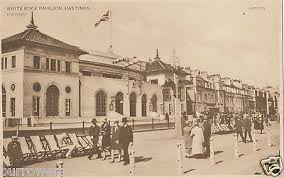
its old haunt, the White Rock Theatre (formerly Pavilion), where it famously
produced Beethoven’s 9th to a record audience under Sir Malcolm Sargent with 
the ‘Southern Philharmonic’ orchestra in celebration of the Coronation.
white-rock
This was in 1953, of course, but in the 1930s, the choir had already performed Beethoven’s 9th 4 times at the White Rock Pavilion under Julius Harrison and the prestigious Hastings Municipal Orchestra, always to great acclaim. Today’s music director of both choir and orchestra, Marcio da Silva, is ambitiously rekindling the spirit of excellence in classical music that prevailed prewar when, three years in a row (1935-37), the  Hastings Municipal Orchestra broadcast from the White Rock Pavilion on BBC Radio in the prime spot after the King’s Speech on Christmas Day.
Beethoven’s entire 9th Symphony will be performed with the full professional orchestra, the Hastings Philharmonic Orchestra’s first public outing. Philip O’Meara’s choral piece is called ‘No Man’ and uses the fine words of great writers, Victor Hugo, W B Yeats, John Donne and the book of Psalms to depict the stupidity of war and the virtues of friendship and cooperation. ‘No Man is an Island’ is an appropriate sentiment in this year when Britain’s relationship with continental Europe is being reset to acknowledge the Referendum result.
marcio da silva
Marcio da Silva’s new name for his orchestra, formerly known as Ensemble OrQuesta, reflects his growing commitment and enthusiasm for living and working in Hastings. He strives towards ever improving standards in classical music. The orchestra is building a wonderful reputation among ‘people in the know’.  This last year in Hastings, Marcio’s musicians produced  the Brahms Requiem, Sibelius’ Violin Concerto, Mozart’s Marriage of Figaro, Faure Requiem and more. Lark Reviews has reported on most of these.
Marcio da Silva and his wife, Aysen Ulucan, who are both renowned soloist singers, also produced recitals together. Aysen is a brilliant virtuoso violinist, who has played in concerts with Maxim Vengerov. Next year’s ‘season’ of classical music in Hastings produced by Marcio will cover 10 orchestral and choral concerts, recitals and opera of the usual outstanding quality. Season tickets for the entire year will be on sale at £130.
For more information see http://hastingsphilharmonic.com/.
Marcio’s musical acumen, zeal and charisma attracts great talent and loyalty from his orchestra and soloists which, at this coming concert, will be a cast of international virtuosi – names to watch! New Zealander soprano Claire Egan, Italian mezzosoprano Alessandra Fasolo, Portuguese tenor Leonel Pinheiro, and British baritone Matthew Sprange. This Beethoven concert will be a memorable event and a waymarker for a whole new World of music in Hastings. Be there at the beginning!
 
Hastings and St Leonards, you have real talent with this conductor and choir, make sure you don’t let them go. I urge all and sundry to attend their next concert, wherever and whenever it is. Something special has come to the south coast, and we must all appreciate this new arrival.” Hastings Observer 19.5.2016 by Peter Georgiadis, former Chairman, Rotary Club of Hastings and former double-bass with many orchestras
 
HASTINGS PHILHARMONIC at the White Rock Theatre, Hastings TN34 1JX, Saturday 12 November 7.30pm featuring Beethoven’s Symphony n. 9 and Philip O’Meara’s ‘No man’. Tickets £20, £10 and £5 (under 16) – booking fee may apply –  from White Rock Theatre box office (01424 462288)
and online at  whiterocktheatre.org.uk
 

ANNIE

The Hastleons, White Rock Theatre, 19 October 2016

annie

I think I’m gonna like it here. From the first phrases of Natalie Spencer’s opening song, Maybe, I knew that I was in for an evening of quality entertainment. Her assured stage presence and confident singing in the title role made a huge impact and set the scene for the rest of the show.

The feel-good nature of the story, together with good music, including some well-known songs has made Annie a popular musical for many years.

It would be difficult to single out anyone else from the cast other than to name the other three leads, who each gave excellent portrayals of their characters by their commitment and energy in song, word and action: Tracy Sutton (Miss Hannigan), Zola Thomas (Grace Farrell) and Steve Corke (Oliver Warbucks). I would, however, also like to mention the wonderful singing of Alfie Differ (Bert Healy).

The superb casting of the lead roles played a huge part in the success of this production, as did the enormous efforts from the whole cast from the spirited and large company of orphans, the smaller named parts and members of the ensemble appearing in different roles and groupings. There were many large scale ensemble pieces where the choreography and interaction was carried out very effectively and with fun and enthusiasm throughout.

It is always pleasing to see live music forming the backbone of a show. Alex Hohenkerk’s team worked wonderfully well, complimenting the action on stage and never overwhelming the singers.
Director Royah Hamed is to be congratulated, as are all who have contributed to these performances, including those behind the scenes and taking on the more mundane tasks of raising the necessary funds to enable the show to take place.

For 90 years the Hastleons have been involved in creating live dramatic/musical experiences for the pleasure of local audiences. The quality of this production proves what talent and resources there are here in Hastings and St Leonards. The group welcomes new members but just as important are the audiences.  Do look out for the next production, tell your friends and make sure you are there!

Further details are available on the Hastleons website  www.hastleons.co.uk

Stephen Page


Brahms in Brighton

The second concert of the Brighton Philharmonic’s season at Brighton Dome takes place on Sunday 6th November when the orchestra is joined by regular collaborators Brighton Festival Chorus conducted by their Music Director James Morgan, with guest soloists Sarah Tynan (Soprano) and Leigh Melrose (Baritone). They will be performing a programme of music by Brahms – his longest choral work Ein Deutches Requiem (A German Requiem) and by way of contrast, his shortest Schicksalslied (Song of Destiny).

bpo-oct-16-press

Conductor and BFC Music Director James Morgan is looking forward to the concert and has a warning for audience members: “I’m delighted that the Festival Chorus and BPO will once again join forces in such a special programme. Schicksalslied is a miniature masterpiece; this is one concert you don’t want to arrive late for, as the first minute of music is particularly sublime! Then there is the Requiem – such a well-loved piece and a key work of the choral repertoire. We are very much looking forward to it, and to welcoming our soloists Sarah Tynan and Leigh Melrose.”

The concert opens with Schicksalslied, sometimes referred to as the “Little Requiem”, Brahms’ most ambitious choral composition considered to be one of his finest choral works; it took him three years to compose and is based on a poem by Friedrich Hölderlin about man’s sense of alienation within the cosmos.

The seven movements of Brahms’ epic German Requiem were written between 1865 and 1868 following the death of his mother, and in writing them Brahms was also highly influenced by the earlier death of his great friend Robert Schumann following a suicide attempt and incarceration in a mental asylum. The Requiem is based on words from the German Lutheran Bible rather than the more usual Latin text, which Brahms put together himself, wanting it to be a Requiem for the living, not the dead. The central message of the Requiem appears in its first lines “Blessed are they that mourn, for they shall be comforted” and “Blessed” is also the last word we hear in the final movement.

The Requiem’s first performance in 1868, with Brahms himself conducting, was a huge success and marked a turning point in his career, giving him the confidence to complete many unfinished projects that had tantalised him for years.

Tickets (from £12-37) are available from Brighton Dome Ticket Office in person, by telephone (01273) 709709 and online: www.brightondome.org. There is a 50% discount for students and under 18s and a Family ticket allows up to two children at £1 each when accompanied by a full-price adult ticket holder.

Those travelling by car can take advantage of the BPO’s special discounted parking rate of £6 between 1pm & 6pm in the NCP Church Street car park. Just collect a follow-on voucher from the Dome at the concert.

Acclaimed visual artist William Kentridge’s spectacular production of Lulu comes to London

Opens Wednesday 9 November at 7.00pm at the London Coliseum (5 performances)

lulu

In one of autumn’s most anticipated arts events, eminent South African artist William Kentridge makes his ENO directorial debut with this ‘provocative and visually stunning’ (New York Observer) production of Berg’s modernist 20th century masterpiece.

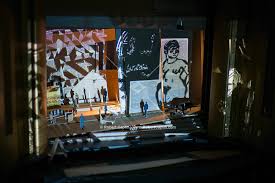
Kentridge locates his production to the period of the opera’s creation in the late 1920s and 1930s, using his own ink drawings to form part of the set and production design. This production has previously been seen in Amsterdam and New York where it was critically acclaimed.

A married woman, a mistress, a murderess and a prostitute who ends up as one of Jack the Ripper’s victims, Lulu is an enigmatic figure. A symbol of sexual desire and its ideal fulfilment, her trajectory from Viennese middle class respectability to her brutal end in a London garret is both harrowing and revealing.

Kentridge’s creative team comprises his co-director Luc de Wit, designer Sabine Theunissen, costume designer Greta Goiris, lighting designer Urs Schönebaum and video designer Catherine Meyburgh. Former ENO Music Director Mark Wigglesworth conducts.

Brenda Rae makes her ENO and role debut as  Berg’s femme fatale, Lulu. She has been a resident artist at Oper Frankfurt since 2008 and has performed with numerous opera companies including Santa Fe Opera, Bayerische Staatsoper Munich, Opéra National de Bordeaux, Théâtre de Champs-Elysées and Glyndebourne.

Acclaimed British mezzo soprano Sarah Connolly returns to ENO as Countess Geschwitz. She last sung with the Company in the title role of David McVicar’s production of Medea, a role that she sang ‘with total technical assurance and radiating baneful charisma’ (Daily Telegraph). Other appearances for ENO include La clemenza di tito (for which she won an Olivier Award for Outstanding Achievement in Opera )Der Rosenkavalier,AgrippinaThe Coronation of PoppeaThe Rape of LucretiaXerxes and I Capuleti e I Montecchi.

Irish-Canadian tenor Michael Colvin makes his role debut as The Painter. He last appeared with ENO as Bob Boles in the revival of David Alden’s critically five star production of Peter Grimes. He has also performed in Madam Butterfly and The Turn of the Screw for the Company.

Eminent bass Willard White is Schigolch. Willard last appeared with ENO as Pope Clement VII in Terry Gilliam’s Benvenuto Cellini in June 2014. Other notable roles for ENO include the title role in Stein Wenge’s production of The Flying Dutchman, Kutuzov in War and Peace and Bottom in A Midsummer Night’s Dream.

American bass-baritone James Morris takes on the roles of Dr Schön and Jack the Ripper. He last appeared with ENO as The Doctor in Carrie Cracknell’s acclaimed production of Wozzeck in 2013, a role in which he exuded “an air of vocal gravitas and cynical manipulation” (Financial Times).

ENO Harewood Artist Nicky Spence makes his role debut as Dr Schön’s son Alwa. Nicky last appeared with ENO as Steva Buryja in the revival of David Alden’s five star production of Jen?fa in June 2016. Other roles with the Company include David in Richard Jones’s Olivier Award-winning production of The Mastersingers of Nuremberg, Francesco in Terry Gilliam’s production of Benvenuto Cellini and Brian in the world premiere of Nico Muhly’s Two Boys in 2011, a role he also reprised at the Metropolitan Opera in 2013.

The cast also includes David Soar (Animal Tamer/Athlete), Jeffrey Lloyd-Roberts (Prince/Manservant/Marquis), Clare Presland (Schoolboy/Dresser/Waiter), Graeme Danby (Theatre Director/Bank Director), Sarah Labiner (15 year old girl), Rebecca de Pont Davies (her mother), Sarah Champion (Female Artist), Geoffrey Dolton (Journalist), Joanna Dudley (Solo Performer) and Andrea Fabi (Solo Performer).

Lulu opens on Wednesday 9 November 2016 at 7.00pm for 5 performances – 9, 14, 17 November at 7.00pm, 12, 19 November at 6pm.

500 tickets for £20 or less are available for each performance. Tickets start from £12. www.eno.org

The Kings Singers @ Pevensey

St Nicolas Church, Friday 21 October 2016

kings-singers

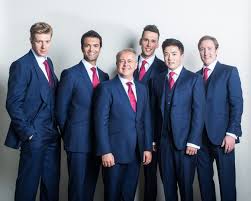
A concert by the Kings Singers is always something special. Since their foundation by six choral scholars at Kings College, Cambridge in 1965, the group has won international renown for  their  total professionalism and lively musicianship. On October 21st, 2016, the Kings Singers performed in St Nicolas, Pevensey to mark its 800th Anniversary.

The Kings Singers began their programme with serious baroque composition, 19th c. French songs and a modern work written for them by John McCabe. Byrd’s canonical ‘Viri Galilaei’ was sung with brisk lightness of voice. Byrd’s music for the Anglican Church has been sung without interruption since the 16th century, and the evening opened with ‘Sing Joyfully’. This proved to be one of the most popular and durable anthems of the Elizabethan age. The piece presents four verses of Psalm 81 in flawless counterpoint. The opening of “Sing joyfully” arrived with a series of upward leaps sung by the counter tenors, alto, and tenor. For the very last fragment of text, which pronounces God’s “law” for the celebration of festivals, Byrd crafts the most extended counterpoint of the piece, which the King’s singers extended beautifully to the final climax.

In contrast, ‘Sicut Lillium’ by Palestrina was characterised by the solemn richness of harmony and sinuous weaving of melodic strands. The modern monasticism of François Poulenc was demonstrated by  the scrunching harmony and sweet texture  of ‘Four Short Prayers’. His countryman Claude Debussy offered ‘Trois Chansons’, old words in a modern setting, clear, sharp and comprehensive, with one song in particular, effective over a drone bass.

We were treated to Palestrina’s ‘Salve Regina’. Palestrina’s writing represents the culmination of Renaissance polyphony. The King’s Singers performed the piece in its original Latin which conveyed this Gregorian chant magically. Intonation, which is critical, was faultless. Sung after Compline the piece can be traced to the monastic practice of intoning it in chapel and chanting it on the way to sleeping quarters at the end of the day. The performance suited the church’s wonderful acoustics for choral singing beautifully.

William Byrd’s –‘Viri Galilaei’ gave the opportunity for the wonderfully rounded tones of Jonathon Howard’s bass voice to come to the fore as the foundation on which the interweaving upper parts could shine in this sacred motet. This piece being part of a larger Mass could only tease us with a flavour of the whole much longer work. Nevertheless this sumptuous performance will stay long in the memory for its delicacy and reflective calm. We were then treated to another early motet by Palestrina, the ‘Sicut lillium’, written for five voices. Again an appropriately early musical experience from a composer who specialised in writing sacred music and who had an influence on so much the development of church music

We moved on three hundred and fifty years to hear a Francis Poulenc – Quatre petites prières de Saint Francois d’Assise, originally composed for the his grandnephew a Franciscan monk. Largely sung in unison the piece demands great breath control and dynamic precision, both of which were effortlessly presented with development into some delicately delicious choral chords which evoked great spirituality, if not on occasion sombre reflections.

Composed by another Frenchman and a contemporary of Poulenc, we heard next Claude Debussy’s ‘Trois chansons de Charles d’Orléans’. The first two songs were performed with full voices before the lively opening of the third song which had some typical ‘clashing chords’ all delivered with authority and confidence. This was a marvellous performance of Debussy’s only choral piece. A rarity well- performed.

Bringing us up to the c21st the King’s Singer’s performed a piece commissioned by the BBC for its first performance by the King’s Singers in the 2002 BBC Proms, forming part of “The Oriana Collection” to celebrate the Golden Jubilee of Queen Elizabeth II. Opening with long glissando voices before the lower voices bring discordancy to proceedings. This is a very unusual composition which had everyone on the edge of their seats as the vocal interweaving knitted a rich texture of sounds on which the first half finished.

The second half delivered a totally different side of the King’s Singers’ repertoire with a selection of arrangements by Gordon Lightfoot of Flanders and Swan songs all delivered with the panache and wit for which the ensemble is renowned. Flanders and Swan, Spike Milligan, a Greek version of ‘Old MacDonald’ (with effective vocal sound effects), and African spirituals were all performed with wit and verve. ‘A transport of delight’, re-arranged by Gordon Langford, was a triumph of witty horsepower (97, to be precise) and tingling bells: the clever ditty lost none of its fun and sparkle in a version for six unaccompanied singers.  A packed audience chuckled mightily before feeling a touch of melancholy at the doomed romance between a well- bred Honeysuckle and rampant Bindweed.

A surprise encore paid tribute to Percy Granger who holidayed for many years close to the church. Percy Grainger is now mainly remembered for ‘Country Gardens’. His 1918 arrangement of this English Morris Dance is still well-known and the King’s Singers rendition completed a memorable evening’s entertainment in a church celebrating its 800th anniversary, in unquestionable style.

There doesn’t seem to be anything that the Kings Singers can’t sing, moreover, with their hallmark perfect pitch, exact intervals and precise enunciation. The audience loved them and refused to let them go without encores, programme signing and drawing raffle tickets. They’re wonderful musicians, talented performers and gave all present a memorable evening.


Oxford Lieder Festival 2016

Friday 21 October

The festival may only run for two weeks but seems to mount more events each year. I was there for a single day and managed to get to six separate events ranging from lieder to Bach Cantatas, and taking in lectures on the way.

The lunchtime recital at Holywell Music room was given by Andre Schuen with an all Schubert programme. Accompanied by Daniel Heide, he opened in operatic style with Auf der Bruck and Der Wanderer an den Mond but produced a fine introspection for Nachstuck and Lied eines Schiffers an die Dioskurn. After many songs with serious if not depressive content he finished happily with Willkommen und Abschied.  He is certainly a young singer whose career we will follow with interest.

The afternoon was given over to three items all linked to the Festival’s theme – The Schumann Project. As well as many concerts given over entirely to Schumann’s lieder, Bach Revived considered the importance of Mendelssohn, Schumann and Sterndale Bennett to the revival of Bach’s music in the early to mid-nineteenth century. Dr Hannah French lectured in the Western Library on the importance of all three composers to the revolutionary change in attitude in the first part of the century, when the concept of J S Bach moved from the antiquarian musicologist, assuming the composer was of little interest and impossible to perform, to the present situation where he is treated in an almost godlike way.

Mendelssohn’s performance of the St Matthew Passion on 11 March 1829 is seen as the turning point. By modern standards this was not a complete performance and nor did is use anything like the instrumentation we have come to expect today. However it gave audiences, and musicians, a clear understanding of the magnificent potential of the work and from then on interest gathered exponentially. Mendelssohn was closely aided by the singer Edvard Devrient – who noted that it had taken an actor and a Jew to reinstate the greatest of Christian works!

The atrium of the Weston Library is not an obvious place for a recital but the Festival aims to present a number of sessions free to encourage a wider audience. Thus after the lecture we heard soprano Turiya Haudenhuyse sing songs by Bach and Schumann, ranging from an entrancing Bist du bei mir from Bach to the bleak setting of Zwielicht by Schumann. The link to the lecture came in the form of arrangements that the composers had made of Bach to make him more acceptable to the contemporary audience. So Schumann had added a piano part to Bach’s solo Violin Sonata No2, and Mendelssohn a similar piano part for the Violin Partita No3. These were finely played by violinist, Jonathan Stone with Sholto Kynoch at the piano. Working against a confused background of clinking teacups from the cafeteria and people coming and going, it still managed to be remarkably effective.

Back in the lecture theatre Richard Wigmore, who had provided many of the lieder translations, spoke about the influence of Bach on Schumann’s song settings.

Little time to recuperate before the early evening instrumental recital in the Holywell Music Room. The Phoenix Piano Trio comprises the violin and piano soloists we had heard immediately before, together with cellist Christian Elliott. They gave us Niels Gade’s Novelletten and Mendelssohn’s second Piano Trio. The Gade is a deeply romantic work, often jolly and extrovert in its scoring with a gentle lyrical Larghetto.  The Mendelssohn was on a different emotional level, sturm und drang from the outset though it comes to a joyous conclusion, using a brief chorale which never overpowers the more enthusiastic lyricism.

The main evening recital was given by soprano Julianne Banse. She apologised at the start for the cold she had developed and it was clear this was not an excuse. Though it did not curtail the performance it was obvious at times she was genuinely suffering and her breathing was often restricted. This did not prevent her from giving us a well focused and highly sensitive reading of Schumann’s Frauenliebe und-leben and the five Gedichte der konigin Maria Stuart.  The evening had opened with five songs by Mendelssohn, concluding with a humorous reading of Andres Maienlied ‘Hexenlied’ and seven by Brahms, of which Die Mainacht impressed.  She was accompanied throughout by Marcelo Amaral whose postludes in the Schumann were moving and always apt.

Most of the audience then moved down the road to New College Chapel where the Oxford Bach Soloists gave a late night performance of three Bach Cantatas. The last of these, BWV55, featured tenor James Gilchrist whose passionate rendition brought the day to a fitting close. Earlier we had heard countertenor Alexander Chance in radiant form for BWV 89 & 115. Here was another young singer who we will follow with interest. Between the cantatas Robert Quinney had shuttled between the chamber organ in the orchestra to the organ gallery to perform two of Schumann’s Fugues on BACH. After so much intimate music in Holywell it was exhilarating to be exposed to the power of the New College organ.

All of this in one day – and one day out of sixteen.

If you have not been, then next year’s Festival runs from 13-18 October and will focus on The Last of the Romantics – Mahler and fin-de-siecle Vienna. www.oxfordlieder.co.uk

Martyn Brabbins to take up position as Music Director of English National Opera from 21 October 2016

English National Opera (ENO) has announced that British conductor Martyn Brabbins will become Music Director of the Company with immediate effect.

m-brabbins

An inspirational force in British music, Martyn Brabbins has had a busy opera career since his early days at the Kirov and more recently at La Scala, the BayerischeStaatsoper, and regularly in Lyon, Amsterdam, Frankfurt and Antwerp.  He is a popular figure at the BBC Proms and with most of the leading British orchestras, and regularly conducts top international orchestras, returning to the Royal Concertgebouw, Tokyo Metropolitan and Deutsche Sinfonieorchester Berlin this season.  Known for his advocacy of British composers, he has conducted hundreds of world premieres across the globe. He has recorded over 120 CDs to date, including prize-winning discs of operas by Korngold, Birtwistle and Harvey. He was Associate Principal Conductor of the BBC Scottish Symphony Orchestra 1994-2005, Principal Guest Conductor of the Royal Flemish Philharmonic 2009-2015, Chief Conductor of the Nagoya Philharmonic 2012-2016, and Artistic Director of the Cheltenham International Festival of Music 2005-2007, and has this season taken up a new position as Visiting Professor at the Royal College of Music.

Brabbins’s performances of The Pilgrim’s Progress at ENO (2012) were conducted with “wonderful breadth and assurance” (The Guardian) and The Times praised his “exemplary musical direction”. His acclaimed performances of Tristan and Isoldewith Grange Park Opera (2016) caused The Observer to describe him as “a musician’s musician, he can turn his hand with ease and perception to anything.”

The appointment runs until August 2020, and  Brabbins will plan the 18/19 and 19/20 seasons together with ENO’s Artistic Director, Daniel Kramer. We are delighted that Brabbins will already be able to conduct one opera production (title to be announced) in 2017/8.

Speaking of his appointment to ENO from 21 October 2016, Martyn Brabbins said:

“With an orchestra and chorus of such exceptional calibre, and a musical legacy nurtured by the finest British conductors, from Reginald Goodall through to Mark Wigglesworth, I feel incredibly honoured to have been invited to join ENO and to become a part of this treasured British musical company.  It is quite an act to follow, and in a tough financial climate, but I am determined that ENO will continue to produce stimulating operatic performances of the highest musical quality at the London Coliseum.  I look forward to working with Daniel, Cressida, and with my dedicated and hugely knowledgeable colleagues in every department at ENO to achieve this.”