CDs/DVDs December 2016

A WELLS CHRISTMAS
Wells Cathedral Choir, Matthew Owens (director), Jonathan Vaughn (organ)
RESONUS RES10176 61’54

Resonus continues to welcome well established performers to record for the label. Here Wells Cathedral Choir under the direction of Matthew Owens presents a programme of music that is often familiar but nevertheless fresh and lively. Many traditional English carols are sung in arrangements by the likes of John Rutter, Vaughan Williams, Malcolm Sargent and David Willcocks. There are also two world premiere recordings of Bob Chilcott’s work and one by Matthew Owens himself. Two organ solos are also included. The CD ends with several more secular items, a decision that will divide opinion, I am sure.

TO BETHLEHEM – Carols & Motets for Christmas
Kantorei of Kansas City, Chris Munce (director)
RESONUS RES10175 61’29

This CD combines unusual renaissance repertoire with contemporary works in a beautiful programme for unaccompanied choir. There are some arrangements of familiar material included in the newer works but mostly this is a journey of adventure and surprise.

THE CHORAL MUSIC OF COLIN MAWBY
Choir of Liverpool Metropolitan Cathedral
 Christopher McElroy (director), Richard Lea & James Luxton (organists)
PRIORY PRCD1163

Colin Mawby’s contribution to liturgical music, particularly in the Catholic Church, has been immense. In his 80th year this CD showcases a wide range of his work, presented by one of the country’s leading Catholic Cathedral choirs. This is an excellent presentation and an enjoyable CD in its own right.

THE COMPLETE ORGAN WORKS OF THOMAS TERTIUS NOBLE VOL 3
John Scott Whiteley, Organ of York Minster
PRIORY PRCD 1152

This short series concludes with another CD of excellent performances by John Scott Whiteley on the organ he knows so well. The programme begins with the longest item,Theme with variations in D flat. It also features a number of voluntaries based on hymn tunes, shorter pieces and the Solemn March in E flat minor.

SIGFRID KARG-ELERT – THE COMPLETE ORGAN WORKS VOL 13
Stefan Engels, Steinmeyer organ of Michaeliskirche, Hamburg, Germany
PRIORY PRCD 1134 71’18

This longer series reaches Vol 13. It features lesser known works – Three Pastels Op 92, Music for Organ Op 145 and the Passacaglia & Fugue on B-A-C-H Op 150.

SIR CHARLES VILLIERS STANFORD – THE COMPLETE ORGAN WORKS VOL 4
Daniel Cook, Organ of Westminster Abbey
PRIORY PRCD 1161 74’07

Daniel Cook continues his excellent survey of Stanford’s organ music on the organ he plays regularly at Westminster. Items included in this instalment include Symphony No 5 in A, Four Intermezzi and the extended Prelude & Fugue in E minor  and  Installation March (1908). Highly enjoyable.

JOHANN MICHAEL HAYDN – SERENADE IN D
Virtuosi Saxoniae, Ludwig Guttler (director)
CAPRICCIO ENCORE C8003

The liner notes give some background to the specific circumstances that this music was written for. Originally to be performed outside and in honour of a specific person the Serenade was often intended for one-off use. Sometimes, however, a new work would be created for repeated use from some of the original material. An interesting and enjoyable release.

SP

Glass; Einstein on the Beach
Lucinda Childs Dance Company, Chatelet Theatre, Paris, Michael Riesman
OPUS ARTE OA 1178D

The real challenge here is to simply let yourself relax into the dynamics of the performance. Not only is the score minimalist but so is a large amount of the stage movement. This becomes both hypnotic and absorbing as the work progresses on it slow but inevitable path. There is also a very real sense of humour in the staging which often comes unexpectedly to light. Musically it is spot on and the company is as fine vocally as it is choreographically.

Arrigo Boito: Mefistofele
Bayerisches Staatsoper, Omer Meir Wellber
UNITEL CMajor 73908

Roland Schwab sets his production in a corrupt wasteland. If heaven exists it is very much off stage, but as Rene Pape’s Mefistofele is the key to the whole work this makes a lot of sense. Boito is far better known today for his work as Verdi’s librettist, but this is a fine work, poised between Verdi himself and the developments that were to come with Puccini. He is happy to borrow ideas where they work – as with the voluptuous Verdian choruses – but the bridge passages are often very well structured and the dialogue terse and effective. Joseph Calleja may not be much of an actor but his heroic Faust is convincing. As a whole the recordings is a valuable addition.

Telemann: Advent Cantatas
Gudrun Sidone Otto
CPO 777 955-2

There is a surprising amount of variety in these cantatas for the Sundays leading up to Christmas. Soprano Gudrun Sidone Otto and baritone Ingolf Seidl shape the material with a keen sense of the dramatic and are not averse to the occasional humorous touch. The continuo ensemble brings an improvisatory touch which makes the whole a pleasure to listen to.

Mauro Giuliani; Music for Two Guitars
Jeffrey McFadden, Michael Kolk, guitars
NAXOS 8.572445

There are some CDs which give instant delight and this is certainly one of them. Mauro Giuliani was ‘perhaps the greatest guitarist who has ever lived’ and was a friend of Rossini, whose works he arranged for two guitars. We hear a number of these, including four overtures and some more domestic pieces. They are, without exception, perfect miniatures. The arrangements of the overtures, even when one knows the originals well, are entirely convincing. If you want to impress somebody this Christmas, this CD has to be an obvious choice.

BH
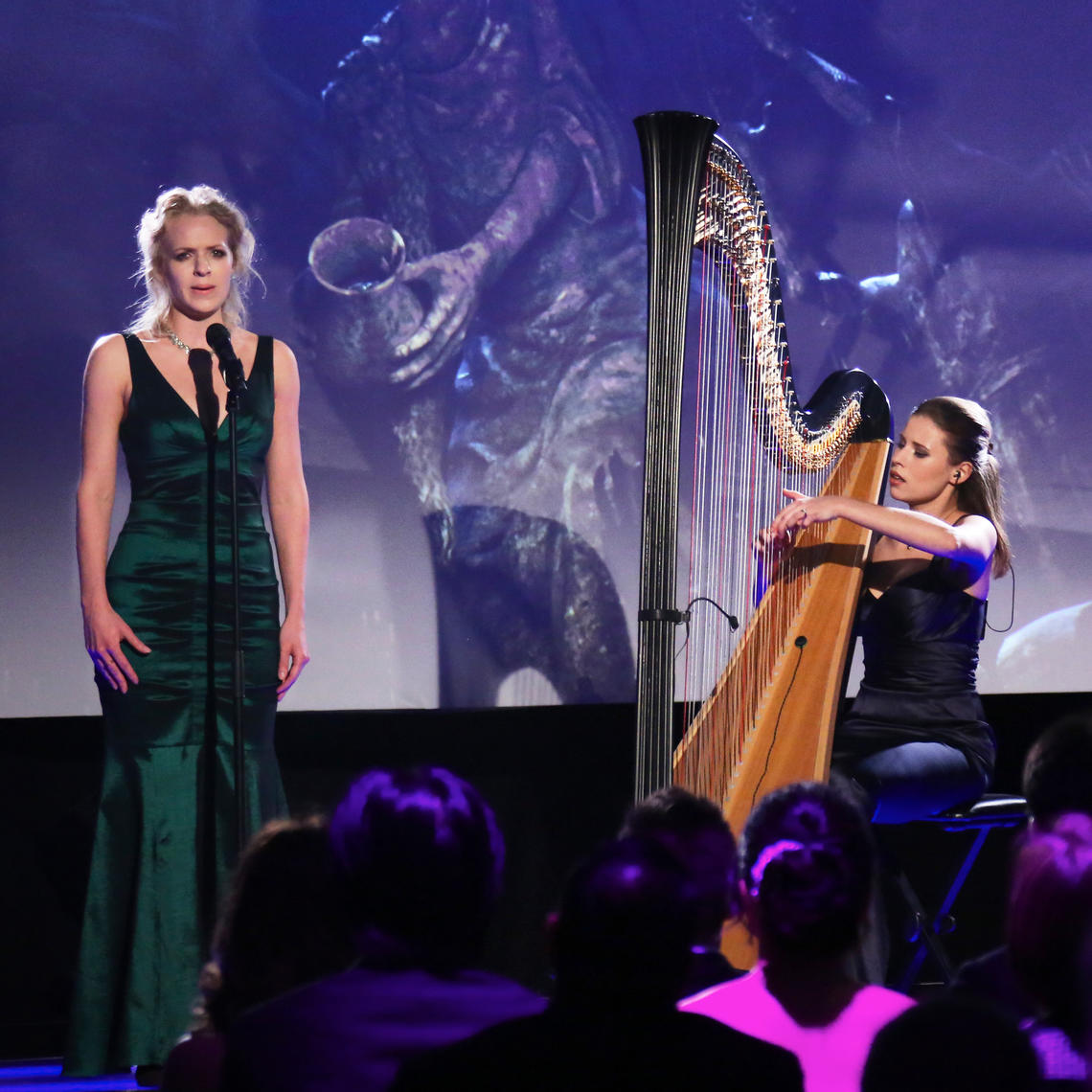
Soprano & Harp Recital – Cantique de Noël at the Kino Teatr

Sophie Pullen has had a busy year with performances aboard the Minerva in Chile & Peru, at Leighton House & Trinity House London, playing the role of Kate Pinkerton in Madama Butterfly at Cadogan Hall, and masterclasses with Dame Anne Evans for the International Opera Awards.  She also started on English National Opera’s prestigious Operaworks programme where the course culminates in a showcase next April. Her studies have been generously supported by grants from Opera Prelude and Coulter Partners.

s-pullen-dec-16

Another highlight of the year was opening the BAFTA Games Awards show in London with harpist Valeria Kurbatova; their performance of Schubert’s Ave Maria was watched by millions all over the world and they were keen to work together again.  So when the Kino Teatr approached Sophie about putting together a Christmas show she immediately thought of Valeria and the idea of a harp and voice recital started to form.  Sophie’s previous shows at the Kino have been theatrical affairs, featuring local tenor superstar Gary Marriott and Finnish mezzo soprano Amanda Martikainen, but Cantique de Noël uses the intimacy of the Kino Teatr to share a dreamy programme of French & German song, interspersed with classic yuletide pieces, mesmerising harp solos and songs that dream of white Christmases and starry winter skies.

Sophie told us “Valeria and I have built a programme that reflects the long nights, dreamy snowscapes and joyful Christmas tales of winter. We are performing some of our favourite songs by Schubert, Strauss, Debussy and Faure, along with festive favourites such as The Sugar Plum Fairy & O holy night.  Valeria and I had such fun working together for BAFTA and are looking forward to furthering our duo with this recital.  Performing in the Kino Teatr by candlelight, a venue with a particularly atmospheric environment, is going to be a special experience.”

As soloists they have appeared variously at the Royal Albert Hall, Royal Opera House, Kensington Palace, The Barbican, The Forge, Warwick Arts Centre, Southwark Cathedral, Cadogan Hall & Wigmore Hall. A graduate of the Royal College of Music, Russian harpist Valeria Kurbatova started her musical career at the age of 8 when she began studying the harp at the Gnessin State Musical College in Moscow; she has won many awards including the 1st prize at the International Harp Competition in Moscow and is a principal performer with the London Electronic Orchestra.

‘Cantique de Noël – A Festive Smash for Voice & Harp’ 9th & 10th December, 7.30pm at the Kino-Teatr, Norman Rd, St Leonards-on-sea

Sophie Pullen will also be performing arias in ‘Christmas Extravaganza’ with Ken Roberts and the Sussex Concert Orchestra on the 4th December, 6.30pm at St. Barnabus Church, Cantelupe Rd, Bexhill


Noteworthy Voices

noteworthy-2
Noteworthy Voices sing a lovely choral collection to brush off the winter blues
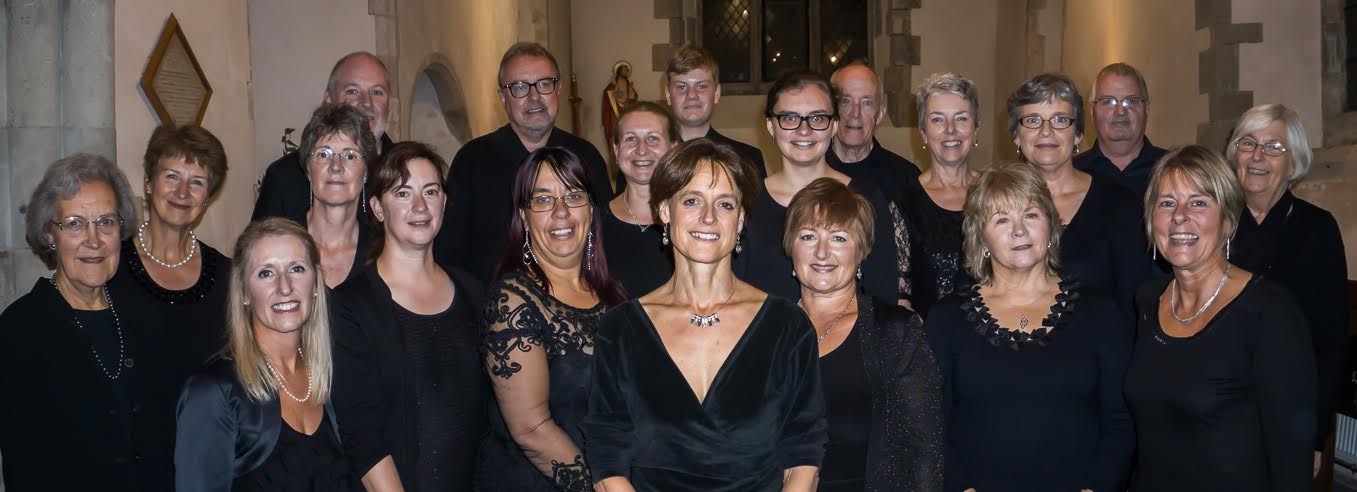
On Saturday 21st of January 2017, this fine ‘a cappella’ group of around 20 singers will be visiting St Simon and St Jude Church in East Dean Village, near Eastbourne.
Lovers of classical choral works will soon realise they are in for a rare treat – the programme, titled Tales & Traditions is sure to lift your spirits: starting with 16th Century masterpieces by Byrd, Tallis and Palestrina, as well as the much-loved Crucifixus by Lotti, the programme also includes Northern Lights by Ola Gjeilo – a spine-tingling work of icy beauty.
There are some delightful collections of songs by Brahms and Vaughan Williams plus the fabulous Calme des nuits by SaintSaëns. The performance starts 7.30 p.m. Tickets £8 at the door. Children free. Refreshments available.

The Best of British Film Scores

Sunday 4 December, 2.45pm, Brighton Dome Concert Hall
Brighton Philharmonic Orchestra
Richard Balcombe (conductor)

film-poster-montage

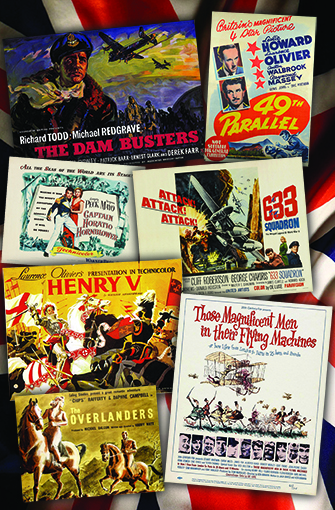
The Brighton Philharmonic Orchestra’s season at Brighton Dome continues on Sunday 4 December with a concert celebrating the work of some of Britain’s greatest film composers – The Best of British Film Scores.

Britain has provided the world with some of the most iconic films ever made, many now considered classics, and part of what makes these wonderful films so powerful is some of the best film music ever written.

Guest conductor Richard Balcombe explains why the audience is in for a feast of memorable tunes and powerful orchestral writing:

“Orchestral film music is some of the most dynamic and exciting you’ll hear as it has an immediacy in creating mood and sentiment that has to hit the ear without any delay – sometimes the mood has to be created almost fleetingly as cues can be very short. Our programme is packed with pieces that will bring emotion to the surface, both in the strength of something like 633 Squadron and in the romance of Ladies in Lavender.

Many composers specialise in writing for film and television (Ron Goodwin, Patrick Doyle and Nigel Hess for example) but we’re also featuring pieces by composers from the great English classical tradition – William Walton, Ralph Vaughan Williams, Sir Arthur Bliss and John Ireland.

Whilst there are doubtless some popular favourites in the programme (The Dam Busters and Those Magnificent Men in their Flying Machines for example) we have also delved deeper to find beautiful compositions like Coastal Command (Vaughan Williams) and The Overlanders (John Ireland).

We should be immensely proud of a long line of British composers contributing amazing scores for the world of film and it’s very exciting to be able to celebrate in this way.”

Full programme details available at: www.brightonphil.org.uk/concerts/sunday-4-december-2016/

Tickets (from £12-£37) available from Brighton Dome Ticket Office in person, by telephone (01273) 709709 & online: www.brightondome.org

Under 18s & students half price, Family ticket: up to 2 children @ £1 each with adult ticket purchase

Discounted parking (just £6) available at NCP Church Street Car Park between 1-6pm

Join Peter Back in conversation with Richard Balcombe for a Pre-Concert Interview on stage at 1.45pm – Tickets £3.75

Glyndebourne Touring: Don Giovanni

Marlowe Theatre, Canterbury. 15 November.

gto-dg

What a success the Marlowe Theatre is, five years on from its rebuild. I’ve seen its main space full for pantomime, Philharmonia concerts, West End-style touring shows and much more.  And of course a Glyndebourne tour guarantees a very excited buzz and hardly an empty seat.

A rather abrupt, very punctually launched, overture led smoothly – once musicians and audience settled – to Leporello’s entrance unaccountably clad in grubby, baggy singlet and underpants in this somewhat bitty 1950s take on the story. In many ways Brandon Cedel, as Leporello, is a mercurial cross between Prince Harry and David Tennant, and the star of this show. His immaculately controlled, impassioned, chocolate-rich bass voice works well for both his serious, vexed moments and for lighter spots such as the famous conquest list aria. And he’s quite an actor.

I last saw Duncan Rock (title role) as Don Giovanni, four years ago in a production in a gay nightclub at Charing Cross in which all the roles except his were gender-reversed. He was interesting then but his interpretation, voice and acting have all matured in the interim. The deceptively simple Act 1 seduction duet with Zerlina (good – especially in the later number in which she woos back Bozidar Smiljanic as Masetto) is exquisitely sung and his sensitive Act 2 serenade is an utter delight.

Andrii Goniukov is suitably imposing as Il Commendatore and Ana Maria Labin is a very creditable Donna Anna with the right level of pain and revenge in her voice most of the time. There’s some fine work in the pit under Pablo Gonzalez with mandolin playing from Francisco Correa for the serenade as an especially noteworthy moment.

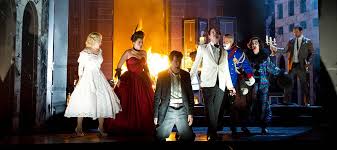
As for the production itself – Jonathan Kent, who directed the original production and Lloyd Wood who directs this touring revival  often stray perilously close to gimmickry. Why, for instance, do we have a fire at the end of Act 1? If it’s meant to prefigure Don Giovanni’s eventual descent then it’s painfully laboured. The set (designed by Paul Brown) makes so much use of the revolve that it quickly begins to feel unnecessarily fussy as it swings repeatedly to reveal different scenes. Much of the action is played in quite small contained spaces within on-revolve mini-sets. And if there’s an artistic or narrative reason for raking so steep within them that I was reminded of rock pools at the seaside as performers teetered rather alarmingly up and down, then I have failed to work out what it is.

In general though, it’s an enjoyable evening. I’ve seen Don Giovanni done in many quirky settings and eras and, actually, the material is so strong that the details of how you present it don’t matter much. Whatever you throw at the piece – provided the singing and playing is right – the music will carry it. That’s Mozart for you.

Susan Elkin


Hastings Philharmonic

White Rock Theatre, Hastings, 12 November 2016

Under Marcio da Silva, Hastings Philharmonic Choir has gained new authority and professionalism. To this he now adds a newly formed orchestra which gave its inaugural concert last night at the White Rock. Where many would have gone for a popular programme to encourage a wider audience he chose works which challenged both the performers and listeners – but the risk certainly paid off.

To set the seal we were given an unexpected violin solo to start the evening – an exquisite performance of Bach’s Chaconne from Partita No2 in D BWV 1004. Not an easy work for the uninitiated but when so lovingly crafted it could not fail.

This set a standard for the rest of the evening. Music of the highest quality given with respect and professionalism by all concerned – not least the audience whose concentration was splendid throughout – and no attempts to clap between movements!

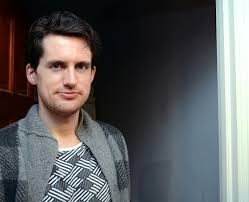
philip-omeara

The main work in the first half was a new composition by Philip O’Meara, entitled No Man.  It draws together a number of texts which reflect on the nature of man, ranging from Yeats and Victor Hugo to Schiller and the Old Testament. The hushed, reflective opening section includes distant whispers from the choir. It is unclear if these are prayers or the voices of the dead, but the motive returns in the final section when the whispers are no longer there. Have they been forcibly silenced, are they destroyed or have the souls been released? The enigma remains but the effect is moving.

Between these two sections there are effective choral settings of verses from Psalm 88 and a folk dance treatment of Victor Hugo’s Betise de la guerre. The seventh section is the only really extrovert passage with chunky syncopated rhythms and a sense of exultation. The choir seemed very much at home with the setting – even more impressive when one realises they were let down at short notice by the French choir which was to have joined them for the French choruses. It would be good to hear it again in the near future.

After the interval we heard Beethoven’s Ninth Symphony – The Choral. Here the orchestra really came into its own showing both its very real strengths and present weaknesses. The quality of individual playing is not in doubt and there were many felicitous passages from solo instruments, notably the first bassoon and oboe. The string sound is good but at present there are simply not enough of them for the necessary balance. The second and third movements faired best in this respect, with a fine rhythmical bounce to the Scherzo and a wonderful lightness to the trio section. There was sensitivity and a sense of joy to the slow movement but again where the strings should blossom there simply was not the weight of sound available.

The choral movement itself is not an easy sing but the choir dealt with this without obvious strain, the top notes flying out with ease. The four young soloists were well balanced if a little nervous in their approach.

Marcio da Silva maintained a real sense of enthusiasm throughout the evening which was reflected by all on stage and in the audience.

This has been a fine start to a new venture which we applaud and look forward to following in future.

Their next concert is the familiar Christmas Carols Concert at St Mary in the Castle at 5.00pm on Sunday 18 December and there is a full brochure available of all the concerts over the next year. www.hastingsphilharmonic.com


ENO: Lulu

London Coliseum, 9 November 2016

ENO

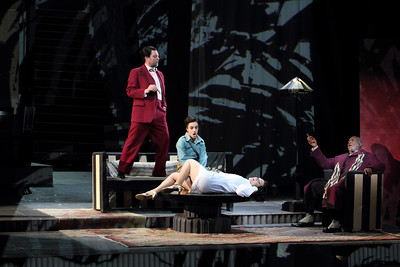
Performances of Lulu are few and far between despite its importance and so it is good that ENO have snapped up a provocative and engaging new production by William Kentridge, even if it is only on for five evenings.

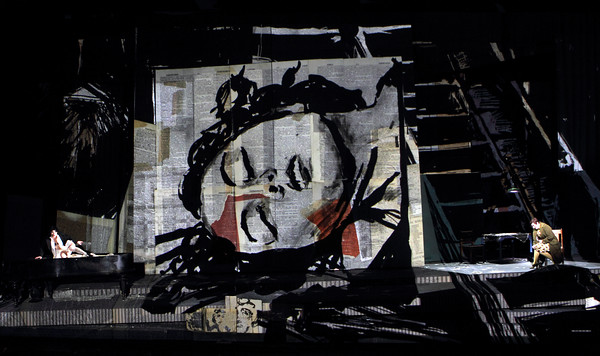
Kentridge is an artist and this is the basis of his approach. The stage looks like the set for a German expressionist film of the nineteen-twenties. Onto this he projects a stream of images taken from his own drawings/paintings which evolve and change in response to the score. It is highly effective, if at times a little overwhelming, but nonetheless does give an insight into the work which is new and provocative without ever doing damage to the music.

Under Mark Wigglesworth’s virile handling the orchestra is in superb form and the glorious late romanticism of Berg’s score shines through. The interludes, which are effectively staged throughout, never sink into purple passages, and part of this is due to the filmic nature of the whole approach, so that Berg’s request for film never stands out as an oddity against the rest of the staging. Very much a step in the right direction for the use of video in opera.

To this we can add a strong cast. Sarah Connolly’s Geschwitz and James Morris’ Dr Schon are superb and Nicky Spence as Alwa is only let down by costume and make-up which regularly reduce him to Billy Bunter. The many smaller parts are well rounded, though I was confused by the lady on the piano and the Igor-like man servant.

ENO

Brenda Rae sings the title role with ease, throwing off the high lying tessitura with a carelessness apt to the part. The difficulty lies in her knowingness where the text is concerned. She seems to want to inflict pain on the men who surround her where the opera as a whole suggests she is as much a victim as they are. There is an underlying innocence to Lulu. In the first act her repeated I don’t know – mirroring Parsifal – should be genuine, and the confession of murder surely needs a sense of naivety. She may be destructive but it is not willed by her so much as the society which has created her. However, the evening is a great success, and given the smaller number of productions this season, one that will surely be well remembered.

CDs November 2016

Handel: Messiah (arr Davis)
Toronto Symphony Orchestra and Mendelssohn Choir, Sir Andrew Davis
CHANDOS CHSA 5176(2)
Most professional performances of Messiah these days take account of baroque praxis even if they perform on modern instruments. Sir Andrew Davis here takes a very different approach, re-scoring much of the oratorio not only for modern instruments but for combinations which Handel could never have contemplated. For most of the time this works well. Use of clarinets and a more romantic sound for the continuo is easy enough on the ear. The moments which startle are those which involve unexpected percussion – the snare-drum in Thus saith the Lord and the cymbals in But who may abide – and occasionally the over-exuberance of the brass. But it is well sung throughout and for anybody wanting what passed for normal fifty years ago, this may be just the thing.


Wagner: Die Walkure
Honk Kong Philharmonic Orchestra, Jaap van Zweden
NAXOS 8.660394-97

I had enthused about Das Rheingold when it was issued last year and this new Die Walkure certainly lives up to expectation. First of all the acoustic is splendid, giving real clarity to the voices with a sense of space around them, and an orchestral ambience which is constantly enthralling. Stuart Skelton, surely the finest heldentenor now singing, is magnificent as Sigmund, heroic and sensitive throughout and ringingly secure in the top passages. Heidi Melton is a sensitive Sieglinde who warms and develops as the evening progresses. Falk Struckmann, himself a fine Wotan, is a suitably black Hunding. Matthias Goerne and Petra Lang are perhaps better known and live up to expectations, and there are no weaknesses among the Valkyries.

I’m really looking forward to the rest of the Cycle which could easily earn its place among the finest ever recorded. Jaap van Zweden has set the orchestra among the best in the world.

MOZART – PIANO DUETS Vol 1
Julian Perkins & Emma Abbate
RESONUS RES10172 68’04

Successful piano duet playing places particular demands on the performers and here the two pianists are working very well together. This is a programme of more substantive works written for this particular genre. As well as the Sonatas in C major, D major & Bb major the programme also includes Johann Christoph Bach’s two movement Sonata in A major. A second volume, also on period instruments,  is to follow.

JOSEPH BODIN de BOISMORTIER – 6 SONATES, Op 51
Elysium Ensemble
RESONUS RES 10171 71’24

Resonus are to be congratulated on their recent output of unusual repertoire. Here is another fascinating disc presenting these six compositions for flute and violin, published in Paris in 1734. This neglected repertoire is made to sound very fresh in these performances.

MUSIC FOR A PRUSSIAN SALON
Boxwood & Brass
RESONUS RES 10177 72’53

The five piece period woodwind and brass ensemble make a lovely sound, bringing this 18th/ early 19th Century music to life in a way that is entertaining and very accessible. Franz Tausch’s XIII Pieces en Quatuor, Op 22 for 2 clarinets, horn & bassoon are presented in two suites which bookend the performance. Sandwiched between these are Johann Stamitz’ Three Quartets for clarinets & horns and Concert-Trio for clarinet, horn & bassoon by Bernhard Henrik Crusell.

RAVEL & SAINT-SAENS PIANO TRIOS
Fidelio Trio
RESONUS RES10173 59’58

This is the first recording by the Fidelio Trio on the Resonus label. Saint-Saens’ Piano Trio No 2 in E minor is paired here with Ravel’s only Piano Trio. A very enjoyable chamber music recital.

BEETHOVEN PIANO SONATAS Opp 31, 78, 79, 81A & 90
Paavali Jumppanen, piano
ONDINE ODE 1290-2D (2 CDs) 71’32 & 47’20

Paavali Jumppanen gives fine performances of this more traditional fare. The interesting booklet notes draw attention to some of the features of these works which trace developments in Beethoven’s compositional style.

PIERRE de la RUE – MISSA NUNCQUA FUE PENA MAYOR
The Brabant Ensemble, Stephen Rice, conductor
HYPERION CDA68150  78’55

This is an enjoyable recording of renaissance choral music from the continent by experienced performers. As well as the Mass which gives the CD its title we also hear Pierre de la Rue’s Salve Regina IV, Magnificat sexti toni and Missa Inviolata.

C.P.E. BACH – THE SOLO KEYBOARD MUSIC, Vol 31
‘FUR KENNER UND LIEBHABER’ SONATAS FROM COLLECTIONS 1 & 2
Miklos Spanyi, clavichord
BIS RECORDS  BIS-2131 73’23

It is no surprise that this prolific, but long neglected, composer’s keyboard output has already filled 30 volumes! Here are seven sonatas of varying lengths (the longest 19’07, the shortest 6’24) played on a 1991 clavichord. Very enjoyable but perhaps a release for the completist collector.

C.P.E. BACH – BURGERCAPITAINSMUSIK 1780
Barockwerk, Hamburg, Ira Hochman, director
CPO 555 016-2  62’57

This is a very interesting release of music written by CPE Bach commissioned by the Civic Captains of Hamburg, a group with great influence on the life of the city, for their annual gala. The commission was in two parts – an oratorio to be presented around noon and a serenata to accompany the evening banquet. CPE Bach composed music for these occasions in 1780 and again in 1783. Here we have the first such offering. The oratorio Hebt an, ihr Chore der Freuden is followed by the serenata Der Trommeln Schlag, der Pfeifen Spiel. A fascinating revival of music for a particular occasion.

Bravura: Vivaldi & Handel
Gabriella Di Laccio, soprano, Musica Antiqua Clio, Fernando Cordella
DRAMA MUSICA DRAMA 001

An exciting mix of the familiar – Rinaldo, Giulio Cesare – and the less so – Vivaldi’s Juditha Triumphans and L’Olimpiade. Garsington Opera showed us just what a fine work this latter one is, and the whole disc bubbles with energy and risky coloratura with which Gabriella Di Laccio has no obvious difficulties.

The Celebrated Distin Family
The Prince Regent’s Band
RESONUS RES 10179

What a wonderful find! This is exactly what we need in the build up to Christmas. Much of the music is familiar – arrangements of Meyerbeer, Donizetti, Verdi and Arne – alongside works by Henry and Theodore Distin with lesser known pieces. The Distin Family blazed a trail across Europe and the USA  thanks to an encounter with Adolphe Sax who introduced them to valved brass and the new saxhorn. I can’t recommend this too highly – it is a gem!

Schoenberg: Gurrelieder
Bergen Philharmonic Orchestra & Chorus, Edward Gardner
CHANDOS CHSA 5172(2)

This recording has such a strong cast it could hardly fail. Alwyn Mellor, Stuart Skelton and James Creswell are in the front rank of Wagner singers which Schoenberg’s work requires, and Edward Gardner draws expressive and moving performances from them and the Bergen forces. Might we get a live performance in this country?

Debussy: Four-Hand Piano Music – 2
Jean-Pierre Armengaud, Olivier Chauzu
NAXOS 8.573463

It is difficult to raise much enthusiasm about this recording – though the playing itself is not at fault. The problem lies in the arrangements which in most cases simply don’t work if one knows the original. I can understand that they may be fun to play but the listener is left yearning for the original.

Chopin & Schumann
Horacio Gutierrez, piano
BRIDGE 9479

The 24 Preludes Op28 in a performance which focuses on the continuity which Chopin intended for the cycle – and how well this works. It is almost like a live performance where one is encouraged to see the work as a whole rather than a series of lollipops – a fate which is all too frequent for Chopin’s Preludes. Schumann’s Fantasie Op17 is a more challenging work but none the less given integrity and emotional truth here.

J S Bach: Works for Lute
Johannes Monno, guitar
HANSSLER HC 16085

The guitar is fine – and these are entertaining pieces throughout – but the lute is a different instrument altogether and there is a sense that the pieces lose something in the translation. However this is a bargain given its twenty-seven pieces across the two discs.

SP & BH

Brahms in Brighton

Brighton Philharmonic Orchestra

The Dome Brighton, 6 November, 2016

Brahms

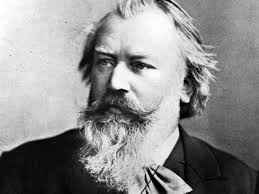
What a good idea to open a concert whose main work is Ein Deutsches Requiem with Schicksalsleid. The choir is already there and it creates a valuable opportunity to hear a live performance of something which doesn’t get too many outings although, as James Morgan told the audience at the beginning, Schicksasleid is one of the finest things Brahms ever wrote. This rendering of it was eloquent, mellow and nicely paced – and it clearly showed how well The Dome works for a large, impressively competent, choir such as Brighton Festival Chorus. The acoustic is warm but also allows for an incisive edge against which Morgan’s tempi were well judged.

Morgan is a perky and insouciantly witty presenter as well as a conductor and he treated us to an unadvertised education workshop on the Requiem between Schickalsleid and the interval, drawing attention to some of former’s most interesting moments. I’ve sung it many times but still learned from this entertaining 15 minutes. The best was the “historical re-enactment” of the first performance when a piano marking was omitted from the timpani part so the player played forte throughout the third movement which put the public off so much that Brahms didn’t risk a second performance for a whole year. Morgan gave us a sample of what this would have sounded like and it was very funny.

And so to the marvels of the Requiem itself with its seven movements, musical and narrative symmetry and emphasis on comforting the living.  Morgan has a real gift for bringing out the detail, such as the double bass pedal in the opening, allowing the harp to dominate briefly where it’s appropriate, letting us enjoy the contra-bassoon and making sure we noticed the beautiful pizzicato passages in the central fourth movement. The final, peace and resolution-bringing movement was particularly fine with some enjoyable flute work.

Leigh Melrose, bass, has some of the clearest, best articulated German diction I’ve ever heard in any account of this work. His style is dramatic with plenty of passion particularly in the third movement. It was a cutting edge performance. Soprano Sarah Tynan has a mellifluous tone and managed to temper the anguish with sweetness in the fifth movement – her big moment

There was excellent singing from the choir too with nearly all entries tidy and very little strain even on demanding high notes. And Morgan’s dynamic control was well observed so that there were some moments of real Verdi-style tension.

Susan Elkin