Tales & Traditions

Noteworthy Voices at St Simon & St Jude, East Dean, Saturday 21 January 2017

St Simon East Dean

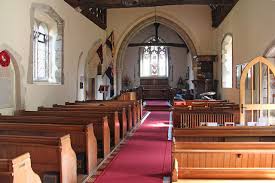
A bitterly cold night but the warmth of the welcome at St Simon and St Jude more than made up for any concerns, and Noteworthy Voices provided us with another superbly balanced programme of a cappella music.

The first half was given over to sacred texts, many from the 16th and 17th centuries, starting with three reflective works. Thomas Mudd’s Let Thy Merciful Ears, O Lord has a quiet dignity before the richer textures of Tallis’ If Ye Love Me, and the wonderfully floated lines of Byrd’s Ave verum. The next section brought us to praise of God with Victoria’s O Quam Gloriosum which seems to pile the musical lines onto each other in a dizzying attempt to raise us to heaven. The same composer’s Jesu Dolcis was more reflective before the high tessitura of Palestrina’s Jesu Rex Admirabilis and the bouncy rhythms of Exultate Deo.  Lotti’s Crucifixus is a miracle of condensed emotion, its harmonic palette so challenging it could have been written within the last century. By contrast the recent works by Norwegian composer Ola Gjeilo seemed almost easy on the ear, particularly the slow unfolding of Northern Lights.

The second half brought us to secular settings, opening with three choral songs by Brahms. The six part settings gave the choir a chance to demonstrate different tonal colours, particularly in the final melancholic Darthulas Grabegesang. Saint-Saens’ charming settings of Calme des Nuits and Les Fleurs et les Arbres led us gently towards the lighter end of the evening with folk and popular numbers.

Vaughan Williams’ arrangements of Linden Lea and Just as the tide was turning are none the less welcome for being familiar, and it was a delight to hear James Tomlinson as the bass soloist in The Turtle Dove. He will be missed when he leaves to take us a choral scholarship and we wish him well.

A lovely gentle arrangement of O Waly, Waly led us into Over the rainbow and Tea For Two – and all too soon we were at the end.

Ansy Boothroyd introduced the programme and conducted with subtlety and skill throughout. The different approaches she takes to the end of a piece is particularly noteworthy, with some dying away to silence while other are softly rounded. It is all beautifully crafted and the choir react with exceptional musicality to her shaping of the sound.

We look forward to hearing them again soon.


GARSINGTON OPERA ANNOUNCES EXTENDED SEASON

GARSINGTON OPERA SEASON 
1 June to 30 July 2017

For the first time in its history, this summer Garsington Opera will present four productions as well as a large community opera.  2017 also sees the arrival of the Philharmonia Orchestra for one opera production each season for the next five years. This year the festival offers Handel’s seductive masterpiece Semele, Debussy’s enigmatic Pelléas et Mélisande, Mozart’s Le nozze di Figaro, Rossini’s Il turco in Italia and will conclude with Silver Birch, a large-scale work for a professional cast with local community participants of all ages, commissioned by Garsington Opera, from leading British composer Roxanna Panufnik and librettist Jessica Duchen. The JLT Group is the season’s sponsor for the fourth consecutive year.   As part of the Garsington Opera for All programme, funded by Arts Council England and run in partnership with Magna Vitae, Semele will also be screened free of charge in Skegness, Ramsgate, Burnham-on-Sea and Grimsby

Semele is a love story in which the god Jupiter is captivated by the beauty of the all-too-human Semele; these dramatic and colourful mythological characters inspired Handel’s most memorably beautiful arias. The title role will mark the British debut of American sopranoHeidi Stober, an established favourite at some of the world’s most important opera houses, including San Francisco Opera, Deutsche Oper Berlin, the Vienna Staatsoper  and the Metropolitan Opera, New York.  Singing the pivotal role of Jupiter is Robert Murray with Christine Rice singing his spurned wife Juno. They are joined by Jurgita Adamonyt? (Ino), David Soar (Cadmus & Somnus), South African countertenor Christopher Ainslie (Athamas) and Leonard Ingrams Foundation Award winner Llio Evans (Iris).  Leading early music specialist Jonathan Cohen will conduct the Garsington Opera Orchestra and Chorus and Annilese Miskimmon, Artistic Director of Norwegian National Opera will direct, in collaboration with designer Nicky Shaw.


Pelléas et Mélisande, Debussy’s only opera, and often considered to be one of the most original in the history of music,  is full of shimmering beauty creating a work of intense hypnotic allure. It will feature established French bass-baritone Paul Gay (Golaud) and two rising stars taking the title roles – Jonathan McGovern (Pelléas) and American soprano Andrea Carroll (Mélisande) making her British debut, with Brian Bannatyne-Scott (Arkel) and Susan Bickley (Geneviève). Jac van Steen returns (Strauss Intermezzo 2015) to conduct the Philharmonia Orchestra in its first year of partnership with Garsington Opera. Michael Boyd (director) together with Tom Piper(designer) return following their acclaimed production of Eugene Onegin last season.


Il turco in Italia will be a revival of Garsington Opera’s joyous 2011 production directed by Martin Duncan with designs by Francis O’Connor. Three members of the original cast return – Mark Stone as the poet Prosdocimo,  Quirijn de Lang as the dashing Turk Selim, and Geoffrey Dolton as the devoted but dull husband Geronio. They are joined by renowned British soprano Sarah Tynan as the dazzling and flirtatious Fiorilla and rising star Katie Bray as Zaida.  Italian tenor Luciano Botelho returns as the love-lorn Narciso. Rossini doyen  David Parry will conduct the Garsington Opera Orchestra and Chorus in this glittering musical score.


John Cox’s legendary production of Le nozze di Figarofirst seen at Garsington Manor in 2005will be recreated for the opera pavilion at Wormsley.  Written at the height of his genius, this is one of Mozart’s finest works. Australian born Joshua Bloom (Leporello, Don Giovanni, 2012) returns to sing the title role with the exciting soprano Jennifer France (Leonard Ingrams Award winner) as Susanna. The Canadian singer Kirsten MacKinnon will make her UK debut as the Countess with Duncan Rock as the Count and Marta Fontanals-Simmons as Cherubino. Stephen Richardson (Bartolo), Janis Kelly (Marcellina), and Timothy Robinson (Basilio) join the vibrant young cast.  Douglas Boyd will again conduct this highly acclaimed production with the Garsington Opera Orchestra and Chorus.  In June the principals and chorus of Garsington Opera will travel to  the Théâtre des Champs-Élysées in Paris to give a semi-staged concert performance of Figaro with the Orchestre de Chambre de Paris conducted by its Music Director Douglas Boyd.


Roxanna Panufnik’s Silver Birch is a commission for Garsington Opera’s Learning & Participation programme with Jessica Duchen as librettist. The production will see over 180 community participants aged 8-80, including recruits from the local military community, performing as dancers, singers, actors, instrumentalists, as well as student Foley artists from Cressex Community School under the guidance of Pinewood Studios Sound Designer Glen Gathard.  They will perform alongside favourite Garsington professionals in the cast and orchestra. The story explores the extraordinary power of love within the devastating context of war and makes use of Siegfried Sassoon’s poetry from WW1 (some of which was written while staying at Garsington Manor). The creative team is Karen Gillingham director, Rhiannon Newman Brown designer, and Garsington Opera’s Artistic Director Douglas Boyd joins them to conduct.  The professional roles will be performed bySam Furness (Jack), Victoria Simmonds (Anna), Darren Jeffery (Simon), Bradley Travis (Sassoon), Sarah Redgwick (Mrs Morrell) andJames Way (Davey) and the Garsington Opera Orchestra will be playing.

CDs/DVDs January 2017

Bruckner: Symphony No 4
UNITEL 732508
Bruckner: Symphony No 6
UNITEL 738208
Staatskapelle Dresden, Christian Thielemann

This is proving to be an excellent series, and if, as promised, it goes on to include the even rarer early symphonies it will prove to be invaluable. If the Fourth is more conventional in approach, its tonal qualities and masterly construction of long paragraphs is continually rewarding. The Sixth is another matter. Very rarely heard live, its starkly different tonal palette compared with his other symphonies is all the more compelling. It is surely more than the fact that the composer had been on an extended holiday before he composed the work. There is an openness of texture and a lightness of touch we find nowhere else. Perhaps it is time some of our own orchestras explored its very eal riches.


Joseph Beer: Polnische Hochzeit
Gartnerplatz Chorus and Munich Radio Symphony Orchestra, Ulf Schirmer
CPO 555 059-2

Anyone who enjoys Lehar will be immediately attracted to this operetta from a composer who spanned virtually the whole of the twentieth century. The Polish Wedding was first seen in 1937, shortly after Lehar’s final work Giuditta. The story line may be conventional but the music has an unexpected freshness and vitality, aided I am sure by the recently reworked orchestral parts. Worth investigating.


Music from a Higher Sphere
Mahler: Symphony No 8
Arranged for organ and chorus by David Briggs
PRO ORGANO CD 7276

I have enjoyed David Briggs earlier forays into Mahler, and felt the arrangement of the Fifth Symphony was particularly impressive. Here I am not so sure. The Eighth relies heavily on its choral setting, where the orchestra supports and enhances the vocal line. On this occasion the organ does not seem to adequately fill out Mahler’s intentions. The acoustic in the Cathedral of St John the Divine, New York, does not help, and for much of the recording both the voices and organ seem distant. This may be a good souvenir of the live performance but it does little to enthuse this listener.


J P Sousa: Music for Wind Band – 16
Marine Band of the Royal Netherlands Navy, Keith Brion
NAXOS 8.559746

This is a joy to listen to throughout.  The longest section is a selection from the operetta The Charlatan alongside which are ten other pieces, all equally endearing. How Sousa was constantly able to turn out so much wonderful music is a mystery, and the longer this series continues the more pleased I shall be.


J S Bach; Cantatas
Iestyn Davies, Arcangelo, Jonathan Cohen
HYPERION CDA 68111

Three Cantatas – BWV 170; BWV 54; BWV82 – together with the Sinfonias from BWV 52 and 174, make this a fine collection and one which shows off Iestyn Davies continuing strengths as a counter-tenor of rare quality. These cantatas were written for boy altos rather than counter-tenor, which only goes to show the quality of voices Bach had at his disposal. The final cantata, Ich habe genug is also the most familiar, but listeners may be surprised by the sinfonia from BWV 174 which is arranged from the Third Brandenburg Concerto.


Rostropovich Encores
Alban Gerhardt, cello, Markus Becker, piano
HYPERION CDA 68136

A collection of encores may not seem the most obvious to issue as a single cd but given that these were pieces used by Mstislav Rostropovich puts them into an altogether different class. Alongside familiar pieces by Debussy and Rachmaninov are a number of pieces by Prokofiev as well as some by Rostropovich himself. All of which makes for an unexpectedly pleasing recording.


Hymnus: Music for Organ by Carson Cooman
Erik Simmons, 1787 Holzhey organ, St Peter & St Paul, Weissenau, Germany
DIVINE ART DDA 25147  66:00

Carson Cooman is a prolific composer and an organist in his own right, though here his works are performed by Erik Simmons on the fine late baroque organ in St Peter & St Paul, Weissenau. The cd is made up of a large number of short pieces, many of which were written in memory of friends or to commemorate specific individuals. As such the whole has a highly reflective character which is none the worse for that. The opening Haec Aeterna is typical of the cd as a whole, being a meditative postlude built around the Old Hundreth. Many of the pieces are in a similar vein, using familiar hymn tunes as the basis for more elaborate, though normally brief, compositions.

There are a few exceptions. Three Enigmas are just that – short pieces which explore harmonics rather than procure any narrative structure. As if to prove that he can provide more exhilarating scores, the cd concludes with a rousing Rondo Festivo.

Many of these pieces would sit comfortably within either a liturgical or concert format, and details of compositions and scores can be found on www.carsoncooman.com

Brighton Philharmonic Orchestra

The Dome, Brighton, 15 January 2017

A crowd pleasing programme meant that the Dome was as full as I’ve ever seen it for a BPO concert. And despite the chilly wet January weather outside there was a very upbeat sense of “Now sits expectation in the air”. The concert which followed met that expectation with aplomb.

First came the operatic colour of the Overture to the Barber of Seville played with lush full tone and plenty of breathless excitement, especially in the syncopated passages, and in all those wonderful woodwind solos with a particularly noteworthy bassoon contribution.

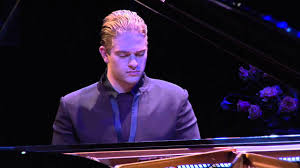
Joseph Moog

I suppose Grieg’s piano concerto is second only to Tchaikovsky 1 and Rachmaninov 2 in popularity – and deservedly so. Joseph Moog is an engaging player to watch despite his sitting so far forward on his stool that he appeared to be in serious danger of sliding off the front and disappearing under the piano. The performance really came into its own during the adagio in which the orchestra achieved a gloriously sweet, immaculately fluid sound, before the magical moment when the piano creeps in. It was played with the sort of imaginative restraint that even some of the world’s top orchestras fail to bring off. Moog and Ben Gernon interpreted the movement as much more of a musical dialogue than as a showpiece for accompanied piano. There was thoughtful, wistful work in the allegro too before the dive into the showy, virtuosic conclusion.

Dvorak 8 is possibly my favourite symphony. I’ve played the second violin part several times in amateur performances and I’ve heard it done professionally dozens (and dozens) of times. The secret of making this delightful music shine lies in managing the contrasts – the soft lyrical passages, the irrepressible dance motifs, the brass fanfares and all the rest of it. Ben Gernon, baton-less and quietly charismatic, was on top of the symphony’s every mood. He found the work’s warmth, passion,fun and made it satisfyingly coherent – even down to resisting the temptation to exaggerate the rall just before the end as so many self-indulgent conductors do. Particular high spots included the tripping, trickling joyfulness in the second movement at the introduction of the second subject, the waltzing vibrancy of the adagio and the beautifully nuanced – so Bohemian! – rhythms of the minor key section in the last movement – and congratulations to principal flute, Margaret Campbell. There’s a great deal of exposed flute solo in this symphony and Ms Campbell ensured that we heard and enjoyed every note of it.

Susan Elkin


A Nossa Bossa

Hastings Philharmonic, The Tabernacle, Saturday 13 January 2017

Bossa

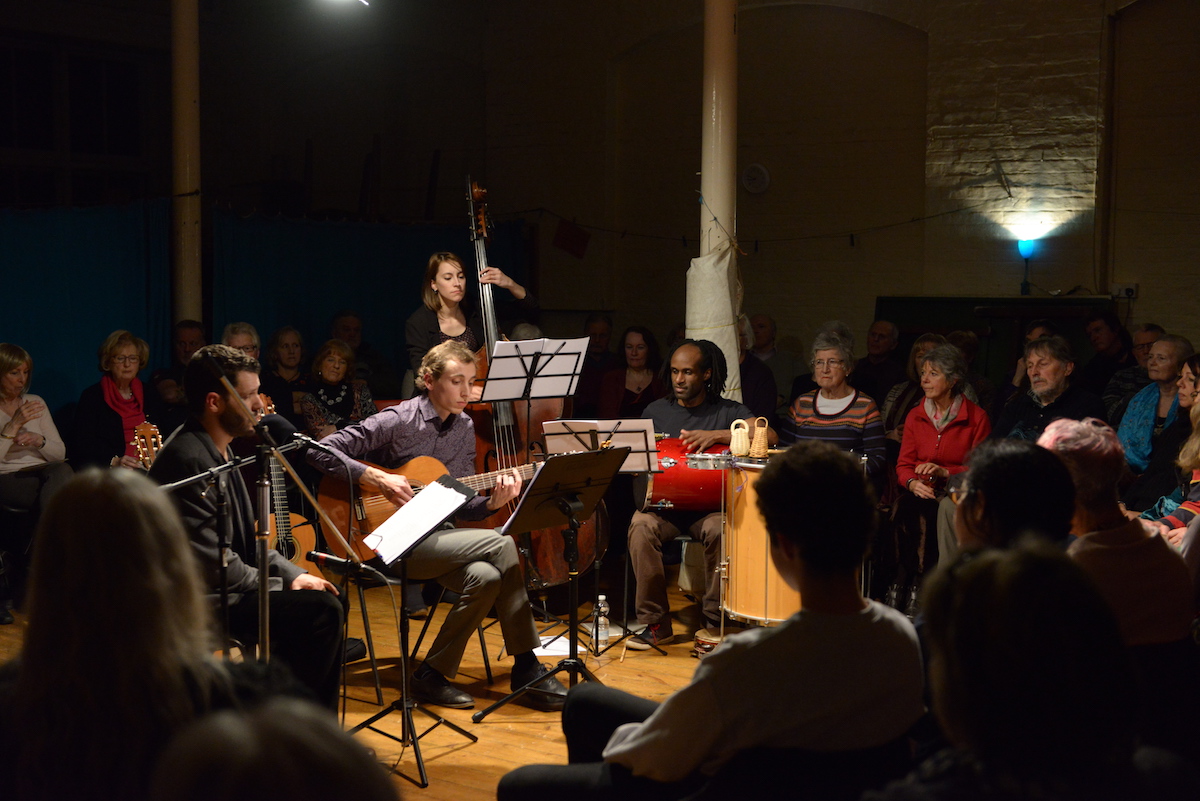
Who would have thought that four musicians could so easily transform the lower hall at Hastings Tabernacle into a South American nightclub? The large, closely packed audience, the low lighting, and the magnificent music at such close quarters, was all it took to provide one of the finest musical experiences we have had for many years.

This was the most recent in the new series of events launched last year to embrace within Hastings Philharmonic an impressively wide range of music. Following the Christmas Concert – and before the baroque concert in St Clements on 4th February – we had an evening given over to Bossa Nova.

Marcio da Silva, who both sang and played guitar, was joined by Ariel Gragnani on guitar, Elena Marigomez on Bass and Emmanuel McDonald on percussion.

Ariel Gragnani

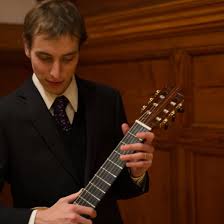
The first half was rather more traditional in terms of recital music but focused entirely on Latin America for its source. Aril Gragnani gave us three solo guitar pieces by Villa-Lobos which included the Scottish Choro. All three were in rondo form, returning us each time to the evocative melody which tends to linger long after the piece has finished. Marcio then sang Manuel de Falla’s Siete canciones populares. Though the songs come from many different parts of Spain they have a linking sense of angst or lament, even when the accompaniment is lighter in texture. Throughout Ariel Gragnani’s playing had been absolutely perfect for the acoustic of the venue.

After the interval they were joined by Elena Marigomez on Bass and Emmanuel McDonald on percussion for a selection of Bossa Nova and Samba numbers. These included well done songs by Tom Jobin – Desafinado, Meditação & Wave – and Zequinha de Abreu’s Tico tico no fubá.

The evening ended with Garota de Ipanema by Tom Jobim, more familiar to us as The Girl from Ipanema. We were encouraged to pick up the rhythm and sing along gently with Marcio. A splendid end to a wonderful evening. If all the other concerts in the series are as musically secure and well attended as this, the venture cannot, surely, fail.

ENO: The Winter’s Tale

Rory Kinnear makes directorial debut with the world premiere of The Winter’s Tale, the first opera by composer Ryan Wigglesworth

Opens Monday 27 February at 7.30pm at London Coliseum (5 performances)

ENO will present the world premiere of Composer-in-Residence Ryan Wigglesworth’s first opera The Winter’s Tale this spring, directed by acclaimed Shakespearean actor Rory Kinnear in his directorial debut. One of the most anticipated arts events of 2017, this will be a major operatic adaptation of Shakespeare’s late masterpiece.

The world premiere is the latest in a series of ENO commissions by British composers of operas in English, which includes Tansy Davies’s Between Worlds and Julian Anderson’s Thebans. Both won British Composer Awards for their work. With a top-flight cast of British singers including returning ENO favourites Iain Paterson as Leontes and Sophie Bevan as Hermione, it is sure to be a significant event for British opera.

Rory Kinnear has a long history of performing Shakespeare on the stage, having recently played Iago (for which he won the 2014 Olivier award for Best Actor) and Hamlet at the National Theatre. He now  takes the director’s seat for the very first time. An opera enthusiast and an accomplished singer himself, he played Macheath in last year’s National Theatre production of The Threepenny Opera. He is best known to wider audiences for his role as M’s chief of staff, Bill Tanner, in the three most recent James Bond films and for television roles in Black Mirror, Penny Dreadful and more.

Commenting on his directorial debut with ENO he said ‘Opera has become a big passion of mine over the last seven or eight years. ENO is the right place to do a commission from a great, young English composer and also an opera of a Shakespeare play. This feels the right kind of piece ENO should be doing’.

Ryan Wigglesworth has established himself as one of the foremost conductor-composers of his generation. Augenlieder, an orchestral song cycle for soprano Claire Booth, received the vocal prize at the 2010 British Composer Awards.

Ryan has written the roles specifically for the voices of the singers, making this line-up particularly significant – he says he ‘couldn’t imagine a greater British cast’. Many of these are figures who have been nurtured at ENO: Iain Paterson as Leontes has been a stalwart of Wagner productions here, with his role debut Hans Sachs in Richard Jones’s Olivier Award-winning The Mastersingers of Nurembergdescribed as ‘towering’ (Bachtrack) and ‘quite beautiful’ (The Telegraph). He is a graduate of the ENO Young Singers Programme.

Soprano Sophie Bevan, who is appearing as Hermione, is among the finest young singers of her generation, receiving the Young Singer award at the 2013 International Opera Awards, the 2010 Critics’ Circle award for Exceptional Young Talent and The TimesBreakthrough Award at the 2012 South Bank Sky Arts Awards. An alumna of the ENO Harewood Artist programme, she makes a welcome return.

The Winter’s Tale opens on Monday 72 February 2017 at 7.30pm for 5 performances – 27 February, 3, 8, 10, 14 March at 7.30pm.

500 tickets for £20 or less are available for each performance. Tickets start from £12. www.eno.org

Pre-performance talk:  Wednesday 8 March 2017  5.15-6pm, £5/£2.50 concs.


BBC Symphony Orchestra

Barbican Hall, Saturday 7 January 2017

A late romantic programme, starting and ending with Janacek, brought a healthily full audience to the Barbican Hall last night. Edward Gardner proved to be both enthusiastic and precise in his conducting, allowing the lush orchestrations to charm the listeners.

The evening opened with Janacek’s overture Jealousy. Originally planned as an overture to Jenufa but eventually abandoned, it was later revised as a concert piece in its own right. Here we heard it in Charles Mackerras’s reconstruction of the original which, if short, is full of impressive changes of mood and texture.

Smetana’s Ma Vlast is more familiar and we relaxed into a lyrically effuse reading of Vltava and a more strident Sarka. There was little sense of danger here, more a mythical, if not quite mystical piece of story-telling.

t-little

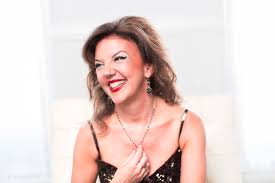
Szymanowski’s second violin concert is something of a rarity but Tasmin Little found all the nostalgic warmth inherent in the work as well as making the significant technical problems seem almost too easy. The extensive double stopping in the cadenza was most impressive but equally supported the sense of delight she brought to the whole piece. The final dance movement exploded into life, and if there was a darker heart lurking it was always at the mercy of the joy which flows throughout.

The new work was the UK premiere of Peter Eotvos’ The Gliding of the Eagle in the Skies.  The work is both loud and aggressive for much of its twelve minutes and it is only towards the end that there is any obvious sense of space or silence surrounding the bird in flight. While there is some interesting use of percussion, the structure is difficult to follow on a first hearing and it did not seem to endear itself to the audience.

The final item brought us back to Janacek with Taras Bulba. If the original narrative line is less than attractive to a modern audience, with its death and torture throughout, the score is thankfully more than open to a range of potential story-lines. As such it made sense to simply enjoy Janacek’s glorious orchestration, particularly the final rolling pages, rather than worry too much over what is supposed to be happening. That way we were able to enjoy not only the BBCSO’s fine playing but the panache Edward Gardner brings to every live performance he gives.

New Year’s Eve Viennese Gala

Brighton Philharmonic Orchestra, The Dome, Brighton
Saturday 31 December 2017

Maybe it was New Year’s Eve falling on a weekend, but the Dome seemed even more alive than usual for the traditional Viennese Gala from Brighton Philharmonic, this year in the capable hands of Stephen Bell. His Christmas cracker jokes strike just the right note between the musical items and the orchestra not only responded with enthusiasm but came dressed for the occasion.

r-bottone

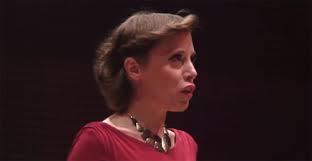
Soprano Rebecca Bottone was a delight throughout. Her high coloratura sparkled in Josef Strauss’ Dorfschwalben aus Osterreich and later in Sparenklange. Between these we heard Lehar’s Love live for ever and the Vilja lied. An unusual choice for New Year was her nicely tongue-in-cheek rendition of Poor Wand’ring One – Sullivan does not normally get a look in here but his pastiche worked well alongside the German masters.

The second half brought us closer to home with Robert Farnon’s Westminster Waltz and Eric Coates’ Mayfair Waltz – neither of them particularly familiar but certainly not out of place. Another rarity was the charming arrangement of Stars in my eyes which allowed us to hear a solo from leader John Bradbury. He started with hints of the Hungarian gypsy music which he plays so well before relaxing into the romantic tones of Kreisler’s composition.

If the above seems to imply there was a lack of more familiar Viennese music then the reality was far from it. The afternoon opened with the Act 3 March from Strauss II’s Der Zigeunerbaron, and the gentle delicacy of the polka Die Libelle – the dragonfly. We heard the Gold and Silver Waltz, and the Trisch-Trasch-Polka. Waldteufel’s Estudiantina brought real castanets and Strauss II’s Cuckoo Polka delighted with cuckoo and bird song. The strings proved their worth in the Pizzicato Polka and we did our bit in the Radetzky March.

The final item of the published programme was the Emperor Waltz – not, as Stephen Bell noted, The Blue Danube. It made sense. I suspect most of the audience will have listened to or recorded the concert this morning from the Musikverein in Vienna, to say nothing of endless repeats on Classic FM. The Emperor Waltz is a masterpiece in its own right and fully deserved to form the climax of the matinee. There was, of course, an encore, with Rebecca Bottone singing Il Bacio¸ and the inevitable Radetzky March before we went on our way.

Let us hope there is as large a gathering on Sunday 15 January for Rossini’s Overture: The Barber of Seville, Grieg’s Piano Concerto and Dvorak’s 8th Symphony, all under Ben Gernon.

Marcio da Silva

A new, fully professional, orchestra? In Hastings? The idea might seem insane in this time of austerity but that would be to ignore the enthusiasm and expertise which Marcio da Silva has brought to Hastings over the last few years. Hastings Philharmonic Orchestra will be the first professional orchestra resident in Hastings for over half a century and his belief in the viability of the project was very evident when we met up just before Christmas.
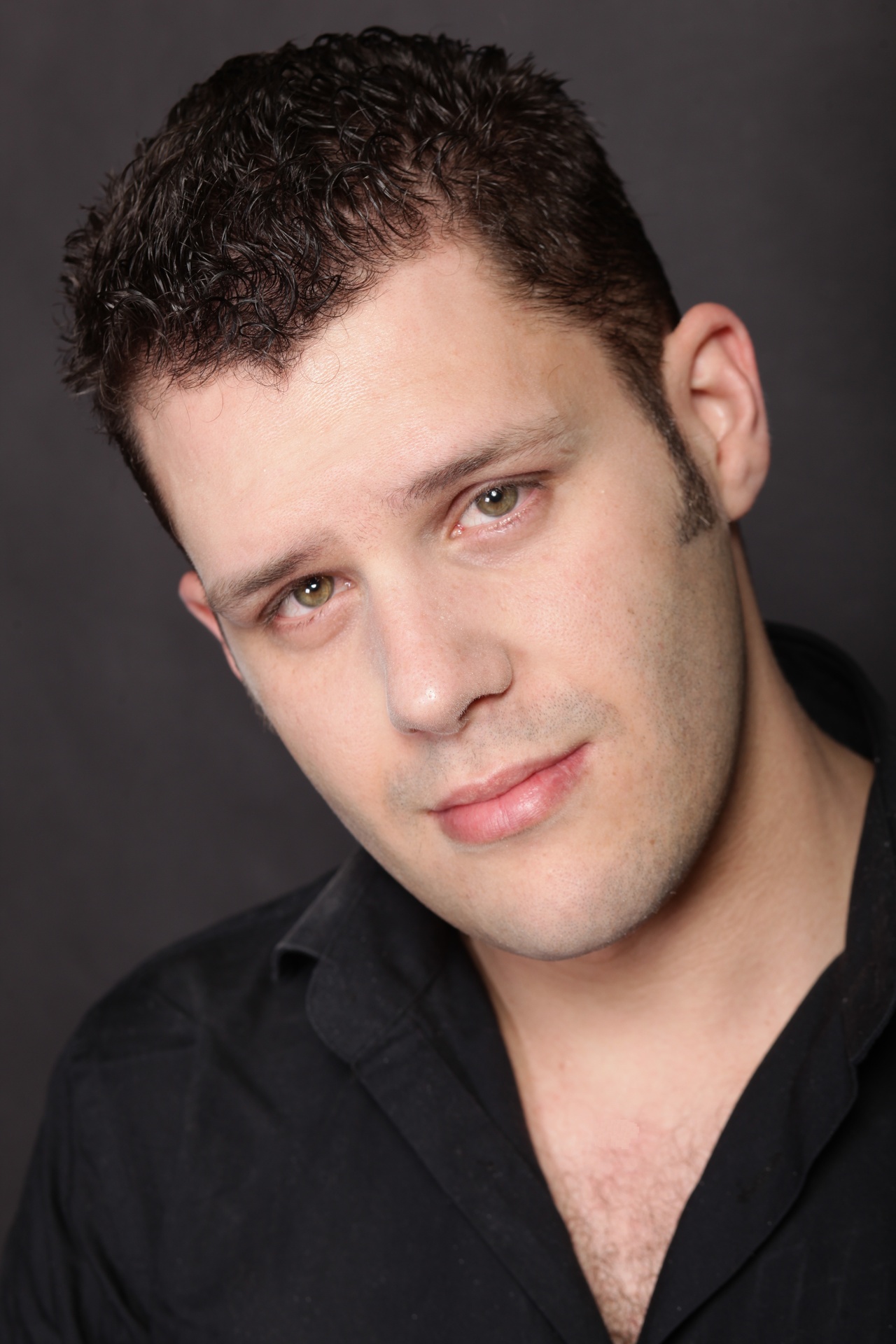
marcio da silva

‘It’s the next step for the choir’, he said. ‘Over the last few years, since I was invited to become Music Director for Hastings Philharmonic Choir, we have been working hard to improve the quality of the choir and the professionalism of the music-making. Now I feel we are right to expand upon this. I felt drawn to Hastings as it has so many people involved in the arts, and particularly in music – there are so many choirs! – and yet there is no regular music programme here – nothing is co-ordinated. So that is what we are planning to do. Our first full season will have ten concerts ranging from chamber music to full orchestral and choral evenings.  I’m pleased that we have been offered a residency at St Mary in the Castle which will give us a permanent base and we can look to ensuring the right conditions are regularly available so that we don’t have to move staging every-time we hold an event.’

Hastings Philharmonic was launched last November with a concert in the White Rock Theatre. The venue – as the White Rock Pavilion – had been the home of Hastings Municipal Orchestra before the second World War, and so it seemed fitting to launch the new venture where the original had been so successful. Marcio da Silva is certainly not averse to taking risks and the opening concert for the first full season included a new work by Philip O’Meara and Beethoven’s Choral Symphony. The evening easily demonstrated the quality of the musicians he has gathered to form the basis of the ensemble. Many come from outside of Hastings but Marcio is keen to involve professional players who live closer to the town. In particular the number of strings will need to increase as large romantic works are contemplated.

‘I don’t want to chase musicians. I’d be happy to have players who live close to us but I want to ensure they are of the same professional standard as the rest of the players. We need to ensure we are providing high quality playing all the time. We need to ensure people know that they will get the best when they attend any of our published events. Happily those involved so far have a real sense of the adventure we are undertaking and are really committed. As part of our publicity we did a flash-mob performance of part of the Beethoven, and are looking for similar ways to promote ourselves in Hastings. Some events will be streamed to attract a wider audience, and there will be a new inter-active web-site to keep supporters in regular touch with him and plans as they evolve.

Alongside the choir and orchestra, Marcio runs Opera Academies which have been the basis of many of his staged performances. Here he works with young professional singers and brings them to a wider international audience.


Born in Brazil, Marcio da Silva studied singing and graduated from the Conservatoire de Toulouse, and received his Bachelor of Music Degree in orchestral conducting from the Musikhochschule Freiburg, followed by a master’s degree in conducting from the Royal College of Music. He has conducted the Pforzheimkammerorchester in Germany, Orchestra Sinfonica della Magna Grecia in Italy, Horizon Ensemble Bydgoszcz in Poland, Württembergische Philharmonie, Südwestdeutschephilharmonie Konstanz, and Stuttgartkammerorchester in Germany, Nord Tchechische Philarmonie in the Czech Republic,Orquestra Sinfonica de Minas Gerais in Brazil, Eski?ehir Metropolitan Orchestra and Çukurova Symphony Orchestra in Turkey, Kosovo Philharmonic Orchestra and London Symphony Orchestra during a Masterclass with Sir Colin Davis. He was one of the three finalists at the Princess Astrid Conducting Competition in Norway with the Trondheim Symphony Orchestra. He is also the Music Director of the Grange Choral Society, and Ensemble OrQuesta. As Music Director of Woodhouse Opera since 2012 Marcio has conducted and directed over 20 productions of operas ranging from less often performed works like Lully’s Armide to very popular works like Carmen, Magic Flute and La Boheme. His oratorio repertoire is large having conducted most of the main stream romantic and baroque oratorios. He is also a composer, with works including choral a capella pieces, art songs and a Te Deum for soloists, chorus and orchestra. He also sings extensively in chamber music and opera.


As his training and professional work indicates, he is a truly international musician who could easily work full-time anywhere in the world, but has chosen to focus on the South-East of England, intending to make Hastings a hub for a new and exciting approach to musical life.

‘Our first season, which started last November,  is very wide ranging. We opened with the Beethoven, but also with the new choral piece by Philip as I wanted to ensure we are supporting new music and new music-making.

As a total change, and following the traditional Christmas Concert, we have a Bossa Nova evening at The Tabernacle on 13 January. Then two weeks later we have an evening of Bach, Handel and Monteverdi at St Clements. So much variety within such a short time! In March we have a chamber recital, followed in April by Mozart’s Requiem in St Mary in the Castle. The really big challenge of the season comes in May when will perform Brahms’ Second Symphony, followed by a fully staged Don Giovanni at the start of June. But that’s not the end – there is a French chamber music recital and the Durufle Requiem in July before we break for the summer. Just a short break before the 2017-18 season begins – and we’ve big plans for that already, building on this first season.’

We finished our coffee and I left Marcio before he headed off for another rehearsal. If professionalism and enthusiasm are any indicators, Hastings is in for a renaissance and the ghosts of the Municipal Orchestra will be smiling.